Monday, 3 September 2012

The fall guy, and other stories - Hakeem Baba Ahmed.


“The difference between a man and his valet: they both smoke the same cigars, but only one pays for them.”
Robert Frost.
Whether you believe former Minister of Power, Professor Barth Nnaji jumped or he was pushed will depend largely on where you stand in your assessment of the general levels of transparency and integrity of the federal administration. If you felt a tug in your heart a few days ago at the passionate lamentation of President Jonathan over the unceasing and near-universal criticism of his administration, you are likely to believe that one of the few bright sparks in the administration was eased out as a part of an effort to commence a roll-back process against corruption. You will then say he was pushed. If, however, you are among the cynics who believe that the administration has neither the will nor the capacity to fight corruption, you are more likely be believe that the good professor resigned to salvage what is left of his good name, rather than save the administration further embarrassment over endemic corruption. You may then believe that he jumped.
Either way, the circumstances around the departure of the former Minister and its implications for some of the policy priorities of the administration do not reflect very well on a government which says it is transforming the nation. There are so many questions and inconsistencies around the whole saga (with the highlights being President Jonathan publicly eulogizing the removed Minister) that it is safer to believe that there is a lot more to the story than has been revealed. But it will not be idle speculation to ask whether Professor Nnaji’s resignation has set a new bar for this administration in terms of accountability and respect for the rule of law, or is challenging it to set one since it does not appear that one has existed. Certainly, in the context of events which have exposed the administration to accusations of being soft on corruption, or at the very least of being indifferent to accusations that some of its frontline ministers and executives are sitting smugly on top of entire systems which will not stand the slightest scrutiny, the circumstances of Nnaji’s departure cannot fail to shake the ground a bit. He could be a fall guy, a man sacrificed for comparatively minor offence of indiscretion and poor judgment, so that the administration can earn a few brownie points on probity. Or he could be the tip of an iceberg of institutional weaknesses, weak political will, and a system in which corruption now inspires and influences all policy. Either way, the administration has lost one of its more capable hands in an episode it could have shrugged off, or made efforts to limit the damage by settling those he had offended in a sensitive bidding process, or simply blaming others for his misjudgment. You now have to wonder if Nnaji, one of the best and brightest could fall so spectacularly on a questionable moral issue, what other Ministers are doing that may not stand up to any scrutiny.
The real test of the value of the President’s removal of Nnaji lies in what happens to the pivotal privatization policy of power stations. Will the entire process now be re-visited afresh, using different institutional mechanisms? Will it be a fresh bidding process, or will existing bids go forward? How much integrity will the entire exercise have, now that Afam has revealed how murky the procurement waters can be? Given the volatility around the entire privatization policy in the power sector, what impact will the revelations from Afam have on the programme as a whole? Can this administration be trusted to undertake sensitive and far-reaching reforms which represent key aspects of its transformation agenda? Will the international and investor community retain the same level of trust now that one of its blue eyed boys appears to have bitten the dust, or has been unfairly sacrificed? Will major labour issues around the privatization programme now disappear, or will labour unions dig in their resistance to key aspects of the policy? Will the new Minister be better than Nnanji, or will he or she avoid pitfall and booby traps in a sector that needs courage and competence?
The Nnaji saga must have a lot more behind it, but for now, it will merely remind Nigerians that corruption in and around government is the most serious problem the nation faces. It will remind Nigerians that it took the most monumental struggle by citizens and civil society groups to open up the subsidy scams, and even with what government claims to be open-and-shut cases against many of the scammers, the nation was recently reminded of its vulnerability to corruption after it was alleged that the scammers were behind a union strike. There are reports of attempts to pay some, and withhold some of the amounts being owed to importers, even when the issues relating to culpability or otherwise are being examined. Trials will take months or years, and with very expensive lawyers lining up to take up costly briefs, no one should hold their breaths over possibilities of convictions. Yet key players who participated in the administration and management of the subsidy policy before the lid was inadvertently blown open by President Jonathan’s decision to remove subsidy are sitting exactly where they have always been, some with even more powers. They straddle the oil and gas sector like colossus, and every decision or appointment in the sector is made by them. The landscape is replete with issues begging for the application of some decisiveness and political will around openness and integrity from the administration.
The shocking revelations around the pensions scams are being dulled by the time-honoured Nigerian strategy of burying one scandal with a bigger one. The involvement of the legislature in probes of suspected scams is now looking like a liability, after it promised so much in terms of prying open the rock-solid defences of the intimate relations behind corruption and the operations of key institutions of the executive arm. Time and time again, legislators have fallen prey to corruption tentacles themselves. It is anyone’s guess where the investigations on the pension scam are. The legislature got its fingers burnt over Oteh, over subsidy probes, and even over constituency projects. If legislators become reluctant to join the fray after another major exposé, some Nigerians will think it is for the better; but the nation would have lost a valuable leverage for demanding higher levels of accountability and openness in governance. As things stand, both legislative and executive arms of government need massive purges to regain public confidence. Both are in the gutter, and it is unclear whether one or both of them are looking up at the stars.
President Jonathan recently cried out to high heavens over criticisms of his administration, basically saying he is not the architect of the problems he is being blamed for. Just when Nigerians were putting those lamentations down as familiar refrain, he concluded by promising Nigerians that he will surprise everyone by 2013 with his achievements. How comforting it will be to believe the President; and how desperately Nigerians will hope that the removal of Professor Barth Nnaji as Power Minister will signal the beginning of a new era in the life of this administration in which drift, incompetence and corruption will be decisively tackled. 2013 is only a few months away, and President Jonathan has no Minister of Defence or Power. He may perform the 2013 miracle groping in the dark to find solutions to the insecurity threatening the very existence of the nation.

THE EDO-KEBBI BRIDGE - HAKEEM BABA AHMED.


“Unity among the cattle makes the lion lie down hungry.”
Nigerian Proverb
In the midst of doom and gloom regarding the future of the nation, a spark of hope was ignited in a small town in Kebbi State. On Saturday 25th of August the small town of Koko was filled to the brim with Nigerians from every nook and cranny of the nation, and a rich assortment of representatives of the international community. Even the Emir and Governor of Kebbi State said they had never seen anything like it in the history of Koko town. Everything you would expect in the circumstances of our existence today was there. There were thousands of locals, horses and camels, musicians, praise singers and many, many politicians. There were also hundreds of soldiers and policemen, and a curious group in bright red obviously organized around law and order and security put together by the state government. In short, a small army and thousands of curious and cautious locals gathered around an occasion which was entirely novel: the turbanning of a man from Edo State as the Dan Majen Koko by the Sarkin Koko, Alhaji Salihu Koko.
To get to Koko town, if you were one of the hundreds of the powerful, privileged or foreign diplomats, you flew to Birnin Kebbi or Sokoto, and then drove for about 2 hours on roads that could do with some serious rehabilitation. You drove through the heart of the Muslim north, a rich agricultural land and friendly and hardworking people battling the odds to stay afloat in a rural economy. You saw no evidence of Boko Haram insurgency on the faces of the people, but many villages in danger of being swept away in this year’s heavy rains. You would have seen bumper harvests of millet and guinea corn, and hardworking villagers hoping to survive the rains and harvest them. You would not have seen small or medium-scale agro-allied industries, but hundreds of petrol tankers and lorries which ferret fuel and other goods to neighbouring countries, quite possibly against the law. You would have passed numerous police and army checkpoints, and most probably, you would have been persuaded to part with some money to show appreciation for the diligence of security men under arms, exposed and vulnerable to the elements and enemies they suspect could be anyone.
Then you got to Koko, a town founded in 1907 by 50 people who left Jega to find better farming land. Famous for its sons who reached great heights in western education and public service, you may be taken aback by its relatively small size and predominantly rural economy. Driving to the palace, you were stared at by thousands of young people and adults who would not attend the turbanning because security will be too tight for ordinary citizens. But when you got to the palace, you would have been amazed by the huge turn-out of people, hundreds of gaily-dressed camels, horses and donkeys, and an elaborate presence of security personnel equipped to fight a war. If you were not intimidated by the water-tight security, you would have witnessed a truly remarkable event that was profound in its implications for the present state of our nation, and its future.
All that elaborate gathering of the nation and the world was to help the people of Koko and Kebbi State express their appreciation to a man who, at the age of 22, was sent by the federal government in 1976 to Government Secondary School Koko to teach during his N.Y.S.C. He was from Edo State, and had read History at the University of Ibadan. Obviously this young man, who today is Ambassador (Dr) Martin Ohumoibhi, K.S.J and Permanent Secretary in the Ministry of Foreign Affairs, must have left a profound impression on the community and his former students. Thirty six years since then, they honoured him with a title normally reserved for princes, in a ceremony rich with symbolism, sincerity and openness. In those 36 years, the man had acquired a Doctroate degree from Oxford, and served in many capacities, including being Nigerian Ambassador to Switzerland before becoming Permanent Secretary in quite possibly the most difficult Ministry to lead. You could tell from the crowd that followed him to Koko that he led a life which touched a lot more than a young class in 1976.
There was no evidence that Martin lobbied for, or paid in any manner, for this symbolic gesture of appreciation from a community to an individual. The huge entourage of Nigerians from many parts of the nation, particularly those from his home State must have been impressed by the sincerity of the gesture without the usual political trappings. The Koko and Kebbi State community itself must have been pleasantly surprised that such numbers of V.I.Ps, including many foreign diplomats, will disregard the threat and reports of insecurity, and inconveniences of long-distance travels in remote parts of the far north to witness a three-hour event that was largely symbolic, but profound in terms of its statement about the people of Nigeria.
Those who did make the journey will have many tales to tell. First time visitors will marvel at the serenity and beauty and peace of rural Hausaland. They would also have been struck by the poverty of the population living in a simple economy, without the industry to add value to the agricultural products that line every inch of the land. Infrequent visitors will be shocked by the huge explosion of population and the sheer number of young people with little or nothing to do, even making allowances for school holidays. Those who listened to the speeches were struck by the outpouring of sentiments which highlight the values of sacrifice and hard work. Those who listened to the inspiring remarks of Ambassador Ohumoibhi will be struck by the feeling that there are many Nigerians who genuinely believe in the utility of preserving our unity, and are willing to work towards it. Those who listened to Governor Dakingari were struck by his admission that money has corrupted Nigerian politics; but good people in politics can mitigate its damage. Those who noticed the large numbers of local Igbo and Yoruba people (whose chiefs were also turbaned at the ceremony) would draw the conclusion that the roots of this nation go very deep indeed; and they are the artisans, shopkeepers, chemist operators, distributors and millions of other small operators who brave all the odds to travel to and live in communities thousands of miles from their original homes, trusting that they are safe.
Above all, those who attended the event would have come away with the strong impression that a good man will stand out wherever he is. Ambassador (Dr) Martin Uhomoibhi built a bridge all the way from Ewatto in Esan South Local Government Area of Edo State to Koko in Kebbi State. The class he taught during his National Service produced many people who made their marks on the nation, including two State Governors. The people of Koko have preserved that bridge by acknowledging that there is still room in our hearts as a nation for appreciating sacrifice and service. There are profound lessons in the turbanning of the Dan Majen Koko, and it says that the leaders who play the dangerous game of pushing our nation to the brink, can be challenged by others who believe in it, and who work to salvage it. 

Effect of the latest oil finds in the North of Nigeria...By Mahmoon Baba-Ahmed.

Hope for discovery of oil in the North is like pursuing a delusive mirage. It had for long proved to be an unrealistic and impracticable feat, at least to those pessimists who never wish the region well. However, concerted efforts by those concerned to ensure it is found in appreciable quantity yielded satisfactory results in many parts of Northern Nigeria, especially around the productive river basins and the legendary Lake Chad area bordering neighboring countries who had already struck the ‘black gold’ and are now fully exploiting it.
These are not the only areas in the North endowed with oil riches. Similar finds have been recorded in the trough of River Benue, the Niger basin as well as in Gombe and Bauchi states. Recently oil has also been found in Kogi State, and Sokoto state is understood to be sitting on a large deposit of oil reserve. However, whenever it is reported that oil has been discovered in any part of the North, the news is greeted with cynicism by skeptics, while the authorities concerned will be totally indifferent, unbothered to authenticate the discovery or move to exploit the new found deposits. In the twilight of Governor Ibrahim Idris’ tenure, large quantity of oil deposit was realized in Kogi State and after bringing it to the notice of those saddled with the responsibility of utilizing it, and oil prospecting experts confirmed the veracity of the find, nothing was done to ensure it is drilled for the benefit of the nation.
Similarly, when Governor Aliyu Magatakarda Wammako paid Sallah homage to the Sultan he dropped hint that oil has been detected in the Sokoto River basin, but it is a disheartening that despite wide publicity given to that disclosure by the press, neither government officials nor engineers of the prospecting firm uttered a word about that. To them that was a myth or idealized conception, which at best should be disregarded.
Even though the federal government was totally unemotional about oil discovery in certain areas of the North, yet President Goodluck Azikiwe Jonathan was ebullient with enthusiasm as he listed Anambra State as the tenth oil producing state in federation while commissioning a private refinery in the area recently. He announced that substantial deposit of oil, discovered in Oguleri Otu in Anambra East Local Government Area, influenced the siting of the refinery in the state.
Nevertheless, in a swift reaction, the neighboring Kogi State Government refuted claims of Anambra being the tenth oil producing state, and insisted that despite locating the refinery in Anambra State, the oil wells number OPL915 and 916 are undeniably situated in the hinterland of Kogi State. Nevertheless, it is puzzling how the Federal government remained quiet about the quantity and quality of oil deposit in Kogi State. Instead it pretended that it did even not exist. It is a well-known fact that oil find in the North has preceded that in any part of the Eastern states, but nobody cares a hoot about exploiting it, because it is located in the North which everyone in the South loves to hate. The controversial listing of Anambra State among the oil producing states in the federation ought to be reappraised thoughtfully and judiciously with a view to avert unwanted quarrel that may likely arise in the future between Kogi and Anambra states.
Nobody can precisely articulate the reasons behind the government’s hesitation or unwillingness in acknowledging the presence of oil in the North even after it had commissioned productive exploratory expeditions around Lake Chad basin. As a result of that the Northern Nigeria Development Corporation NNDC had been given franchise to acquire two blocks in the region, but it is yet to commence exploiting the oil wells. That may, however, not be difficult to comprehend. The multi-national corporations, which influence and direct the nation’s economic activities, are locked in unhealthy rivalry aimed at controlling the prospective oil fields in the North especially at the Lake Chad basin and the Komadugu-Yobe River which flows into it at the boundaries of Nigeria and Niger Republic. It was established that this nasty competition for the north-east oil by major foreign powers was responsible for the unrest that often devastate the area in the name of religion.
It is quite evident that Northern Nigeria is blessed with variety of mineral deposits including hydrocarbons from which petroleum products are derived, but these remained untapped deliberately, begrudging the northerners the chance to benefit immensely from the divine bequest. The North’s oil should not be a source of concern and difficulty for its citizen as it has been a curse instead of blessing to this nation. If President Jonathan is serious about directing his government toward increased prospecting of oil in the river basins at Nigeria’s borders, he should then be advised to start with areas with known oil reserves in the North. That will surely redress the matter of falsehood and the reality of oil find in the North once and for all.

British varsity moves to save Nigerian students from deportation.


London Metropolitan University is launching legal action against the United Kingdom Border Agency’s decision to revoke its licence to sponsor international students.
The university said it was taking action so its students could return to study “as a matter of urgency,” the British Broadcasting Corporation reports.
The government revoked London Met’s “highly trusted” status last week.
The UKBA found a quarter of its 2,000 overseas students did not have permission to stay in the country.
The revocation of the licence meant that over 2,000 students, mainly Nigerians, risked being deported from Britain.
A task force was set up by the university to help students affected by the decision.
The government says it wants to assess how many students will be successfully reallocated to alternative institutions before the UKBA sends out notices giving them 60 days to leave. At this stage, the Home Office is unable to say when those notices will be issued.
The UKBA says London Met had “failed to address serious and systemic failings” identified six months ago.

The Punch.

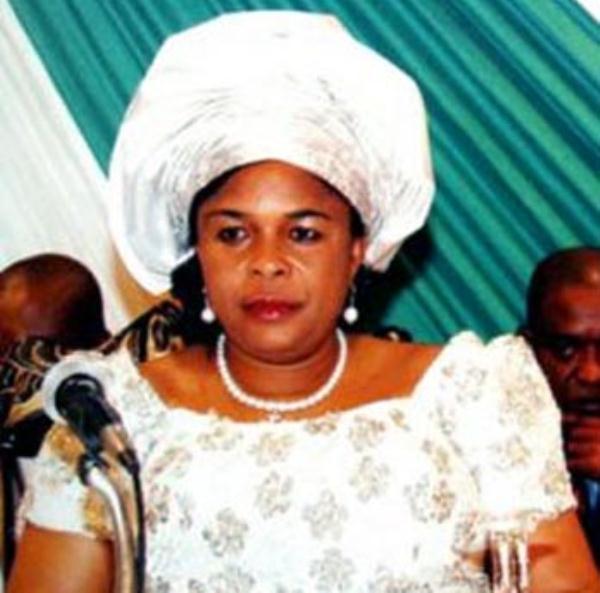
First Lady Patience Jonathan's Health Update: Illness Started In Dubai.

Dame Patience Jonathan
By SaharaReporters, New York
The “food poisoning” condition that landed Mrs. Patience Jonathan in a hospital in Germany reportedly started in Dubai eleven days ago where she had gone to see a doctor because her hands were twitching.
Presidency sources said she had gone to Dubai after the recent African First Ladies Summit in Abuja, an event that imposed an unfamiliar and grueling schedule of meetings and late nights on Mrs. Jonathan, saying she needed some rest.
Her visit to Dubai was explained as a vacation but our sources said it involved a medical procedure, while in Dubai, she reportedly had "food poisoning" alongside her medical doctor,  soon after she returned to Abuja last Monday, the emergency broke and she had to be airlifted to Wiesbaden, Germany for food poisoning.
Since SaharaReporters broke the news yesterday, the Presidency has officially kept mum about the First Lady's condition.  Despite a media arm recently fortified to give Mrs. Jonathan a more aggressive press presence, it has provided neither denial nor confirmation.
Last night, Ayo Adewuyi, the First Lady’s media aide, told us that he had himself only just returned from vacation, and pleaded for time to respond to our inquiries.
When we called him today to find out if he had found out Mrs. Jonathan’s whereabouts, he confirmed that she was in Germany and pleaded to let him send a press statement regarding the issue.  Several hours later, he insisted that he was still working on a statement.
There have, however, been half-hearted denials and spins in some newspapers and blogs claiming that Mrs. Jonathan is only resting, but none of those outlets have provided her location or shed light on her condition.

Presidency denies First Lady’s foreign medical trip, insists she is just resting abroad.


There are concerns at the weekend over First Lady Patience Jonathan as information filtered saying she has gone on a foreign medial trip, though her office said she only went abroad to take a rest.
Sources told Daily Trust that Mrs. Jonathan left Abuja a week ago to a German hospital to treat an undisclosed condition.
The First Lady, whose local and foreign trips normally enjoy wide coverage in state-run media, travelled out on Monday with no official announcement of where she was headed.
But her absence at public events has been conspicuous.
During the past week, Mrs. Jonathan, 55, has not been seen at any public function.
She has not accompanied President Jonathan on his trip to Addis Ababa for the funeral yesterday of the late Ethiopian Prime Minister Meles Zenawi.
Mrs. Jonathan was not with her husband in Anambra State on Thursday where he launched the Orient Petroleum facility.
Also, she did not join the president on his two-day trip to Senegal on August 22. The last foreign trip the First Lady embarked on with the President was to Trinidad and Tobago at the beginning of last month, few days after she hosted the African First Ladies Summit in Abuja.
A source told Daily Trust at the weekend that Mrs. Jonathan has gone to a hospital called Horst Schmidt Klinik in Wiesbaden, Germany, but did not say what condition she went there to treat.
Horst Schmidt Klinik is where the late President Yar’Adua was once hospitalised for kidney-related ailments.
But the office of the First Lady said last night that Mrs. Jonathan’s foreign trip was “to take time off to rest” and not for medical purposes.
First Lady’s spokesman Ayo Osinlu confirmed that Mrs. Jonathan has travelled abroad since last week but that she was only away to take a “moment’s rest” given that she has not taken a rest since President Jonathan’s election last year.
Osinlu told Daily Trust by telephone that after the African First Ladies Summit which she hosted late July, Mrs. Jonathan decided she should take some time off to rest.
“If you look at her itinerary in August, you will be wondering how she was able to accomplish that,” Osinlu said.
Asked when the First Lady is expected to return to Nigeria, Osinlu said, “In the course of this week she will be back home. But remember, it all depends on her plans.”
He added that she may decide to extend her stay abroad.
The Dr. Horst Schmidt Hospital Corporation is the Municipal Hospital of the city of Wiesbaden, according to its website. It serves as a teaching hospital for the University Medical Center.
“With 21 clinics, four institutes and 1027 beds we offer our patients a very sophisticated and high-quality treatment range for the necessary care in our region,” information on the website said.
The hospital says it has more than 3000 workers.


Source: Daily Trust.

Tales Around Ibori’s $15 Million By Okey Ndibe.


Okey Ndibe

As if anybody was still in doubt, there was more proof last week that Nigeria is an organized criminal enterprise. That proof came in the form of some young man’s brazen attempt to use the courts to stow away with $15 million that, clearly, did not belong to him. The man in question is named Chibuike Achigbu.
For those who missed the story, here’s a brief background. In 2007, Nuhu Ribadu, then the chairman of the Economic and Financial Crimes Commission, reported that former Governor James Onanefe Ibori of Delta State had tried to bribe him with $15 million – in cash. At the time, Ribadu’s EFCC was hot on the heels of Mr. Ibori, a man who, like many Nigerian public officials, apparently didn’t respect any demarcation between public funds and his private pockets.
A self-aggrandized personality who gave himself the pompous name of Ogidigbodigbo of Africa, Mr. Ibori had started his criminal career as a petty thief in London. Then, with two convictions in London under his belt, he landed in Nigeria during the reign of Sani Abacha, the bespectacled emperor whose favorite sport was to raid the Central Bank for hard cash. One thing led to another, and Mr. Ibori was installed as a Nigerian stakeholder, which implied that he was certified to eat his people’s steak, drive a stake into the starved hearts of the self-same people, and say to them, I don’t give a damn! By the time the ruling PDP smuggled Ibori into Government House, Asaba, the small-time thief had metamorphosed into a grand looter and embezzler.
Mr. Ribadu once told a foreign TV interviewer that Mr. Ibori perhaps stole as much as 75 percent of the Federal allocation that accrued to his state during his two-term, eight-year rule. The EFCC’s sleuths were snooping into the ex-governor’s mishandling of state funds when, according to Mr. Ribadu, Mr. Ibori sought to tempt him with cash of $15 million.
We know that the offer was made at the Abuja residence of Andy Uba, at the time a senior aide on domestic matters to President Olusegun Obasanjo. Not only did Ribadu rebuff the offer, he also caused the funds to be deposited at the Central Bank of Nigeria. It was important, he decided, to present the cash as evidence both of Mr. Ibori’s corruption and his attempt to subvert justice.
In the end, Mr. Ibori had his day in a Nigerian court. After a sordid affair, an unimpressive outing for all participants in the trial, Justice Marcellus Awokulehin dismissed all charges. Were it up to the judge, Mr. Ibori would have been canonized that day as St. James the Pious of the Delta. Today, the same Ibori is holed up in a maximum security jail in the UK. Rather than face the prospect of a proper, rigorous trial in Britain, the former governor caved, pleading guilty.
His swagger was gone. Back in Nigeria, there was still the unresolved matter of $15 million with which Mr. Ibori had allegedly tried to entice the EFCC to call off its scrutiny of his handling of state funds.
A few weeks ago, it emerged that the Delta State government had filed suit seeking to reclaim the money. The principle seemed sound: cash that was pilfered from a state ought to go back to that same state. Of course, some people worried whether the state’s current governor, Emmanuel Uduaghan, could be trusted to responsibly husband the funds, once recovered. A medical doctor, Mr. Uduaghan is Mr. Ibori’s cousin. He was also a top confidante during the former governor’s tenure.
At any rate, the state’s legal pursuit of the “bribe” funds was proceeding with relatively little drama – until last week.
Suddenly, ten lawyers appeared in an Abuja court armed with an affidavit by Mr. Achigbu. The burden of the affidavit was that the $15 million cash belonged to this virtually faceless Achigbu.
To read the document is to confront the most facile form of fiction masquerading as an assertion. Mr. Achigbu claimed that he had collected the money as a campaign contribution for PDP candidates running in the 2007 elections. However, on learning that such a large transaction donation needed to be made through a bank, he claimed he gave the cash to Andy Uba. Mr. Uba, he asserted, undertook to hand over the cash to the EFCC to enable the agency to authenticate the legitimacy of its source. Thereafter, the money was to be disbursed to party candidates.
It’s easy to recognize the narrative for what it is: an audacious attempt to hijack funds that belong, properly, to the people of Delta State. Why would Mr. Achigbu try a scheme that’s so patently jejune? How could he have hired so many ostensibly senior lawyers, without a single one of them raising alarms about the ludicrousness of the whole thing? Were there, perhaps, other sponsors of the charade, other well-placed “steakholders” who encouraged this possibly criminal undertaking?
One of the affidavit’s claims is that “Dr. Andy Uba has offered to depose to the foregoing facts on oath before this Honorable Court to clear his name and restore himself to the confidence of the Intervener/Applicant.”
Once Mr. Achigbu’s claim received media attention, the man quickly ordered his lawyers to withdraw it. He saved himself the certainty of making a big fool of himself in court. But the fact that he withdrew his preposterous application should by no means be the end of the matter.
The police ought to question Mr. Achigbu about this whole messy affair. How did the idea germinate in his head to go for the $15 million? Did he raise millions of dollars for PDP candidates in 2007? If he did, what were the sources? And what are the contributors’ sources of income? Did he ever hand Mr. Uba millions of dollars in cash? If he did, what was the purpose? Did he consult with Mr. Uba before he decided to stake out a claim on Ibori’s “bribe” funds?
One thing is clear from Mr. Achigbu’s now withdrawn claim. It’s either he handed Mr. Uba some millions of dollars in 2007 that’s not accounted for, or he set out to steal $15 million that doesn’t belong to him. It’s up to the police to find out which it is.