Friday, 7 September 2012

Why We Lifted Dana Air’s Suspension – FG.


The minister of Aviation, Stella Oduah, has said Dana Air was allowed to resume operations as it was not indicted by the Accident Investigation Bureau (AIB).
Oduah said: “The AIB as you are aware have released their preliminary report; it was a very good report. There was no conviction that it was Dana’s fault. NCAA has also done their air worthy check on the airline and they were freed for that and usually, you do not ground in whole term for an accident because as regard some airline, which had an accident not too long ago such as Air France, Kenya and Ethiopian airlines, the same thing happened.
“Not because of the company service, it was an isolated issue, but before that we had to do airworthy check on the company as a whole including the administrative, technical and the preliminary report exonerated them. NCAA report also exonerated them. Remember we set up a panel as well, they also exonerated them.
“Therefore we isolated them because there is still ongoing investigation. It is still under AIB investigation and until that is done, we will not know if it is the engine or the pilot, so we cannot apportion blame now. We are not allowed to. But as an isolated investigation, as they come, as an airline operator, they have been exonerated, that is why we are exonerating them, that’s why we are allowing them to fly and it was not their licence by the way that was suspended.”
She also said only the AIB was allowed to investigate air crashes in the country. Analysts believe this is an attempt to discredit the investigation the Lagos State Coroner’s office is spearheading. An investigation which is said to indict Dana airlines.

BusinessNews.

Introduction of N5,000 note will cause inflation, kill small businesses – Obasanjo.


Former President, Chief Olusegun Obasanjo has joined the leagues of other Nigerians currently kicking against the planned introduction of N5, 000 notes by the Central Bank of Nigeria (CBN). He noted that it would kill production and affect small businesses negatively. Obasanjo said this in Lagos at a roundtable advocacy forum organized by the Institute of Directors, stating that the approach of the Central Bank governor, Mr. Lamido Sanusi, towards fighting inflation through cash regulation was not proper.
He said some observers had suggested that the Vision 2020 blueprint was somewhat of an ambitious agenda, which was unrealizable, considering the frightening challenges confronting businesses in the country.
According to former leader,  the 2012 annual report of the International Finance Corporation and the World Bank publication titled, ‘Doing business in a more transparent world was paying off,’ Obj noted that a good number of African countries took crucial steps towards encouraging more local entrepreneurs to come into the formal economy over the past 12 years. He said, “Across the continent, 15 countries lowered barriers to entry for new businesses, 23 facilitated access to credit, and seven made it easier to pay taxes. Nigeria is not in any of these leagues.
“In its 2008 report, Nigeria ranked 108 out of 178 countries and in the space of four years, we rank 137 out of 183 countries measured.
This is a damning report on our business environment and, therefore, calls for more concerted efforts by various stakeholders on how to ensure that this trend is reversed and the Nigeria business environment is made more conducive for investments and less costly for businesses to thrive. We cannot aim for 2020 if we do not halt the downward spiral.”

Daily Post.

VOICE OF LIBERTY: The crude pains of crude oil a generation must avoid ~ Japheth J Omojuwa.


VOICE OF LIBERTY: The crude pains of crude oil a generation must avoid ~ Japheth J Omojuwa

Ghawar is the largest oil field in the world. It has produced over 60 billion barrels of oil so far. This field alone accounts for about 50 per cent of Saudi Arabia’s daily output of around 11 million barrels per day. If the oil at Ghawar runs out for a week, the world would be in a state of chaos reminiscent of an apocalypse. Note that the Ghawar field produces more than twice Nigeria’s daily production that averaged 2.12 million in the second quarter of 2012. The sad reality about Ghawar is that a lot of water is increasingly being used to get oil out of it. This simply means that Ghawar needs to be pushed harder than ever to do what it used to do without this process. Ghawar is a well in decline.

Why is Ghawar on the radar of a piece that speaks of Nigeria’s 4 million barrels per day? It is simple enough; Ghawar offers us the picture of a reality we may not be primed to see in Nigeria because here the things we are allowed to see are not real and the real ones are never seen except you look elsewhere and get lucky with a reflection. Ghawar is the reflection of the fact that Nigeria’s economy cannot not be based on oil in 30 years’ time. Apart from alternatives that abound in research labs all over the world, most oil wells the world over have reached their peak. A barrel of oil sold for $12 only recently in 1999. It hovers around 1000 per cent of that today. What problems exist in the world today that did not exist then? These rising oil prices will be excused on many factors but one factor the oil producing countries would rather have you ignore is that their oil wells are increasingly weakening. Like Ghawar, the baby oil wells have to be pushed to produce at least as much as what they used to. The production processes are essentially now costlier and since these are not helping to produce more, price increase is naturally an attendant effect of that.

During the first term of President Olusegun Obasanjo when the country produced about 2.2 million barrels per day and had reserves of 25 billion barrels, the government had ambitious targets that looked feasible at the time. Nigeria expected to have 30 billion barrels in reserve and to produce 3 million barrels per day in 2003. The projections for 2010 were even more ambitious but compared to those of 2003, a period of seven years before it, you’d agree targeting 40 billion barrels in reserves and 4 million barrels per day in production were in order. The country never reached both milestones. In fact, Nigeria today produces less than when the projections were made.

You would look at militancy, oil bunkering and all the criminality around the exploration and production as the cause of these problems but they are only a part. Take a deep look into the nation’s oil wells, you’d find that they are not the endless pool of wealth our rulers – Obasanjo and co – thought them to be. We were to be producing 4 million barrels per day in 2010 and today in 2012 over a decade after those projections were made, we are producing even less than the year of the bench mark.
Do you need me to break it down? Our generation, this generation that uses New Media to save lives, this generation on whose shoulders Nigeria’s future lie, cannot be thinking of running this country on the wheels of petro dollars. To do so would be to suffer more crude pains as we are suffering today. The difference being that ours will be crude pains without crude oil. Time for a new order…

Terrorism: Telecoms firms threaten to cut off North.


Major providers of mobile telephony  in the country  have threatened to withdraw  their services from the  North.
They hinged their threat on the spate of attacks on  base stations which has made them to lose a whopping N1.03bn.
The umbrella body of the telecoms operators, the Association of Licensed Telecommunications Operators of Nigeria, on Thursday said its members were losing too much to the development and may close shop if it became too dangerous to operate in the region.
The major GSM providers – MTN, Glo, Airtel and Etisalat – are all members of ALTON.
Gunmen, also on Thursday reportedly bombed a base station belonging to an indigenous telecoms infrastructure company, IHS Nigeria, in Kano, barely 24 hours after the attack on several base stations in Borno, Yobe, Bauchi and Gombe states.
The Executive Director, Commercial and Business Development, IHS, Mr. Gbenga Onakomaiya, who confirmed the development to our correspondent on Thursday, said one of the company’s base stations was bombed in Borno on Wednesday while another one was bombed in Kano on Thursday morning.
Officials of ALTON put the number of base stations that had been attacked in the north at 26.
President of ALTON, Mr. Gbenga Adebayo, who decried the situation, said  “If it becomes impossible to continue to do business in the face of rising attacks on telecoms sites, operators will naturally suspend operations in the area.
“This is because beyond base stations, these elements may begin to target telecoms operators‘ offices and data centres among other key infrastructure. That is why it is important that the situation is curtailed before it gets to that point.
“During military coups, dissidents attack newspaper and television houses as well as telecommunications centres and infrastructure to destabilise the government. This is not different from what we are experiencing now as people’s phones can’t be reached in the affected areas.”
The ALTON president said an emergency meeting of the association’s executives had been called for today (Friday) to decide on what next to do.
A Chief Executive Officer of one of the GSM companies, who asked not to be named, said though the company was not contemplating suspending its operations as of now,  it could be forced to do so if the situation persisted.
“We are not contemplating the withdrawal of services as of today but if the situation continues like this in the next four to five days, we may have to withdraw service. But we are not contemplating that now,” he said.
Telecoms infrastructure analysts in the country have put the average cost of a base station at $250,000, which amounts to N39.47m at an exchange rate of N157.91 to a dollar as at Thursday.
With 26 base stations already destroyed, an investment of N1.03bn might have gone down the drain.
Contrary to the belief that only MTN, Airtel and Glo were affected, the Executive Secretary, ALTON, Mr. Gbolahan Awonuga, said the attack affected all telecoms operators, including  Multilinks and Helios Tower.
When contacted, an official of Helios Tower, said that about three of the company’s  base stations were also affected.
He confirmed the report that services had been disrupted in the affected areas as  engineers had been finding it difficult to give adequate reports of the situation because they couldn’t be reached.
Onokomaiya, who attested to the seriousness  of the situation, said, “One of our base stations was bombed in Borno on Wednesday and another was bombed in Kano this morning (Thursday). The base station was completely burnt out. The generators, shelter and equipment are gone. The only things remaining now are the towers and we have to assess them to ascertain their integrity.”
A formal report sent by Multilinks to ALTON, which was made available to our correspondent, confimed that Multilinks base stations located at Mainok Village, Borno and another one at Abari Village in Damaturu, were damaged.
The report said, “Reports obtained from our personnel indicate that extremists numbering about 40 stormed the area at about 22:20 Hrs on 05/09/2012 and immediately launched an attack on the MTN cell site. After the attack on MTN cell site, the extremists proceeded to our site which is close to the MTN site to launch a similar attack.
“As at this (Thursday) morning,  the extent of damage done to  the site is yet to be ascertained as contact with the security men is yet to be established after the attack.
“ Also our Abari site in Damaturu which is not on air was reportedly attacked also. Details remain sketchy as those resident in the area were  all indoors.”
Stakeholders urged the Federal Government to wade into the issue to ensure that the safety of lives of operators’ personnel and agents was assured.
Key stakeholders had called on the Federal Government to bestow on ICT infrastructure a Critical National Security Infrastructure pending the time appropriate laws would be enacted to strengthen it.
“The time has come for the passing into law of the National Security Bill pending in the National Assembly which must be made all-embracing by giving telecoms industry a critical mention in the bill,” a former Executive Vice- Chairman, Nigerian Communications Commission, Mr. Ernest Ndukwe, said.

via Punch.

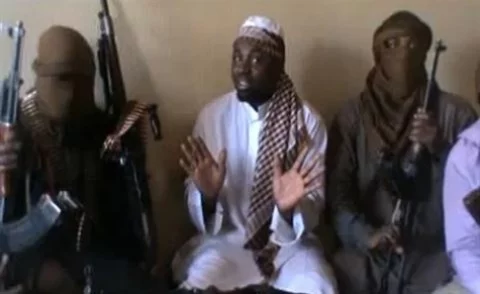
Boko Haram explains why they are bombing GSM companies, targets more primary schools.


The dreaded Islamic group (Boko Haram sect) has claimed responsibility for the massive attacks on telecommunication facilities in Borno, Yobe, Kano and Bauchi.
The group said the attacks on communication facilities will continue unabated because such companies are assisting the federal government and security agencies in tracking and arresting members of the group in many parts of the country.
The group said with the connivance of such companies, many of its members have been incarcerated in various prisons.
A statement written in Hausa and signed by Abul-Qaqa equally threatened attacks on the facilities of the Voice of America (VOA) as well as its correspondents and staff.
It was reported that more than 20 telecommunication masts of MTN, Airtel, Etilsalat and Glo have been set ablaze in Maiduguri and Bama in Borno State as well as Damaturu and
Potiskum in Yobe State on Tuesday.
The development hampered communication and affected business transactions in the affected place while many employees of the telecommunication companies have fled.
According to them “Our ultimate goal is the establishment of an Islamic State in Nigeria and we would not hesitate in taking punitive measures against anybody who sabotage or assist others that are sabotaging our efforts,” Qaqa said.
“This is why we are fighting the Nigerian government and its collaborators, including telecommunication companies. We would continue attacking them (telecoms) until the time they stopped releasing information about our activities.
“We have also established that through its various programmes, the VOA has launched a campaign of calumny against Islam. We have resolved to fight back by tracking and killing its employees. Any employee of the VOA that wants to remain alive must quit”.
  DailyPost.

Is the Presidency becoming desperate and jittery?

•Azuka Onwuka.

Three responses from the Presidency in the last one month have painted a picture of irritation, fear and desperation. The first was the response to the demand of the Islamic fundamentalist group, Boko Haram, on President Goodluck Jonathan to convert to Islam or resign as a precondition for their cessation of a reign of terror. The second was the cantankerous article by the Senior Special Adviser to the President on Media and Publicity, Dr. Reuben Abati, directed at the President’s social media critics. The third was the President’s comment at the 52nd Annual General Conference of the Nigerian Bar Association that he was the most criticised president in the world.
Starting from the first point, it is pertinent to ask: Did the Presidency need to respond to Boko Haram’s baseless demand for Jonathan to convert to Islam or resign? NO! By addressing the media on that issue, the Presidency created the impression that it did not have more serious and pressing issues to attend to.
That demand should have been completely ignored by the Presidency and all presidential aides and spokespersons. Even if Abati was asked by journalists to respond to that call, he should have replied that the President was too busy with important state matters to respond to such. The President should have left the matter to sympathetic groups and individuals to respond to. By responding to Boko Haram on the issue of conversion to Islam or resigning, Abati was simply according the faceless group authenticity and legitimacy and also telling the world that the Presidency was jittery and, even, petty. That was poor strategy.
If the Presidency responds to Jonathan’s arch-opponent in the April 2011 presidential election, Maj.-Gen. Muhammadu Buhari (retd), or Alhaji Lai Mohammed, the National Publicity Secretary of Nigeria’s leading opposition party, the Action Congress of Nigeria, or the Arewa Consultative Forum or Ohanaeze Ndigbo, he would be seen to be responding to people or groups with identity and fixed addresses. The case of Boko Haram was worsened by their demand. If the group had accused Jonathan of marginalising Northerners or Muslims or embarking on a Niger Delta or Christian agenda against the North or Muslims, then such a comment should necessarily have elicited a robust rebuttal by the Presidency with concrete evidence.
But the height of desperation and pettiness was displayed in Abati’s article, in which he used condescending and disdainful words on the social media critics of the President. Abati went further to defend accusations that no serious publication, broadcast station or individual had ever made. The accusations that Abati denied included that the President was not a drunk or a glutton. Unbelievable!
From where did Abati hear these accusations? From people that had no traceable addresses, people who gather on the web the way friends gather in beer parlours and social events to drink and exchange the latest jokes and gossips. Yet, the President’s special adviser on media and publicity spent several hours on an essay, simply meant to deny petty jokes against his principal and then pass the article to the media houses to publish. It was surprising that Abati did not also respond to all the jokes passed around about the President’s wife, to prove that he was an effective defender of the Presidency.
What Abati did was to publicise and give authenticity to beer parlour jokes and rumours. He simply made those who had never heard such jokes and rumours to hear them. And such people would begin to assume that there could be a modicum of truth in the jokes and rumours, given that the President’s spokesman went to great lengths to refute them. It was like the case of a man who was called impotent by another man when only two of them were present in a room. The man decided to go to court to prove that he was not impotent. In trying to save his name, he brought the news to millions of other people who never knew that such a rumour existed. Rather than going to court, the man should have ignored the man or asked the accuser to put him to test in the accuser’s household! End of story!
As if that was not bad enough, a day later, at the 52nd Annual General Conference of the Nigerian Bar Association, the President told the world that he was “the most criticised president in the world.” We never knew when the Guinness World Records conferred such an award on our President. That comment further confirmed that the President is very uncomfortable with the barrage of criticisms that he receives. It also confirmed that the President listens to all the gossips in the nation. His tone and words betrayed a president who is frustrated and irritated about the deluge of negative comments he receives.
The tragedy of this deficit of an effective communication strategy is that the Presidency has become reactive rather than proactive. Every time Jonathan or any of his spokesmen addresses the public now, rather than telling the nation the programmes and achievements of the President, they end up reacting to accusations upon accusations against the presidency. And the headlines of the media are usually taken from those reactive comments – which are usually open to many interpretations – while whatever programmes itemised are usually lost in the controversy generated by such hare-brained responses.
To say that the President’s communication strategy is middling is being euphemistic and charitable. It is known that the President does not have the gift of the garb. That deficit could have been compensated for by the quality of his communication team. But it is not clear if the problem is that Jonathan’s communication advisers are not advising him well, or that the President does not listen to advice, or that he is the one who decides what is to be communicated and how it should be communicated and simply directs his communication aides to execute such.
Whatever the problem is, the President’s middling communication has cost him much of the goodwill that saw him winning a presidential election in 2011 despite all the odds against him. Deep down the hearts of many Nigerians, they pray that President Goodluck Jonathan should succeed. The good news is that despite what the President has lost, he can still regain lost ground in a matter of months if he adjusts his communication strategy and makes it more proactive and inspiring than reactive and antagonistic or bitter.

Punch.

Asiwaju Goes to Charlotte By Pius Adesanmi.


Bola Tinubu clapping at the US Democratic convention in Charlotte, NC.

Asiwaju Bola Tinubu was at the just-concluded convention of the Democratic Party held in Charlotte. Glossy pictures are already circulating in social media. There is one of him clapping excitedly in the audience. There is another of him in an outside pose with one of his men Friday, Governor Kayode Fayemi of Ekiti state. On the surface, this is a good development. When a man of such enormous influence decides to come and observe and learn from the best democratic practices, the idea – only the idea – should be lauded. But observing and learning from the best practices in the world is an area in which Nigerian leaders and socio-political élite are not in good standing. Therefore, we need to know what Asiwaju and his entourage saw, heard, and learnt in Charlotte.
Indeed, Nigerians are eternally perplexed that the reproduction of modernity and postmodernity has remained rocket science for our political and social élite. Let me explain. If your understanding of the concrete expression of modernity and postmodernity lies in democracy, 21st century infrastructure, advancements in science and technology, and the creation of opportunities and a level playing field for the pursuit of happiness for the citizenry, you will discover that most non-Western societies – Japan, China, Singapore, South Korea, Malaysia, Dubai – that have achieved parity with or surpassed the West (especially in modern and postmodern infrastructure) have done so in great part by observing and copying.
Indeed, the spread of the developmental and infrastructural aspects of modernity and postmodernity beyond the West is a study in the ability of the excluded to observe, copy, and adapt the end product to local-cultural conditions and circumstances. Aware of the existence of such things in the West, the élite of these societies spent much of the 19th and 20th centuries copying and reproducing them for their own peoples.
A Japanese official sees the French TGV or German ICE (super rapid trains) and begins to think of how to out-perform the French and the Germans by producing a more modern Japanese version of the trains but a Nigerian official sees the same trains in Germany or France and begins to think of how to buy homes in Germany or France in order to spend summer enjoying those trains; a Dubai crown prince sees an architectural wonder in New York (it could be a mall) and rushes back home to the task of constructing something bigger for the people of Dubai but a Nigerian official sees the same mall in New York and hurries home to steal money to come and shop in that mall next summer; a Chinese official sees the German autobahn and hurries home in nationalistic anticipation because better roads must be constructed in China but a Nigerian Governor sees the same autobahn in Germany and begins to make discreet inquiries into how to buy shares in the German company that constructed the said autobahn. If German financial regulations allow him, he will return to Berlin next year with his entire security vote to buy shares in that German company.
The Nigerian élite is incapable of replicating anything they see abroad. What they take back to Nigeria are the worst aspects of Western behaviour. Hence they return to Asokoro or Lekki with their fake amala, akpu, or gworo-coated accents, supercilious airs, and acquired Western consumption patterns. I’ve been in high-end restaurants in Lagos while folks who don’t know the difference between Merlot and Rosé would come in, order wine and cuisine from a menu they can barely read, and discuss their last European vacation loud enough for everybody to hear.
This is all our élite take back to Nigeria when they come here and that is why Nigerians should be very interested in what Asiwaju saw in Charlotte and what he took back home. What did he learn about internal party democracy? What did he learn about the power of ideas over money? What did he learn from the zero violence in back to back conventions? What are his concrete plans to translate such lessons into concrete, verifiable results in his southwest fief in particular and in Nigeria at large? In the same vein, Nigerians should also be interested in the things Asiwaju did not see and did not hear in Charlotte. The list is endless but I’ll limit myself to three:
1. Asiwaju did not hear that any Governor of the states controlled by the Democratic Party is in permanent financial bondage to Bill Clinton.
2. Asiwaju did not hear that Governors of the Democratic Party have ever collectively used taxpayers’ money to fund Bill Clinton’s birthday celebrations.
3. Asiwaju did not hear that companies owned by Bill Clinton or in which Bill Clinton has substantial interest somehow manage to corner most of the contracts in states controlled by Governors of the Democratic Party. He did not hear that Bill Clinton’s companies are operating concessions and toll gates in any state controlled by the Democrats.
Now, over to you. What else do you think Asiwaju did not see or hear in Charlotte?