Monday, 10 September 2012

Buhari, Boko Haram And The Northern Establishment By Salisu Suleiman


By Salisu Suleiman
One of the greatest ironies of Nigeria’s current political dialectics is the fact that the only man who probably has the moral authority to end the Boko Haram imbroglio also happens to be one of the men most distrusted by the northern establishment and the government.
Characteristic of the sectionalism and obduracy that followed the bitterly divisive 2011 presidential elections, some Nigerians still hold on to the idea that former Head of State and opposition leader, Gen. Muhammadu Buhari, is behind Boko Haram and had promised to make Nigeria ungovernable if he lost the election.
This charge goes against the grain and substance of Buhari: As an army captain in the 1960s, he fought for Nigeria’s unity. As a general in the 80s, tasked with removing marauding Chadian rebels and bandits who had been pillaging Nigerian towns and killing citizens, Buhari not only chased them out, he followed them far into Chad and, in his own words, gave them a ‘bloody nose’. His action secured that border from foreign fighters for the next 20 years. Would Buhari have betrayed the people of Bakassi?
Anyway, what is the connection between Buhari, Boko Haram and the Northern establishment?
One arm of the tripod is the Boko Haram insurgency. Despite the religious colouration, the movement is basically a rebellion against a feudal system that seeks to enslave the majority while a privileged few – mostly traditional rulers, military brass and business elite – control the political and economic spaces. As a reaction against decades of oppression, a deliberate policy of emasculation and ever growing poverty, the group is only the most visible and violent.
The second arm of the tripod is the Northern establishment. Before the British conquest in the early 20th century, the emirates in the north had well developed and highly efficient social and political systems that were essentially feudal in nature, separating rulers from peasants. With British control came Western education. As in many parts of Africa, initially only the children of peasants were sent to schools – only to come back as powerful colonial clerks and messengers. Realizing the powers of western education, the establishment quietly tried to limit the ‘commoners’ access to education.
Which was why, when the then Premier of the Western Region, Chief Obafemi Awolowo, introduced Free Education in 1955, the North, already educationally disadvantaged, did not copy the policy. And that is why today, for example, Ogun state alone has more universities than the entire six states in the North-east Zone. There are more private universities in Ogun state than the entire north has. The result is that in virtually every area of human enterprise, the region lags behind other parts of Nigeria.
The third arm of the tripod is Gen. Buhari. The simple fact that he is educated should make him part of the establishment. That he joined the military and rose to the rank of General should make him a prominent leader of the establishment. That he was a military governor, petroleum minister and head of state should make him one of the richest members and de facto leader of the establishment.
But Buhari is none of these. Not only has he displayed an aversion to the politics of exclusion that is the ideology of the establishment, he also committed a cardinal sin when as Head of State, he offended (and even arrested) high-ranking members of the clique. Theoretically, Buhari lost his bid for the presidency in 2003, 2007 and 2011, but in reality, he lost long before then. Actually, Jonathan had no reason to campaign in the north, nor expend as much public funds as he did during the elections because the establishment would have stopped Buhari by any means. It was a matter of life and death.
Back to the tripod. For analysts trying to understand Buhari’s popularity among the northern masses, there is no magic to it; he is adored simply because he represents their best chance to topple a class that has systematically impoverished the region and its people. The establishment fears Buhari because they know he will dissipate their power base and end their corruption and nepotism. In essence, Buhari has the moral authority without the political power; the establishment has political power without the moral authority, while Boko Haram is fighting the establishment to create their view of a moral authority.
The tragedy is that many of those who would have championed a moderate transition from old traditions to a progressive society have been largely assimilated into the establishment, leaving the fight to the Boko Haram extremists. Where are the progressives in the North today? Rather, the dream of many young Northerners not born into the establishment is to acquire wealth and power by whatever means to buy their way into the system and to repress the less fortunate – who are responding with bombs and bullets.
Until the establishment develops just and equitable systems that would confer them with moral authority, until leaders with moral authority get the needed political influence to create a progressive society and until Boko Haram realizes that killing and maiming innocent people will bring neither political clout nor moral authority, the region may continue to reel in confusion.

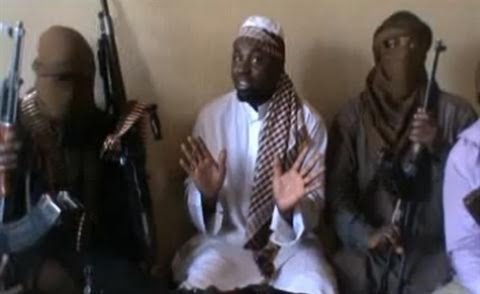
Pastor sends list of Boko Haram sponsors, video evidence to David Mark


A Maiduguri, Borno State-based cleric, Pastor Kallamu Musa Ali Dikwa, has unmasked those behind the activities of the dreaded Islamic sect popularly known as Boko Haram and forwarded their names to the Senate President, Senator David Mark, for necessary action.
The Nigerian Tribune authoritatively learnt that the cleric chronicled the activities of the sect in an open letter to the Senate President entitled, “Open letter to the Senate president: My Suggestion on how to tackle Boko Haram,” dated 17th June, 2011 but was received by the office of the Senate President on November 2, 2011.
Further investigation by the Nigerian Tribune showed that alarmed by the claims of the cleric in the open letter, which was supported with five DVD-CDs containing video clips of the activities of the sect and their sponsors, the Senate president reportedly referred the matter, along with the five DVD-CDs, to the appropriate Senate committee for a thorough investigation on February 29 this year but nothing was heard since then, because of the names of the prominent Nigerians and top government officials mentioned.
In the open letter, the cleric suggested that the Freedom of Information Act should be used to extract the phone numbers of the leaders of the Boko Haram group from journalists who had been receiving text messages and press releases from the group from time to time.
He advised that the government should start the crusade of ending the Boko Haram menace in the country by fishing out its officials and security agents supporting the terrorist group since it had now been established that the group was being supported by prominent Nigerians, top government officials and decurity personnel.
The cleric, who identified the head of one of the prominent Federal Government agencies as the financial secretary of the group, alleged in the letter that the “Islamic Revolution has a security committee” with a former principal officer in the Senate, as well as a former governor from the North as members, saying that the main aim of the group was to Islamise the country through Jihad.
Pastor Dikwa also revealed all his interactions with the now late leader of the group, Mohammed Yusuf, since 2006 till he was killed and why he was killed and why the group continued to attack churches, security personnel and installations.
When contacted, the Special Adviser to the Senate President (Media), Mr Kola Ologbondiyan, said that he was not aware of the said sensitive letter but promised to find out from the appropriate quarters.
However, another top aide to the Senate president told the Nigerian Tribune in confidence that the office received the letter and, as usual, passed same to Senator Mark and that he immediately sent it to the appropriate quarters for a thorough investigation because of its sensitivity.
According to the source, “it is true, a letter like that was received from a cleric. I can’t remember his name again but the Senate president acted on it. Maybe the investigation is still in progress, I don’t know. But now that you are raising it [the issue], we will find out. The claims of the cleric are nothing that can be overlooked; something will have to be done.”
Meanwhile, a London-based charity organisation, Al-Muntada Trust Fund, has been accused by a British member of parliament of funding Boko Haram in Nigeria, according to a report released by British newspaper The Guardian on Sunday.
David Alton, a member of the House of Lords, raised concerns about the Al-Muntada Trust Fund’s activities with Foreign Office minister, Lord Howell, in July, as well as with the United Kingdom’s Charity Commission and the Metropolitan police.
However the charity commission stated that while it was aware of concerns regarding Al-Muntada’s affiliations with Boko Haram, it was unable to confirm whether those concerns were directly related to the London-based Al-Muntada, since there were several other charity organisations registered under the same name, according to The Guardian.
Nevertheless, the London-based Al-Muntada is notorious for being a platform for radical clerics, The Guardian reported.
Nigerian state security also has concerns with Al-Muntada allegedly funding Boko Haram, according to Nigerian media reports.
Boko Haram has been conducting violent activities in Nigeria since 2009, usually by blowing up churches. The Nigerian Army announced on Friday the killing of seven suspected Boko Haram members and the arrest of 13 others, according to BBC news.
BBC news quoted Lieutenant Colonel Sagir Musa who said the killings and arrests took place after “a group of gunmen suspected of being Boko Haram,” attacked a military checkpoint.
The attacks came a day after Boko Haram released a statement claiming responsibility for attacking a number of mobile telecoms installations, according to Reuters.
In their statement, Boko Haram explained their actions, accusing the mobile installations of giving security personnel information about them, vowing to “continue attacking them until they stop,” Reuters reported.
Boko Haram also vowed not to “leave any correspondent or staff of the Voice of America (VOA), alone”, according to VOA. The Islamist group accused VOA of having taken “the task of harming our religion.”
Boko Haram, a term which means that western teachings are prohibited, is an organisation seeking to impose Islamic Shari’a law in Nigeria, especially in the Muslim-majority North. It is affiliated with Al-Qaeda in the Islamic Maghreb.


Source: Tribune

DNC 2012 Drama: Tinubu never said Obama invited him, he bought invite for $5000 – ACN


Leading opposition party, the Action Congress of Nigeria, (CAN) has denied that its leader, Asiwaju Bola Ahmed Tinubu never said Obama invited him to the recently held Democratic Party National Convention, DNC, in Charlotte, North Carolina, United States of America. It described their action as an ego massaging.
The party; through its National Publicity Secretary,  Alhaji Lai Mohammed said it was a rumour sponsored by opposition, noting that the erstwhile Lagos State governor paid 5000 US dollars for the generic invitation.
He said “This indolence on the part of those making the allegation; anybody, who is conversant with the Democratic Party National Convention, DNC, and US politics, will know that you will never be invited to the convention unless you fall into any of these three categories: you are  either a candidate, a delegate or supporter of the party.
“If you are a supporter and you are being invited, you will be addressed with your first name as if the President (Obama) invited you.
“Asiwaju (Tinubu) never said he got personal invitation from President Barack Obama. Why the brouhaha about who invited him? The question is was he there or not? He was invited because of his support for the Democratic Party, and he never said he was personally invited by Obama”
Daily Post.

“I’m ready to pay any price to make Nigeria better” – Goodluck


Amidst the persistent crisis, bombing and other national issues facing Nigeria at the moment,  President Goodluck Jonathan had assured Nigerians that he was prepared “to pay any price” to ensure that things work well in the country.
The president had further maintained that he will do his best possible to implement all his ongoing reforms in the most important sectors of the country’s economy.
The president made this assurance in a goodwill message he sent at the opening ceremony of the second plenary session of the Catholic Bishops Conference of Nigeria (CBCN) held at the Mater Dei Cathedral, Umuahia.
His message which was delivered by the minister of Labour and Productivity, Chief Emeka Wogu, was indeed full of assurances for positive change in the country as Jonathan believed that efforts were being made towards transforming the nation.
While warning those against the ongoing reforms, Jonathan insisted that there was no going back on the privatization of the power sector, adding that “the transformation agenda has reached the point where everybody would be proud that reform has taken place.”
Goodluck Jonathan, expressed his appreciation over the invitation granted him by the CBCN in order to come and “share with them thoughts and vision that guide the nation in the search for development,” asserting that his administration was working towards restructuring the country,
He said he was not unaware of the different problems facing the nation that cuts across the youth and also the nation’s power sector, assuring that all that will be over soon.
Reflecting on the security challenges facing Nigeria and the rest of world today, Mr. President concluded that “human society today is far from attaining the City of God status as propounded by St Augustine of Hippo.
He further sought the support of the church to continue to pray for the nation as his administration was committed towards establishing a true democracy.
“This administration will always stand for the truth, peace and justice,” the President said. He quoted some passages from the Holy Bible as he urged Nigerians to learn to love one another and live in harmony in the pluralistic society.
The president of CBCN and Catholic Bishop of Jos Diocese, Most Rev Ignatius Kaigama, in his address called for peace in the country, stating that the crisis in the country had stretched more than necessary.
“The patience of Christians, especially in the North has been tried and tested for too long now. We ask that the reckless attacks on them and other innocent Nigerians be brought to a halt, through the proper use of security intelligence/expertise available to government and security agencies both within and beyond Nigeria,” he said.
He further affirmed that “ explosive devices have become like toys used at will and local and sophisticated arms escape our sea ports, land borders and find their way into the hands of criminals and hoodlums; it is a cause of very great concern,” the CBCN President said.
He further blamed the incessant killings on inflow of weapons into the country “most Nigerians wonder whether we are on top of the situation as usually claimed by government and security agencies”
In conclusion, Bishop Kaigama assured the president the church was committed to a united and peaceful Nigeria irrespective of the senseless killings, and assured that they will continue to pray for national peace and security.
Daily Post.

Nigeria: British Trust Fund Accused of Financing Boko Haram.

A member of the British House of Lords, David Alton, has accused a London-based charity organisation, Al-Muntada Trust Fund, of financing the operations of Boko Haram.
According to the London-based Guardian newspaper, the parliamentarian raised concerns about the Al-Muntada Trust Fund's activities with Foreign Office Minister Lord Howell in July, as well as with the United Kingdom's Charity Commission and the Metropolitan police.
However, the paper, in its publication yesterday, quoted the country's Charity Commission as stating that while they are aware of concerns regarding Al-Muntada's affiliations with Boko Haram, they were unable to confirm whether those concerns are directly related to the London-based Al-Muntada, since there are several other charity organisations registered under the same name.
Nevertheless, the London-based Al-Muntada is notorious for being a platform for radical clerics, the Guardian reported. The paper said the State Security Service (SSS) also has concerns about Al-Muntada allegedly funding Boko Haram.
The trust's website shows that Al-Muntada Al-Islami parades itself as an independent organisation initially established in the UK to cater to the needs of the local community with a number of centres around the world, each delivering need-based projects through local initiatives.
Some of these projects include: feeding programmes for some of the poorest people in the world, educational programmes to tackle illiteracy, building of water wells, and community outreach programmes.
"Easy Zakat is your all in one solution for fulfilling your Zakat obligation. We, at Al Muntada Trust, understand the sacred importance of Zakat and how it must only go to the permitted eight categories of deserving people mentioned in the Quran and Sunnah," the website says.
A call to the number found on the organisation's website rang without response and an email enquiry was not immediately responded to.
The spokesman of the SSS, Marylin Ogar, told THISDAY she does not discuss security issues on the phone but promised to speak with a correspondent.

CPC faults support for Jonathan’s re-election

THE Congress for Progressive Change (CPC) has condemned leaders of the South-South who have supported the call on President Goodluck Jonathan to contest the 2015 election. The party described the endorsement as ill-timed and self-centred.
In a statement issued by its National Publicity Secretary, Rotimi Fashakin, CPC decried the use of sectional meetings to cause disharmony in the polity.
It said: “It is odious and utterly irresponsible for such meetings to be used for overheating the polity.”
At a meeting in Delta State last week, a group under the aegis of South-South People’s Assembly threw its weight behind Jonathan to contest the next election.
While alluding to the usefulness of regional interaction, CPC said: “It is utterly inconceivable that the endorsement of Jonathan for the 2015 election was on agenda in a 2012 meeting. It was ill-advised, flattering and inflammatory.
“The drum beats of America’s presidential election scheduled for November started just a few months ago. Are they saying that Nigeria exists for only elections? We had elections just last year. The performance of the Jonathan administration has not been satisfactory. What cogent, tangible or positive change has he brought?”
The party said the call on Jonathan to contest the next election might have been borne out of hypocrisy.
“Where were they when leaders of other geo-political zones moved to ensure that Jonathan was made acting president?” the statement questioned.

2015: Igbo’s stand on presidency uncertain


By .

Chief  Ezeife Chief Ezeife

WHERE will the Igbo stand in 2015? Will they back an Igbo candidate or align with President Goodluck Ebele Azikwe Jonathan – if he decides to run?
Three questions implex at the weekend, with  Igbo traditional rulers from the 19 northern states pledging to join forces with President Jonathan.
Former Anambra State Governor Chukwuemeka Ezeire spoke for the Igbo leaders when he told reporters that “2015 is a very big thing (project), we are going to play a game of co-operation with Jonathan forces”.
Chief Ezire spoke as Movement for the Actualisation of Survival of the Sovereign State of Biafra (MASSOB) leader Ralph Uwazuruike reiterated the determination of the Igbo not to carry out reprisal attack on Northerners for attacks on Igbo in the North. 
The duo spoke in Abuja at a meeting of Ndi-Eze Igbo in the 19 Northern states hosted by the Chairman of the group, His Royal Highness Nwobu Ibe, Igbo 1 of Abuja.
At the meeting were the Eze Nri and custodian of Igbo culture and tradition, Eze Obidiegwu Onyesoh; Eze Cletus Ilomuanya of Obinugwu in Imo State who is the chairman of the Southeast Council of Traditional Rulers; Chairman, Ndi Eze Igbo in 19 States, the host, Dr Ibe, the former governor of old Anambra State, Dr Ezife.
According to the MASSOB leader, the meeting was at the instance of the security and welfare of the Igbo in the North. “As you can see, we came from Igbo land and we are here to see what has been happening to our people here in the North to talk with them, know their feelings and know the areas we can be of help to them,” Uwazuruike said. 
He declined comments on the Federal Government’s measures aimed at curbing the attacks, saying: “This is not for me to say here, if I’m not satisfied with what is happening. I have a way of communicating with them,” Uwazurike nonetheless assured that the Igbo would not embark on reprisal.
He said: “I have said it before, our people will shun reprisal attacks because we don’t believe in killing someone just because another person was killed. We shall continue to advise our people to refrain from reprisal attacks and ensure that we do not encourage that.
“However, governments should accept their responsibilities by making sure that people ‘s lives and property are secured”.
Ezife who noted that the forum would also explore means of seeking the government’s proactiveness of government in curbing the incidents, regretted that the Igbo were adversely affected by the attacks.
He said: “We are here to also find out how we can develop a response to it in terms of pleading with the government to do more.
“How much affected the Igbo were by the attacks does not matter because we all know that when you go and bomb a church, you are bombing the Igbo; when you go and bomb a spare part-markets, it is the Ndigbos that are more affected.
“This is not to say that we are the only target but we are involved but as Christians, we are the dominant people, so anybody attacking Christians is invariably attacking us also though not necessarily because we are Igbos but because we are also Christians.”
On the way forward, Ezeife said: “Nobody knows we are ever going to get to this level because suicide bombing is alien to us. How do you relate to person that has made up his mind to die.
“The long term solution is enlightenment, public education on religious matters that will make it certain that our brothers, Christians and Muslims, know the meaning and limit of what their scriptures are saying. 
“You do not just go out of it and start to brain-wash people into committing suicide. Do we even understand the meaning of suicide? He who commits suicide goes to hell straight; no trial. Though the person that brin-washed you will go to hell but since he wasn’t dead yet, he can seek forgiveness for his sins.”