Monday, 10 September 2012

Dana Air And The Complicity Of Nigerian Government Officials


June 3rd 2012 was just like any other day. It was a Sunday, the last day of the weekend, and most Nigerians were relaxing in their homes with the knowledge that they would be returning back to work in only a few hours, but what they did not know was that in those few hours preceding the new week, they would be tuning in to television stations or computers to learn about a tragedy that would throw the nation into a state of mourning. When the Dana Air McDonnell Douglas MD-83 with registration number 5N- RAM finally fell from skies by mid – day, the people of Iju – Agbado, a dense neighbourhood in Lagos would be witnesses to an avoidable tragedy that would go on to kill all 153 people on board, as well as 16 on ground. The days following the Dana air crash were filled with stories of the victims of the crash. We saw the smiling face of an expectant mother, posing with her children, a husband and wife smiling into the camera, young girls with eyes lit with hope of the future and many heartbreaking images of a people cut down in their prime.
Following the crash, the senior managers of Dana Air, an Indian owned and controlled company, fled the country to avoid the anger that followed the crash, while junior officers from the airline did the perfunctory visits to the site of the crash, posing with children whose parents had either been killed or displaced by the crash. In a manner typical of the Nigerian government officials, there was a cacophony of noise and a fury of sound designed to deceive the masses. It came in the form of a ban on the operating license of Dana Air. For those of us who wondered if certain government officials were not complicit in the escape of Dana Air’s senior managers from the country, there was no window dressing that could hide the rot in the aviation industry. That a foreign owned company operating in Nigeria would be given the free hand to play with the lives of Nigerians exposed our leaders for what they truly were – a bunch of greedy, unpatriotic, and visionless individuals content to sacrifice their countrymen to the gods of power and influence.
Now, three months after the crash. Three months after families are yet to get over the tragedy that claimed the lives of their loved ones. Three months after some relatives have gone through the trauma of physical altercations over dead bodies of the crash victims, the federal government in a magnanimous move has deemed it fit to lift the ban on Dana Air with the claim that the ban was a mistake. But the government is not the only one applauding Dana Air for its air worthiness.  According to the secretary general of the Airline Operators of Nigeria (A.O.N.), Muhammed Tukur, the move to lift the ban by the Federal Government was commendable. He was quoted as saying that, since the government discovered that “Dana was not at fault, the next thing was to act positively.” Really? How did the secretary general of A.O.N come to the conclusion that Dana Air was not at fault?
This is an airline that has already been indicted by the investigations conducted into the crash, which showed that there were pre-existing safety issues with the doomed McDonnell Douglas MD-83 plane which first flew in 1990. Assuming we choose to ignore the history of the plane while in use at Alaskan Airlines where several near mishaps caused the plane to be grounded, and then assume that Dana Air took diligent steps to ensure that the plane bought from Alaskan Airlines in 2008 was airworthy before it was allowed into service in Nigeria, why were there reports of safety issues while the plane was being used in Nigeria?
On May 3, 2012, an unnamed Lagos station manager of the airline was reported to have drawn the attention of management of the airlines that the aircraft in question needed to be grounded for general check-up, but that alarm was ignored. Then, on May 11, 2012, the same aircraft was billed for Lagos/Abuja with more than half capacity passengers and an air return, but some minutes into the air, the plane had to have an emergency landing at the Murtala Muhammed airport. Passengers on board had to disembark and seek alternative means of travelling.  Again, on May 25, 2012, the same plane that was to do  Lagos/Calabar flight also made another air return to Lagos after the crew reported engine fault. There was also no casualty.  So in the light of all these damning evidence that the management of Dana Air was more concerned about making money than ensuring safety of their passengers, the Federal Government as well as representatives of airline operators believe that Dana Air is not to blame for the crash?
While Dana Air continues to offend our sensibilities and insult the memories of those that perished in the crash by stating in its defence that it is losing N50 million daily from the ban (after all, money is more important than Nigerian lives), as well as joining forces with the civil aviation round table (C.A.R.T)  to stop the coroner inquest into the crash, one cannot help but wonder how an Indian company, an alien company, has grown so brazen that it sees no danger in showing contempt for the entire Nigerian citizenry. Is it not clear that it enjoys the backing of government officials who view Nigerians as expendable pawns to be given up at the right price?
There is no way the government can convince the people that it has their interests at heart after this debacle, because even as it hurries to vindicate Dana Air, some families who lost loved ones are yet to be given the money promised to them. In saner societies, Dana Air and its management would have had a lot to answer to, but this is Nigeria, anything goes. After all, this is a country where the regulating body of telecoms operations is hapless to defend the people against high tariffs where its officials enjoy free rolls of recharge cards.  A country where legislators cannot query the substandard services provided to its citizens because they enjoy freebies from corrupt foreign companies. I remember being offended by the words of an American over the Halliburton saga a on an online forum a few years back. The man had responded in a rather cryptic manner to Nigerians attacking American political and economic integrity over Halliburton. The last part of his words, “You can only play dirty in a dirty place,” were scathing but to say the least, and yet they were true. Nigeria is a very dirty place and Dana Air is playing according to the dirty rules – When in Nigeria, do like the Nigerian government officials do.

Umari Ayim

Behold, Nigeria`s True National Heroes and Heroines | List of 2012 Olympic Champions – Eno Hanson


The Olympic and Paralympic games have come and gone; below is the list of our heroes and heroines who, made our country proud:
Yakubu Adesokan (WR) – Gold,
Esther Oyema (WR) – Gold,
Joy Onaolapo (WR) – Gold,
Folashade Oluwafemiayo (WR) – Silver,
Grace Anozie – Gold, Ivory Nwokorie – Gold,
Loveline Obiji – Gold, Ifeanyi Nnajiofor – Silver,
Ikechukwu Obichukwu – Silver,
Anthony Ulonnam – Silver,
Lucy Ejike – Silver,
Eucharia Iyiazi – Bronze and
Victoria Nneji – Bronze.
Our Paralympics team set 4 new World Records; won 6 Gold, 5 Silver and 2 Bronze medals. 13 medals in total.
I humbly call on all corporate organizations in Nigeria; the MTNs, Glos, Airtels, Etisalats, Guiness, Dangote, Banks et al to celebrate these heroes and heroines, the same way they have celebrated our stars like P-Squared, Genevieve, Davido; and legends like Kanu Nwankwo.
I also plead with celebrities, politicians, bloggers, friends and aides to top executives in the corporate world, to assist us, through endorsements and sponsorship, to celebrate our heroes, for they have shown us that we can excel irrespective of our physical, mental or emotional challenges.
To these heroes and heroines, I HAIL THEE and pray that the God of my fathers give you the honor, respect and recognition you deserve. God bless

Public Interest Lawyers Dismiss 2012 Honours List As A ‘Joke’


By SaharaReporters, New York 
 
The Public Interest Lawyers League (PILL) today called a “joke,” the 2012 National Honours List published by the federal government.
In a public statement signed by its President, Abdul Mahmud, PILL said that President Goodluck Jonathan would find it difficult to justify the names put forward by his government, and wondered why the nation’s cultural icons are not it instead.
“From discredited entrepreneurs whose stars faded as their enterprises, dubious politicians who fail democracy and the people, puny public servants, with no sense of service or commitment, who make governance what it is in our country today, to the everyday jesters who walk the quarters of political governance, they remind us that ours is Kamuzu Banda’s country,” PILL said.
Calling on President Jonathan to end the joke, the group argued that National Honours are not about conferring honours on patronage-seekers and bootlickers.
“It is about giving recognition to individuals who commit their lives of service to the community; and it is about recognising the stellar patriots among us,” the statement said.
The lawyers warned that such honours are not supposed to be part of the complex networks of the patronage system that successive governments have made it, and are not cash instruments a patron president deploys to secure clientele-loyalty.
“They are what they are: honours,” PILL  said.  “Sadly, the 2012 Honours list, like others before it, names debtors and thieves as patriots, dubious enterprise moguls as the exemplars of the New Nigerian entrepreneurial utopia.”

Buhari, Boko Haram And The Northern Establishment By Salisu Suleiman


By Salisu Suleiman
One of the greatest ironies of Nigeria’s current political dialectics is the fact that the only man who probably has the moral authority to end the Boko Haram imbroglio also happens to be one of the men most distrusted by the northern establishment and the government.
Characteristic of the sectionalism and obduracy that followed the bitterly divisive 2011 presidential elections, some Nigerians still hold on to the idea that former Head of State and opposition leader, Gen. Muhammadu Buhari, is behind Boko Haram and had promised to make Nigeria ungovernable if he lost the election.
This charge goes against the grain and substance of Buhari: As an army captain in the 1960s, he fought for Nigeria’s unity. As a general in the 80s, tasked with removing marauding Chadian rebels and bandits who had been pillaging Nigerian towns and killing citizens, Buhari not only chased them out, he followed them far into Chad and, in his own words, gave them a ‘bloody nose’. His action secured that border from foreign fighters for the next 20 years. Would Buhari have betrayed the people of Bakassi?
Anyway, what is the connection between Buhari, Boko Haram and the Northern establishment?
One arm of the tripod is the Boko Haram insurgency. Despite the religious colouration, the movement is basically a rebellion against a feudal system that seeks to enslave the majority while a privileged few – mostly traditional rulers, military brass and business elite – control the political and economic spaces. As a reaction against decades of oppression, a deliberate policy of emasculation and ever growing poverty, the group is only the most visible and violent.
The second arm of the tripod is the Northern establishment. Before the British conquest in the early 20th century, the emirates in the north had well developed and highly efficient social and political systems that were essentially feudal in nature, separating rulers from peasants. With British control came Western education. As in many parts of Africa, initially only the children of peasants were sent to schools – only to come back as powerful colonial clerks and messengers. Realizing the powers of western education, the establishment quietly tried to limit the ‘commoners’ access to education.
Which was why, when the then Premier of the Western Region, Chief Obafemi Awolowo, introduced Free Education in 1955, the North, already educationally disadvantaged, did not copy the policy. And that is why today, for example, Ogun state alone has more universities than the entire six states in the North-east Zone. There are more private universities in Ogun state than the entire north has. The result is that in virtually every area of human enterprise, the region lags behind other parts of Nigeria.
The third arm of the tripod is Gen. Buhari. The simple fact that he is educated should make him part of the establishment. That he joined the military and rose to the rank of General should make him a prominent leader of the establishment. That he was a military governor, petroleum minister and head of state should make him one of the richest members and de facto leader of the establishment.
But Buhari is none of these. Not only has he displayed an aversion to the politics of exclusion that is the ideology of the establishment, he also committed a cardinal sin when as Head of State, he offended (and even arrested) high-ranking members of the clique. Theoretically, Buhari lost his bid for the presidency in 2003, 2007 and 2011, but in reality, he lost long before then. Actually, Jonathan had no reason to campaign in the north, nor expend as much public funds as he did during the elections because the establishment would have stopped Buhari by any means. It was a matter of life and death.
Back to the tripod. For analysts trying to understand Buhari’s popularity among the northern masses, there is no magic to it; he is adored simply because he represents their best chance to topple a class that has systematically impoverished the region and its people. The establishment fears Buhari because they know he will dissipate their power base and end their corruption and nepotism. In essence, Buhari has the moral authority without the political power; the establishment has political power without the moral authority, while Boko Haram is fighting the establishment to create their view of a moral authority.
The tragedy is that many of those who would have championed a moderate transition from old traditions to a progressive society have been largely assimilated into the establishment, leaving the fight to the Boko Haram extremists. Where are the progressives in the North today? Rather, the dream of many young Northerners not born into the establishment is to acquire wealth and power by whatever means to buy their way into the system and to repress the less fortunate – who are responding with bombs and bullets.
Until the establishment develops just and equitable systems that would confer them with moral authority, until leaders with moral authority get the needed political influence to create a progressive society and until Boko Haram realizes that killing and maiming innocent people will bring neither political clout nor moral authority, the region may continue to reel in confusion.


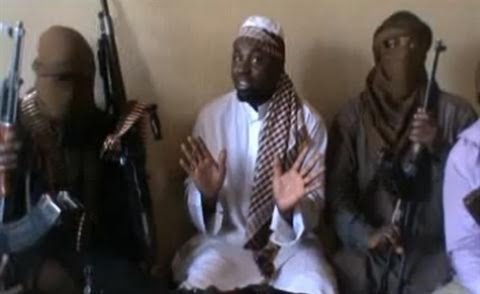
Pastor sends list of Boko Haram sponsors, video evidence to David Mark


A Maiduguri, Borno State-based cleric, Pastor Kallamu Musa Ali Dikwa, has unmasked those behind the activities of the dreaded Islamic sect popularly known as Boko Haram and forwarded their names to the Senate President, Senator David Mark, for necessary action.
The Nigerian Tribune authoritatively learnt that the cleric chronicled the activities of the sect in an open letter to the Senate President entitled, “Open letter to the Senate president: My Suggestion on how to tackle Boko Haram,” dated 17th June, 2011 but was received by the office of the Senate President on November 2, 2011.
Further investigation by the Nigerian Tribune showed that alarmed by the claims of the cleric in the open letter, which was supported with five DVD-CDs containing video clips of the activities of the sect and their sponsors, the Senate president reportedly referred the matter, along with the five DVD-CDs, to the appropriate Senate committee for a thorough investigation on February 29 this year but nothing was heard since then, because of the names of the prominent Nigerians and top government officials mentioned.
In the open letter, the cleric suggested that the Freedom of Information Act should be used to extract the phone numbers of the leaders of the Boko Haram group from journalists who had been receiving text messages and press releases from the group from time to time.
He advised that the government should start the crusade of ending the Boko Haram menace in the country by fishing out its officials and security agents supporting the terrorist group since it had now been established that the group was being supported by prominent Nigerians, top government officials and decurity personnel.
The cleric, who identified the head of one of the prominent Federal Government agencies as the financial secretary of the group, alleged in the letter that the “Islamic Revolution has a security committee” with a former principal officer in the Senate, as well as a former governor from the North as members, saying that the main aim of the group was to Islamise the country through Jihad.
Pastor Dikwa also revealed all his interactions with the now late leader of the group, Mohammed Yusuf, since 2006 till he was killed and why he was killed and why the group continued to attack churches, security personnel and installations.
When contacted, the Special Adviser to the Senate President (Media), Mr Kola Ologbondiyan, said that he was not aware of the said sensitive letter but promised to find out from the appropriate quarters.
However, another top aide to the Senate president told the Nigerian Tribune in confidence that the office received the letter and, as usual, passed same to Senator Mark and that he immediately sent it to the appropriate quarters for a thorough investigation because of its sensitivity.
According to the source, “it is true, a letter like that was received from a cleric. I can’t remember his name again but the Senate president acted on it. Maybe the investigation is still in progress, I don’t know. But now that you are raising it [the issue], we will find out. The claims of the cleric are nothing that can be overlooked; something will have to be done.”
Meanwhile, a London-based charity organisation, Al-Muntada Trust Fund, has been accused by a British member of parliament of funding Boko Haram in Nigeria, according to a report released by British newspaper The Guardian on Sunday.
David Alton, a member of the House of Lords, raised concerns about the Al-Muntada Trust Fund’s activities with Foreign Office minister, Lord Howell, in July, as well as with the United Kingdom’s Charity Commission and the Metropolitan police.
However the charity commission stated that while it was aware of concerns regarding Al-Muntada’s affiliations with Boko Haram, it was unable to confirm whether those concerns were directly related to the London-based Al-Muntada, since there were several other charity organisations registered under the same name, according to The Guardian.
Nevertheless, the London-based Al-Muntada is notorious for being a platform for radical clerics, The Guardian reported.
Nigerian state security also has concerns with Al-Muntada allegedly funding Boko Haram, according to Nigerian media reports.
Boko Haram has been conducting violent activities in Nigeria since 2009, usually by blowing up churches. The Nigerian Army announced on Friday the killing of seven suspected Boko Haram members and the arrest of 13 others, according to BBC news.
BBC news quoted Lieutenant Colonel Sagir Musa who said the killings and arrests took place after “a group of gunmen suspected of being Boko Haram,” attacked a military checkpoint.
The attacks came a day after Boko Haram released a statement claiming responsibility for attacking a number of mobile telecoms installations, according to Reuters.
In their statement, Boko Haram explained their actions, accusing the mobile installations of giving security personnel information about them, vowing to “continue attacking them until they stop,” Reuters reported.
Boko Haram also vowed not to “leave any correspondent or staff of the Voice of America (VOA), alone”, according to VOA. The Islamist group accused VOA of having taken “the task of harming our religion.”
Boko Haram, a term which means that western teachings are prohibited, is an organisation seeking to impose Islamic Shari’a law in Nigeria, especially in the Muslim-majority North. It is affiliated with Al-Qaeda in the Islamic Maghreb.


Source: Tribune

DNC 2012 Drama: Tinubu never said Obama invited him, he bought invite for $5000 – ACN


Leading opposition party, the Action Congress of Nigeria, (CAN) has denied that its leader, Asiwaju Bola Ahmed Tinubu never said Obama invited him to the recently held Democratic Party National Convention, DNC, in Charlotte, North Carolina, United States of America. It described their action as an ego massaging.
The party; through its National Publicity Secretary,  Alhaji Lai Mohammed said it was a rumour sponsored by opposition, noting that the erstwhile Lagos State governor paid 5000 US dollars for the generic invitation.
He said “This indolence on the part of those making the allegation; anybody, who is conversant with the Democratic Party National Convention, DNC, and US politics, will know that you will never be invited to the convention unless you fall into any of these three categories: you are  either a candidate, a delegate or supporter of the party.
“If you are a supporter and you are being invited, you will be addressed with your first name as if the President (Obama) invited you.
“Asiwaju (Tinubu) never said he got personal invitation from President Barack Obama. Why the brouhaha about who invited him? The question is was he there or not? He was invited because of his support for the Democratic Party, and he never said he was personally invited by Obama”
Daily Post.

“I’m ready to pay any price to make Nigeria better” – Goodluck


Amidst the persistent crisis, bombing and other national issues facing Nigeria at the moment,  President Goodluck Jonathan had assured Nigerians that he was prepared “to pay any price” to ensure that things work well in the country.
The president had further maintained that he will do his best possible to implement all his ongoing reforms in the most important sectors of the country’s economy.
The president made this assurance in a goodwill message he sent at the opening ceremony of the second plenary session of the Catholic Bishops Conference of Nigeria (CBCN) held at the Mater Dei Cathedral, Umuahia.
His message which was delivered by the minister of Labour and Productivity, Chief Emeka Wogu, was indeed full of assurances for positive change in the country as Jonathan believed that efforts were being made towards transforming the nation.
While warning those against the ongoing reforms, Jonathan insisted that there was no going back on the privatization of the power sector, adding that “the transformation agenda has reached the point where everybody would be proud that reform has taken place.”
Goodluck Jonathan, expressed his appreciation over the invitation granted him by the CBCN in order to come and “share with them thoughts and vision that guide the nation in the search for development,” asserting that his administration was working towards restructuring the country,
He said he was not unaware of the different problems facing the nation that cuts across the youth and also the nation’s power sector, assuring that all that will be over soon.
Reflecting on the security challenges facing Nigeria and the rest of world today, Mr. President concluded that “human society today is far from attaining the City of God status as propounded by St Augustine of Hippo.
He further sought the support of the church to continue to pray for the nation as his administration was committed towards establishing a true democracy.
“This administration will always stand for the truth, peace and justice,” the President said. He quoted some passages from the Holy Bible as he urged Nigerians to learn to love one another and live in harmony in the pluralistic society.
The president of CBCN and Catholic Bishop of Jos Diocese, Most Rev Ignatius Kaigama, in his address called for peace in the country, stating that the crisis in the country had stretched more than necessary.
“The patience of Christians, especially in the North has been tried and tested for too long now. We ask that the reckless attacks on them and other innocent Nigerians be brought to a halt, through the proper use of security intelligence/expertise available to government and security agencies both within and beyond Nigeria,” he said.
He further affirmed that “ explosive devices have become like toys used at will and local and sophisticated arms escape our sea ports, land borders and find their way into the hands of criminals and hoodlums; it is a cause of very great concern,” the CBCN President said.
He further blamed the incessant killings on inflow of weapons into the country “most Nigerians wonder whether we are on top of the situation as usually claimed by government and security agencies”
In conclusion, Bishop Kaigama assured the president the church was committed to a united and peaceful Nigeria irrespective of the senseless killings, and assured that they will continue to pray for national peace and security.
Daily Post.