Friday, 14 September 2012

“I did not advise Patience Jonathan to undergo cosmetic surgery” – Bola Shagaya.

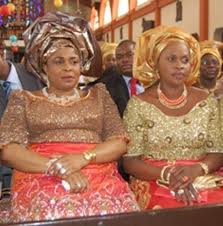
For several days now, the wife of President Goodluck Ebele Jonathan has remained incommunicado. She was reportedly airlifted about a forthnight ago, from Nigeria,to Horst Schmidt Klinik, Wiesbaden,Germany, where is presently recuperating from an undisclosed ailment.
The secrecy around her ailment ,has given rise to speculations,with diverse reports mentioning stress, food poisoning, appendicitis and fibroid tumours.
If the silence from official quarters suggests consent, it could therefore be believed that the first lady was first diagnosed with food poisoning at the Aso Rock clinic, but, when the situation worsened, she was flown to a German hospital that detected a ruptured appendix or troublesome fibroids that had to be removed.
Online reports (not NigeriaFilms), have however suggested she might have had a mishap, during a tummy tuck procedure, in Dubai. It further fingered her close friend, Hajia Bola Shagaya,as the one, who persuaded her to enhance her look, with the surgery.
When NigeriaFilm sought the popular billionaire business woman,she debunked the tale. Over the phone, she fumed, claiming not be in Dubai with First lady when,she allegedly ate the so-called lethal food.
According to her, “I don’t know why you are blowing it beyond it’s proportions.You people have written different kinds of stories.
“She was hospitalized because of the food, she ate and she is now getting better. I didn’t persuade her to undergo any procedure. You know ,we just finished fasting, I was in Saudi when it all happened. I was not with her in Dubai,” the top society woman retorted

 DailyPost.

Alleged Fake Documents Heightens Questions Over Oshiomhole’s Academic Credentials.


image
GOVERNOR OF EDO STATE, COMRADE ADAMS OSHIOMHOLE
SAN FRANCISCO, September 13, (THEWILL) – In the days ahead, the academic qualifications of Governor of Edo State, Comrade Adams Oshiomhole will come under intense scrutiny, following the emergence of documents that seem to cast serious doubts on his claim of both primary and secondary school education.

According to documents he tendered to the Independent National Electoral Commission (INEC) alongside an affidavit before the last Edo State Governorship election, the comrade-governor claimed to have attended Iyamoh Primary School, Iyamoh, in the then Midwest state from 1957-1962.

However, multiple sources at the Edo State Ministry of Education told THEWILL that the same Iyamoh Primary School was founded in 1976, — about 14 years after the governor supposedly graduated from it.

Also curiously, the name on the primary and secondary school certificates simply bore Adams Aliu, and then his Ahmadu Bello University Adult Education certificate (1973-74) (also submitted to INEC) bore Adams O. Aliyu, while subsequent certificates bore his current name Adams Aliyu or Aliu Oshiomhole.

Born on April 4th, 1952, the comrade governor in a handwritten affidavit he personally deposed to said he had no previous names other than Adams Aliyu Oshiomhole.

Though the Governor wrote in the affidavit that he attended Iyamoh Primary School, he did not tender a certificate from the school or the education board to confirm attendance and graduation.

The discrepancy in Oshiomhole’s stated date of attending the primary school questions the truthfulness of his claim to have graduated from the elementary school and moved on to a higher school at that time.

Oshiomhole’s Chief Press Secretary (CPS), Mr. Peter Okhiria, declined to comment on the discrepancies discovered in the documents saying the matter was already in court.

Though Oshiomhole has lifted Edo State from the rubbles and terrible leadership the state suffered in the hands of convicted former Governor, Chief Lucky Igbinedion of the PDP, THEWILL can report that the governor has been shaken by the discovery of discrepancies in his academic qualifications.

THEWILL has also gathered that the governor who contested and won back-to-back the last two governorship elections in the state under the platform of the Action Congress of Nigeria (ACN) and recorded an overwhelming victory over the PDP in the last poll, has reached out to President Goodluck Jonathan and Chief Tony Anenih, where a deal has allegedly been agreed that will see Anenih nominate a handful of commissioners in the yet to be constituted state cabinet as guarantee for the Federal Government’s full support as he battles to protect his electoral victory in court.

Oshiomhole was the only governor from the opposition that accompanied President Jonathan on his working visit to Malawi and Botswana on Monday.

Two high-ranking politicians in the state told THEWILL that the intervention of the Oba of Benin, who had earlier informed the President of his desire to see him return as governor smoothened the path for the deal between the governor and the Presidency.

However, for not carrying along the PDP’s Governorship candidate, Major General Charles Airhiavbere and the state chapter of the party, the duo ignored a directive from the national office of the PDP to abandon the legal challenge over Oshiomhole’s eligibility for the governorship election of July 14, 2012.

The party and Charles Airhiavbere have accused Oshiomhole of only tendering a Modern School Leaving Certificate without a Primary School Certificate. In their filing in court, they claimed that Oshiomhole dropped out of Blessed Martin’s Secondary Modern School saying that “even the modern school certificate he presented on oath to INEC had been found to be fake”, adding that by the constitution, he should not have been eligible to stand as a candidate in the election.

The 1999 constitution says, “a person shall be qualified for election to the office of Governor of a State if

(a) he is a citizen of Nigeria by birth;
(b) he has attained the age of thirty-five years;
(c) he is a member of a political party and is sponsored by that political party; and
(d) he has been educated up to at least School Certificate level or its equivalent.”

It is now in the hands of the judiciary to decide the authenticity of the documents tendered by the comrade-governor who to the amusement of many filled “Edo State Governor” in the column marked “Occupation” in his INEC form.

Oshiomhole is in his second term as governor of Edo, after defeating Charles Airhiarvbere, candidate of the PDP, who was his closest challenger, by 477,478 votes to 144,235, in the July election.


Below are copies of Gov. Oshiomole's Certificates


Electoral Reforms (1) – To be or not to be!


Back-Pg-El-rufai(1).jpg - Back-Pg-El-rufai(1).jpg
Nasir Ahmad El-Rufai.

The legitimacy of any government can only be derived from the will of the people as expressed in credible, free and fair elections held at regular intervals on the basis of universal, equal and secret suffrage; which explains why the critical importance of free and fair elections along with credible electoral process in any modern nation cannot be overemphasised.
This is underscored in one of the most important books I have read in recent times: Why Nations Fail – The origins of power, prosperity and poverty by Daron Acemoglu and James Robinson; where the authors quoted Mohammed ElBaradei, the former director of the International Atomic Energy Agency as having written that: “In Tunisia, repression + absence of social justice + denial of channels for peaceful change = a ticking time bomb”. Clearly, Nigeria can be substituted for Tunisia and the truism of the equation would remain just as valid!
Elections in Nigeria began from the colonial era with the Legislative Council elections in Lagos and Calabar in 1923. Other elections also took place between 1951 and 1959. During the military interregnums, three elections took place; 1979 with the Murtala-Obasanjo regime, the 1992-1993 elections under Gen. Ibrahim Babangida and the 1999 elections conducted by Gen. Abdulsalami Abubakar.
According to an analysis of these elections by the EU Election Monitoring Group in its 2003 Report, the elections of 1959, 1979, 1993 and 1999 were the most free and fair while those of 1964 and 1983 were adjudged to be the most violent and chaotic. The reasons are obvious and not farfetched: the former were ‘transition’ elections to hand over power to civilian governments by the military with minimal vested interests while the latter were ‘succession’ elections laden with enormous political interests.
It is trite to state that all elections conducted in Nigeria have been characterised by malpractices to various degrees. Since the current republic began in 1999, every election seems to be worse than the one before it. In 2003, the elections led to a loss of about 100 lives with many more injured. The 2007 elections were characterised by massive rigging and violence with results being declared in many states before the arrival of ballot papers.
They were bad enough for the main beneficiary – late President Umaru Musa Yar’Adua to publicly acknowledge as such in his inaugural speech shortly after being sworn into office; along with a solemn promise to the nation that rigorous electoral reforms would be embarked upon to address the patent malpractices. To this effect and credit of Yar’Adua, an electoral reform committee with respected former chief justice Muhammed Uwais as chair was charged with the task.
That the Uwais committee did a commendable job is self-evident in the 319 pages long main report that was submitted to the Federal Government in December 2008. The introduction section of the report, inter alia states that: “Nigeria’s experience with democratic elections since independence has been rather mixed. Although the country has managed to transit from one administration to another, hardly any election conducted in the country has been completely free of charges of irregularities, electoral malpractices, violence and various degrees of disruptions.
The factors responsible for this state of affairs include, among others, the character of the Nigerian State as the arena for electoral contests; the existence of weak democratic institutions and processes; negative political culture; weak legal/constitutional framework; and lack of independence and capacity of the Election Management Bodies.”
The report’s main recommendations include:
*The constitution should be amended to guarantee the independence and autonomy of INEC
*In filling the position of INEC Chairman, the National Judicial Council (NJC) should advertise to the public, spelling out the required qualifications, receive the applications, shortlist three persons and send the nominations to the National Council of State to select one person and then forward to the Senate for confirmation
*INEC should be unbundled into four units;
-Political Parties Registration and Regulatory Commission whose duties are to register political parties and monitor their activities.
-Electoral Offences Commission which is to investigate electoral frauds and other related acts. It is also to co-ordinate, enforce and prosecute all electoral offenders.
-Constituency Delimitation Commission
-Centre for Democratic Studies.
• Funding
*INEC should be removed from the list of Federal Executive Bodies
*The Chairman and Board members of INEC may be removed by the Senate on the recommendation of the NJC by two-thirds majority of the Senate which shall include at least 10 members of the minority parties in the Senate.
*Associations seeking registration as political parties must have functioning offices in at least two-thirds of the states of the Federation. These associations must also have 20% women membership in their governing bodies.
*Political parties should not be allowed to receive funds from abroad
*Number of voters per polling station as well as layout of the stations should be specified. Each polling station should not have more than 500 voters.
*Disqualification period of candidates engaged in corrupt practices should be increased to 10 years.
*Post-election petition periods should take a total of six months.
*No elected person shall assume office until their case in the tribunal is disposed of.
*The police should be trained specially for elections.
*INEC should be composed of a board which formulates electoral policy and a professional/technical election management team to manage elections.
*State Independent Electoral Commissions should be organised in the same way as INEC.
*Elections for President and Governors should be held at least six months before the expiration of their terms.
It is regrettable that almost four years after the submission of the foregoing excellent recommendations, not much has changed in our polity. But please do not take my words for this. The Economist Intelligence Unit’s Democracy Index measures the state of democracy in 167 countries throughout the world.
The Index was first produced in 2006 and it ranked countries on a scale between zero and 10, based on 60 indicators that were grouped in five categories: electoral process and pluralism, functioning of government, political participation, political culture and civil liberties.
According to the latest issue of the Index for 2011, whereas in 1945 the world only boasted of 12 democracies, it now boasts of 115 in three different classes of 25 full democracies, 53 flawed democracies and 37 hybrid regimes; with the remaining 52 countries being in the bottom of the pit class of authoritarian regimes as to be expected.
In the class of full democracies, it ranks Norway first with a total score of 9.80, keeping its position from 2010, when it replaced Sweden as the highest ranked country; whilst North Korea scored the lowest with 1.08, remaining at the bottom in 167th place, as in 2010.
Back home, in spite of the self-acclaimed “free and fair elections” that the Jonathan administration conducted in 2011, it did not come as a surprise that Nigeria is in the authoritarian regime class with a score of 3.83 and a ranking of 119; just behind Russia with 3.92 and 117 respectively. Meanwhile, Ghana is justifiably ranked way ahead of us at 78, in the class of flawed democracy with a score of 6.02!
What constitutes a free and fair election?  According to Commonboarders.org, a 'free' electoral process is one where fundamental human rights and freedoms are respected, including:
*  freedom of speech and expression by electors, parties, candidates and the media;
*  freedom of association; that is, freedom to form organisations such as political parties and NGOs;
*  freedom of assembly, to hold political rallies and to campaign;
*  freedom of access to and by electors to transmit and receive political and electoral information messages;
*  freedom to register as an elector, a party or a candidate;
*  freedom from violence, intimidation or coercion;
*  freedom of access to the polls by electors, party agents and accredited observers;
*  freedom to exercise the franchise in secret, and
*  freedom to question, challenge and register complaints or objections without negative repercussions.
And a ‘fair’ electoral process is one where the 'playing field' is reasonably level and accessible to all electorate, parties and candidates, and includes:
*  an independent, non-partisan electoral organisation to administer the process;
*  guaranteed rights and protection through the constitution and electoral legislation and regulations;
*  equitable representation of electors provided through the legislation;
*  clearly defined universal suffrage and secrecy of the vote;
*  equitable and balanced reporting by the media;
*  equitable access to financial and material resources for party and candidate campaigning;
*  equitable opportunities for the electorate to receive political and voter information;
*  accessible polling places;
*  equitable treatment of electors, candidates and parties by elections officials, the government, the police, the military and the judiciary;
*  an open and transparent ballot counting process, and
*  election process not disrupted by violence, intimidation or coercion.
The flaws in the electoral system are known to almost every politically conscious Nigerian. Massive bribing and rigging, thuggery, insecurity during elections and the incompetence of the Independent National Electoral Commission (INEC) in delivering its mandate are some of these problems.
If there is going to be any change in our nation for the better, it has to begin now! The first step will be a re-orientation of the populace. People have to believe that they have the power to decide who their leaders are irrespective of the flaws of the electoral system. They need to get more involved in the electoral process instead of sitting back and complaining.

75% Nigerians Oppose N5,000 Note - NBS


A survey by the National Bureau of Statistics (NBS) has revealed that 75.1 per cent of Nigerians are opposed to the currency restructuring by the Central Bank of Nigeria (CBN) which will lead to the introduction of the N5’000 note and the conversion of lesser bills to coins.
According to the poll conducted by the NBS, only 16.1 per cent of the Nigerian populace are in strong support of the CBN policy while 4.04 and 4.62 per cent were partially in support and against the currency restructuring policy respectively.
The proposal to introduce the larger bill and convert the N20, N10 and N5 bills into coins has generated a lot of controversy with many groups issuing statements against the CBN initiative.
However, the CBN says it will introduce the new note and coins come 2013 despite the opposition the policy is receiving.
The unyielding stand of the CBN may not be unconnected to the full support given to the policy by both the federal and state governments. The policy has also received the approval and backing of the presidency.
Nigeria’s Economic Management Team also believes that the move will help drive the country’s economy and discourage the high demand for the US dollar, saying the N5,000 bill will only be for banks and a few “heavy cash users”.     
But many are of the view that the new policy will engender corruption, fuel inflation and negate the “cashless” policy of the CBN, which was designed to promote the use of non-cash transaction instruments.
FBN Capital Limited, in its bulletin just released, had noted that “some opposition can be attributed to a generalised lack of trust in any official measure with economic or financial implications”.
On the cost of managing cash, FBN Capital said, “We note the high, but falling, cost of currency management. Over N125 billion was spent in the past three years printing and minting currency. If this move goes through, we expect to see significant savings made, as the new currency note becomes easier to carry and manage.
“We are also of the view that there is no proven evidence of a correlation between inflation and higher currency denominations. Inflation as we know it is fuelled by too much money chasing fewer goods.

Suspend talks on 2015, Tukur tells Jonathan, Sambo

…harps on performance, infrastructure development
BY HENRY UMORU
ABUJA—THE National Chairman of the Peoples Democratic Party, PDP, Alhaji Bamanga Tukur yesterday urged President Goodluck Jonathan and Vice President Namadi Sambo to deliver on energy and infrastructure and put on hold discussions on 2015.
According to Tukur, he was not interested on who emerges for the 2015 general elections, just as he said  the next three years for the nation’s polls was not his immediate concern.
Speaking on Wednesday during a media interactive session to mark his 77th birthday anniversary at his Abuja residence, the PDP National Chairman stressed that what preoccupied his mind now was how to build a strong party that will transform the country to a greater level as well as focus on who will deliver on the party’s manifesto.
He admitted that his interest in 2015 lies on who will deliver on agriculture, energy, health and other sectors that would help to transform the country, reiterating that PDP under his leadership would not guarantee automatic tickets for incumbent political office holders in the 2015 general elections.
Tukur said, “PDP has been in government for 13 years because the party is consistent. We are not talking of 2015, but infrastructure development, energy, health, agriculture among others. We are talking of performance and not 2015. Give us energy. I am not after 2015 now, all I am interested in is selling the person who has done well based on his performance to the people by 2015. When we get to the bridge of 2015, we will cross it.”
Bamanga Tukur
Reconciliation, key to unity in PDP
The PDP National Chairman also told newsmen that if the nation’s problems must be addressed, there was the urgent need for the government to pay serious attention to education, adding that the country’s security challenges could be effectively addressed if the people were better informed through education.
When asked why members of the National Working Committee, NWC were not at the function, Bamanga Tukur explained that he was not fighting his members and that he got to know about the function at about 6pm.
The PDP national chairman who emphasized that his agenda for the party was based on three Rs, three Ds and three Es aimed at transforming the party and by extension Nigeria, however, explained that the three Rs, which are reconciliation, reformation and rebuilding will help to reconcile the warring factions in the party and by extension Nigeria, while the three Ds which stand for defence, dialogue and diplomacy would help to defend one in term of aggression, dialogue in a given situations so that peace would reign in the country and diplomacy whereby volatile situation could be addressed.
Education, panacea to Nigeria’s problems
The three Es, which stand for Environment, Energy and Education, the National Chairman of the party said would also help to develop the country.
While the environment would be sustained, Tukur maintained that improving energy would develop the country, while education would help to transform the country and put Nigeria among the most developed nations.
Tukur who expressed optimism that with effective utilisation of the country‘s natural endowments, national development would be guaranteed, said, “there is nothing that Nigeria does not have, whatever America and Europe have got, we have got too but to achieve development, we have to build a stable platform and take care of our environment.”

Aviation: Industry Riddled with Corruption


060612F2.Ibrahim-Lamorde.jpg - 060612F2.Ibrahim-Lamorde.jpg
EFCC Chairman,   Ibrahim Lamorde
Chinedu Eze writes that the Nigerian aviation sector is full of bottlenecks and delays that are designed to exploit and strangle the growth of the industry
A visit to the Kotoka International Airport, Accra, Ghana will surprise any Nigerian, who has been hearing about the airport. He will notice to his shock that the airport is a decrepit facility, smaller than the Murtala Muhammed International Airport, Lagos, but that is where the comparison favours the nation’s busiest airport
The Accra airport though decrepit, is functional. The personnel carry out their duties professionally and as small and old as it is, the airport meets all the standard practices.
It is therefore not surprising that all the airlines that operate into Nigeria also operate into the airport. All the mega carriers include British Airways, Lufthansa, KLM, Air France and others. There are also many other international carriers that also operate from the same airport, which do not operate from any airport in Nigeria.
Comparison
Ghana is approximately one-sixth the population size of Nigeria. When you see Boeing B777 and Airbus A320 deployed by these mega carriers boarding passengers at the airport, you ask yourself: Where are they going to get the passengers that will fill these wide body aircraft?
Many say that many of the passengers that travel through Ghana are Nigerians. In fact, Nigerians constitute about 50 per cent of the passengers in flights leaving Kotoka airport to the US.
The conveyor belt (carousel) at the Accra airport is old, but it is working. The immigration officers, aviation security and others efficiently carry out their duties. When you pass through the airport you feel a tinge of patriotism wafting from those airport personnel. That is what is conspicuously lacking in Nigeria.
A travel expert told THISDAY that basically it is easier to travel through Accra airport than to travel through Lagos.
“Lagos airport is stressful; check in and transfer in Accra is easy. Except for the yellow card which they have recently introduced for West Africa passengers, traveling through Ghana is good. The town is also less stressful; but Lagos airport is a mad house.”
Not only that, fares for first class and business class cabins are lower-  so a passenger flies to London from Accra at a cheaper fare.
“It is like getting two for the price of one. You visit Accra and sight see; you enjoy cheaper fare and also have your frequent flyer mileage. It is good.”
Hectic Trips
Why is travelling through the Lagos airport so hectic? First, since after the terrorist insurgency in Nigeria mobile police officials are stationed at the departure and arrival gates of the airport. The passenger meets his first challenge there. Sometimes you will ready to travel and have all your travel documents but they will find a reason to stop you until you bribe them before they let you go.
That is one. Two, when you take your luggage you intend to check in for physical search by security operatives they will openly ask you for money. If you do not seem to “cooperate”, they will find something wrong with the content of your luggage, forcing you to part with some money.
When you check in your luggage and go into the central search for screening Immigration may hold back your passport, even when you have met all the conditions to travel, until you “cooperate”. They smell a fist time traveller the way sharks smell blood and they will find something wrong with you. It is at that point you will find out how dexterously the officers have mastered the immigration laws that guides air travel.
When you have passed immigration and you are now going through screening, the aviation security will size you up and if their hunch tells them to move they will stop your bag and open it and take out something that you must not board the fight with. Then you “cooperate” and everything will be okay.
After going through screening you meet the Customs who will ask you where you are going, what are you going to do there, how much foreign currency you have. From these questions they may get something to hold you back with and for you not to miss your flight, you “cooperate.”
Then the almighty National Drug Law Enforcement Agency (NDLEA). They will first scrutinise you, then subtly threaten to take you for full body scanner screening. Your time is running out. If you don’t “cooperate” and “settle”, you will be taken there and you may be delayed deliberately until you miss your flight.

Porous Airport
There are two painful facts about this. One, you might have met all the criteria to travel but you might miss your flight if you do not bribe your way to the aircraft boarding gate. Two, if you are willing to bribe your way and you dress corporately, you can carry human head and go through the screening and safely board your flight. This explains why drug dealers still find their way through the airport everyday even when some of them are caught by the NDLEA.
Perhaps there could be an exception; these security operatives may never allow a bomb to escape to the aircraft. But the bribery culture that has been constituted by the security operatives is a strong culture that cannot be gnawed by all the threat made in the offices by top officials of the security agencies.
The above are the reasons why travelling through Lagos airport or any other international airport is highly stressful. And this is part of the reasons why Ghana, a small country compared to Nigeria is doing better, and Nigerians are green with envy.
On another level, the civil servants at the Ministry of Aviation have their hands stained crimson with corruption with their shameful romance with foreign airlines.
There were feeble efforts recently to review the agreement Lufthansa had with the Federal Government, which was said to have been tilted against Nigeria’s interest.
Unfavourable Agreements
The Federal Government signed an agreement with Lufthansa for the technical and manpower development of the aviation sector, including making the Nnamdi Azikiwe, International Airport, Abuja its operational hub for West Africa, some years later the members of the House of Representatives described it as a rip-off because by that deal, Lufthansa, which operates from three airports in Nigeria was exempted from paying the charges that then amounted to about N1 billion, which other international operators paid for the commercial agreement they had with Nigeria.
The aviation ministry is reeking of such unfavourable deals hatched by the top ministry officials who convince the ephemeral ministers to sign. And most of the past ministers play along and get their picks wetted.
The bureaucracy in the ministry is artificial. It is meant to force anybody who is seeking something to drop money…in foreign currency. Sometimes, the ministry officials are defiant enough to carry some people’s file to their homes and keep it there until the persons involved understand what they should do.
Last week, during the 18th Aviation and Allied Business Conference in Windhoek, Namibia, the Director General of the Nigeria Civil Aviation Authority (NCAA), Dr Harold Demuren, could not contain himself. He bitterly complained that Ghana takes advantage of Nigeria as far as air transport is concerned.
Bureaucratic Bottlenecks
Demuren explained that due to bureaucratic delays by Nigeria, an airline that wished to fly into the country may decide to go to Ghana after waiting many months for approval from the Federal Government as such requests do not take time to be approved in Ghana.
“All those airlines that came from the US, we brought them in and very sadly we did all these things, got Category 1 (safety status from US Federal Aviation Administration) for this our region with all the gains taken over by Ghana because we don’t take decisions quickly. When you submit a request they tell you come back next week; when you come they tell you come back next tomorrow,” Demuren remarked.
The director-general said  the airline could not wait indefinitely because it had already deployed aircraft for the route waiting for such approval that in Nigeria was gripped by bureaucratic bottlenecks.
Speaking in the same vein, aviation legal expert and senior partner in Aelex, Fubara Anga, recalled his experience when his office facilitated the operation of an international carrier to Nigeria and Ghana.
“I think the major problem is bureaucracy. I have been privileged to act for an airline that wanted to come to Nigeria and Ghana and because I have an office in Ghana, I acted for them in Nigeria and I acted for them in Ghana. We got approvals for Ghana in three months; it took us one year and three months to get approval in Nigeria. And for that reason they decided to start in Ghana because they had scheduled aircraft and if those aircraft did not go into service, they would have been taken to another area entirely.”
During the inauguration of United Airlines direct flight to Nigeria in Lagos, the then minister of aviation quipped during her address, “This is the greatest day of my life”. One critic who heard that asked, “Why is today the greatest day of her life; greater than the day she married; the day she had her first child? We know why she is so excited.”
ThisDay.

Economy: How northern Nigeria swims against the tide of insecurity

THIS is certainly not the best of times for most of the 19 states of the North. For about two years now, most of them have contended with unceasing violence, which has led to the death of thousands of persons and destruction of properties worth  billions of Naira. Vanguard Politics took a tour of the affected states and our findings show that the region is gradually becoming inclement for business. Dearth of professionals hits Gombe
THE spate of insecurity, characterised by ethnic conflicts in Jos, Plateau State and Boko Haram insurgency, is fast demolishing the remnants of economic and social infrastructure of the North with palpable fear that life would become tougher and harder in the region.
Like other northern states, Gombe, which used to be a safe haven of some sorts for the people of the north-eastern region, is now suffering a backlash of the violence with the relocation of over 1000 out of 1,687 Batch B, 2012 corps members from Gombe recently. No thanks to the growing state of insecurity in the North East geo-political zone.
Vanguard checks indicate that there is dearth of graduate teachers across secondary schools in the state. Hospitals and other public institutions also lack qualified hands. These are the areas where corps members, prior to now, were primarily deployed. But with their redeployment to other states of the federation, Gombe is left with insufficient personnel to drive the economy.
A confirmation of the situation came from the State Governor, Alhaji Ibrahim Hassan Dankwambo recently, during a courtesy call on him by the Director-General of the National Mathematical Centre, NMC, Abuja, Prof Sam Ale. The governor, who was particular about the study of Mathematics said: “No Gombe child has been given the opportunity to study Mathematics.
Because it is an opportunity; if it is not given to you, you cannot have it. So, there was no teacher who could teach Mathematics very well”. He further added that the case of Government Secondary School, Doma where over 4000 students of the school have not been given adequate attention in terms of proper teaching was worrisome.
Similarly, commercial activities have considerably slowed down. There is also a drastic fall in commercial transportation. For instance, commercial motor cycle riders popularly called Achaba are not getting the usual patronage from passengers, who they say prefer taxis. Those who spoke to Vanguard said passengers feel dangerously exposed while on bikes, and so, elect to wait for taxis.
But one interesting thing amid the development is that the number of tricycles on the roads in Gombe is increasing on daily basis thereby providing an appreciable alternative to commercial motor bikes. Enquires showed that there is influx of people from other neighbouring states such as Borno, Adamawa, Yobe and Taraba.
Reports say that Borno and Adamawa states had long banned commercial motor bike operations culminating into massive exodus of people whose means of livelihood is the Achaba business, to Gombe in search of greener pastures.
By its location, Gombe is strategically positioned in the centre of North-East zone thereby giving it both business and tourist advantages. Besides, the people, mixed in their religions, live peacefully with one another. But notably, at the peak of the serial bombings in Gombe, most residents especially the non-indigenes decided to take a flight out of the state  to the chagrin of many but others from the states around it are making Gombe their safe haven.
In what ways has the development affected the state? Barrister Zubairu Mohammed Umar, the immediate past Commissioner for Justice and Attorney –General of the State, said: “I think that generally in the North, things are becoming bad, economically. We really thank God that Gombe is not experiencing the kind of drastic fall in economic activities as it is been experienced in other states, say Yobe, Borno, etc.
You know Gombe is the commercial nerve centre of the North-East. So, people still come to Gombe for their commercial activities. Although, things might have fallen a little bit but I don’t think it is as bad as we think. In any event, one would even say business activities have even picked up because people still need to do business even in the North-East and the only place they can come now comfortably, despite all the security challenges, to do business is Gombe.
So, Gombe is okay as far as business is concerned.” He was also very swift to add that Gombe was not witnessing mass exodus as such compared to its neigbours in the North-East.  “When it comes to an exodus, I think Gombe stands a better place because less people are leaving Gombe than they are leaving some other parts of the North.
Raising the tension
Though, we may admit that some people still do leave but those who have really established here are not leaving. Still people are coming to Gombe. As for the Youth Corps members, I think it is the media that are just raising the tension and thinking that the whole North or the whole North-East is on fire.
Of course, no father would want his child to go to a place that he is not comfortable with their security, but the security situation on the ground in Gombe, honestly, is better. And I think, the government is up to the task with the security challenges and that’s why we are seeing a drastic fall in all the unfortunate things that are happening”. Indeed, the government appears determined to provide maximum security.
To actualize this, the Army hierarchy recently reshuffled in its formation based in the state. The 301 Artillery Regiment Unit was swapped with that of Onitsha, Anambra State. Since their arrival, analysts say the soldiers have been up and doing, complimenting the efforts of the Police and the State Security Services, SSS in policing the state. It is expected that with the latest development in the security checks, Gombe and indeed, the entire North-East may soon heave a sigh of relief from criminal activities and insurgency.
Borno: Violence lays economy prostrate  FOLLOWING the activities of suspected terrorists in Maiduguri, the Borno State Capital, which is riddled with series of killings and bombings, the socio- economic fortune of the state, is in shambles. Although Governor Kashim Shettima and the security agencies, particularly men of the Joint Task Force (JTF) are having sleepless nights in order to end the violence, the efforts are yet to start yielding dividends.
Abandoning businesses
Over 70 percent of investors have either fled the town or abandoned their businesses due to insecurity. For example, Igbo traders, who constituted the majority in trading and other businesses, were forced to leave the state, as their brothers and sisters were the most targets by the sect.
Already, Gomboru Market, Baga and Monday Markets, which attract foreigners from Chad, Niger and Cameroon Republic, have remained deserted as over 80 percent of stalls and shops are closed without any hope of reopening them, as most owners were either killed or they have fled the town.
Also, most telecommunication companies have relocated their North- East offices from Maiduguri to Adamawa, Bauchi, Gombe or Taraba. The situation has compounded the problem of youth restiveness following the sack of many youths by the relocating firms. Likewise, with the outright ban of commercial motorcycle (Okada) riders, the transportation system in the state has been made more difficult for less income earners, whose welfare is also worse off because commercial motorbike was a means of livelihood for about 20 percent of the state’s population.
The cattle market in Gomboru popularly called Kasuwan Shanu, which supplies most of the cattle to Southern parts of the country has remained a-no-go area, as series of attacks and killings remained the order of the Day in the market.
How insecurity affects business on the Plateau
PLATEAU State has been plagued by series of crises for over 10 years now leading to massive loss of lives, property and other investments. The perennial situation even led to the destruction of the famous Terminus Market, which used to generate millions to the state coffer. The situation has crippled some businesses; left traders stranded and forced many more into street trading.
For some years, the various administrations in the state condoned the street trading phenomenon attributing it to lack of market where traders could put their wares in shops but the Jonah Jang’s administration, in its first tenure, constructed market stalls at the Rukuba satellite market still in Jos, the State capital.
Though there have been few hitches in allocation of the stalls in the market, a problem which had long been solved but most traders refuse to go to the new market citing various reasons. While some traders say they do not have shops there, many said they were used to selling at the roadside at the old Terminus, Abuja markets as well as other major streets in the metropolis as many customers patronize them on their way to and fro their businesses. However, the situation has generated controversy as the State government recently put a Task Force in place to relocate the traders from their temporary sales point, a move which the roadside traders have severally rebuffed. On the effect of crises on businesses in the state, to say the State has been worst hit is an understatement as many business premises do not open on time and business men also close businesses early due to lack of patronage as residents are cautious on daily basis on what time to come out and what time to return to the safety of their homes.
Many investors especially the foreign ones whom the government has approached are skeptical about investing in the state. Some existing business owners have relocated to other states with a typical example being the closure of the MTN Call Centre in Jos, a situation many believe is an afterthought and an act aimed at portraying the state in bad light.
Mostly, many traders open for business as early as 8:30 am compared to when businesses were opened at 7am and shops are closed by 6pm. Banks which before now used to operate on Saturdays only open to customers by 8:30am. While some close by 2pm, others stop operation by 3pm. Residents are very cautious as you hardly see people far from their houses once the day gets dark.
Night life in Kogi:
LOKOJA – Insecurity in Kogi State has taken a huge toll on the socio – economic activities of the residents. The recent killing of 20 worshipers at the Deeper Life Bible Church and killing of two soldiers at the Okene secretariat by gunmen have further heightened tension in the town.
The development, which brought the deployment of army to the area coupled with the curfew imposed by the state government, is affecting how residents conduct their affairs in the state. Lokoja, which is the state capital also, has a fair share in the deal as Okada operators have been banned from 6pm everyday; a development that has made life tough for Okada riders and those who require their services for evening businesses.
Also, majority of drinking joints are adversely affected as patronage has dwindled. The fear of the unknown since the surge in insecurity in the state has caused fun seekers to desist from drinking at joints and night clubs. Suspicious of fellow residents, everyone sleeps with one eye closed.
At Present, business activities close early while resident have decided to avoid hot spots where they may be susceptible to attack by armed bandits. Churches have been advised to close before 12 noon for Sunday services; and attendance during church services has recorded a noticeable decline in the number of worshipers ever since.
However, the state government has continued to put in place measures to resolve the insecurity in the state in order to pursue their investors’ drive. The quick response of the State Governor, Capt. Idris Wada and the directive to security operatives to fish out the perpetrators of the acts seem to be aiding to address the ugly trends.
File photo: From left; Governor Patrick Ibrahim Yakowa of Kaduna State with chairman, Northern Governors Forum, Dr Babangida Aliyu of Niger State and Governor Gabriel Suswam of Benue State at one of their meetings in Kaduna
At many fora, the state governor and his deputy have assured of their commitment at ensuring that normalcy returns to the state while pursuing with vigour their drive towards attracting both local and international investors to Kogi.
Towards this, Governor Wada had embarked on numerous journeys to economic summits in Germany, Malaysia and other part of the country to seek for investors in the agricultural, mining and infrastructural sectors coupled with the ongoing beautification exercise in the state capital to make it attractive for investors. At present, the security personnel seem to be handling the situation adequately while the state government pursues their aims of attracting investors into the state.
Fear of the unknown reign in Jigawa
JIGAWA State has been very lucky because it has not witnessed the security crises bedeviling neigbouring states but ironically commercial activities in the state have a suffered setback in recent times. Though business activities in Jigawa State commence as from 9-10am daily and closes at 7 p.m in the markets because the traders stay longer hoping to make more sales, patronage has dwindled since neighboring states like Kano, Bauchi and Borno states started experiencing terror attacks.
The general outcry from the traders, who usual travel to Kano to buy consumable and textile materials, is that business is slow because of poor patronage. While those who buy food stuffs from the north eastern states are complaining that the incessant crises in those states have affected their business activities because they get less supply of food stuffs from those states, and most of them seldom travel because of insecurity in the neigbouring states.
In terms of government effort on maintaining security, the Jigawa State Government has adopted diverse methods apart from holding several meetings with relevant stakeholders on security. Joint patrol teams are also assigned to monitor all parts of the state.
On the other hand, the new central market, which is located in the outskirt of the state, has notable presence of both security operatives as well as market security men. Governor Dr. Sule Lamido is relying on the prevailing peace in Jigawa to woo investors.
Niger: Life no longer the same after Suleja attacks
Niger State was one of the first states to have baptism of bomb blasts in the country during which hundreds of people were killed. The first was in April last year in Suleja during a political campaign rally organized by Peoples Democratic Party (PDP) towards the general election during which there was a bomb blast leading to the killing of many people.
Nearly three days to the National Assembly elections last year, another bomb blast was recorded at the INEC office, Suleja during which some lives were lost and many others injured. The worst came on Christmas Day in the same Suleja town last year when innocent worshippers were bombed and several people killed at St. Theresa Catholic Church, Madalla, and Suleja.
This incident recorded the highest casualties and was the climax of it all which eventually sent strong and wrong signals to most Nigerians especially the non-indigenes. The deadline given by the Boko Haram leaders also last year to all non-indigenes residing in the northern part of the country is still very fresh in the memories of all Nigerians especially the non-indigenes. Till now, the facts have not been really established on why Suleja town is the main target in Niger state.
The only reason attributed to the dastardly acts is the proximity of Suleja town to Abuja, the new Federal Capital. Minna, the state capital, have not experienced any form of bomb blast but the state government had always been proactive on the issue in order to preempt any of such occurrences in the state capital.
Besides the state of emergency clamped on the state by the federal government, Niger state government has since restricted movement of motorcycle operators, also known as Okada in Minna the state capital from 6am to 7pm during which traders and residents rush to close shops and rush home to beat the deadline thereby escaping being arrested.
Subsequently, business activities come to an abrupt halt as from 5pm to 6pm daily. Most businesses that strive in the night only come to a close between 5pm to 6pm. People, especially the okada riders complain and are still complaining because of their affected businesses.
Their claim is that they rake in more money in the night especially between 6pm to 10pm daily but that since the restriction of their movements, their incomes have dwindled seriously. Generally, the three bomb blast in succession in Suleja town sent a wrong signal to people of Niger state especially the non-indigenes residents in Suleja and they are yet to be convinced that all is well and that it will be well in the future with them.
Almost every day, non-indigenes especially from the South-East resident in Suleja town most especially are now seen shifting base home ward for fear of a reoccurrence of what they have experienced in the past. While the head of the family remains in the state and operate skeletal business, their spouses and children have been transferred home to avoid any future eventuality and thereby having a negative effect on various businesses generally in the state especially in Suleja town.
Staking money on properties
Statistics have also shown that many houses of non-indigenes especially in Suleja town have been put on the market for any ‘reasonable prices’ but with less patronage as most people are withdrawing from staking their money on properties because of the uncertainties generally in the north. Rents of properties have also dropped considerably in Niger state especially in Suleja because of the mass exodus of residents to their various states.
The 2015 general elections no doubt is causing another stir as people especially non-indigenes are skeptical of what might become of Nigeria especially with the negative utterances of those perceived to be Nigerian leaders who are now drumming war songs of which is further driving fears into the minds of Nigerians especially the non indigenes.
Though the economy of the state is not totally grounded but it cannot be seen or described as booming especially when compared to what have been striving in the state before the various bomb blast and the Boko Haram insurgences in the North.
Vanguard.