Monday, 17 September 2012

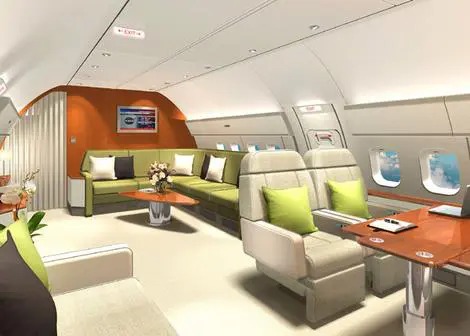
How wealthy Nigerians spent $6.5bn on 130 private jets


The growing penchant for private jets acquisition has cost wealthy Nigerians a sum of $6.5bn (N1.02tn) in the last five years. Aviation sources reveal that the luxury trend, which rose by 650 per cent between 2007 and 2012, is encouraged among the rich by the need for privacy, fear of insecurity and the urgency required by modern business.
Private jet ownership in Nigeria has grown by 650 per cent, from 20 jets in 2007 to over 150 jets in 2012.
According to documents sighted in aviation agencies, the development means that wealthy Nigerians acquired, at least, 130 private jets with a sum of N1.02tn ($6.5bn) within the last five years.
This put the private jets aviation market in Nigeria (the monetary value of all private jets in the country) at N1.18tn ($7.5bn), using $50m as the average cost of each brand new private jet.
A private jet goes for between $40m and $65m, according to the websites of major private jets manufacturers, like Bombardier of Canada; GulfStream and Hawker Siddley of United States; and Embraer of Brazil.
According to findings, the common brands of private jets in Nigeria are Gulfstream 450, 550 and 650; Bombardier Challenger 604, 605; Global Express; Embraer Legacy and Falcons; and Hawker Siddley 125-800 and 900XP.
Top aviation officials told our correspondent on Friday that Nigeria currently rivalled China as one of the two fastest growing private jet markets in the world.
An official with in-depth knowledge of the situation, who spoke under condition of anonymity because he was not authorised to comment on the matter, said most of the jets were bought by top politicians, oil magnates and other business moguls in Nigeria.
He explained that the economic downturn in Europe and the United States had made Nigeria and China to become two of the fastest growing private jet markets in the world.
He said, “Two countries buying private jets now are China and Nigeria. Europe and America are going through turmoil; so, their people are no more buying. This accounts for the trend that whenever some of the private jet manufacturers develop any new jet, they take them to Nigeria and China.”
“The private jets in Nigeria are owned by top politicians, oil magnates and business moguls. It is difficult to get the real identities of owners of some of the private jets in Nigeria because they buy them through some foreign companies in North America, especially the US. The foreign company then leases it to another company in Nigeria.”
Investigation by our correspondent also revealed that there were still several private jets on order by wealthy Nigerians. Some of the jets, it was learnt, would be delivered this year, while others would be delivered in 2013 and 2014.
A top official of the Nigerian Civil Aviation Authority, who asked not to be named, said representatives of the owners of the private jets on order had already notified the agency about the order. This, he said, was necessary for the purpose of registering the aircraft in Nigeria. According to him, some of the private jets also come with foreign registration credentials.
The Managing Director of Aero Airlines, Captain Akin George, had recently commented on the increasing number of private jets being parked at the Nnamdi Azikiwe International Airport, Abuja.
He particularly lamented the fact that most of the private jets carried foreign registration credentials. He had subsequently called on the authorities concerned in the country to make registration processes in Nigeria friendly and attractive.
During a recent visit to Abuja, our correspondent observed that over 40 private jets were parked at the terminal.
The CEO of another airline also said that during political meetings or big functions in Abuja, over 50 private jets were usually seen parked at the Abuja airport.
These, he said, were different from the ones parked at the Lagos and other major airports across the country.
“If you go to the old local wing at the Abuja airport, there is virtually no place to park private jets again,” he said
Just on Thursday, a team of officials from the headquarters of Bombardier in Canada arrived at the Executjets Private Hangar at the Murtala Muhammed Airport, Lagos, to showcase one of their latest private jets, Global 6000.
The team was led by the Sales Director, Africa, Bombardier Business Aircraft, Mr. Robert Habjanic, who said that the team was on a tour of 12 cities in Africa, including Lagos. Habjanic, who spoke with a few aviation journalists, told our correspondent that Nigeria was the company’s largest market in Africa, with about 35 Bombardier-made business aircraft currently flying its airspace.
He said the team had also showcased the relatively new business jet in other parts of the world.
He confirmed that “private business in Nigeria has been growing tremendously in the last five years.”
He attributed this to the fact that “Nigeria is an emerging market.”
The growth in the purchase of private jets in Nigeria has also led to the development of multimillion dollars private jets hangars, where repairs and maintenance could be done in the country. Some of these include Execujets Nigeria Hangar, Caverton Hangar and EverGreen Hangar, all located at the Lagos airport.
Speaking on the development, industry expert, Mr. Olumide Ohunayo, said, “The economy is expanding, with increasing investments within the country and the region. This will invariably necessitate instantaneous travel that scheduled airlines cannot provide.
“Also the privacy needed in a country filled with paparazzi can be an issue. Increasing political and religious issues are contributory. By and large, it will continue to increase if the economy continues with a lot of diversification inputs that naturally spread wealth.”
DailyPost
 

Of Presidential Bed Rest And The Rest Of Us

When the news was leaked that the first lady had taken ill and had to be flown abroad for medical attention, there were many speculations about the state of her health as the presidency had kept Nigerians in the dark about the whereabouts of Mrs. Jonathan. We heard of a burst appendix and then that was replaced by uterine fibroids. As Nigerians were left scratching their heads and wondering which news to believe, the president was hush hush about the whole matter, with the spokesman of the first lady, Ayo Osinlu telling Nigerians that the Mrs. Jonathan had only gone for a bed rest in Germany after hosting the African First Ladies Summit. It is more than two weeks since the news broke and yet, and Nigerians continue to depend on the grapevine and newspaper reports to stay informed on the whole situation.
While most of us wish the president’s wife speedy recovery, Mrs. Jonathan’s trip to Germany has exposed once again the dismal state of our health care system in this country. If the stories are to be believed, Mrs. Jonathan was misdiagnosed by the Aso Rock medical doctors with food poisoning before a trip to Dubai, and another one to Germany showed her to be suffering from appendix/uterine fibroids or whatever ailment the German doctors are currently treating. This will not be the first time we are hearing of Nigerian doctors giving a wrong diagnosis to a patient. The late legal luminary, Gani Fawehinmi was misdiagnosed with pneumonia before a trip to England revealed he was suffering from lung cancer. Sunny Okosun, a famous singer from the 70s-80s was also misdiagnosed in Nigerian until trips abroad showed he had been suffering from colon cancer. There are several other fatal cases involving ordinary Nigerians where doctors diagnose patients wrongly, leaving whatever sickness is ravaging the patient to do its damage.
There have been several desperate calls from different quarters for the government to rise up to its responsibilities and do something about the sad state of the health sector, but nothing is yet to be done. Not only have the facilities not been provided, the sector is overrun with doctors who have no idea how to diagnose patients correctly. All over the federation, government hospitals that should boast the best doctors and facilities are left to run on restricted budgets, leaving the hospitals nearly empty and reeking of hopelessness and premature deaths. Even the private hospitals themselves are not without their own problems. While most of them are pricey, the doctors running them are not even better than their counterparts working at government owned hospitals. In spite of all these problems, most Nigerians have no other choice than to patronize these hospitals, putting their lives at risk.
It is baffling why the government finds it difficult to introduce reforms that will bring the much needed change to the health sector. It has been said that Nigeria loses 100 billion naira annually to medical tourism as wealthy Nigerians and government officials leave the shores of the country to seek medical attention in foreign lands. Mrs. Jonathan, like her predecessors contribute to the loss suffered by the health sector and unless something is done, more money will continue to leave the shores of the country to the benefit of foreign hospitals. The health sector needs intervention. If adequate attention is given to it and money invested in it, there is sure to be a drastic improvement in the sector. There will be doctors who know their trade. There will be facilities to take care of patients and there will be a healthy productive populace to govern.
That being said, I can only continue to wish Mrs. Jonathan a quick recovery and hope that her short stay in Wiesbaden, Germany, has given her a short time to compare the quality of care the German doctors have given her to the ones the doctors at the villa gave her. Maybe she will think about the rest of us. Maybe she will become an advocate of the people, having been at the receiving end of poor medical service from highly paid Nigerian doctors. Maybe she will wonder about the rest of the masses who have to put up with far less qualified doctors, or at worst, quacks. Who knows, she might even spare us a shudder when she thinks of the inhuman conditions we have to put up with in poorly ventilated hospitals with cramped spaces. Then she might go ahead to advice the president that the rest of us cannot afford presidential “bed rests” in Germany, and that we too are humans like them and deserving of excellent healthcare. I hope. I truly hope.
Omojuwa.com

Sunday, 16 September 2012

Most former governors should be jailed – Iko-Awaji


Former National Vice-Chairman of the All Nigeria Peoples Party  (ANPP), Chief Asukewe Iko-Awaji has said that over 65 per cent would have been jailed if the FG had not given up in its quest to eradicate corruption.
Iko-Awaji noted that out of all the ‘stained’ governors, only one former governor had been convicted and jailed for financial misappropriation since the inception of the current democratic dispensation in 1999.
He recalled that over 31 past governors were on the watch list of the Economic and Financial Crimes Commission (EFCC) to have misappropriated huge money belonging to their states, adding that none of the governors had been prosecuted ever.
Iko-Awaji said, “Going by the rate at which governors steal public money from 1999 to date, more than 65 per cent of those who served and  those still serving as governors should be in jail.
“Unfortunately, it is only one governor that was found guilty and jailed abroad. It shows the judiciary and the anti-corruption agencies in the country have a lot to do to ensure that public office holders who stole from the nation’s coffers do not go scot-free.”
He said, “For the incumbent governors, they always come up with huge budgets, but at the end of the year, there is nothing to show for these huge budgets. It is only in Nigeria that governors and other leaders don’t retire budgets.
“In a proper democracy, a governor or any public office holder should give account of what he spent while in office. Is it not worrisome that former Governor James Ibori, who was seen as a saint by the judiciary, was eventually jailed in London?
DailyPost.

“Nigerians are missing me,” says Dame Jonathan…

by Stanley Azuakola

Nigerians are missing me – Dame Patience
The wife of Nigeria’s Vice-President, Hajiya Amina Sambo, has turned down calls for her to step up and assume the role of acting first lady of the federation, saying she is not interested in the job, as she is loyal to her boss, Dame Patience Jonathan.
Some Nigerians have been worried that following the first lady’s continued absence; the very important duties of a first lady like organising thank-you tours and causing traffic have been left unattended to. But Hajiya Sambo has said that there is no vacuum in leadership.
Meanwhile, a source in the office of the first lady told A Pinch that Dame Patience is excited about the level of interest her absence is generating. The source said, when she heard how interested people were, she decided to postpone her return for another two months, saying “Nigerians are missing me well-well. I told them to make my position official and constitutional but they refused. I will so do them, that when I’m ready to come back, they’ll be begging me to make my office official.”
Three things A Pinch… saw and overheard last week
A Pinch… would like to share with you some of the things we saw and overheard this past week. We are not exactly sure where we heard or saw them though, so it might just have been in our head.
  1. A quote inside the in-flight magazine of one of the remaining surviving airlines in Nigeria: “What shall it profit a man to build a great business and allow Jimoh Ibrahim to buy it from him?”
  2. The president would soon fire his recently appointed attack dog, Doyin Okupe over the current allegations against him. In his place, CBN governor, Sanusi Lamido would be appointed. Sanusi who fancies himself as an effective attack dog, famously slamming ex-president Obasanjo last week, will bear the title of Chief Barker of Nigeria (CBN).
  3. President Jonathan hurriedly ended his foreign tour earlier than planned because of an epiphany he received. The president who had just visited Malawi to launch their Malawian National Cassava Master-plan felt bad afterwards. He was worried that the last time Nigeria helped a country in agriculture was Malaysia, and now they’ve surpassed us in oil palm plantations. He worried that since Malawi and Malaysia have similarities in how they are spelt, Malawi, “just like the other Mala- before it, will come and surpass Nigeria in cassava production” which is dear to his heart.
CROWNED CLOWN (CeeCee) OF THE WEEK
If it were in the days of old, songs would actually have been written and sung about the man, Dino Melaye. They would call him the loud politician who knows how to capitalise on situations for personal gain when in reality he wouldn’t have acted any different, the ex-legislator renowned for his physical combativeness, the serial political party switcher, and the self-confessed election rigger.
In light of the stunt he pulled last week, they’ll also call him the erratic, foul-mouthed leadership pretender. Melaye, an Action Congress of Nigeria stalwart, who obviously harbours hopes of standing for elections again in the future, was asked by one of his followers on twitter to explain one of his many bumbling positions. Rather than declining to respond or doing so with grace befitting a leader, this was his response: “You can take two liters of acid and shut up.”
Now pause for a moment and think about this: If that man was a Jonathan or a Fashola, do you think he would tolerate free speech or criticism? A Pinch… doesn’t think so. For his natural ability to surpass his previous levels of silliness, Dino Melaye takes the CeeCee this week.
YNaija.com

The Forthcoming Annual EFCC Report By Sonala Olumhense


It is my favorite season of the year again: the drama season.  In September each year, the Economic and Financial Crimes Commission (EFCC) submits its annual report to the National Assembly.
That leads to October, which I call National Hypocrisy Month, because that is when Nigeria’s leadership advertises itself when it awards the chieftaincy titles called National Honours.  A troubling list of the 149 people who will receive them this year has already been published.
Actually, I do not know that the EFCC will actually submit a report this year.  Its former chairman, Farida Waziri, never did.  She played games with the idea, but she never did.
But the EFCC (Establishment) Act of 2004 says: "The Commission shall, not later than 30th September in each year, submit to the National Assembly, a report of its activities during the immediately preceding year and shall include in such report the audited accounts of the Commission."
This means that the National Assembly ought to be offended if it does not receive such a report.  It ought to be outraged whenever especially such a high-profile body as the EFCC, which is charged with chasing law-breakers, breaks the law.  For several years, the Assembly has shown no such concern.
In 2006, the EFCC submitted its first report.  That was the day its original chairman, Mr. Nuhu Ribadu, named the most corrupt governor.
He also named the most unoriginal thief, one whom he noted with disgust, had emptied a safe with his bare gubernatorial hands.
That year, he named one woman among the army of corrupt governors and notable Nigerians.
Mr. Ribadu even wanted to name Nigeria’s most corrupt person, but the Senate President prevented him from doing so.
Only one governor received the honour and respect of the Commission: Cross River’s Donald Duke.
And all of that was simply the oral preface to the report. Mr. Ribadu departed.
That may have been the point at which the political elite decided his fate.  By the next reporting season, Ribadu was out as boss of the Commission.
In came Mrs. Waziri, a woman with a fascinating record. A former policewoman, she had prior to her appointment actually had a relationship with the EFCC, helping our former governors with EFCC troubles.  Several uncontested reports alleged that she had been sponsored to the EFCC job by some of those powerful political chieftains.
Mrs. Waziri was full of all the correct sound bites, but when it came to striking at the heart of corruption, she knew when to flash her expensive jewelry and leave the room. She flushed out of the EFCC Nigeria’s best-trained corruption hunters and dispersed them all over the country. Her case was so rotten that after a while, the Americans refused to talk to her at all.
It was obvious she would circumvent the duty of having to publish an annual report, and she did.  Repeatedly.
Her tenure was scandalous, and the Americans, who were holding Mr. Goodluck Jonathan to his promises to “combat” corruption, were so loud about the need for him to do something that she made an easy target.
Mrs. Waziri was flushed out, finally, last November.  Predictably, and despite a list of allegations against her as long as Abuja is ethically desolate, she was never probed let alone prosecuted.  Like James Ibori after one last wave at Justice Marcel Awokulehin, little wonder she claimed victory as she handed her office over to her predecessor, reeling out irrelevant statistics.
But Mrs. Waziri is the past.  The future, beginning this month, is Ibrahim Lamorde, the EFCC’s new boss.
Mr. Lamorde has been at the commission since the very beginning, and he has held all the top offices.  This month, if and when he publishes the annual report, we will finally find out whether he is a man or a mouse.
To be sure, Mr. Lamorde’s task is not easy, and he must make the difficult choices, which is what leadership is all about.
His report, if he really does submit one, will need to be much more than an annual report; he cannot provide certain narratives dating from his inauguration or even from last September because that would be an intolerable and artificial vacuum.
Since he knows that there has been no annual report for several years, he must determine whether to collude with his predecessor and maintain that false history, or account for it so that the true story of the EFCC, as an institution, will be complete.  This is how strong institutions function, and flourish.
Receiving the baton from Mrs. Waziri last November, Mr. Lamorde said, "I will be making more demand of every staff of EFCC, far more demand of professionalism, integrity and ethical conduct than had ever been made of each and every one of us, and I will not accept any excuse whatsoever for failure.”
I am so glad he said that, because he is the first member of staff of the commission, and from his first annual report, Nigerians will now get to learn exactly how he spells professionalism, integrity and ethical conduct in terms of himself.
Only last June, it was reported that the Independent and Corrupt Practices and other related offences Commission (ICPC) had begun an investigation of Mrs. Waziri’s tenure over what an official called very “disturbing evidence of corruption.”
They include such illegalities during her tenure as issuing official clearance letters to former governors who were indicted or being investigated for corruption by Mr. Ribadu, such as Mr. Ibori and Victor Attah, a former governor of Akwa-Ibom State who is also wanted in the United Kingdom.
Other cases include the controversial authorization given Victor Uwajeh, an Abuja based businessman, to act a consultant for the EFCC to help investigate cases of politically exposed persons (PEP), a profile Mr. Uwajeh allegedly parlayed into business for himself, for which he is now being prosecuted.
Since Mr. Lamorde’s assumption of the leadership of the EFCC, the commission has given every appearance of being busy.  There have been a lot of pictures and a lot of words in a lot of different forums.  There has been a lot of activism concerning small corruption cases.
If and when Mr. Lamorde produces a comprehensive report, we will finally be able to determine the true character of this mysterious institution. 
This report will be the most important so far in the history of the EFCC.  What Mr. Lamorde chooses to include will be as important as what he chooses to leave out.  The work he is doing will be assessed alongside the job he has defined.
Now, we get to find out if the EFCC is fighting corruption fundamentally, or helping it.

Three States Fight Over ‘Anambra Oil’


OBI
SINCE the commissioning of the oil exploration facilities belonging to Orient Petroleum Resources (OPR) at Aguleri-Otu Aguleri in Anambra East Council Area of Anambra State by President Goodluck Jonathan where he declared Anambra State as the 10th oil-producing state, there have claims and agitations from the neigbouring states of Kogi and Enugu that the oil deposits being explored by the company were domiciled in their territories and not Anambra State.
The controversy surrounding the ownership of the oil wells was brought to fore by the Chairman of the Revenue Mobilisation Allocation and Fiscal Commission (RMAFC) Mr. Elias Mbam at an Economic Workshop on Diversification in Asaba Delta State on Monday.
Mbam said though crude oil production had begun in Anambra State, becoming a beneficiary of monthly allocation based on 13 per cent oil derivation, was not automatic.
He said: “The derivation fund is clearly defined in the constitution. The law does not say you must start benefiting when we discover oil in your place.
“You benefit when that mineral resources contributes to the Federation Account and what you benefit is the value of the contribution to Federation Account.”
“We have agencies of government charged with the responsibility of ensuring that boundary issues are settled. We have National Boundary Commission (NBC) and Surveyor General of the Federation, who are charged with responsibilities of delineating boundaries.
There is no need to dissipate energy now, because once they start contributing to the Federation Account, the Commission will request the boundary commission and Surveyor General to go and establish where the oil wells belong.”
Even with this pronouncement, the affected states are still laying claim to the wells.
The Kogi State Deputy Governor, Mr. Yomi Awoniyi, who represented his boss at the commissioning of the oil facilities: “As you know, Orient is operating on OPL 915 and this oil field straddles many states, including Kogi and one of the oil wells that have been explored and capped by ELF that have now been re-developed by Orient is actually in Ibaji Local Government of Kogi State.”
On the Presidential declaration that Anambra State is an oil-producing state, Awoniyi said: “I don’t see how one can explain the statement. The oil well is in Anambra River basin, which is a very large expanse of land with an overlay of several states on that basin and even that basin has been divided into several OPL. Orient has 915 and 916. Now, one of the wells is in Kogi State, while other wells are in Anambra and Enugu States. You can drill as many holes as you want in this basin and for every hole you drill, it is a well.”
In the same vein, the Chairman of Uzo-uwani Council Area of Enugu, where the oil wells are allegedly situated, Cornel Onwubuya, told The Guardian that from historical and documentary evidence, the oil wells are situated in Iggah, a suburb of the council area.
“The distance of the oil wells to Iggah is eight kilometers and seven kilometers from Echenwo community in Ibaji Council Area of Kogi State. The nearest Anambra State migrant settlement, Otu, to the Oil well is 50 kilometers.
Since the creation of Enugu, and Kogi states in 1991, the deposit of oil and gas in Nigeria’s inland basin has been subject of dispute between the three states. The matter has been before the National Boundary Commission (NBC) and Surveyor General of the Federation.”
He faulted President Jonathan’s declaration of Anambra State as oil-producing state even when NBC has not made a statement on where the oil wells are located.
But faulting the claims, Chief Press Secretary (CPS) to Anambra State Governor, Mr. Mike Udah described the claims as an afterthought.
He said that the premises of Orient Petroleum Resources and the oil wells belonging to the company are in Aguleri-Otu in Anambra East Council of the State.
“There is no truth in the claim by some neighbouring states that Orient Petroleum is in their land. This clearly is an afterthought and an unnecessary distraction. If their claims are true, why weren’t their governors around on August 30 when President Jonathan commissioned Orient Petroleum Resources?
“Only Governor Peter Obi was there to receive the President. Anambra State is not opposed to the idea of the Boundary Commission determining her boundaries with any of her neighbours,” Udah said.
The Managing Director of Orient Petroleum Resources, Emeka Nwawka, told The Guardian that the two oil blocs OPL-915 and 916, covering an area of 2158km2, extend a little into Edo, Delta and Enugu states, while the bulk is in Anambra state.
The Guardian investigation reveals that unless the NBC makes a clear statement on the location of the oil wells, fear, anxiety and suspicion already building up in the affected states my snowball into full-scale crisis.
The Guardian

Islam and the West (1) - Dr. Hakeem Baba Ahmed


“Though the lion and the antelope live in the same forest, the antelope still has time to grow up” Ghanaian Proverb
A major casualty of the fury in Muslim nations over a movie made in the United State which insulted the Holy Prophet Muhammad (S.A.W.) was the U.S Ambassador and three other US citizens. They died during a siege in Benghazi, a city which has been the frontline and symbol of the Libyan people’s uprising against their late leader, Muammar Ghaddafi. That uprising involved the very active, and some may say, even decisive involvement of the US and its allies in the North Atlantic Treaty Organization (NATO). The events in the last few days in Libya, Tunisia, Egypt, Yemen and many other Muslim countries has refocused attention on the difficult relations between the West and Islam. I have decided to start this two-part series on Islam and the West with a comment I made for our Radio and Television station which was broadcast on 25th September, 2011, almost one year ago. It was titled, “Post-Ghaddafi Libya: A Difficult Road to Many Destinations”:
The National Transitional Council which provided the political leadership for the insurgency which ousted and killed Muammar Gaddafi last week led the celebration for Liberation Day on Sunday, 23rd of October. The world watched hundreds of thousands of Libyans formalize a victory in Benghazi, the city which provided the bulwark of the resistance against Gaddafi virtually for his entire reign, but particularly since the insurgency built up and took on much of the traditional cultural and political fault lines of the Libyan nation. It is difficult not to share some of the relief of the Libya people that the 9-month old insurgency has come to an end. Nonetheless, even as they celebrate, it is not difficult to see that the road ahead for them will be fraught with many challenges, some of them with the potential to rob them of the benefits of removing Gaddafi. This is a time for deep reflection, and friends of the Libyan and African people should have the courage to give them honest and practical advise as they commence the difficult task of national reconstruction and reconciliation.
    The image of the dead and beaten up body of Gaddafi being dragged by a crowd made up of supposedly civilised Libyan Muslims will remain indelible in the mind of a global audience. It will dent the joy and accomplishment of the celebrations even in Benghazi. It will particularly leave a negative image in the minds of other Muslims who believe that a dead body, anyone’s dead body, deserves to be treated with some dignity. When Americans threw the dead body of Osama Bin Laden into the ocean for fish to feed on, they at least claimed that they gave him his rites as a Muslim, and did not humiliate and violate his dead body and gloat over their actions on television.  When the US captured Saddam Hussein, they tried and hanged him, instead of killing and desecrating his dead body. Now, even NATO nations who provided the fire power and the intelligence which led to the ouster, capture and eventual killing of Gaddafi are joining the chorus of demands for enquiry into how or why he was killed after his capture. Nothing will come out of this hypocrisy.
     The savagery which was shown on global television by some Libyans has exposed the soft underbelly of the revolution. Gaddafi’s 42years in power, much of it spent in brutal suppression of opposition must have robbed many Libyans of their basic humanity. The nine months of bitter and brutal campaign to oust him had further affected every Libyan very badly. Both sides adopted the most inhuman methods in the conflict, and in the end, the struggle to remove Gaddafi had stripped Libyans of their civilisation and humanity to their bare bones. Those who fought these bitter battles against each other, including those who dragged a dead body through the sand, are going to continue to live within Libyan communities. They will also keep their arms and ammunitions. And some of their memories and bitterness. And they will count graves, and injuries and bullet holes. And others will ask how all these will be justified by the outcomes of the revolution.
     There will be many who will be counted among the defeated. They will continue to live in Libya, but may have to pay a price for siding with, or defending Gaddafi. They too will have their reasons and justification for their choices. And they will have their arms and ammunitions; and their grievances and bitterness. They too will ask how the revolution will be better than Gaddafi’s rule. There are yet many who will wake up to a new Libya which has been thrown wide open to NATO countries. They will ask how the new Libya will or should relate with Europe and the US. They will ask deep and searching questions over the cost of reconstruction; which nations among the NATO coalition will get the biggest contracts for rebuilding what NATO bombers destroyed; and what type of constitution and political system Europe and the US will now insist is adopted by Libyans. Those among them who may retain some pride in being an independent people that, although at great price, stood up to the US and Europe under Gaddafi in the past, may resent the possibility that their faith and culture will suffer to the degree of NATO influence in their lives. They too will have their arms and ammunitions; and their memories and their sympathisers.
     There are tribal leaders, religious leaders and leaders of factions who will each jostle for a place in the sun in the new Libya. Many will test the powers and the resolve of the NTC, and its NATO backers. They will quarrel and bicker on the type of constitution to adopt; on how victors and vanquished should be treated; how Arab and Islamic they want the new Libya to be; and how to deal with the many legacies and liabilities of Gaddafi’s 42 year rule. They will have to fight over, and learn how to elect new leaders; how hundreds of thousands of young people can be disarmed and demobilized; and how trust can be rebuilt among and across communities. And they will have their arms and ammunition; and their memories and bitterness over the course of the last 9 months.
The Libyan people have come through one of the worst crisis any people can go through. The killing of Gaddafi and the bestial treatment of his body may have given a small number of Libyan people some satisfaction. But now the real work of reconciliation and rehabilitation has to begin. There is no easy way forward. Every challenge they will meet has the potential of opening up new theatres of conflict. They need a strong and broad-based leadership which should disarm citizens and begin the process of reconciling the people. They need NATO to lower its profile, and retreat sufficiently to allow some semblance of Libyan influence in deciding a Libyan future. They need to re-integrate with Africa and the Arab world in a manner that acquires support for them to reduce the influence of NATO, as they embark on the difficult road to a new life. They need to look at the abuses and excesses on both sides of the conflict, and commence the process of addressing the requirements of guaranteeing basic human rights, particularly for the thousands of black people who have been imprisoned on sundry and questionable suspicions. The journey of the Libyan people will be difficult because there will be arguments over routes and destinations. It will be tragic if a post-Gaddafi Libya continues to suffer because its people and leaders fail to appreciate the fact that the reverse side of Gaddafi is the emergence of a democratic system that gives every citizen a fair chance to make concrete choices over how he lives, and who governs him. It will not be easy to build that system; but failure to build it will mean an unending conflict and real potentials for prolonged civil war. This is the one destination Libyans should avoid at all cost