Tuesday, 18 September 2012

Why Nigerian banks must rethink their business strategies?


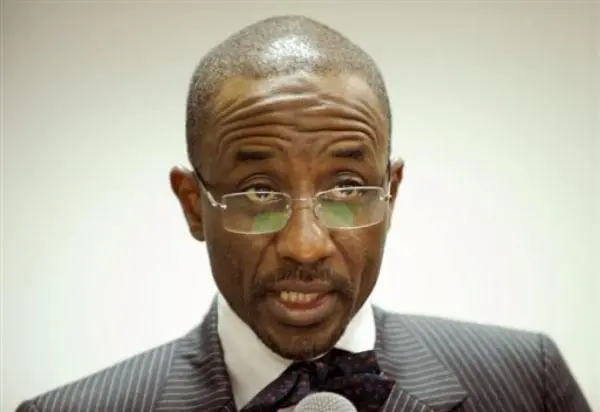
“The financial system is more than just institutions that facilitate payments and extend credit. It encompasses all functions that direct real resources to ultimate users… It is the central nervous system of a market economy.”
— Sanusi Lamido Sanusi
The above quote from the Governor of the Central Bank of Nigeria in explaining the banking reform and its impact on the Nigerian economy, illustrates explicitly why the financial system is key to the economy and its smooth working is a concern to all.
A major component of the financial system is the banking system. The way our banks operate today is not aligned with the economic growth prospects of the Nigerian economy. Banks are service institutions, and as such, they should aim to help build their customers businesses so they will have businesses to service.
Recent developments in our banks seem to consist only of collecting deposits mainly from government institutions and buying government treasury bills with them to earn large margins. This seems to be their only goal. Creating credit that builds businesses is no longer a part of banking business for many of our banks today. Where they give credit at all, they price it so badly that the loan is destined not to perform. They charge an annual interest sometimes approaching up to 30 per cent and then add legal fees, arrangement fees, management fees, etc. These upfront fees can add an additional three to five per cent of the facility. This is usually deducted up front and when annualised on its own, can come up to anywhere from 36 per cent to 50 per cent. If you add this to the annual interest charge of 30 per cent, you can see why a large proportion of credits in Nigerian banks do not perform. They are designed to fail from day one. No matter what the business is, this kind of facility pricing is bad and any profit predicated on this structure is unsustainable.
This is a great pity, because banks do not exist for profit alone. They have a role to play to help develop the economy. You would think that self preservation would make this abundantly clear. No one is saying that they should not aim to be profitable, the argument here is how you make profits is just as important as making profit itself. Any institution that exists only to make profits alone is doomed. Profit should be a major path to growth, other things must also be thrown into the mix if they are to nurture and grow the businesses that keep them alive.
As the famous Standard Chartered Bank advertisement says, “It is not everything that counts, that can be counted”. For instance, a utility company that serves the public, may want to make all the profits it can because of the “must use” status of its offering. This will not be possible because its purpose is more than just making profits. This is why they are usually regulated to ensure that the public gets good service while the consumers pay enough to cover cost and provide for a reasonable profit. Apart from profits, the longevity of the utility company attracts investors in this kind of company as they are looking for stable and consistent earnings growth. They must continually expand their services to cover more and more consumers to bring down its unit cost of production. Its goal is not to make the highest profits by charging the highest prices to the small group it serves now, but to increasingly widen its customer base and spread its operating cost over a larger base that will let it lower the unit cost of its output. If it fails to do this, its long term success will be threatened.
Our banks will need to look at the utility company model that relies on a larger consumer base to meet its mandate and still makes a profit by achieving efficiency, as the cost of production is spread to a larger group of consumers. The smaller the cost of service per customer, the better it will have prospects in making larger and more sustainable profits. Note here that, the profits come from spreading production costs over an increasingly larger consumer base and not raising prices over a limited pool of customers.
The current model for our banking industry is an unsustainable strategy that is unsupportive of growth; this in turn threatens their own future as service businesses.  Banks should aim to be of service at the most cost effective to the users of their services. The current model where their only goal seems to be, to make the most profits as much as possible even when it means squeezing the customer in the most Machiavellian way, will not be in their interest.
How can banks justify charging quarterly management fees for loans they give out to their customers?  Or the unjustified charge for internet banking that does not involve the bank doing anything. This means that in addition to the normal interest charges, the borrower must also pay recurring fees that have nothing to do with the loan. These unfair charges that create an additional burden for the borrower is a sure way not to get their money back. They also charge N100 for any cheque written on your current account. One wonders how they want you to take out the money you deposited with them. They charge you COT, internet charges, and cash cheque charges, all on a current account that you operate with the bank. You lose money by paying charges even when you have not taken a loan or used any of their facilities.
This is not good for the customer and the bank in the long run.  This current strategy to make money at all cost is not the right strategy. Banks frequently charge a series of fees that are blatantly unfair to their customers in addition to the very high interest rates that again is unjustified.
Unfortunately, the CBN does not seem to have any say in this. One wonders what banks did to make money in the many years before our whizkid bankers took over these last few years.
Banks frequently quote their higher cost of operation which they attribute to poor infrastructure, as the reason for charging high interest rates. A closer look at this reasoning shows that they are not cogent, because the customers they squeeze also operate in the same environment. This bad strategy in the name of making large profits is misplaced, because the charges coupled with higher interest rates do not assist the growth of the customer’s business. It is therefore myopic, since the only way our banking industry can grow consistently and sustainably is to ensure growth of its customers.
This growth also translates to growth for the bank. If banks continue to operate in such a myopic fashion, they will soon find out that there will be no business to serve. As their stagnated business customers die one by one.
 BusinessNews

From Radiculopathy To Myomectemy: Nigeria And Her Expatriate Rulers By Ogaga Ifowodo


And so, once again, the wife of a serving president flies off to Europe in search of a cure for a non-life threatening problem. For plastic surgery, if there is a grain of truth to the unofficial disclosures attributed to sources in the presidency, though that is all that the citizens underwriting this expensive treatment have: the president does not deign to tell us what is wrong with his wife.
Mrs Patience Jonathan — who will not be pleased with me for not addressing her by the cherished self-appellation of Dame even in her moment of distress — is recovering in Germany after having her uterine fibroids removed. No, she did not go to excise her ruptured appendix, as was earlier reported: myomectemy; not appendectomy. This also puts to rest the happier reason of much needed rest from exhaustion (so arduous are the labours of the first spouse) as her spokesman informed us. The eagerness of Nigeria’s rulers to whisk themselves or their wives off to tend to every real or imagined ailment abroad at public expense is nothing short now of a national calamity. And it invites even greater scrutiny than ever before. For want of a better term and since we are speaking of diseases, I will call this infuriating habit bordering on a disorder of the mind the expatriate syndrome or expatriaitis.
According the Merriam-Webster dictionary, the word “expatriate” in its verb form means “to withdraw (oneself) from residence in or allegiance to one’s native country”; “to leave one’s native country to live elsewhere”; also “to renounce allegiance to one’s native country.” Now, clearly, our rulers do not live abroad, though we must include the qualification “physically” while sticking to the literal sense of the word.  But while they may reside in their official quarters, have palatial homes in their villages, state capitals, Abuja and Lagos, their most cherished mansions are to be found in the priciest neighbourhoods of London, Paris and Washington, D.C.  In any case, I am more concerned with the second sense which warrants the diagnosis of expatriaitis, defined as a disease of the mind that causes its victims, who, for my purposes here are Nigerian rulers, to see themselves as foreigners, and so to shape their thoughts and actions with reference to a developed foreign country, especially a European one. I lay no claim to exactitude, but it will do.
If an expatriate is not merely one who resides outside his or her own country (ex patria) but can also be one who has “renounced” or “withdrawn” allegiance to the native country, then our rulers are expatriates to the core. By tell-tale deeds, they betray their primary allegiance to Europe.  As a result, they feel no sense of patriotic duty or responsibility to the land of their birth. If the Christians’ holy book is right when it says that where a man’s wealth is there will his heart be also, then nothing proves this claim more than the ultimate destination of the billions our rulers steal: Swiss banks and other Euro-American institutions of graft. In other words, Frantz Fanon was right to describe the emergent African bourgeoisie as having “black skin” and “white masks.” It is a product of the dubious legacy of colonialism, what we refer to in popular parlance as “colo-mentality.” We may turn the phrase a little to “black skin, whitewashed minds.” Our rulers, still ravaged by the unbroken and unexamined, though mostly unconscious, legacy of external conquest and domination, are no more than mere stand-ins for the erstwhile colonial masters whose allegiance was always to Europe.
Thus, a quarter of a century after General Ibrahim Babangida flew to France to treat a leg injury, no succeeding head of state has thought it necessary to build, or made it possible to build, a medical facility where his head- or tooth-ache, cough, malaria, arthritic toe, “general debility” or, God forbid, any more serious ailment, may be treated. Babangida’s long-standing injury was given the grandiloquent name of radiculopathy, a condition more appropriately associated with the spine and eminently treatable at home, but, no, he had to go to Europe. Then there was the case of Mrs Stella Obasanjo who died in Malaga, Spain, after a cosmetic procedure to remove stomach fat.
And so it happens that more than two years after the national embarrassment of the saga of President Yar’Adua’s endless trips to hospitals in Germany and Saudi Arabia to save his ailing heart and liver, his successor, Goodluck Jonathan, has chosen to shame us anew with another medical trip fiasco. This time, the rumoured emergency that necessitated the junket to Germany was uterine fibroids, a condition that many women are known to have without even knowing it because it is generally benign and so seldom requires surgery, except for cosmetic purposes. And, indeed, the word is out that this was the real reason why Mrs Jonathan flew to Germany and checked herself into the Dr. Horst Schmidt Klinik in Wiesbaden, a facility, let us note, shared by the United States Army’s medical department.
How else but in the light of the utter obliteration of national competence and self-belief following a chronic case of expatriaitis can it be explained that Mrs Jonathan’s fibrosis was allegedly misdiagnosed as appendicitis or food poisoning by the doctors at the presidential clinic? Yet the misdiagnosis is only a symptom of the cancer of self-doubt that has now overawed our collective being. Leading to the crying shame that such routine procedures as appendectomy and myomectemy could not be performed at the presidential clinic.  Nor in any of our teaching hospitals. Nor in any of the country’s countless private hospitals. But then, I assume that with our rulers’ necks turned rigidly towards Europe, to anywhere but home — see the staggering number of foreign trips Jonathan has made since assuming office — the president even thought for a second about the possibility of a cure at home.
Saharareporters

Neither Nigeria Nor Cameroun Has Just Right To Bakassi – Soyinka


L-R: Femi Kuti, Wole Soyinka, Tunji Braithwaite and Joe Okei-Odumakin
By SaharaReporters, New York
Nobel laureate Wole Soyinka has weighed in on Bakassi, the territory that has been a subject of dispute between Nigeria and Cameroun. Mr. Soyinka declared Bakassi a parcel of land that belongs to its inhabitants, arguing that it should not to be seen as a geographical space over which two countries should go to war to contend for ownership title. He stressed that the overt
dispute had to do with the disputed area’s oil reserves.

Mr. Soyinka’s comments on the disputed land came in a lecture delivered yesterday in Lagos to celebrate the 79th birthday of lawyer and political activist, Tunji Braithwaite.
The event was sponsored by a group called Women Arise Initiative 

Speaking on “Corporate Gains and Human Deficit,” Mr. Soyinka outlined two types of wealth which he defined as inert and dynamic. He then lampooned a third type that has emerged in the context of religious overzealousness. Said the globally celebrated playwright, “Let us make a note however of a dubious third, which is virtual – and I do not mean virtual in terms of paper currency or stocks and shares. I am speaking of ‘virtual’ as in non-palpable, vaporous, fantasized
realms – such as heaven or its equivalents in all religions.
You know the religious admonitions – lay not your treasures down upon earth', ‘your reward is in heaven’, plus a hundred other varieties – you’ll encounter them in virtually all religious constitutions, known as the scriptures.” 

The writer bemoaned the collapse of the cotton industry in the northern part of Nigeria. He blamed the collapse and the massive layoffs of workers on “smuggling corporations” supported by the state to the detriment of citizens. Mr. Soyinka recalled “being presented with a bolt or two of fabric from its looms; at that time, the industry was already gasping for breath.” He described the eventual death of the industry as only a matter of time, emphasizing that the industry “did not commit suicide” but “was killed…by highly placed smuggling corporations that were allowed to operate freely through our obliging borders.”

The laureate noted that corporations “are not limited to licensed businesses which
incinerate a hundred or two workers in one fell swoop.”
He argued that corporations “include
other forms of enterprise which slowly starve hundreds of thousands to death and create hordes of unemployed who are then snatched up by spiritual corporations for the destabilization of an entire nation – in the process of which, let us take note, hundreds of innocents in this nation are also incinerated, gunned down, and/or blown to pieces.” 

Mr. Soyinka warned about the consequences of laying off workers, noting that such workers are often enticed by recruitment into vicious circles. According to him, to leave the unemployed roaming all over Nigeria in various degrees of starvation helps their recruitment into syndicates of armed robbers and kidnappers.

He also added: “Vulnerable, impressionable, [the unemployed] also become willing recruits to
extreme religious indoctrination and are focused solely on the hereafter, having been expelled by neglect from the garden of the here and now – albeit a garden overrun by the brambles of inequity.” 


Steering his discourse to Bakassi, the laureate described the contested land as a testing ground for corporate integrity. “The Bakassi islands were not uninhabited spaces,” he said. “The Bakassi islands were human settlements. They existed not as wasteland but as homeland. And then, they were traded off – a quite pertinent expression – traded off between the leadership of Nigeria and the Cameroon corporations during the civil war.”

Mr. Soyinka wondered, “Were the wishes of the people who actually inhabit that space taken into consideration when that head of state appended his signature thereon? Were representatives of the indigenes invited to The Hague to testify? The answer was No, thus vitiating whatever
judgment that learned body chose to pass.”
He continued: “The world no longer lives in a feudal fiefdom. The rights of minorities and indigenous peoples are encoded in the statutes of the
United Nations. The human deficit inserted into the Bakassi decision is now plagued with unpredictable scenarios.” 

Even so, Mr. Soyinka warned Nigerians to be wary of people calling for the nation to go to war over Bakassi land. He described trumpeting war as unpatriotic, contending that they were often out to pursue their own monetary interests.

“Do not take my word for it,” he declared, “the then Head of Nigeria’s version of the KGB cum MI5 etc etc, M.D. Yusuf, has placed it on public record that, among those who urged the nation so stridently to defy the judgment of the international court were indeed those who enjoyed lucrative retainerships from the state. Were they ever interested in the people? Did they care for the humanity of Bakassi? Of course not.”
The dramatist then restated his view that “neither Nigeria nor the Cameroon had a modicum of just rights over the slab of real estate known as Bakassi. The crucial question that the International Court does not appear to have considered remains this: what do the people of Bakassi want for themselves? To become Cameroonians? To become Nigerians? Or simply to remain Bakassians? Bakassi became a focus of interest and desire only because
of her oil reserves and the greed of state corporations – presented as national interest.”


Mr. Soyinka asserted that “the suppressed voice of Bakassi’s humanity [should] be heard,” calling for a plebiscite in the disputed territory to determine how the residents feel. 

Responding to toasts by various guests, Mr. Braithwaite stated that people must continue to fight in order to realize their dreams. 


Among the guests were Joe Okei Odumakin, the President of the Women Arise initiative, Akin
Oyebode, a professor of International Law and Jurisprudence at the University of Lagos, Balarabe Musa, a former governor of Kaduna State, Yinusa Tanko, the national chairman of the National Conscience Party (NCP), Femi Kuti, an Afro-beat musician, and Debo Adediran, a leader of Citizens against Corruption.
 

Terrorists hack into DHQ, Navy websites

BY KINGSLEY OMONOBI
ABUJA—Chief of Defence Staff, Air Chief Marshal Oluseyi Petinrin, raised alarm, Tuesday, that the Defence Headquarters’ website and that of the Nigerian Navy had been hacked into by terrorists, adding that the threat posed by the Boko Haram sect, through online reports of their activities needed to be effectively checked.
Petinrin raised the alarm just as the Chief of Defence Communications, Air Vice Marshal Osmond Amu warned that if cyber crime was not checked, “the security challenges the country is currently facing, such as killings, bombs by Boko Haram, kidnapping, pipeline vandalism, oil theft, corruption and so on, which had kept the armed forces and other security agencies on their toes, would be nothing compared to the potential threats inherent in cyber space.”
Speaking in Abuja, at the opening of the World Cyber Conference, the CDS, who was represented by Major-General K. Amao, Chief of Research and Development, DHQ, said to checkmate hacking into the websites of security agencies, “DHQ has achieved successes in the deployment of Information and Communication Technology, ICT, surveillance and tracking equipment to locate criminal elements in our society and perpetrators of the Boko Haram menace.
File photo: Chief of Defence Staff, Air Chief Marshal Oluseyi Petinrin (2nd left) and other security chiefs after a security council meeting chaired by President Goodluck Jonathan at the State House, Abuja, recently. Photo: Abayomi Adeshida.
“However, further successes would be achieved if we appropriately apply cyber technology and space researches to tackle the country’s contemporary security problems.”
Declaring that it was no longer news that Nigeria has been making moves towards the actualisation of a cashless economy, the CDS said: “Before the pronouncement of the cashless policy, cyber attacks had been a major threat to the Nigerian economy. The threat to the Nigerian cashless policy can, therefore, never be overlooked.
“While the country’s apex bank, CBN, backs this policy, commercial banks over the last few months have also keyed into the initiative.
“Cyber attacks may stand out as a stumbling block or threat to the actualisation of this project, except concrete measures are put in place to counter such attacks.”
On his part, AVM Amu said: “The armed forces and other security agencies are by themselves incapable of containing the physical security challenges, hence the call for collective participation. Same applies to the containment of cyber threat, but with a higher universal involvement.”
In her message, Minister of State for Defence, Erelu Olusola Obada, said the prevalence of cyber crime is a worrisome development as Nigeria becomes more reliant on ICT.
Vanguard

Ibori’s Wife Theresa Among The Crooks Owing Millions To UK


Theresa Ibori
By SaharaReporters, New York
Theresa Ibori, the wife of jailed former Nigerian state governor James Ibori, was on the list of deadbeats who altogether owe British taxpayers “a staggering one billion pounds,” according to a new report.
Senior lawyers called on ministers to look “urgently” at whether new powers were needed to collect the unpaid debts.

Mrs. Ibori’s name appeared along with major drug importers, fraudsters and other serious criminals who are among more than 7,000 convicted offenders that must still pay back their unlawful gains.

“These are very worrying figures,” said Keith Vaz , chair of the Commons home affairs select committee of the unpaid debt totals. “They show that it is far too easy for major criminals to hold onto the profits of their crime. These serious offenders are escaping proper punishment and, even worse, they are being left with large sums of money which they can use to fund further crimes.”

Mrs. Ibori still owes just under £5 million of a court order imposed for her role in a £50 million fraud committed by her husband, despite owning a home in Hampstead and missing a deadline for repayment that ran out in May.

Danjuma ‘Donated N800m’ To Obasanjo Campaign In 1999


TY Danjuma
By SaharaReporters, New York
Guests at the 2012 Annual Conference and Awards Ceremony held in Abuja were shocked today when it was revealed that a former Chief of Army Staff, Lt.Gen. Theophilus Danjuma, donated a massive N800m to the Olusegun Obasanjo presidential campaign in 1999.
The revelation was made by one of the master of ceremonies who read Danjuma’s citation at 2012 Annual Conference and Awards Ceremony organized by the Leadership Newspapers. The event was held at Ladi Kwali Hall, Sheraton Abuja Hotel.
Danjuma, who was a Minister of Defence after Obasanjo took office, received the award of Leadership Person of the Year 2011.  The Taraba State born general merely smiled when the revelation was made.
It is not clear how such an amount of money was donated to the campaign of the Peoples Democratic Party (PDP) for the 1999 election because the Independent National Electoral Commission did not allow such a huge amount to be given by an individual to a political party or a candidate.
Even when the law on campaign donation was amended, the highest an individual can donate to a political party still remains about N1m.
At the ceremony, people simply shrugged their shoulders.  “The PDP has always been the PDP, the members know how to manoeuvre their ways,’ quipped some members of the audience. 
Danjuma was later rewarded with one of Nigeria's most lucrative oil blocks which fetched the retired general about $1.5 billion.  He also owns another one in Sao Tome.
Danjuma is said to have insisted that Obasanjo handover to a civilian government in 1979, a process that led to his handing over to the National Party of Nigeria government of Alhaji Shehu Shagari.  He then spent 20 years in the cold before returning as the PDP candidate in 1979.
It will be recalled that Danjuma and Obasanjo fell apart during Obasanjo’s second term in office and had to resign his position as the Minister of defence.
“In a different society, this obscene N800 million revelation would still have been probed, and sanctions effected,” a political analyst told SaharaReporters in Abuja.
 

2015: CPC to dump Buhari for Sanusi?

The hope that the former Presidential Candidate of the Congress for Progressive Change [CPC], Gen. Muhammadu Buhari will secure a ticket for the 2015 election is almost slipping away, as the party’s prominent members may opt for the incumbent Governor of Central Bank of Nigeria [CBN], Sanusi Lamido Sanusi as the Presidential candidate of their party.
The party inside source had disclosed that the party’s resolution was to use young and vibrant Nigerian whose ideology and philosophy would be in line the interest of Nigerians.
Sources have revealed to our correspondent that the party has decided to go for a younger Nigerian because Buhari, who has been contesting for the same position since 2003 may not be appreciated by Nigerians due to his age.
It was also noted that few days to the 2011 general elections, Buhari reportedly said that the last year election would be his last political struggle in the country. This contradiction has created room for serious deliberation over the choice of his candidacy, says the source.
Buhari who has been on Jonathan’s neck since  his renewed interest to contest in the 2015 election, has been  approached by the party’s chieftains to back the candidature of the CBN Governor as the party Presidential candidate in 2015, Daily Post had authoritatively gathered.
It was also gathered that Sanusi has decided to give the contest a trial, while leaving his acclaimed interest in the Kano emirate stool in the cooler.
Meanwhile, so much is yet to be done regarding the alliance between the CPC and the Action Congress of Nigeria [ACN] for the 2015 general election. The National leader of ACN, Senator Ahmed Tinubu had on several occasions met with Buhuri on the need to merge in order to overpower the PDP in 2015.
Tinubu, who is the exponent of the alliance, had disclosed that the alliance will enhance result, as the two parties are very strong in the country, and can as  unseat the PDP government.
However, an attempt to form such alliance in 2011 under the platform of Mega Party did not yield any positive result.
DailyPost.

**Pls note below, Nasril el'Rufai's comment on Buhari's candidacy. Nasril el'Rufai, as the Chairman of CPC Renewal Committee is in a better position to tell the world the position of the Party. Above news on Sanusi may just be mere media speculations.

"I don’t think that issue is on the table right now.What is on the table right now is the unity of the opposition and building strong structures all over the country to merge and outstrip that of the PDP.When the parties all come together,the decision as to which candidate is in the best position to win the election will be taken.And which candidate is finally selected by the merged parties will even depend on whether that candidate is likely to face a Jonathan or someone else.So it is too early to start making those calculations.Of course, there are presidential aspirants all over,you could speculate about who would emerge.Of course, Buhari  is a strong candidate,having been president before and the general level of insecurity and corruption and impunity in this country may probably call for someone with Buhari’s credentials.But that is not on the table right now.What is on the table right now is to unite and build a very strong nationwide party…." - Nasril el'Rufai.