Saturday, 22 September 2012

How Aviation minister Stella Oduah, FAAN MD squandered $76m BASA Funds

A civil society group, Whistleblowersmonitors  says it has uncovered multi-million dollars scams
in the Ministry of Aviation and Federal Aviation Authority of Nigeria (FAAN) as it alleged  that
$76 million Bilateral Air Service Agreement (BASA) funds have grown wings and flew away.

The group in an online statement sent to African Examiner accused Mrs Stella Odua, the
minister of aviation and the Managing Director of FAAN, Mr. George Uriesi of complicity in the
disappearance of the funds.

According to the group, a petition in respect of the scam has been submitted to the Economic
and Financial Crimes Commission (EFCC) for investigation and prosecution.

“Under the law, the procedure for accessing and spending from the Bilateral Air Service
Agreement (BASA) fund required that any expenses from this fund must be budgeted in the
annual budget, appropriated by the National Assembly and approved by Mr. President.

“Unfortunately, since the resumption of Mrs. Stella Oduah and Mr. George Uriesi as Minister of
Aviation and Managing Director of FAAN respectively, this has not been done.

“Today, over $76million and another $13million have been diverted to various projects without
following due process and the laid down procedures in the Bureau for Public Procurement Act.
These contracts were neither publicly advertised nor contained in any of the Federal
Government’s Tenders & Procurement bulletins.” the group stressed.

    The petition states thus:
    "As at 2006, the BASA fund held in the CBN was $86,202,875.02 however by 2010 this amount had dropped to $76 million.  The unfortunate thing is that between 2010 and April 2012, the $76 million fund had simply vanished.  Rather than apply the money to verifiable physical projects, the money is being shared and used to pay for unbudgeted pseudo claims, expenses and unapproved projects.  For instance in February 2010 or thereabout $6 million out of the balance standing to the credit of the BASA fund was claimed to have been used to pay Hydro Air Cargo for damages to its aircraft when it landed at the Murtala Muhammed International Airport in November 2003.  The real truth however is that this money was only taken out using Hydro Air Cargo as an excuse for the money to be shared by the Managing Director of FAAN and top officials of the Ministry of Aviation.  
    "In order to confirm the veracity of this petition, the SFU is urged to investigate into the following:1. Why was the claim by Hydro Air Cargo for the damage to its aircraft not referred to FAAN’s insurer by the management of FAAN for settlement?2. Has FAAN not been paying its insurance premium to allow it enjoy full indemnity for the accident of Hydro Air Cargo?
3. Investigate the insurance premium schedule of FAAN.
4. Request for all documents relating to the claims made that $6 million was paid to Hydro Air
Cargo
5. Investigate the account into which the payment was supposedly paid and to also investigate
the persons directly involved in the transaction. Note how the $6million was “share” once it
entered into Hydro Air Cargo Account.
DIVERSION OF NEW MONIES AMOUNTING TO $80MILLION

"Now that the $76million has been diverted and spent, the Federal Ministry of Aviation has now
devised a new method to further divert and spend all the current BASA income of over $80
million received from the foreign airlines operating into Nigeria.  For instance the recent
payments by airlines such as Lufthansa, British Airways, Emirates etc amounted to over $80
million are now being diverted.  This alarming situation of complete depletion of the BASA fund
without any appropriation from the National Assembly or approval from the Presidency or
Federal Executive Council or Bureau for Public Procurement is worrisome.  We therefore call on
the SFU to avert this dangerous trend from continuing.

"The SFU is invited to conduct an investigation into how all the money received from the 25
international airlines that paid BASA fees between 2010 and April 2012 were diverted during
the stewardship of Mrs. Fidelia Njeze and the present Minister of Aviation, Mrs. Stella Oduah.
This fund which included about $13.5million paid by Lufthansa as contained in a letter from the
Ministry of Aviation reference FMA/ATMD/501/S.I/104/XI/1153, $12 million paid by British
Airways and various amounts paid by the other airlines all totaling over $80million were spent
and diverted into various fictitious accounts under the guise that there is a Presidential
approval for the spending of BASA fund.

"Again, the Agency is invited to investigate the actual amounts invoiced to and paid by these
airlines as well as the accounts into which all these BASA fees were paid, how these fund was
appropriated and the approvals obtained for appropriation - the BASA fund had been
converted for both capital and recurrent expenditure against the approval guidelines for the
management of the fund. All they do is issue payment to any of these contractors without
following due process and then share the proceed with the company.

"Furthermore, there is a need for the SFU to investigate how the Federal Ministry of Aviation
was able to divert the BASA fund which ought to have been paid to and managed by the
NCAA.  The Federal Ministry of Aviation is now very powerful to be able to divert monies into
any account it feels like, using FAAN accounts and fictitious FAAN projects.
SHARING OF THE LOOT

"Having successfully gained access to the BASA fund, the Honorable Minister of Aviation
seemed to have perfected acts of sharing the loot.  Instead of using the BASA fund to develop
the industry, money in the BASA account simply found its way into private bank accounts of
contractors and the accounts of some parastatals under the Federal Ministry of Aviation,
particularly that of FAAN.  An example is the N3 Billion out of the BASA amount that was paid
into FAAN HQ Main Account No. 1012771229 at Zenith Bank on February 8, 2012. This yielded
an interest of about N420 Million which was not appropriately credited to any FAAN Account but
was fraudulently shared by the MD of FAAN, Hajia Nana Aliyu - 08037874204 (Ag. Director of
Finance & Account), a Director in Zenith by named Mr. Peter Amangbo, and other persons.

"The N3 Billion was placed in an interest yielding deposit account, but cunningly put in the
Current Account to deceive innocent looker. This fact can be easily confirmed since the N3
Billion that was put in the Zenith Account no. 1012771229 in February 2012 still remain so till
today without interest accruals.  This is not surprising, as it has been an established practice in
FAAN to keep money in interest yielding accounts only for such interests to be diverted into the
private accounts of top executives of the parastatal.  FAAN is used to under declaring interest
income for example in 2010 FAAN placed N1.7billion in Zenith Bank Plc Account no.
6011520927 where accrued interest was understated and the proceeds shared by senior
officials including the erstwhile Managing Director, the former Director of Finance & Account
and immediate past Director of Airport Operations now Managing Director, Mr. George Uriesi.

"A further check confirmed that this N3 Billion was used by the Honorable Minister of Aviation,
Mrs. Stella Oduah, to secure a loan from Zenith Bank to buy a Ship for the operations of Sea
Petroleum & Gas, her company. This is a great abuse of office!

MISAPPROPRIATION OF CONSTRUCTION AND MAINTENANCE FUND

"FAAN maintained an Account they referred to as Construction and Maintenance Account. This
Account is used to warehouse monthly allocations to all the 22 Airports in the country. The
Account is maintained at Finbank Nig Plc now FCMB Plc and a total of over N3.3Billion was
transferred to the Account from Lagos operations alone from January 2008 to April 2012.
However, the usage of this funds remains questionable as it is a general knowledge that the
Airports are greatly rundown and cry for allocations to run the Airports which accounts for the
decayed infrastructure at the Airports.

"It is on record that the Murtala Muhammed Airport generated as much as N43 Billion in the 5
years between 2008 and 2012, one would however expect that 10% of these amount would be
set aside for maintenance of this airport.  It is sad to note that moneys earmarked for
maintenance of airports are taken out and misappropriated.  There is no better way to describe
the level of corruption in FAAN that has affected airports maintenance than in the words of Mr.
Edward Olarerin the Airport Manager of Murtala Muhammed International Airport who said: ‘It
will be very wrong for me to say there is no corruption at the Murtala Muhammed International
Airport. We generate so much but we don't get this money. It is frustrating for me when I cannot
produce what I generate at MMIA……. Corruption is also exhibited among the lower cadre of
staff; it affects every hierarchy’ quoted in Thisday Newspaper of 17 June 2010."

The petition was signed by Sulaiman Kazeem National Co-coordinator of the organization.
AfricanExaminer

A Federation without Federalism By Nasir Ahmad El-Rufai

By Nasir Ahmad El-Rufai
If any questions remain as to why, despite huge oil revenues and massive borrowing by the government - poverty, unemployment and insecurity have worsened, our detailed analysis in this column of the 2011 and 2012 budgets of the federal government would have provided some answers.
We raised posers on whether the vast sums of money earmarked for the expenditure heads – both capital and recurrent have in any way added value to the lives of Nigerians, and offered alternative spending and expenditure priorities on how our resources may be better managed.

Ultimately, it is a sad commentary on the mind-set of government that massive infrastructure development projects to generate employment and reduce poverty were relegated in favour of misplaced and ineffective security spending and other recurrent expenditure that mostly benefits those in power but have near zero impact on Nigerians. The cost of governance - never mind it is of such a poor quality and totally dysfunctional - has never been higher. How can such high levels of insecurity, fewer hours of electricity than ever, and the hardly-educated products of our educational institutions cost us so much as a country?

While the focus of this column has been on the federal government, we cannot escape the fact that the dereliction and mismanagement of our resources are not confined to the center but replicated in all the component units of the Nigerian Federation: If President Jonathan leads in profligacy, most of our 36 state governors and 774 local government chairmen are proving to be very good followers. From 2001 to 2011, available records indicate that a total sum of N34 trillion accrued as revenue into the federation account, apart from what was paid into the excess crude account for a rainy day. In the five years of Yar’Adua and Jonathan at the helm, over $200 billion have been frittered away by the federal, state and local governments with pretty little to show. On monthly basis, these revenues have been distributed among the federating units using the revenue allocation formula: FGN – 52.68%; States – 26.72% and the LGAs – 20.6%.  This is apart from the 13% using the derivation formula, which accrues to each of the nine ‘oil producing’ States, and transfers from ecological funds, natural resources funds and the like, all at the discretion of the president to favored states and pet projects.

We must begin to ask: how have these huge allocations and financial transfers from the centre been expended?  Is it in the interest of the generality of the people at the federating units or that of a privileged few that mostly rigged their way into power?  And we must begin to seek answers. This is the task to which this column will devote itself to in the coming weeks as we look at specific cases of subnational revenue and expenditure trends with data from all of the six geopolitical zones of the country.

In the meantime though, there is need to assess, in real terms, what is today referred to as the Nigerian federation.  Is it plausible to refer to Nigeria as truly a federation or a failing nation-state in which all the component units were designed to live off the federation account, and maintained by the federal government at the centre? Will our current ‘federal’ structure ever create a productive and competitive nation? Or are we doomed to be a nation of parasites on oil and mineral wealth that we neither produce ourselves nor really sweat for? But, has Nigeria always been structured this way?

From one perspective, there might be a nexus between our anomalous federal structure and the lack of accountability, particularly at the state and local government levels.  If we reflect on our distant past, the 1963 Republican Constitution was close to an ideal federal structure, with clear guidelines on how the Nigerian federation and the federating units were to be financed without undue reliance of one on the other.  Unlike the 1979 Presidential Constitution and its successors including the current 1999 version, the 1963 Constitution set clear parameters for territorial and fiscal federalism and carefully avoided undue centralization.  For instance, section 140(1) (a) & (b) of the 1963 Constitution foreclosed any agitations in the guise of ‘resource control’.  While all minerals – solid or liquid - remain unequivocally the property of the government of the federation, the Constitution provided thus: “There shall be paid by the Federation to each region a sum equal to fifty percent of – the proceeds of any royalty received by the Federation in respect of any minerals extracted in that Region; and any mining rents derived by the Federation from within that Region”.

In reciprocal terms, the regions were contributing towards the costs of administration of the federal government at the centre in the proportion of what they received as their own share of proceeds of export, import and excise duties collected in each region by the region on behalf of the government at the centre. In the case of oil production, the same applied with the unforeseen exception that the federation will go into joint ventures and production sharing contracts that bring in revenues other than rents, royalties and taxes. This system was maintained until the circumstances of the civil war changed it radically in favour of retention of most of the revenues by the centre, in order to prosecute the war. Things have never been the same since then.

Accordingly, the fallout of military regimes that governed the country for the greater part of our post-independent era; was that virtually all those roles being performed by the regions were overtly taken over and centralized to the situation we now have. We now have a federal government at the centre that tends to be biting more that she could chew for instance by the ineffective policing of the streets, highways and borders across the length and breadth of the vast geographical space called Nigeria. Prisons have been taken over from states and local governments. Every major interstate road is a federal road – which then neither gets built nor maintained when it ever gets constructed. The Federal Government has secondary schools, attempted to build Primary Health Centers, and construct boreholes – activities best done by Local Governments! We can go on and on, but I believe the point is well made. The federal government should scale back on the breadth and depth of its interventions.

Many of these so-called federal functions that are backed by huge recurrent budgets and bureaucracies in Abuja are better handled, cheaper by State Governments. But looking more closely at our states, are they capable of shouldering the burden? These are the questions we will seek to answer over the next few weeks. With the possible exception of Lagos, we currently have states, most of which cannot survive on their internally generated revenue without the monthly transfers from the federation accounts from Abuja. The States now resemble parastatals that wait for a monthly subvention! Compare this with what was obtainable under the First Republican Constitution, there is no incentive for the states to impose and collect income and other taxes, scout for mineral resources in their domain and make efforts for the exploration of same, and develop their agricultural potentials. These would have raised revenues, created employment opportunities and made the citizens of the states more prosperous – and more secure! In effect, rather than forging a reciprocal resourceful interaction with the government at the centre, the states wait monthly to be spoon-fed by the federal government – and with that we see the inevitable erosion of their independence and constitutional powers. In this fourth republic, only Bola Tinubu and Raji Fashola as governors of Lagos State had the fiscal independence – and therefore the guts - to not only stand up to any attempted oppression by Abuja, but tell the successive occupants of the Villa to take a walk!

The resultant consequences of this distortion of our federation have now come home to roost? There are increased agitations and hatred among the federating units – manifest in open calls for some National Conference (NC), the senseless but continued demand for the creation of more states, and the review of the revenue allocation formula. It is clear to everyone that such agitations are not borne out of genuine developmental need but to satisfy the territorial ambitions of the political elite in such enclaves. The dismal fiscal performance, poor governance and lack of financial accountability in the existing states are too self-evident for any rational person to insist on more of the same. The case of the oil producing states that enjoy huge derivation windfalls from the federation accounts does not exempt them from this. Rather than spend the huge monthly allocations to build badly-needed infrastructure, create employment opportunities and improve the welfare of their people, the levels of poverty, unemployment and environmental degradation remain largely unchecked amidst high per capita incomes! It is similar to the case of Nigeria’s fast-growing economy but with over 112 million citizens living in poverty and tens of millions of qualified youths looking for jobs!

Without question, I believe the situation would have been different if true federalism in which every state generates the bulk of its recurrent needs, lives within its means and gets help from the centre on need basis; operated as in the 1963 Constitution. Rather than blame the government at the centre for the woes of the states, citizens would have learnt to hold state governors and local government chairmen responsible for their neglect, and the incessant scramble for political positions at the federal level would have been less desperate and divisive. As it is, the attitude is one of “it is our turn to rule and chop” - with dire consequences for national cohesion, transparency and accountability in governance.

A sound federal structure with balanced devolution of powers among the federating units would provide a respite for the security challenges currently facing the country. In our pieces on the armed forces, the Police and the paramilitary agencies, this column advocated reforms which would encompass decentralization of the police structure close to what was obtainable under the 1963 Constitution as a panacea to the current heightened level of insecurity in the nation.

At the local government level, there is virtually no infrastructural or social development. Apart from paying salaries of teachers, political appointees and the overheads of running the LG secretariats, the rest of the allocations from the federation account are usually not accounted for by the chairmen.  The plight of LGAs was further compounded by the constitutional provisions which make it obligatory for a State-LG Joint Account to be established, under the control of the State Government.  This became a conduit of a sort where funds allocated to the LGAs for grassroots development simply grow wings – to land in governors’ offices. Rather than entertain the clamour for more non-sustainable states, this is one area that should attract the attention of the National Assembly while considering further amendments to the 1999 Constitution.  To play their rightful roles and engender true federalism, any constitutional amendment must clearly specify the tenure of local government chairmen and councilors, and entrench direct transfer between the LGAs and the federation account.

Dream as we may for a better Nigeria; a country that works; a nation with egalitarian principles of equal opportunity for everyone and built on peace requires governments that are responsive and responsible. These ideals will remain mere dreams if we are unable to aggregate and articulate concerted efforts to first have elections that really reflect the wishes of the electorate, a decent judiciary, and then entrench a constitutional structure that enables true federalism. These need to be pursued not sequentially but simultaneously, and immediately. Until these are done, Nigeria will remain a federation in dire need of real federalism. And we will continue our accelerated decline towards state failure. That will be very sad indeed.
Saharareporters

The Unmaking Of Nigerian Federalism


Remi Oyeyemi
By Remi Oyeyemi
 “Conscience is an open wound, only the truth can heal it” -    Uthman Dan Fodio (1754-1817)
“Those who cannot remember the past are condemned to repeat it.”  George Santayana, The Life of Reason, Volume 1, 1905
It was Uthman Dan Fodio, a Fulani and great Islamic scholar who described  “Conscience” as “an open wound” that could only be healed by “the truth.” Whatever served as the inspiration for this concept could not be anything other than awesome. In fact, one of the finest stables in the Nigerian media market, The Guardian, definitely shares the depthness of this thought as it adopted this in its logo: “Conscience nurtured by truth.” The fact that this same Dan Fodio is the great grandfather of Sir Ahmadu Bello, the late Sultan of Sokoto and Premier of Northern Region, the man who has played a prominent role in the Nigerian vicissitudes makes it highly imperative that we all open our “consciences” and allow “the truth” to heal them, if Nigeria must be saved.  
It is important that Nigeria returns to true Federalism if it must survive. In this era when there is clamour for the Sovereign National Conference (SNC), it is important that we try to look back in History and examine how our Federalism was unmade. This is because as the Spanish born American Essayist Geoge Santayana once contended, “Those who cannot remember the past are condemned to repeat it.” In this venture, all of us, regarfless of our ethnic background must allow “the truth” to nurture and heal our “consciences” for the sake of our collective survival as a country.
The Nigerian Federalism was unmade via two fronts: (1) Structural or Political and (2) Fiscal or Financial
In 1952, Sir Ahmadu Bello, the Sultan of Sokoto and the leader of the Northern Peoples Congress (NPC) made the following request to the Nigerian Colonial Seceretary, Mr. Oliver Lyttleton:
 “If you want us (the North) to be part of this Nigeria you have in mind, then we want 50% of the membership of the National Assembly.”
It would be recalled that as a result of the elections of 1954, there were 162 seats in the Nigerian National Assembly. Out of this, the South had 83 seats (51.23%) and the North had 79 seats (48.76%), including the Yoruba people of Kwara. This means that if the Kwara people were not lumped with the North, they would still have less number of seats than 79,  since this was based on population. This shows that the South of Nigeria has always been more populous than the North of Nigeria. But Sultan Bello, as evident from this 1952 request, has a different idea. If one considers his aristocratic background, one would have an understanding of his fear of “pure” democracy. Aristocracy is “the government of a country by a small group of people especially a hereditary nobility” which is “a group believed to be superior to all others of the same kind.” Thus for the Sultan to seek to dominate by any means necessary, would seem natural to him.
In 1957, he refused the independence of Nigeria because he insisted the North was not ready. But the North was ready when he got what he wanted, and more, before Nigerian Independence in 1960. The British overlords, in order to assuage Sultan Bello’s fears and put Nigeria in his control, created in 1959, 312 seats for the Nigerian National Assembly without any election or new Census. Out of this 312, the North was allocated 174 and the South 138 in the anticipation of the Parliamentary Political System being put in place for Nigeria’s independence. Sultan Bello asked for 50% of the seats in the National Assembly, he got 55.7%. Suddenly, an apartheid system was put in place as the majority South, became the minority and the minority North became the majority. This is where the future of Nigeria was unmade, and the seed for the destruction of the Nigerian Federalism was sowed.
This development gave unburnished confidence to Sultan Bello who declared on October 12, 1960, in an interview with The Parrot,  just days after independence the following words:
"This New Nation called Nigeria, should be an estate of our great grand father, Uthman Dan Fodio. We must ruthlessly prevent a change of power. We use the minorities in the North as willing tools, and the South, as conquered territory and never allow them to rule over us, and never allow them to have control over their future."
With Alhaji Tafawa Balewa firmly in charge in Lagos, Sir Bello’s confidence became ebullient. To him Chief Obafemi Awolowo has been a thorn in his flesh politically, having mainatained an effective opposition to the feudalisation of Nigeria.  Earlier  in 1959, he had vowed to make Chief Awolowo pay dearly for forcing him to canvass for the votes of his Northern people. Awolowo had to be caged. Thus in the Daily Times of May 3, 1961, Sir Bello said the following: 
"I'm set and fully armed, to conquer the Action Group, AG, in the same ruthless manner as my grandfather conquered Alkalawa, a town in Sokoto province, during the last century.”
In May 1962,  twelve months after this statement, the NPC Prime Minister of Nigeria, Tafawa Balewa, acting on instructions from Sultan Bello moved a motion to Declare A State of Emergency in Western Region. Below is an excerpt of Chief Awolowo’s contribution opposing the motion of Prime Minister Balewa on May 29, 1962:
"Not long ago after independence, there was rioting of a most severe nature in the Tiv Division of Northern Nigeria. Several lives were lost, several properties were destroyed, there was arson and a host of other crimes were committed. At that time, Sir Abubakar Tafawa Balewa was the Prime Minister as he is today. He did not think it fit to call this parliament to declare a state of public emergency in the Northern Region. Also in Okrika - there was widespread rioting in Okrika;  again, several lives and properties were lost. I understand that this widespread rioting in Okrika occurred twice in the Eastern Region. The Prime Minister and the cabinet did not think it fit on that occasion to declare a state of public emergency in the Eastern Region.
"But, because the Action Group is pursuing the normal democratic processes as laid down in our constitution to oust someone who happens to be a very close friend of the Prime Minister, and also because the AG is looked upon as a moral foe to the NPC, this very far-reaching provision of our constitution is now being invoked, …..It is doing violence to our constitution and doing violence to the construction of words to suggest that what happened in the Western House of Assembly amounts to a state of public emergency.”
On July 16, 1962, exactly 46 days after Chief Awolow moved this motion and fourteen months after Sir Bello made the statement of conquest of the AG, Chief Awolowo was arrested on the trumped up charges of Treasonable Felony. On November 2, 1962, Chief Awolowo and 28 other members of his party were put on trial. After a hearing lasting eleven months, he was sentenced (September 11, 1963) to ten years imprisonment. This effectively shut down the opposition to the unmaking of Nigerian Federalism which continued unabated.
Thus, why Awolowo was incarcerated, the Northern Peoples Congress led Federal Government embarked on  headcount. This exercise was headed by a Briton as Federal Census Officer, Mr. J. J. Warren. The exercise was later cancelled because it was unacceptable. Daniel Agbowu in his book “NIGERIA: The Truth” quoted from M. Crowder’s book, “Story of Nigeria” published in 1966 noting that “The 1962 figures were first questioned in the first place not by politicians but by the civil servant in charge of the Census.”
The Census was reconducted in 1963 but not without controversy. The figure released on February 24, 1964 is as follows:
North:         29,809,000
East:        12,394,000
West:        10,931,000
Midwest:       2,536,000
TOTAL:      55,670,000.
This was in contrast to the initial figure of over 60 million. Dr. Michael Okpara, Premier of Eastern Region described it as “worse than useless.” Chief Dennis Osadebey characterised it as the “stupendous joke of our age.” Chief S. L. Akintola, revelling in his supposed invulnerability having allied himself to the NPC, which mastermined the incarceration of Awolowo, gladly “accepted the census figures” and said “the figures were accurate..” Dr. Nnamdi Azikwe, encumbered by his involvement in the Balewa government, could not effectively artculate the anger of his people as he pleaded that “all should remain calm” because the Census controversy “might plung the nation into disaster.” Chief Awolowo was meanwhile effectively out of circulation. Sultan Bello had come out smoking as he threatened that “he and his party were ready for a complete showdown” and “warn all Nigerians” that his “Government has accepted the published figures.”
Tafawa Balewa ignored all the protestations and went ahead to distribute the seats in the National Assembly as follows:
North                 168         53.8%,
East                   69         21%,
West (Lagos included)      61          19.6%,
Midwest               14         4.5%.
The Eastern Region Soilicitor General, Mr. D. O. Ibekwe “took out a writ in the Supreme Court to restrain the Federal Government  from using the 1963 Census  figures for delineation of the country.”  But the Supreme Court said it had no jurisdiction over the case, thus the unmaking of Nigerian Federalism continued.
Crisis followed that action of 1964 by Tafawa Balawa. In the West, the people took their destiny in their hands to confront the government of S. L. Akintola in an episode ingloriously referred to as “wet e.”  The Tiv Riots, simmering since 1960 also came to a head in 1964 in what was called “nande nande”  (burning burning) and “atem ityough”  (head breaking).  The whole country went up in flames which unfortunately, consumed the main actors, Sir Ahmadu Bello, Sir Tafawa Balewa and Chief S. L. Akintola, as the Military ascended the political pedestal to continue the serial rigging of Nigeria’s Federalism.
As at the time the First Republic went up in flames in 1966, there were different constitutions for each region and Nigeria. Each region has its own High Commissioner in London. What does this mean? It meant that every region was in control of its destiny. Most historical analysists believed that General Aguiyi Ironsi who took over the reign of power from the uncoordinated plotters of the coup was the first leader who actually practicalised Unitarism of the Nigerian political space, at least officially. Reasons for this should not be difficult to decipher given the chaos that ended the First Republic. But this particular act coupled with the fact that in January 15, 1966 coup led by mainly Igbo officers, Sultan Ahmadu Bello, Alhaji Tafawa Balewa (both Fulani) and Chief S. L. A. Akintola (Yoruba) were killed.  But this was reportedly an excuse for the July 25, 1966 coup led by Murtala Mohammed that eventually saw the installation of Lt. Colonel Yakubu Gowon as the military Head of State.
If the Northern soldiers abhored Unitarism, part of the reason they had allegedly staged a vengeance coup, one would have thought that things would have been different on taking power. But alas, that was not the case. The Aburi Agreement meant to calm the nerves after the 1966 pogrom that would have guaranteed each region the control of its own destiny was violated by the North led Federal Government which went ahead to break Nigeria into twelve states. One region, the North ended up with six states. The three other regions ended up with 6 states in yet another rigging of Nigeria. And then there was the Civil War and the unmaking of Nigerian Fiscal Federalism commenced in earnest.
The Constitution establishing Nigeria  stipulated 50% derivation “in respect of any Mineral extracted from that region.” Sub-sections 1,2 3,4 and 5 of the Constitution explained this in detail. But this would not deter the rigging of Nigeria as Yakubu Gowon unilaterally took off 5% oil receipt of the Niger Delta leaving them with 45%. He then proceeded with another Census in 1973. At first, Gowon came out with a total of 79,758,969. The six states of the North got 51 million while the Southern six states were given barely 28,758,969. “This meant that the population of the North had jumped from 53.6% in 1963/64 to 63.8 in 1973/74 census. The Southern populatin had dwindled to 36.2% from 46.4%....” The Chairman of the census board late Sir Adetokunbo Ademola said “the figures published by Gowon were not my making.” Chief Obafemi Awolowo, now out of incarceration called the 1973 census a “barren exercise..”
To appreciate the extent of the rigging of the census figures, a comparative analysis of the figures alloted to the North of Nigeria showed that Niger Republic with 1,266,700sq km in land space in the desert has 5,013,966 population in 1973. Chad with 1,259,200 sq km of space had 4,011,856 population in 1973. But the North of Nigeria  sharing boundaries with Chad and Niger Republic and with 679,534 sq km of space had 51million! The 1990/91 Census gave the North 47,261,959.  Nothing points more to rigging when you look at the 1973 figures of 51 million and 1990 figure of 0ver 47 million. There is no scientific explanation for the reduced difference of almost 4 million.  
The Northerners rigged the population  in favour of the North and used it as a basis to create States  and local governments to the North’s advatage  as ameans to siphoning resources to the disadvantage of the South. The Northern Military rulers who created states made sure that the North always had more states than the South as the tables below shows:
Year     Governing Official     North        West        East        Total States
1967       Y. Gowon              6          3          3               12
1976       M. Mohammed       10          4          5               19
1987       I, Babangida           11          5          5                21
1991       I. Babangida           16          7          7                30
1996       S. Abacha           19          9          8                36
At the risk of stating the obvious, it is an open seceret that the North has 64 more local governments than the entire South – North 419 LGs to South’s 355. What is obvious is the careless abandon with which money is allocated to the states and local governments of the North such that the North takes home  21/2 times what the former Eastern Region  took,  and 3 to 4 times  what the Western Region  took and at times, as much as 10 times what the former Mid-Western Region took.
According to “Nigeria: The Truth,” since 1980 when the Federation Account was introduced before the 13% derivation was resuscitated, the take home of each region in percentage of the total accrued money is as follows:
        North        54%
        East        22%
        West        18%
        Midwest      6%
Not many Nigerians are aware that the Northern Region paid custom duties to the Western Region until 1976, when Murtala Mohammed took over the reigns of Government. Or that as at 1975 when Murtala Mohammend overthrew the Yakubu Gowon administration, the Niger Delta  enjoyed 45% rents and royalties?  Murtala Mohammed slashed it to 20% (Decree No. 6 of 1975) to assuage the Northern States, before Olusegun Obasanjo, through the Aboyade Technical Commission which recommended the removal of the remaining 20% of the rents and royalties, finally nailed the coffin of the Southern States without any protest from the people of the Niger Delta or other parts of the South.
Since then the North has been having advantages in appointments and resource distribution and have been robbing Peter to pay Paul. Now that the call for Sovereign National Conference is increasing, it is important that Nigerians isolate where the country went off the track and seek ways to retrace their steps as a way of moving forward. Way to go include but not limited to the following:
 Install TRUE FEDERALISM  and allow each region to have its own constitution according to the Principles of Self Determination;
This will put an end to the apartheid system where the minority North is lording it over the majority South.;
This will end the injustice against the South, the goose laying the eggs being deprived of appropriate entitlements to its resources;
Allow a minimum of 45% derivation if we cannot go back to the old 50%;
Allow state or regional police force and dismantled the Nigeria Police Force;
Decentralise the Nigerian Armed Forces and allow each region to manage its own defence;
Decentralise power generation (already in place); and
Let each Region or zone be able to enunciate its own economic plan without the Central Bank being able to overrule them.
Nigeria as is presently, will not survive much longer. It is either we restructure it as brothers or we part ways as friends who have irreconcilable differences. Apartheid – the domination of the majority (South) by the minority (North) -  is what we have in Nigeria. It will not hold. Truth is bitter, but it is what the conscience needs as an open wound to get healed a la Uthman Dan Fodio.
Saharareporters

The Gains Of Jonathan’s Diplomacy, By Reuben Abati


We have a leader who is respected by the international community.
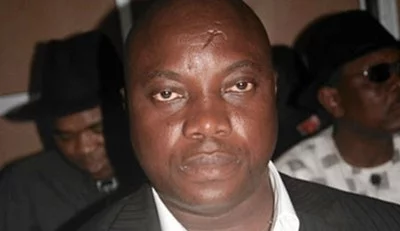
The gains of President Jonathan’s diplomacy are often overshadowed by misrepresentations of the size of his delegation, ignorance about the value of his foreign travels, and the positives of his constant engagement with the international community. I have had cause on more than one occasion to expose the lie about published figures about the size of his delegations. I intend to deal here with what is overlooked.
Given the damage that the Nigerian interest suffered a few years ago, the same interest needed to be clarified and strengthened. We are living witnesses to that short, critical, phase in Nigeria’s foreign relations when the country failed to show up at important international meetings, lost many positions in multilateral associations, forsook obligations, and found itself in a situation where many of our allies started wondering what had gone wrong with Nigeria. President Jonathan has brought the much-needed change in this arena, and has launched an operational framework for Nigerian diplomacy, which continues to strengthen the place of Nigeria in the world.
In 2010, as Acting President, he embarked on a number of diplomatic shuttles, as part of a deliberate attempt to reassure the world that Nigeria was well and secure despite the trauma of succession that it had just experienced and the divisive politics of zoning that threatened to scuttle the country’s political transition. Many may have forgotten, selective amnesia being a dangerous national malaise, that President Jonathan’s statesmanship, his humility, and the maturity that he displayed during that momentous season proved to be a strong stabilizing influence on a nervous Nigerian community. He had promised that Nigeria’s next general elections to be conducted under his watch, in 2011, even with him as a contestant, will be free and fair, and that nobody’s blood was worth being shed for him to win an election.
That promise was kept. The elections were not only free and fair, they were adjudged the best ever in Nigeria’s modern history. The achievement was not merely one of legitimacy; the applause from the international community was redemptive. Nigeria, at that point, almost a typical case study of the challenges of democratic consolidation, became yet another success story. President Jonathan has since taken many steps further to build on this.
One of the very early steps was a four-day, August 2011, seminar on Nigeria’s Foreign Policy Process, with inputs from the Presidential Advisory Committee on Foreign Affairs led by Chief Emeka Anyaoku. The seminar and the foreign policy experts, recommended, inter alia, a robust diplomacy, driven by Nigeria’s economic interests. This accent on self-interest had shown up during the Obasanjo years. It reflected an increasing awareness that Nigeria’s foreign policy should not be driven by the vainglory of being a certain brother’s keeper, or the Father Christmas pretensions that dominated it for years, rather, hard-headed pragmatism. The world had changed a lot since Nigeria distributed its oil wealth to other countries and asked for nothing in return. The new strategy called for partnership, mutual respect, enhanced and innovative diplomacy, and constructive exchange. In this context, President Jonathan leads a foreign policy process that has been fruitful and meaningful, and properly linked to domestic policy.
His foreign travels fall into three categories: state visits (formal state to state activity), courtesy visits (attendance at ceremonies, burials, inaugurations) and working visits (trips to attend multilateral, bilateral and regional meetings). Each of these visits is official, the ultimate gainer is Nigeria, and it is well worth noting that since his assumption of office, President Jonathan has not gone on any unofficial or private trip abroad.  It is a trite point that a strong foreign policy process, one which involves constant interaction and openness brings a country much goodwill, promotes understanding and strengthens the country’s friendship with other countries.  Closed countries are often treated with suspicion; their leaders are subjects of mystery. President Jonathan has worked very actively in the last two years to promote Brand Nigeria.
His foreign travels are usually, carefully chosen. He has equally played host to Heads of State and Governments and delegations from around the world including high profile visits by Britain’s David Cameron, Germany’s Angela Merkel, and US Secretary of State, Hillary Clinton.
On all of these occasions, Nigeria’s interest is strategically promoted. The President is accompanied on each of his trips by members of the National Assembly and Ministers who attend the relevant meetings and make necessary inputs for follow up action. Trade and investment always tops the agenda. The President personally leads the campaign of inviting investors to set up industries in Nigeria, and produce locally if they wish to take advantage of Nigeria’s huge market potential. Interestingly, Nigeria’s domestic security challenges have not proved to be a disincentive.
Foreign Direct Investment generated in the last year alone according to UNCTAD’s 2012 Investment Report was $8.9 billion making Nigeria No 1 in Africa and a top quartile investment destination in the world.  During a recent trip to Rio, Brazil, Nigeria signed an MOU with Electrobras to invest in the generation of 10, 000 MW; since then, there have been subsequent visits to Nigeria by Brazilian investors interested in infrastructure, food and beverages and consumer items. In October 2011, when President Jonathan met with the Australian investment community in Perth, on the sidelines of CHOGM, the Australia-Nigeria Trade and Investment Council (ANTIC) was established to facilitate the flow of investments into agriculture, mining  and the petrochemicals sector. Australian Council members have since visited Nigeria, and there is an agreement in place to provide technical support for the local mining sector. In April 2012, the President, in the course of an official visit to Germany, got Siemens to commit to investment in power generation, and turbine maintenance and repair in Nigeria. Generally, there has been massive support from governments and investors for the President’s policies and strong interest to invest in the country.
The corollary to this is the search for opportunities for Nigerian investors in foreign markets. The President often times travels with Nigerian businessmen who are looking for in-roads into foreign markets: the Nigerian private sector is involved in banking and insurance in Rwanda and other parts of Africa (Access Bank, IGI, GTBank), in manufacturing in Ethiopia, and Southern Africa (the Dangote Group, LUBCON) and so on. Such investors often require the support of the Nigerian government, which has been readily and consistently provided by the Jonathan administration.
The class of Nigerians who have probably benefitted most or who stand to do so, would be the Nigerians in Diaspora. Wherever President Jonathan goes in the world, he insists on the local embassy organizing a meeting with the Nigerians in the country. He likes to exchange views with them, find out how they are faring and even ask them to raise issues they may want him to take up with the host country. Such issues usually range from immigration to Nigerian issues, particularly absentee voting, and in one instance, request for the airlifting at Government expense of Nigerians who are willing to return to home, but cannot afford to do so.
President Jonathan never fails to acknowledge the importance of Nigerians abroad and the invaluable resource that they represent. To prove the point, many members of his government were sourced from the Diaspora.  The Jonathan administration has always had cause to defend the interest of distressed Nigerians in diaspora in pursuit of citizen diplomacy, famously the evacuation of distressed Nigerians from Libya (more than 2,000 between March and November 2011) and Egypt (more than 1, 000 in January 2012). It continues to engage with several development partners to ensure managed migration in the overall interests of all sides, including Nigerians. The fifth Nigeria/EU dialogue on Migration and Development was held in Abuja in January 2012.  Thus, the welfare of Nigerians in their relations with other countries has also been given the top most priority. Government has stood up to all countries in upholding the principle of reciprocity and by insisting that Nigerians be treated fairly.
Multilateral institutions usually have vacancies to be filled by nationals from all over the world. Even when the positions are rotated on a regional basis, the relevant countries still have to compete for such positions. It is not always an easy struggle as each country jostles for the positions with the highest possible visibility or influence. It requires sharp diplomacy to secure the support of other countries and to get the required number of votes for your candidate. When your country is not eligible for the post, you become one of the brides to be wooed to deliver the vote in favour of a particular country’s candidate. It sounds like routine diplomacy, but it is high-wire politics. In the past one year, President Jonathan has devoted considerable energy to lobbying and campaigning for Nigerian candidates to get into positions in international organizations. The achievement in this regard has been remarkable: Dr. Bernard O. Aliu, President of the Executive Council of the International Civil Aviation Organization (ICAO) based in Montreal, Canada;  Mrs. Theodora Oby Nwankwo, member, UN Committee on the Elimination of All forms Discrimination Against Women (CEDAW); Dr. Aisha Laraba Abdullahi, AU Commissioner for Political Affairs.
After three unsuccessful attempts, Nigeria finally broke the electoral jinx at the AU for the first time in ten years. Mrs. Salamatu Sulaiman, Commissioner Political, Peace and Security at the ECOWAS Commission;  Nigeria’s election to the Executive Board of UNESCO for a term of four years in November 2011; Nigeria’s election to the Governing Board of the United Nations Environmental Programme (UNEP); Nigeria was also elected to the Economic and Social Council (ECOSOC) on  October 24, 2011; Election of Mr. Adamu Mohammed, a Deputy Commissioner of Police, as the Vice President of INTERPOL representing Africa at a meeting held in Hanoi, Vietnam in October, 2011; Re-election of the Attorney General and Minister of Justice, Hon. Mohammed Bello Adoke, SAN to the International Law Commission on November 17, 2011. The election of Dr. Chile Eboe-Osuji as one of the six judges of the International Criminal Court (ICC) in a tightly contested election in New York in November, 2011 and the election last year, of Nigeria as the first President of the Executive Board of the United Nations Entry for Gender Equality and Women’s Empowerment (UN Women).
Our embassies abroad are also better organized.  Ambassador Gbenga Ashiru, Jonathan’s appointee as Minister of Foreign Affairs is a career diplomat who has been doing a good job of actualizing the new framework for Nigerian diplomacy. He is collegial in approach, and supportive of Mr. President’s vision. Career diplomats used to complain about their jobs being taken over and messed up by politicians. This year, President Jonathan handed over letters of commission to the country’s new set of ambassadors, mostly career diplomats, and because he has thus encouraged the professionalization of the diplomatic service, career diplomats are no longer complaining.  Many who have no foreign postings have achieved their career dreams as ambassadors-in-situ; our diplomats are reciprocating by showing higher levels of enthusiasm for the job. Nothing can be more damaging to a country’s foreign policy process than a distracted professional foreign affairs cadre.
We have a leader who is respected by the international community. When TIME international magazine named President Jonathan one of the 100 Most Influential leaders of the world in 2012, a fitting acknowledgement of his achievements, and the only African leader to be so recognized, the warm citation was written by the Liberian President. Our President also holds one of the highest national honours in Liberia. In the last year, he has also been honoured by people, governments and institutions in Nigeria, Ghana, Jamaica, and Trinidad and Tobago.
At the regional level, Nigeria’s voice now rings loud and clear; its interventions are taken more seriously. President Jonathan served as ECOWAS Chairman for two years, and received great applause at the end of his tenure in February 2012. Under his watch, he led both Nigeria and ECOWAS to put an end to the threatened mayhem in Cote D’Ivoire when Laurent Gbagbo refused to hand over power, after the 2010 Presidential elections in that country. He helped to check a similar crisis of self-perpetuation in office in Niger, and has provided support for democratic efforts in Liberia, Sierra Leone, Senegal, Mali, Ghana and Guinea Bissau. He was one of the first African leaders to recognize the National Transitional Council of Libya and ask Muammar Gaddaffi to quit. Since handing over as ECOWAS chair, President Jonathan has remained a respected voice among his brother Heads of State. At the moment, he is a co-mediator in the crisis in Mali. The relationship between Nigeria and other countries in the region, particularly Ghana, Chad, Cote d’Ivoire, Republic of Benin, Niger, Senegal and Liberia has never been stronger.
Commentators often insist that greater emphasis should be placed on domestic policy, not foreign policy. Our new framework links both strategically. The investments that are flowing into Nigeria create jobs,  deepen competition within the market, push the drive for necessary infrastructure further, and on all fronts, Brand Nigeria is strengthened.
Dr. Abati is Special Adviser (Media and Publicity) to President Jonathan.
 PremiumTimes

Nigerian Breweries Plc soars in bullish trading


The bullish run on the Nigerian equity market continued today with the NSE All- share index (ASI) recording its eighteenth daily gain in the last twenty sessions. The ASI reached its highest value since 6th June 2011 as it surged fully ahead in Q3-2012.
According to CSL analysts the ASI has advanced 19.80 per cent since the beginning of July as renewed investor interest trailed first half results.
Two out of every three stocks advanced in the general market as the non-financials anchored today’s rally. Nigerian Breweries, Cadbury and Ashaka Cement advanced strongly to lift the broad market index. The NSE Food and beverage index rallied 2.87 per cent on gains by Honey flour, Dangote flour, UTC and Cadbury.
A total of 546.83 million shares worth N1.82 billion were traded in 4,681 deals on the Nigerian Stock Exchange on Thursday.
Although, the volume of trading dropped compared with Wednesday’s 904.16 million shares valued at N5.5 billion traded in 5,340 deals, the All-Share Index grew by 232.04 points or 0.91 per cent to close at 25,874.43 from 25,642.39.
Similarly the market capitalisation, which opened at N8.162 trillion, appreciated by N76 billion($470million) or 0.93 per cent to close at N8.238 trillion($51.49 billion).
Nigerian Breweries led the gainers’ chart with a gain of N8.50 to close at N145 per share.
New Gold followed, gaining N3 to close at N2, 703 per unit, while Okomu Oil rose by N1.50 to close at N36.50 per share.
Cadbury appreciated by N1.02 to close at N21.56 per share, while UACN grew by 75k to close at N42.75 per unit.
On the other hand, International Breweries led the losers’ table with a loss of N1.66 to close at N15.03 per share.
Arbico trailed with a loss of 51k to close at N9.88 per share, while Zenith Bank lost 29k to close at N16 per share.
Diamond Bank depreciated by 22k to close at N3.31 per share, while Skye Bank dropped 14k to close at N3.14.
The NSE banking index moved southwards as a result of the losses recorded by the banking stocks.
 BusinessNews

Kuku warns FG: “Niger Delta may boil again if…”


Special Adviser to the President on Niger Delta and Chairman of the Presidential Amnesty Office, Hon. Kingsley Kuku has warned that the
Niger Delta region would experience a turbulent time again if the government fails to change the face of the oil producing communities.
Kuku said this at the public presentation of his book, “Remaking The Niger Delta: Challenges and Opportunities” in Lagos on Friday.
He noted that it is only the continuous amnesty programme initiated by the late Yar’Adua that would sustain peace in the regionHe said: “Today, as we savour the benefits of the amnesty proclamation and its attendant derivatives after disarmament, demobilization and reintegration, the nation has gone ahead in terms of oil production quota from a disturbing 700,000 barrels per day in the pre-proclamation era to an enviable figure of almost 3 million barrels per day.
“Crucially, the post amnesty programme merely gives relevant agencies such as the multinational oil companies, states, local governments, NDDC as well as the Ministry of Niger Delta the rare opportunity to commence immediate developmental efforts in order to avoid future
agitations that may take an entirely different dimension.
“This is very crucial because, unlike before, when there were no trained employable technicians of Niger Delta origin, we now have eminently qualified ones, who can favourably compete with their counterparts all over the world,” he noted.
DailyPost

Abuja court rules former police boss, Ehindero, ‘must’ face corruption trial


Former Inspector General of Police, Sunday Ehindero to face trial for allegedly embezzling money meant for the police force.

An Abuja High Court judge has told former Inspector General of Police, Sunday Ehindero, that he has a case to answer and should face prosecution for allegedly embezzling N16 million, meant for the police, while he was in office.
The judge, Mudashiru Oniyangi, dismissed an application filed by Mr. Ehindero seeking to quash the charges against him.
The former police boss, in his application, had challenged the jurisdiction of the court.
Mr. Ehindero is being prosecuted by the Independent Corrupt Practices and other related Offences Commission, ICPC.
The commission says Mr. Ehindero, and a Commissioner of Police in charge of Budget at the Force Headquarters, John Obaniyi, connived to embezzle the funds.
While Mr. Ehindero has been retired from the police, Mr. Obaniyi has been suspended.
Both men had filed separate notices of preliminary objection, challenging the jurisdiction of the court as well as the leave granted the ICPC to file charges against them. They had prayed the court to quash the six-count charge preferred against them by the anti-graft agency.
Mr. Oniyangi dismissed their applications.
The embezzled funds
Bayelsa State Government donated N567 million to the Nigeria Police for the purchase of arms, ammunition and riot control equipment, during the tenure of Mr. Ehindero as police chief.
The money, the ICPC says, was deposited in a bank from which it yielded an interest of N16 million. Investigations by the commission revealed that the interest disappeared between Mr. Ehindero and Mr. Obaniyi.
After its investigations revealed that both men embezzled the money, the commission went ahead to file a six-count charge against the two men.
Not wanting to respond to the charges, the two men through their lawyers wanted the charges dismissed.
Delivering his ruling, Mr. Oniyangi held that the anti-graft agency had, by the proof of evidence before the court, successfully established a prima facie evidence against the accused to warrant their being put to trial.
“Prima facie evidence has been shown by the ICPC through the exhibits and statements of witness to proceed with trial,” he said.
Mr. Oniyangi also held that the ICPC is competent to prosecute the accused, adding that the ICPC Act 2000, under which the duo were charged, was a valid law. He said that the submission of Mr. Ehindero’s counsel, Mike Ozekhome, that the ICPC Act 2000 is a non existing law, is not tenable.
The judge held that the offences the suspects were charged with, were known to law, stressing that it is not correct to say the ICPC is charging the accused under non-existent law. He said the commission is empowered to prosecute offences which fall under the penal and criminal codes.
Mr. Oniyangi dismissed the objections and subsequently ordered that Mr. Ehindero and Mr. Obaniyi be arraigned.
We are not guilty
After the ruling, Mr. Oniyangi read the charges to the accused persons.
They pleaded not guilty to the charges.
The judge refused to grant bail to Mr. Ehindero and Mr. Obaniyi on liberal terms as made in an oral application by their lawyer. He granted them bail in the sum of N10 million each and one surety in like sum.
Mr. Oniyangi ordered that the surety must swear to an affidavit of means. He also said the accused persons should be detained in prison if they failed to meet the bail conditions.
The accused face a seven-year jail term if found guilty.
The case has been adjourned to November 12 for accelerated hearing.
PremiumTimes