Thursday, 27 September 2012

I’m Ready To Go If Nigerians Don’t Want Me - Jonathan


President Goodluck Jonathan declared yesterday that he was ready to leave if Nigerians had demonstrated that they no longer wanted him as their president through the ballot box.
“I was ready to lose the election if Nigerians did not want me. If I was ready to be disgraced out of office to sanitise the system, that is to tell you I am ready to sanitise the system to bring about investments in our country,” Jonathan stated.
Speaking at a breakfast meeting on the Nigerian economy organised by the African Business Roundtable in New York, USA, Jonathan also noted that the reason why many Nigerian political leaders fight to sit tight in office was because of the fear of the unknown.
He, however, assured that he has vowed that the electoral reforms embarked upon by his administration would continue to ensure that the choice of the people emerge at every election, adding that he was fully committed to solving the nation’s electoral problems.
The Nigerian president added: “We are totally committed to solving our problem. We started with the electoral process and we have demonstrated our commitment in sanitising that system because when the people put you there you will be committed to serving the people.”
He assured investors that he would do everything to sanitise the investment environment to attract the much-needed investment and create jobs for the teeming youth who, he observed, make up the majority of the nation’s population.
Noting that this critical segment of the society could not be ignored as they were the ones that needed housing and jobs, Jonathan expressed hope that Nigeria could join the elite group of the world economies between eight and 10 years as it has been proved in other countries that it does not take eternity to solve the development problems of a country.
On Nigerians in Diaspora who want the opportunity to contribute their quota to the development of the country, he promised to carry the Nigerian people along in the governance process even though he conceded that it was not possible to involve all in the administration of the country at the same time. “We have a lot of eggheads in Nigeria. Unfortunately, not all will be ministers but we appoint them into teams where we have challenges to help address them. We meet monthly. Soon our economy will be what you will be proud of,” he said.
Present at the meeting were former British prime minister Tony Blair, former United States secretary of state Condoleezza Rice, international investors and captains of industry from Nigeria.
Jonathan told them that Nigeria has numerous problems but his government has decided to prioritise its options in order to systematically deal with the challenges.
Also speaking, Tony Blair urged Nigerians not to always accept the stance of the opposition on issues as they were not speaking for the majority of the citizens but a few vested interests.
Drumming support for President Jonathan, the former British prime minister lauded his effort to reform the political and economic sectors of the country, which he said was a difficult but necessary thing to do.
“One of the things I learned since leaving office is  that it is not easy to get the advice and take the decisions. Each set of the reforms are hard and tough. I know how difficult it is to make changes. When you are doing the changes, it is very, very tough and difficult for government. On the other hand, it is absolutely necessary,” he said.
Blair said with what was going on in Nigeria, the country was on its way up, noting that once Nigeria was on its way up, it meant that Africa was on its way up.
He said, “My plea is to stick with it, support the president and the ministers in making these changes. My plea to Nigerians is: Don’t be deterred by the voices that say they are representing the majority of the public but often are actually representing the minority or vested interests.
“Among all these difficulties and challenges, there is hope of optimism and opportunities for Nigeria. We all know that in politics as in life, the difficult thing is not in the saying but in the doing. It was all about the courage to make the changes that are necessary.
Leadership

For the Records: The June 12 election annulment speech of General Ibrahim Babangida, June 26, 1993


Fellow Nigerians,
I address you today with a deep sense of world history and particularly of the history of our great country. In the aftermath of the recently annulled Presidential Election, I feel, as I believe you yourself feel, a profound sense of disappointment at the outcome of our last efforts at laying the foundation of a viable democratic system of government in Nigeria .
I therefore wish, on behalf of myself and members of the National Defence and Security Council and indeed of my entire administration, to feel with my fellow countrymen and women for the cancellation of the election. It was a rather disappointing experience in the course of carrying through the last election of the transition to civil rule programme.
Nigeria has come a long way since this administration assumed power and leadership about eight years ago. In the attempt to grapple with the critical and monumental problems and challenges of National existence and social progress, this administration inaugurated and pursued sound and justifiable policies and programmes of reform.
These policies and programmes have touched virtually all aspects of our national life – the economy, political process, social structures, external relations, bureaucracy and even the family system. I believe strongly that in understanding, conception,
formulation and articulation, these policies and programmes are not only sound but also comparatively unassailable. I believe too that history, with the passage of time, would certainly score the administration high in its governance of our country.
Let me also express my deep conviction that the core strategy and structures of our reform policies and programmes, as enunciated in 1986/87 would, for a very long time, remain relevant and durable in the course of changing our country positively. I believe that at the exit of the Administration from power, we would leave behind for
prosperity, a country with an economy, the structures of which have been turned around for good. The average Nigerian person has come to reconcile himself with the fact that his or her social progress remain essentially in his or her hands in collaboration with other fellow Nigerians and not merely relying on what government alone could provide for him or her. The days are gone for good, when men and women trooped to government establishments for employment and for benevolence.
This administration has built the foundation that would take Nigerians away from their previous colonially-induced motivations and the encumbrances of colonialism. We have laid the foundation for self-reliant economic development and social justice. We have established a new basis in our country in which economic liberalization would continue to flourish alongside democratic forces and deregulated power structure. In all these, the average Nigerian person has more than ever before this administration imbibed and assimilated the values of hard work, resilience and self-confidence.
It is true that in the course of implementing our reform policies and programmes and especially because of the visionary zeal with which we approached the assignment and responded to incidental pressures of governance, we engendered a number of social forces in the country.
This is so because we sought to challenge and transform extant social forces which had in the past impeded growth and development of our country. We also sought to deal with the new forces to which our programmes of action gave rise. Thus in dealing with the dynamics of both the old and new social forces, we ran into certain difficulties.
In particular, during the course of handling the interlocking relationships between the old and new political forces and institutions, some problems had arisen leading us into a number of difficulties and thereby necessitating our having to tamper with the
rules and regulations laid down in the political programme. As a result, the administration unwittingly attracted enormous public suspicions of its intentions and objectives. Accordingly, we have experienced certain shortfalls and conflicting responses to the pulls and pushes of governance in the course of policy implementation.
I believe that areas of difficulties with the transition programme, especially from the last quarter of 1992 to the recent cancelled presidential election, derived primarily from the shortfalls in implementing the programmes of actions which, though objectively taken, may have caused a deviation from the original framework and
structure of the programme.
Fellow Nigerians, it is true that by the cancelled presidential election, we all found the nation at a peculiar bar of history which was neither bargained for, nor was it envisaged in the reform programmes of transition as enunciated in 1986/87. In the
circumstance, the administration had no option than to respond appropriately to the unfortunate experience of terminating the presidential election. Our actions are in full conformity with the original objectives of the transition to civil programme. It was also
in conformity with the avowed commitment of the administration to advance the cause of national unity, stability, and democracy. In annulling the presidential election, this administration was keenly aware of its promise in November 1992 that it would disengage and institute a return to democracy on August 27, 1993. We are
determined to keep the promise.
Since this transition, and indeed any transition, must have an end, I believe that our transition programme should and must come to an end, honestly and honourably.
History will bear witness that as an administration we have always striven, in all our policy decisions, to build the foundation of lasting democracy. Lasting democracy is not a temporary show of excitement and manipulation by an over-articulate section of the elite and its captive audience; lasting democracy is a permanent diet to nurture the soul of the whole nation and the political process.
Therefore, it is logical, as we have always insisted upon, that lasting democracy must be equated with political stability.
Informed by our sad experience of history, we require nothing short of a foundation for lasting democracy. As an administration, we cannot afford to leave Nigerian into a Third Republic with epileptic convulsions in its democratic health. Nigeria must therefore confront her own reality; she must solve her problems notwithstanding
other existing models of democracy in other parts of the world.
In my address to the nation in October 1992, when the first presidential primaries were cancelled, I had cause to remind our country men and women that there is nowhere iin the world in which the practice of democracy is the same, even if the principles are similar and even for countries sharing the same intellectual
tradition and cultural foundation. The history of our country is not the history of any other country in the world which is either practicing advanced democracy or struggling to lay the foundation for democracy. Yet, in spite of the uniqueness and peculiarities of Nigeria, there are certain prerequisites which constitute an
irreducible minimum for democracy. Such essential factors include:
A. Free and fair elections;
B. Uncoerced expression of voters preference in election;
C. Respect for electorate as unfettered final arbiter on elections;
D. Decorum and fairness on the part of the electoral umpires;
E. Absolute respect for the rule of law.
Fellow Nigerians, you would recall that it was precisely because the presidential primaries of last year did not meet the basic requirements of free and fair election that the Armed Forces Ruling Council, the, had good reason to cancel those primaries. The recently annulled presidential election was similarly afflicted by
these problems.
Even before the presidential elections, and indeed at the party conventions, we had full knowledge of the bad signals pertaining to the enormous breach of the rules and regulations of democracy elections. But because we were determined to keep faith with the deadline of 27th August 1993 for the return of civil rule, we overlooked the reported breaches. Unfortunately, these breaches continued into the presidential election of June 12, 1993, on an even greater proportion.
There were allegations of irregularities and other acts of bad conduct leveled against the presidential candidates but NEC went ahead and cleared them. There were proofs as well as documented evidence of widespread use of money during the party primaries as well as the presidential election. These were the same bad conduct
for which the party presidential primaries of 1992 were cancelled.
Evidence available to government put the total amount of money spent by the presidential candidates as over two billion , one hundred million naira (N2.1 billion). The use of money was again the major source of undermining the electoral process.
Both these allegations and evidence were known to the National Defence and Security Council before the holding of the June 12, 1993 election, the National Defence and Security Council overlooked these areas of problems in its determination to fulfill the promise to hand over to an elected president on due date.
Apart from the tremendous negative use of money during the party primaries and presidential elections, there were moral issues which were also overlooked by the Defence and National Security Council. There were cases of documented and confirmed conflict of interest between the government and both presidential aspirants which would compromise their positions and responsibilities were they to become
president. We believe that politics and government are not ends in themselves. Rather, service and effective amelioration of the condition of our people must remain the true purpose of politics.
It is true that the presidential election was generally seen to be free, fair and peaceful. However, there was in fact a huge array of election malpractices virtually in all the states of the federation before the actual voting began. There were authenticated reports of the election malpractices against party agents, officials of the National Electoral Commission and also some members of the electorate.
If all of these were clear violations of the electoral law there were proofs of manipulations through offer and acceptance of money and other forms of inducement against officials of the National Electoral Commission and members of the electorate. There were also evidence of conflict in the process of authentication and clearance of credentials of the presidential candidates. Indeed, up to the last few hours to the election, we continued in our earnest steadfastness with our transition deadline, to overlook vital facts.
For example, following the council’s deliberation which followed the court injunction suspending the election, majority of members of the National Defence and Security Council supported postponement of the election by one week. This was to allow NEC enough time to reach all the voters, especially in the rural areas, about the postponement. But persuaded by NEC that it was capable of relaying the information to the entire electorate within the few hours left before the election, the council, unfortunately, dropped the idea of shifting the voting day. Now, we know better. The conduct of the election, the behaviour of the candidates and post-election responses continued to elicit signals which the nation can only ignore at its peril.
It is against the foregoing background that the administration became highly concerned when these political conflicts and breaches were carried to the court.
It must be acknowledged that the performance of the judiciary on this occasion was less than satisfactory. The judiciary has been the bastion of the hopes and liberties of our citizens.
Therefore, when it became clear that the courts had become intimidated and subjected to the manipulation of the political process, and vested interests then the entire political system was in clear dangers.
This administration could not continue to watch the various high courts carry on their long drawn out processes and contradictory decisions while the nation slides into chaos.
It was under this circumstance that the National Defence and Security Council decided that it is in the supreme interest of law and order, political stability and peace that the presidential election be annulled. As an administration, we have had special interest and concern not only for the immediate needs of our society, but also in laying the foundation for generations to come.
To continue action on the basis of the June 12, 1993 election, and to proclaim and swear in a president who encouraged a campaign of divide and rule among our ethnic groups would have been detrimental to the survival of the Third Republic. Our need is for peace, stability and continuity of politics in the interest of all our people.
Fellow countrymen and women, although the National Electoral Commission and the Centre for Democratic Studies officially invited foreign observers for the presidential elections, the administration also considered it as important as a democratic society, that our activities and electoral conduct must be open not only to the citizenry of our country but also to the rest of the world. In spite of this commitment, the administration did not and cannot accept that foreign countries should interfere in our internal affairs and undermine our sovereignty.
The presidential election was no an exercise imposed on Nigerians by the United Nations or by the wishes of some global policemen of democracy. It was a decision embarked upon independently by the government of our country and for the interest of our country. This is because, we believe, just like other countries, that democracy and democratization are primary values which Nigerians should cultivate, sustain and consolidate so as to enhance freedom, liberties and social development of the citizenry.
The actions of these foreign countries are most unfortunate and highly regrettable. There is nowhere in the history of our country or indeed of the third world where these countries can be said to love Nigeria or Nigerians any more that the love we have for ourselves and for our country. Neither can they claim to love Nigeria any more than this administration loves our country.
Accordingly, I wish to state that this administration will take necessary action against any interest groups that seek to interfere in our internal affairs. In this vein, I wish to place on record the appreciation of this administration for the patience and understanding of Nigerians, the French, the Germans, the Russians and Irish governments in the current situation. I appeal to our fellow countrymen and women and indeed our foreign detractors that they should cultivate proper understanding and appreciation of the peculiar historic circumstances in the development of our country and the determination not only of this administration but indeed of all Nigerians to resolve the current crises.
Fellow Nigerians, the National Security and Defence Council have met several times since the June 12, 1993 election. The council has fully deliberated not only on our avowed commitment but also to bequeathing to posterity, a sound economic and political base in our country and we shall do so with honour. In our deliberations, we have also taken note of several extensive consultations with other members of this administration, with officers and men of the Armed Forces and will well-meaning Nigerian leaders of thought. We are committed to handing over power on 27th August 1993.
Accordingly, the National Defence and Security Council has decided that by the end of July 1993 the two political parties, under the supervision of a recomposed National Electoral Commission, will put in place the necessary process for the emergence of two presidential candidates.
This shall be conducted according to the rules and regulations governing the election of the president of the country. In this connection, government will in consultation with the two political parties and National Electoral Commission agree as to the best and quickest process of conducting the election.
In the light of our recent experience and, given the mood of the nation, the National Defence and Security Council has imposed additional conditions as a way of widening and deepening the base of electing the president and sanitizing the electoral process. Accordingly, the candidates for the coming election must:
(1) Not be less than 50 years old.
(2) Have not been convicted of any crime;
(3) Believe, by act of faith and practice, in the corporate existence of Nigerians;
(4) Posses records of personal, corporate and business interests which do not conflict with the national interests;
(5) Have been registered members of either of the two political parties for at least one year to this election.
All those previously banned from participating in the transition process other than those with criminal records, are hereby unbanned. They can all henceforth participate in the electoral process. This is with a view to enriching the quality of candidature for the election and at the same time tap the leadership resources of our country to the fullest. The decree to this effect will be promulgated.
Fellow Nigerians, I wish to finally acknowledge the tremendous value of your patience and understanding, especially in the face of national provocation.
I urge you to keep faith with the commitment of this administration.
I enjoin you to keep faith with the unity, peace and stability of our country for this is the only country that you and I can call our own. Nowhere in the world, no matter the prompting and inducements of foreign countries, can Nigerians ever be regarded as first class citizens. Nigeria is the only country that we have. We must therefore renew our hope in Nigeria, and faith and confidence in ourselves for continued growth, development and progress.
Thank you all, and God bless you.
YNaija

SEC extends deadline of of shares certificate dematerialisation


The committee inaugurated by the Securities and Exchange Commission (SEC) on dematerialisation of shares in the nation’s bourse has canvassed for an extension of the exercise.
Dematerialisation is the elimination of physical certificates or documents on ownership of securities through conversion to an electronic ownership mode domiciled with the Central Securities Clearing System Ltd. (CSCS).
Investigation on Wednesday in Lagos showed that extension of the deadline earlier scheduled for January 2013 is the consensus of most of the committee members interviewed separately.
Emeka Madubuike, the Chairman of the SEC Committee on Dematerialisation told the NAN that the deadline would likely be extended to ensure effective sensitisation of investors.
Madubuike, who is also the President, Association of Stockbroking Houses of Nigeria (ASHON), said that the extension was necessary for proper implementation of the policy.
He said that the capital market community was in the process of concluding arrangement for a nationwide enlightenment campaign and needed time to get the process right.
Madubuike said that the committee planned to get the details of all share certificates through biometrics and as a means of ensuring that dematerialised certificates belonged to their rightful owners.
Ms Arunma Oteh, SEC’s Director-General, had earlier urged investors to embrace the dematerialisation programme as it would make the market more efficient and in lined with global practices.
Oteh said that full dematerialisation “makes buying and selling of shares easier and also facilitates shareholders entrance in securities lending process in the nation’s bourse.’’
“People are still surprise that the stock market that is going to 50 years is still in this format,” Oteh said.
The director-general said that the market was working on a process for issuance of share certificates for retail investors on demand.
The SEC in a public notice dated March 13, has set Jan. 1, 2013 as deadline for the dematerialisation of all share certificates.
The notice said that all share certificates dematerialised on or before Jan. 1, 2013, would be at no cost to the shareholder, but that there would be a penalty for those done after that date.
It also said that the allotment of shares of public offerings would from now be by electronic processes that would transfer shares directly to the CSCS.
 BusinessNews

“General Gowon did not cede Bakassi to Cameroun” – Akinjide insists


Former Attorney-General of the Federation (AGF) and Minister of Justice, Chief Richard Akinjide, on Wednesday, declared that former head of state, General Yakubu Gowon, did not cede the Bakassi Peninsula to Cameroon.
The former minister, who was the guest speaker at the 2 Division, Nigerian army training week with the theme: “Developing requisite capabilities by the Nigerian Army for combating contemporary security challenges,” said it was a former head of state who signed an instrument that seceded the part of the country to Cameroon.
Akinjide, who did not give the name of the former head of state, said the matter was more complicated than what the people perceived.
According to him, “Nigeria did not secede the Bakassi Peninsula to Cameroon.
“There are a lot of rumour that General Gowon cede Bakassi to Cameroon. That is not true. He did not cede the place to Cameroon at all.
“The truth is that it was a former head of state who signed an instrument that the place belongs to Cameroon, and that was presented at the International Court of Justice (ICJ),” Akinjide declared.
He explained that for eight years when the case was on, every issue was considered, including the human element, saying that many memoranda were presented before the court.
DailyPost

ExxonMobil chief warns Nigeria could lose new investments because of new oil law


A bill seeking to overhaul Nigeria’s oil sector would lead to a halt in new investments if passed in its current form due to onerous fiscal terms, the head of ExxonMobil’s Nigeria operations warned Thursday.
Mark Ward, who also leads a grouping of oil majors operating in Africa’s top producer, said industry players shared the view that the current bill jeopardises Nigeria’s bid to boost new investment and output.
New investment in Nigeria’s oil industry has already been limited in recent years due to lingering uncertainty over the bill.
“Quite frankly, the extremely large investments that are needed are seriously at risk under the proposed PIB (Petroleum Industry Bill) terms,” he told a forum on the bill in the economic capital Lagos.
If the bill passes without significant changes, “the government’s aspirations to grow the business and the industry will not be met,” he said.
Oil Minister Diezani Alison-Madueke has described the bill as fair to the government, oil firms and Nigerians, who have long pushed for a fairer shake from an industry that has left the country’s Niger Delta region badly polluted.
Legislation to reform Nigeria’s much criticised oil sector was first introduced in 2008.
President Goodluck Jonathan sent a fresh version of the bill to parliament in July that lays out immense changes to the industry and restructures the state oil firm, widely seen as corruption-riddled.
Ward argued that the new bill could push the government take from oil revenue to above 90 percent of all revenue.
“Nigeria is already one of the most onerous fiscal regimes and now the government wants to make it tougher?…That is something we don’t understand,” Ward said.
Any hopes of expanding lucrative offshore production would be quashed if the bill passes unchanged, Ward said.
“For deepwater: we’re done. There are no investments that can be supported under the current terms of the PIB,” Ward said.
Nigeria’s house recently ended a recess and lawmakers have said the bill is among the first items to be debated in the new session.
Other concerns raised over the bill include powers granted to the president and the oil minister and what activists describe as insufficient measures to improve transparency.
Meanwhile, from the Nigerian perspective, Governor Rotimi Amaechi of the oil-rich Rivers state has applauded the PIB, urging law makers to speedily pass it.
In his view, PIB will promote investment and employment opportunities in the country.
Addressing members of the House of Representatives Committee on Air Force who paid him a courtesy visit on at Government House, Port Harcourt, Amaechi said the PIB would contribute to curbing the security challenges in the country.
He explained that apart from the state and federal government having a duty to fund security, passage of the PIB would pave way for investors to invest and create employment opportunities that would address the security challenges, poverty and unemployment facing the nation.
“The Petroleum Industry Bill (PIB) is a law for the overall benefit of all Nigerians to allow investors to come into the country and invest. This is so because, if we don’t enact a law that would attract investors, then we can’t make progress; right now investors are heading towards Angola, we must seek ways of attracting investors,” Amaechi said.
He urged the federal government to make the Nigerian National Petroleum Corporation (NNPC) a regulatory agency and give wider opportunities to the private sector to participate in investment to create more employment opportunities and tackle poverty in the country.
“As Governor, I don’t know the quantity of oil NNPC produces per day, this is why government should be a regulatory agency and allow investors to come in, and I think it will go a long way to address the needed peace in the country.”
 BusinessNews

$15m Ibori bribe: “Return money to Delta State, sack EFCC boss” – Edwin Clark weighs in


by Isi Esene
The self-styled godfather to the president, Chief Edwin Clark has called for the removal of the chairman of the Economic and Financial Crimes Commission, Ibrahim Lamorde over the $15m allegedly offered to former EFCC chairman, Nuhu Ribadu by the former Delta State governor, James Ibori.
Clark said this at a press briefing in Abuja to address matters regarding the alleged bribe. He canvassed for the prosecution of Lamorde, who was EFCC’s director of operations under Ribadu, when Ibori allegedly offered the money and was asked to fetch it from the home of a former presidential aide, Andy Uba, now a senator.
He said there were contradictions and lies in the affidavit deposed to by the EFCC concerning the Ibori’s $15m bribe insisting that the funds belong to the Delta State Government.
According  to him, an affidavit deposed to on August 10 2012 by Bello Yahaya, a police officer attached to the EFCC on behalf of the EFCC was suspect.
He gave an instance where Yahaya reportedly stated that no one has claimed ownership of the said money.
He said:
“In paragraph seven of his affidavit, Yahaya claimed: ‘I know as a fact that the said $15m is an unclaimed property and no one has claimed or shown any link to the sum’”.
“This is not true as in September 2009, the Delta State Elders and Leaders Stakeholders Forum in a protest march that took them to the Central Bank of Nigeria premises in Abuja submitted a written petition to the Governor of Central Bank urging him to refund the money to the Delta State Government as Ibori, as an individual, could not have raised the said huge sum.
“Also in the charges that were later dropped by the London Crown Court against James Ibori and in the statement of former EFCC chairman, Nuhu Ribadu statements to the Metropolitan Police, the ownership of the said money were not in doubt.”
He explained that this sort of actions will only portray the anti-graft agency in bad light urging them to do the right thing.
He said EFCC’s position on the alleged bribe offer will “put the anti-graft agency not only in ridicule, but portray it as an agency not transparent, competent and committed to war against corruption”.
YNaija

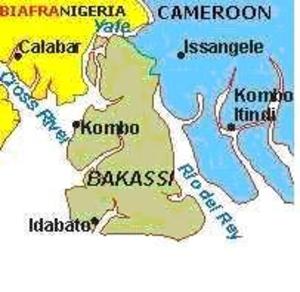
FG Must Appeal Bakassi judgment -Senate

THE Senate, yesterday, declared total rejection of the ceding of Bakassi Peninsula to Cameroon following the judgment of the International Court of Justice, ICJ, and directed President Goodluck Jonathan to urgently appeal the judgment.
The ICJ in its ruling in 2002 ceded Bakassi Peninsula, located in Cross River State of Nigeria to Cameroon, with a 10-year window gap for appeal which expires on October 9, 2012.
Also, the Paramount ruler of Bakassi, Dr. Edet Okon Etim, said in a letter to President Goodluck Jonathan that the most significant issue for the people of Bakassi was the right to self determination, which is enshrined in the UN Charter on Human Rights.
Bakassi protesters Photo by Johnbosco Agbakwuru
Meanwhile, the Foreign Affairs Minister, Mr. Olugbenga Ashiru, has been criticized by lawyers for his comments that members of the Nigerian Bar Association, NBA, that gave the Federal Government seven-day ultimatum to approach the ICJ to review the Bakassi case were doing so for pecuniary interest.
The position of the Senate came at a time  China and Japan are flexing muscles over the uninhabited Daiyou Islands in the South Pacific Island and Nigeria has 12 days to make a fresh case to ICJ on new facts supporting its claims to Bakassi peninsula.
While considering a motion on Bakassi sponsored by Senator Abdul Ningi and 17 others, the upper legislative chamber faulted the ICJ judgment, declaring it as null and void.
The Senate held that the Vienna Convention on treaties that required domestication of the ICJ judgment by a national parliament was not done by the National Assembly before Bakassi was handed over by fiat to  Cameroon by the Federal Government.
Bakassi could not be ceded to Cameroon —Senators
Senators during an emotion-laden debate expressed shock at the approach applied by the Federal Government in the handing over of Bakassi to Cameroon without referendum by the people of Bakassi as stipulated by the United Nations, UN.
Senate President, David Mark, who presided over the motion, maintained that Bakassi could not be ceded to Cameroon, adding that he would write to President Jonathan to immediately begin the appeal process which expires in nine days time.
According to him, “the resolution that we need to make is that Bakassi should not be ceded to Cameroon. I think that is the final objective of our decision.
“If we do not go to an appeal at all while we have subjected ourselves to the international court, I think that will be a grievous mistake. There is room for us to appeal. Going on an appeal is a line of action that we should not reject. If that is what is available through the court, we should utilise it. I think that is the most appropriate thing to do now. The most we should do now is to quickly rush an appeal in spite of what the President said at the UN.
“We have obeyed the international court to this point, but we still do not accept it. It is not that we accept it, we have simply obeyed their decision. We have not accepted it. There is a lot of pressure at home here and I think it is the belief of every Nigerian that we should not cede Bakassi, not the way it has happened. I think that is really where the problem is.”
Mark assures
Mark assured that the Senate would go ahead with all legislative processes to ensure that the judgment is over turned in favour of Nigeria.
He said: “There is a host of other things, letters written to National Assembly are actually here and we on our part have not done anything. We have neither rejected it nor said anything. They just came and went like that.
“We will revisit the letters and whilst we are urging the Federal Government to go on an appeal, we on our part will revisit the letters and see what we can do from our own side, may be to quickly again come up with a debate and then reject it and forward it to buttress our points and to buttress our resolutions arrived at today (yesterday),” he added.
Deputy Senate Leader, Abdul Ningi, leading debate on the motion urged Nigeria to appeal the judgment, stating that the whole process that led to ceding of Bakassi to Cameroon was full of irregularities. He argued that both Cameroon and Nigeria had not fully complied with details of the judgment, adding that new facts have emerged to show that the peninsula belongs to Nigeria, in accordance with article 61 of the ICJ.
He said: “The dateline of the judgment of the ICJ on the International Boundaries between Nigeria and Cameroon including Bakassi that cedes Bakassi Island from the Federal Republic of Nigeria to the Republic of Cameroon would expire by October 9, 2012.
Judgment erroneously based on agreement
“The judgment was erroneously based on agreement between the British and Calabar Chiefs in 1884. There has never been a precedent in history where any case of this nature was executed without a referendum as enshrined by the United Nations.
“There is lack of faithful implementation of articles 3 (1) and 2 (a) of the ‘Green Tree Agreement’ signed by both the Cameroon and Nigeria, thereby violating the basis of the implementation of the court of judgment.”
Senators to fund appeal process
Ningi added that the action of government was a conspiracy of silence against the minorities in Nigeria and that Senators had agreed to fund the appeal process.
“Let government appeal, we are ready to fund the processes if the problem of government is money,” he stated.
Senators unanimously backed the call for an appeal, as some of them who spoke, yesterday, urged government to physically reclaim the Island from Cameroon.
They said it was very shocking for government to hand over Bakassi without even a fight, pointing out several instances where there have been long drawn battles over lands between countries, without the ICJ settling the disputes.
Those that spoke include Senators Victor Ndoma-Egba, Bassey Otu, Heineken Lokpobiri, Haidi Abubakar, Enyinnaya Abaribe, Ita Enang and George Akume.
FG must protect us —Ndoma-Egba
Ndoma-Egba, PDP, Cross River Central, said the ceding of Bakassi to Cameroon was in complete violation of the fundamental human rights of the people of Cross River State.
He said: “Bakassi was ceded by Federal Government in spite of protest by Bakassi people, because they are minority of minorities. Bakassi was ceded in spite of the Senate not rectifying the treaty. The least Federal Government can do is to protect us.
“Federal Government must pay Cross River compensation. It is their land, their heritage, their history, their ancestors were buried there and Nigerian government keeps quiet about compensation. The government must protect us.”
Enyinnaya Abaribe in his contribution said the action of the Federal Government in hastily handing over Bakassi to Cameroon depicts that of a coward.
He said: “In which country in the world can a country willingly give away its property? It is a father that is weak that would be quick to admit that his child is at fault when there is a dispute. Nigeria is not a weak father so we must appeal.”
Senators want physical reclaimation
Senators Lokpobiri, PDP, Bayelsa West and Atiku Bagudu urged the Federal Government to use its physical might to quickly reclaim the Island while pursing the appeal.
According to Lokpobiri, “two options are available to Nigeria: the first option is to appeal. Second option is to go back to Bakassi and reclaim it. It is very unfortunate that in the 21st century, we could just hand over part of the country just like that. We should physically go and repossess the land. Since we have a bigger military might, we should go to Bakassi and repossess it.”
Also kicking against the ceding of Bakassi, Senator Haidi Abubakar, CPC Katsina Central said government had no choice but to appeal since no referendum was conducted. His words: “The issue of referendum has not been done. We must force the Federal Government to appeal.
But the former Attorney General of Cross River State, Mrs. Nella Rabana (SAN) who was at The Hague said those who were advising the Federal Government against approaching the ICJ to revisit the Bakassi issue should examine their position because “Nigeria has all along complied with the ruling of ICJ. So, asking that we invoke article 61 of ICJ statue is in fact, part of this compliance process and not a violation.”
Senator Ewah Bassey Henshaw, who represented Cross River South from 2007-2011, told us that the Obong of Calabar and the Efik Kingdom have resolved that they would not concede their territory on the basis of wartime contrivance between two leaders who did not have the consent of Bakassi people.
He said: “There is every reason for Nigeria to exercise its right of appeal which is also part of the compliance rather than shirking its responsibility.”
 Vanguard