Friday, 28 September 2012

Financial Times: Nigeria aviation: A new low


And then there were two. A fortnight after Air Nigeria folded, and three months after Dana Air was grounded following a crash in Lagos that killed 153 passengers and crew, Nigeria’s biggest airline Arik Air suspended all domestic flights on Thursday “until further notice”.
Thousands of people were left stranded at airports across the country. The only commercial carriers left in the sky are Aero, which has a dozen or so planes, and IRS, with six aircraft and a website that inspires little confidence. This in Africa’s most populous country, with distant commercial, political and oil industry capitals, and an unfriendly road network that makes flying the only option for businesspeople.
The Arik debacle shows the depth of the aviation sector rot. On its website the company said its operations had been disrupted by workers from the Federal Airports Authority of Nigeria. FAAN denied this, and said unions upset over unpaid salaries were responsible for picketing the airline’s offices in Lagos. Arik, which also flies regionally and to London, New York and Johannesburg, then spread the blame higher.
Addressing the media on Thursday afternoon, its management accused the aviation ministry and in particular the minister, Princess Stella Oduah, of having a personal interest in seeing the airline fail. Oduah, who is a close ally of President Goodluck Jonathan and describes herself on her website as “an amazon of a woman”, dismissed the allegations through a spokesman. Her ministry alleged that Arik was trying to divert attention away from the many millions of dollars it owes to the federal government. All this just a day after the Senate Committee on Aviation recommended that Arik be allowed to serve as the national carrier.
For frequent flyers in Nigeria, which accounts for around two-thirds of all the air traffic in West Africa, this is all very bad news. The Dana disaster, which occurred on the busy Abuja-Lagos route, had already left many people uneasy about flying. Though it has not yet resumed operations, Dana has been cleared for take-off, to the anger of some of the victims’ relatives who still don’t know what caused the crash.
The demise of privately-owned Air Nigeria also left a bitter taste, with passengers stranded in the UK reportedly forced to pay £40 each for aviation fuel for the journey home. Arik’s own future is now clouded.
Dung Pam, a Nigerian pilot and industry watcher, says weak regulation, political interference, fraud and high operating costs all contribute to the aviation crisis. Airlines need to consolidate to survive, he says.
But there is no sign that anyone who matters is listening. “We are on a slippery slope,” says Pam.
 BusinessNews

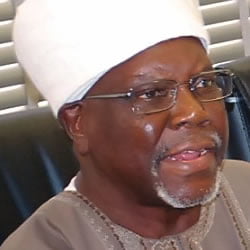
Secretary General of the Nigerian Supreme Council for Islamic Affairs, Lateef Adegbite is dead


The governor of Ogun State, in a statement signed by his Senior Special Assistant on Media, Funmi Wakama on Friday, announced the death of Dr Adegbite, who was also the Seriki Musulumi and Baba Adini of Egbaland.
According to the statement, Dr. Adegbite “passed on this (Friday) evening in Lagos, at the age of seventy nine.”
The statement described the late Seriki of Egbaland as one of the icons the state has produced for Nigeria.
“Dr. Adegbite shone like a star in the field of law and was well known across the world as the mouthpiece of Islam in Nigeria”, the governor stated, adding that “the late Seriki was a man who usually offered wise counsel to governments at Federal and State levels.”
“The demise of Dr Adegbite is not just a loss to Ogun State but to Nigeria as a whole” the governor mourned.
The Islamic cleric would be laid to rest on Saturday, according to Islamic rites.
DailyPost

“100 million Nigerians lack proper identification” – NIMC


As the security challenge facing the country mounts, more than 100 million Nigerians do not have proper identification, according to the National Identify Management Commission (NIMC).
Also, more than N940 million had being paid as severance benefits to former workers of the agency.
Its Director General Chris Onyemenam said yesterday in Abuja that “more than 75 per cent of the 150 million Nigerian Population have fake identification or are not properly captured.”
This, he noted, has not helped in addressing the many complicated issues of security, immigration and many such related issues.
Onyemenam said: “Disengagement cost of N940.0million” was paid to more than 4000 redundant workers who were ‘sacked’ from the Commission.”
The affected workers protested at the main entrance of the NIMC headquarters in Abuja, but NIMC’s Head Human Capital, Mrs. Winfred Ojieh, said: “Disengagement is not termination nor dismissal, as the such a worker have a chance to return. Because it is a process in a reform exercise, it is when you commit an offence that you will be dismissed”.
The NIMC said most of the affected workers lacked the requisite educational qualification to be employed or were redundant or absentee.
“Following successful consultation with the Unions, management formally declared a redundancy and subsequently followed laid down procedure in conducting the redundancy exercise including the negotiation sessions with representatives of all Unions inherited from the defunct Department of National Civic Registration (DNCR)” he said.
 DailyPost

“If one Abu Qaqa dies, it can generate 10 Abu Qaqas” – President Jonathan explains why the government is winning war against Boko Haram

by Stanley Azuakola

On the issue of Boko Haram, President Goodluck Jonathan’s official position at the United Nations General Assembly is that Nigeria’s three-prong strategy of a “robust” approach to neutralizing Boko Haram, holding indirect talks with the group and improving education in the North is working, and Nigeria is winning the war.
When one considers the recent killing of Boko Haram spokesman Abu Qaqa by the military and the recent arrest of militants in a bomb factory in Adamawa, it truly appears like the strategy is working. However, in an interview the president had with Reuters on the sidelines of the U.N. General Assembly, he downplayed the impact of the September 16 death of Abu Qaqa during a gun battle with soldiers in Kano.
“If I look at it, the trend is coming down. It is not because Abu Qaqa is dead. Abu Qaqa is just one person. If one Abu Qaqa dies, it can generate 10 Abu Qaqas,” said the president.
“The issue is not the death of one person. The issue is that the robust approach that government is taking, exploiting all possible means… is paying off, and we believe it will continue to pay off.”
Responding to the reported heavy handed tactics of the military, Jonathan made it clear that the military approach could only be one part of the solution. He said there were much more important approaches, like the push to improve agriculture, job prospects and access to Western-style education in the predominantly Muslim north.
The whole approach, both the security aspects, the indirect talks, and the job opportunities that we are creating, we are giving hope to the people. The education institutions we are establishing are giving hope to the people.
“One links up with the other to get to the respite we are seeing now. I cannot credit it to only one approach”, he said.
YNaija.com

N140m tax evasion: Lagos shuts down 13 more companies


Thirteen more companies have been shut down by the Lagos State Internal Revenue Service, LIRS, for allegedly defaulting to pay over N140 million in company taxes.
The affected companies owed taxes ranging from one to six years, the Head of LIRS Distrain Unit, Folasade Coker-Afolayan, said on Friday.
Lagos state has closed dozens of defaulting companies in the last few weeks as it steps up its tax drive, reputed as the nation’s most aggressive.
Eleven companies were sealed for tax debts of over N181.4 million last week.
Mrs. Coker-Afolayan said on Friday the additional companies were not legally known to the state government, and had been shut down between September 17 and 26.
“It is only the state government that is authorized to unseal these companies after remitting their taxes to government coffers,” she said.
The closures were ordered by the State High Court, and is in accordance with the Personal Income Tax Amendment Act of 2011, she said.
The Act provides that the LIRS could apply to the court for a warrant to close down companies defaulting in tax remittance.
Mrs. Coker- Afolayan described the state-wide company tax enforcement drive as successful and advised taxpayers to cooperate with officials of LIRS.
“It is better for companies to pay their taxes as at when due to avoid any sanction and by extension loss of productivity,” she said.
BusinessNews

“PIB is considerate, refreshing and competitive” – Petroleum minister responds to Shell’s claims

by Stanley Azuakola

On Thursday, in the United States of America, at a forum themed - Nigeria-Africa’s Frontier in the Global Economy, the Nigerian government gave what qualifies as its first rebuttal of claims by International Oil Companies (IOCs) that the new Petroleum Industry Bill (PIB) does not give them a fair shake.
At the roundtable, which was declared open by President Goodluck Jonathan, with former British prime minister, Tony Blair, and former U.S. secretary of state, Condoleezza Rice, as special guests, Nigeria’s minister of petroleum resources, Diezani Alison-Madueke, defended the terms of the proposed bill.
She said that the increment of the FG’s share from deep offshore oil blocks production from 61 to 73 per cent as contained in the draft Petroleum Industry Bill, PIB, before the National Assembly, was in order.
The parts of the PIB which are not going down well with the oil companies include the Nigerian Hydrocarbon Tax, of 50 per cent on profits from production in onshore and shallow water areas; 25 per cent tax from frontier acreages and deep offshore water areas; and a company income tax of 30 per cent, which they would all be expected to pay.
Shell’s country chair, Mutiu Sunmonu had argued at a stakeholders forum in Lagos last week that the fiscal terms of the law was uncompetitive and would stifle investments. However, the government insists that the two-tier tax rate is in line with its resolve to establish a progressive fiscal framework that would encourage further investment in the petroleum industry, while at the same time optimising revenues accruing to the government.
(Read: Wow! Oil companies owe Nigeria N1.57 trillion, greater than our capital budget)
According to Alison-Madueke: “I like to state that the proposed increase of government take to about 73 per cent is not only competitive, but also considerate, when we look at the scale of other entities around the world, like Norway, Indonesia and even Angola, with even higher government takes.
“The new PIB provides for a refreshing fiscal regime, which has strong incentives for enhanced exploration of new frontiers, especially in the Inland Sedimentary Basins as well as providing strong support base for the complete activation of the Gas Master Plan.
“Under the new arrangement, fiscal regime is anchored on royalty and tax, which is now predicated on production, as opposed to terrain and investment as was previously done.
“Royalty by production as outlined in the Bill is designed to capture the output of company as opposed to its location while creating a fair balance between small and big operators operating in the same terrain, thus giving operators the opportunity to make fair returns during field decline,” she added.
YNaija.com

Saudi Arabia deports more Nigerian women pilgrims

Saudi Arabia yesterday ignored protests by the Nigerian government over the deportation of female pilgrims to the holyland as the Saudi authorities deported another batch of 510 Nigerian female pilgrims to this year’s hajj. 171 pilgrims had earlier been deported on Wednesday.
The authorities of Saudi Arabia insisted that the women were unaccompanied by male relations which was considered against laid down rules of the kingdom.
An adamant Saudi Arabia has so far refused to yield any ground to Nigeria on the issue of alleged unaccompanied female pilgrims, in spite of spirited diplomatic efforts by the Federal Government.
An intriguing development was that the husband of one of the female deportees also returned home with his wife, in protest, when the Saudi Authorities refused to clear his wife, even after explaining that he was the husband of the woman.
A highly placed source at the National Hajj Commission who disclosed this said that the return (in protest) by the male pilgrim in question was an indication that there was more to the stance of the Saudi authorities than meets the eyes.
He said: “On board of the plane bringing the women is also a male pilgrim.  He decided to return home with his wife in protest when his explanations and entreaties to the fact that his wife was accompanied fell on deaf ears. That shows clearly that there is more to the issue than meets the eyes”.
It was learnt that the Chairman of the commission, Mallam Mohammed Bello, had a hectic day in Abuja, yesterday, as he had to shuttle between the Presidency and the National Assembly to brief his bosses in the executive, as well as, the Speaker of the House of Representatives, Aminu Tambuwal, who is the leader of the Federal Government delegation to this year’s hajj.
Officials of the Ministry of Foreign Affairs, were, until yesterday, still making efforts to get the necessary clearance for a Federal Government delegation to visit Saudi Arabia with a view to resolving the issue.
President Goodluck Ebele Jonathan  had on Wednesday constituted a Presidential delegation to interface with the Saudi authorities over the issue surrounding the detained Nigerian female pilgrims at King Abdul-Azziz International Airport, Jeddah.
The Secretary to the Government of the Federation, SGF, Senator Anyim Pius Anyim, named Aminu  Tambuwal as leader of that delegation.
Other members are: Minister of State II for  Foreign Affairs,  Dr. Nuruddeen Mohammed, Ambassador Shehu Galadanchi;  Sheikh Sherif Saleh and Chairman of the Hajj Commission, Muhammad Bello.
The delegation is expected to depart for Saudi Arabia as soon as an appointment is finalised with the appropriate Saudi authorities.
Senate had on Wednesday asked President Goodluck Jonathan to liaise with the King of Saudi Arabia, King Fahad Abdulaziz to allow over 1, 500 Nigerian female pilgrims stranded in Saudi airport entry into the holy land to perform their hajj.
The directive was upon the adoption of a motion entitled, ‘Refusal of the Saudi Arabian Authority to grant entry to over 500 Nigerian female pilgrims’ sponsored by Senator Atiku Bagudu.
Leading debate on the motion, Bagudu lamented the refusal of Saudi Arabian authorities to allow the pilgrims entry into the country despite fulfilling all visa requirements.
He said, “Over 500 Nigerian female pilgrims from the various states of the federation that arrived Saudi Arabia for this year’s hajj were denied entry upon arrival at the airport in Jedda and Medina.
“All the requirements for visa and entry into Saudi Arabia had been met by the pilgrims and were still denied entry.”
The motion was widely supported by Senators as some of them that spoke yesterday urged Nigerian government to quickly intervene in the crisis, adding that the stranded pilgrims are going through untold hardships.
Senator Uche Chukwumerije, PDP, Abia while contributing to the motion asked the Federal Government to develop a new foreign policy that will protect Nigerians abroad.
He said, “Nigeria must take a robust diplomatic position and make it clear to the world that any Nigeria anywhere must be given protection of that place, if they failed, we are going to visit same on their citizens here.”
Chukwumerije also urged the Senate to mandate local coordinating authorities to ensure that pilgrims fulfill all the legal requirements of Saudi Arabia before embarking on pilgrimage.
Senate President, David Mark, who presided over the motion in his ruling, decried the situation despite interventions from Federal Government.
Mark urged the Saudi Arabia authorities to allow the pilgrims perform their religious obligation having arrived in the country.
He said, “I think that from the effort so made by the Minister of foreign affairs, rather than urge government, I think that we should ask the President to talk directly with the Saudi king because the way they operate there, nobody else may make any difference. The foreign Affairs Minister has done all he can, he has spoken to his counterpart, he has invited the ambassador, they have done whatever they possibly can and nothing has changed
“Our pilgrim having gone this far, we should insist that they should be allowed to perform the hajj and if there are lessons, we will take the necessary corrections.”
It will be recalled that no fewer than 1200  Nigerian female pilgrims from Taraba and Katsina states who were denied entry into Saudi Arabia and deported from the Medina airport, yesterday  arrived the Mallam Aminu Kano International Airport, Kano, ..
Meanwhile, the Saudi Arabian Ambassador to Nigeria, Mr. Khalid Abdrabuh yesterday gave an  assurance that the controversy over the detention of  about 1,200   female Nigerian pilgrims in Saudi Arabia will be resolved today.
More than 908 women were detained at the Jeddah Airport  while   171 of them were deported to Nigeria on Wednesday.
The Saudi Ambassador  explained that the issue of detention of pilgrims who failed to meet entry requirements was not restricted to Nigeria. According to him, some pilgrims from other countries have also been subjected to similar screening on arrival at the Holy Land.
He also  hinted that  officials of the Saudi  Ministry of Hajj were already  holding talks with a delegation of the Nigerian Ministry of Foreign Affairs in Mecca on the issue.
He  made the pledge shortly after meeting with the Speaker of the House of Representatives, Hon. Aminu Tambuwal at the National Assembly.
The Federal Government had  on Wednesday given  the Saudi Arabian government 24 hours to resolve the issue. The Vice President, Namadi Sambo who  gave the order also appointed  Tambuwal as  head of federal government delegation to Saudi Arabia to resolve the impasse.
On the strenght of that presidential intervention, Tambuwal met with the Saudi Arabian envoy behind closed doors on Thursday where the duo deliberated on the way out of the pilgrimage  standoff.
Tambuwal who spoke to journalists at the end of the meeting also   disclosed   that the Nigerian mission in Riyadh has been  meeting with the  Saudi authorities to resolve the situation.
However,  chairman of the House Committee on Foreign Affairs, Hon. Nnenna Elendu-Ukeje, has warned that Nigeria will not hesitate to bring back her people if the issue was  not resolved today.
The National Hajj Commission of Nigeria had on Wednesday briefed the Foreign Affairs Committee of the House on the matter. The standoff began when the Saudi Arabian authorities discovered that hundreds of
female Nigerian pilgrims  were without their statutory male escorts which is a prerequisite to  entry into Saudi Arabia.
Vanguard