Tuesday, 9 October 2012

Boko Haram: Yobe Governor Reportedly Moves Family Out Of Damaturu


– Yobe State Governor, Ibrahim Gaidam
By SaharaReporters, New York
A source within the government of Yobe State has told SaharaReporters that Governor Ibrahim Gaidam had moved his family out of Damaturu, capital of Yobe State, to an unknown location. The source said the governor’s decision to relocate his family was informed by Boko Haram’s widening insurgency and terrorism in the state.
A security source in the state also revealed that the governor had adopted extraordinary security measures to insulate himself as well as members of his close family from the violent activities of the militant Islamist group.
The state governor earlier decided that Yobe State should not have any official activities linked to “the Governor’s Wife’s Office.” It is a common practice in most states to create a formal office for the governors’ wives, complete with programs and high-profile activities.
Governor Gaidam’s spokesman, Abdullahi Bego, recently went on radio to deny that the governor had moved his family. Even so, Mr. Bego could not explain the whereabouts of the governor’s family. Nor did he affirm that they were still in Damaturu, the state capital. Our source insisted that the First Family had been moved.
A top opposition politician in the state, who asked for anonymity, criticized the governor for moving his family to a safe place even as Boko Haram continues to make the lives of other residents miserable.
“It is a bad omen for the governor to hide his family somewhere when he has been pleading with others not to flee the state.”

A Northern Response to Chinua Achebe’s Book, “There Was a Country”


0
nzeogwu


NORTHERN NIGERIAN MUSLIMS AND THE NIGERIAN CIVIL WAR: BETWEEN ACHEBE AND OTHER IGBO INTELLECTUALS
By Ibraheem A. Waziri
iawaziri@yahoo.com
Is it just that ignorance reigns in Nigeria or our public intellectuals do not have passion for details and deep philosophical inquiry into the nature and realities of our socio-cultural formation and its history for the best of their opinions. These can be the only open and not so stretched explanations to Chinua Achebe’s blatant, below status and insincere depiction of the Nigerian Civil War of 1967 – 70 in the light of a so called jihadist expansionist goal of Muslims of northern Nigeria. The opinion summary of his latest book, There Was a Country, as he published in the UK Guardian, Tuesday, 2nd 2012, make bold this meaningless assertion:
“But if the diabolical disregard for human life seen during the war was not due to the northern military elite’s jihadist or genocidal obsession, then why were there more small arms used on Biafran soil than during the entire second world war? Why were there 100,000 casualties on the much larger Nigerian side compared with more than 2 million – mainly children – Biafrans killed?”
Needless to mention that Achebe is not alone in this kind of portrayal that is typical of*recent Igbo ‘intellectuals’ when it comes to discussing the civil war. The task of re-educating them and the crop of their students is therefore necessary if the dream of a greater Nigeria in fair neighborliness is to be realized.
Yes, northern Nigerians are mainly and majorly proud and faithful Muslims with unique culture and a record of close interactions with other world civilizations since time. They have for long known and understood that not everybody must look like them or believe in what they believed in, before peace, social cohesion and fair neighborliness are justifiably established. In fact it can be authoritatively said that northern Nigeria of the 1960s, formed one the most cosmopolitan and accommodating social spaces in the whole world. When the Ghanaian president Kwame Nkrumah wanted to initiate and draft Nigeria’s prime minister Abubakar Tafawa Balewa and the premier of the northern region Ahmadu Bello into his Pan-Africanism, they clearly told him that they were not racists and believed in the universal nature of truth, justice, fairness and equality of humankind regardless of race or ethnicity and that reflected the way they managed northern Nigeria and the country in general.
Chinua Achebe
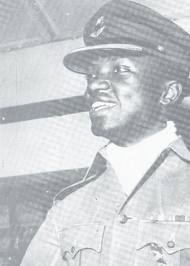
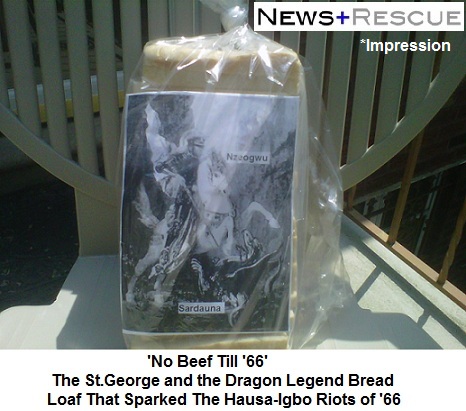
It was this world-view with its values and norms guiding intra and inter-pinning of human relations that saw a northern Nigeria of the 1960s as a home to many Igbos. In*modern history the top one percent of the most literate and influential Igbo personalities once lived in northern Nigeria or spoke Hausa, the dominant language in the North. It was here that Major Chukuma Kaduna Nzeogwu’s parents settled and gave birth to him in 1937. He grew up with all opportunities unhindered and got the award of love, justice and trust of the then premier of the Northern Region, Sir Ahmadu Bello until he finally, easily and safely got access to him, in the night, in his house, in the privacy of his bedroom and killed him in front of his wife with no struggle, no any suspecting guard to check him or even ask him hard questions.*It is finished. Brutus killed his Caesar in cold blood of treachery, hatred and breach of trust.
Kaduna Nzeogwu
Describing a similar situation in the same operation kill, where Major Ifeajuna an Igbo soldier and Major Nzeagwu’s co-kill planner and partner, shot Brigadier Maimalari, Bernard Odogwu, an Igbo Nigerian Diplomat at the times of the events, in his book, No Place to Hide – Crises and Conflicts inside Biafra, clearly put it, “I am particularly shocked at the news that Major Ifeajuna personally shot and killed his mentor, Brigadier Maimalari. My God! That must have been Caesar and Brutus come alive…”
What then could have been the fate of other Igbos in many parts of the North who enjoyed the same love, trust and protection of the other northerners who began to see a new streak of arrogance, condescension in the behavior of the Igbo who were illussioned in the new leadership of General Ironsi to the extent that, as told by our parents, they used to mock the northerners, imitating the cries and squeaks of Abubakar Tafawa Balewa before he died in the hands of Major Ifeajuna. Still Igbo intellectuals engage in this mockery as the Nigerian military historian Max Siollun, recently re-told the story of Nzeogwu’s kill, which clearly portrayed Ahmadu Bello as a coward and a simpleton who hide behind his wife when he saw that Nzeagwu was certain to get him. These provocations and the details of stories such as captured by David Muffett, a*British colonial officer who wrote the account of the 1966 coup in a book titled, Let Truth Be Told, outlining the Igbo elite’s detailed plan to take control of not only the political structures but even the social structures of the North by killing all the then northern emirs in the final.
Related: NewsRescue- Post-Colonial Nigeria: Did Igbo’s Draw First Blood? Another Lekan Explosive!
Some including Achebe are still contesting that the kill was not an Igbo carefully planned affair but rather a coup plotted against all Nigerian leaders of then. Yet all Igbos in prominent positions were missed in the fire and it was said the president, Dr. Nnamdi Azikwe was missed because he was out of the country for a medical checkup.*The question is could they have missed Sir Ahmadu Bello or Abubakar Tafawa Balewa if any was on a medical trip or they would have postponed the operations for more appropriate date that would guarantee and ensure an all inclusive kill?
Yet, the pogroms that followed the events and the civil war were unfortunate (more objective details of which were written by Elechi Amadi in Sunset at Biafra). But the characterization of Northerners as Muslim jihadists who were already prepared and ready to stage a ‘holy jihad’ against Igbo, as a reason for the war is very untrue and intellectually insincere. Just because Igbo intellectuals have to find reasons then it doesn’t mean every reason must be dashed out. Just because they need someone to blame doesn’t mean the 21st century image of fundamentalist Islam must be projected backward into the story of Nigeria to justify a perspective.
Besides what religion did the major actors of the war on the federal side professed? General Yakubu Gowon, General Theopilus Danjuma and General Joseph Garba, were Christians. Chief Awolowo, the intellectual architect of the War was a Christian. General Olusegun Obasanjo and General Adekunle were all not Northerners. The prominent name in the commands that is a core Muslim northerner was only General Murtala Muhammed.*Even if all the others were Muslims what sense could it have made for the Muslims to have fought the Igbos only to establish the leadership of General Yakubu Gowan who was a Christian, the same and only reason they supposedly could have fought the Igbos? Gowon enjoyed the support of all Muslim northerners as my good friend Alhaji Yakubu Musa, currently a media assistant to President Goodluck Jonathan who is from a devout Muslim family, once mentioned how he was named Yakubu in celebration of Gowon’s visit to Kano on a day that coincided with his birthday.
No. The truth of the matter is Igbo betrayed the trust given to them in the then northern Nigeria by the singular act of betrayal of Nzeogwu on Ahmadu Bello and the subsequent poor management of their relationship with their hosts that bred suspicion of complicity in the plans of the kill and a thought of greater conspiracy.
The way forward is not to employ a wider and more efficient propaganda machinery to score cheap sympathy and sponsor the production of a sensationalist movie in the Holly Wood, Tears of the Sun, starring Bruce Willis and displaying that northern Nigerian Muslim Hausa will attempt to do the same in the present Nigeria and in the recent future and can be stopped only by the Americans.
The way forward is to always tell the truth, accept faults, take responsibilities for errors and constantly preach the gospel of keeping trust, commitments and fair neighborliness.*Let’s make the younger generation and the entire world know that we are one in Nigeria and the top one percent of Igbo most informed political and public intellectuals lived in the North or even spoke Hausa. This ranging from Chinua Achebe himself, Cyprian Ekwensi, Major Chukwuma Kaduna Nzeagwu, General Emeka Ojukwu or Dr. Nmandi Azikwe. Cyprian Ekwensi even copied and translated the literary work of my uncle; John Tafida Umaru titled, Jiki Magayi, from Hausa to English, titled it, African Nights Entertainment, and dubbed it his own without acknowledgement, adding to his literary stock, achievement and fame.*The world must know the good contribution their living in the North and speaking its language brought into their skills and perspectives, that, which won them the accolades they so celebrate and rejoice in, today. A fact which they and their friends always want to hide!
NewsRescue

Uniport shut down as students set Omuokiri-Aluu ablaze

PORT HARCOURT: Students of the University of Port Harcourt, went on the rampage Tuesday  protesting the murder of four of their colleagues by youths in Omuokiri-Aluu community  last Friday and set ablaze no fewer than 12 houses in the community even as the university has been shut down by the school authorities.
Spokesman of the university, Dr William Wordi confirmed the closure of the school to the Vanguard on phone.  He assured he was going to send an official statement.  It was yet to come at the time of this report.
University of Port Harcourt students brutally beaten and burnt alive
Students from other institution under  the aegis of National Association of Nigeria Students, NANS, stormed the university  to mobilise  students in Port Harcourt to protest against the brutal killing of three of their colleagues and one other  by riotous youths in Omuokiri-Aluu community  last Friday.
The rampaging students blocked the East West road for several hours before allegedly marching to Omuokiri-Aluu community to start wrecking havoc. Community sources told the Vanguard that they torched about twelve houses.
Vanguard gathered that while the rampaging students were on the East West road, they reportedly insisted that they would only move out of the road after the Vice Chancellor of the University, Prof Joseph Ajienka had addressed them.  The Vice Chancellor reportedly obliged them after securing assurances that he would not be rough handled
Sources said while the Vice Chancellor came to plead with the students to shun any temptation to be violent some of the students immediately started hurling sachet water at him.
Vanguard gathered that it took the timely intervention of security operatives to whisk him away from the spot.  At press time, security operatives had been drafted to quell the situation.
Vanguard

Desola Ade Unuigbe: Jungle Justice: I Am With Aluu Community


After seeing only two of the pictures that were being circulated about the 4 “innocent” boys murdered by the Aluu community, and hearing bits and pieces of the story surrounding their deaths, I did not even bother to watch the murder video as I again got angry at my country and tweeted a couple of things about how I had lost all hope in the country, and the countrymen.
One of my brothers immediately tackled me on bbm and tried to get me to see things differently. The truth is that I do. And my anger has simply been misinterpreted. And allow me admit here that my deep hatred towards
Nigeria has been overly convincing. I do not hate Nigeria and probably never will. I will probably always carry an unlit torch of hope for her in my heart. Because I am like a mother when it comes to Nigeria; your child does something bad and you want to punish her, let her know that it is unacceptable to treat people in certain ways. But then in the next minute of a positive achievement you are proudly displaying medals and showing her off to your friends.
I am that mother.
Let me start off by pointing out two things that this situation has made me become aware of, firstly, we obviously do not know the whole story about this alleged laptop and phone theft or cultism or armed robbery resulting in the murder of these four students of University of Port Harcourt. Secondly, the Nigerian people have become so confused that they now do not know where to direct their anger. Or humanity. Or inhumanity.
Just to be clear, I do not in anyway whatsoever support that gruesome murder, I do not support the video of that murder, I do not support the people circulating it, I do not support the people who where murdered, and I do not support the community that carried out the murder. But I understand that community.
I am that community.
Humans are by nature animalistic and barbaric people. Before education and literacy, we had no clue how to live, what to eat or what to wear. The only thing that has helped us achieve some sort of civilization and sophistication is education. So all of this, is just a cover up. Because inside of me, I am an animal, and if cornered, the only defense I have of myself and my family is too attack and attack blindly. Animals do not see reason.
It is because we are animals, dressed up as humans, that we have created the law. We need some sort of regulation and guide because if we are left to wander and control ourselves, we would hurt ourselves.
So we have put our faith in people that we have chosen, people that we trust to help us hear our voice and make sane decisions to profit us as a group of people. That is why we have the government. Not to rule us, but to guide us. Somewhere along the line, the Nigerian government must have gotten the wrong message about why they were put in the positions that they are in. I think it started with the oil, but that is another anger entirely.
I’m not going to focus on the empty promises that we have gotten over the decades, or the unfairness to most Nigerians in their own country, because I don’t even know their story. What I do know is this. The Nigerian people have now reached a point where our government is pointless to us. Our ears are filled with empty promises of change, quelled corruption, discovered secrets and hidden loot. We have heard it all, and we have seen it all.
We do not have a functioning police system. The legal system is flawed. The media is tilted in ways we can’t even begin to comprehend. And the government is king. So let me ask this, if there is a crime, a crime so painful and hurtful, one that personally affects you, one that there’s every possibility that the prepertartors will go free. And if you could, if you were given the opportunity to take matters into your own hands, what would you do?
That’s jungle justice.
If someone walks up to me and says to me, “See this man, he is the one that killed your father. We are not totally sure yet, but we have certain reasons to believe he is the one. And if we let him go now he will get away. So take him”. I will take him. I will hurt him. I will cause him pain in all the ways that I have felt pain. That’s jungle justice.
The law says that every man is innocent until proven guilty. True. But who is doing the proving? And how long is it taking? Nigerians are tired and are having to resort to their own hands for justice. And humanity is dead because we are not human, we are animals. The law should be the human, and Nigeria has no law.
So what do we do?
With jungle justice there is usually no fairness or patience to listen to sides. But even our legal system now has no fairness. Are there no innocent people in jail? Are there no innocent men who have been hung while the guilty ones who sacrificed them sit and watch? Nigeria needs jungle justice. And that’s why I am on the side of the Aluu community. Not because I have no emotions, and not because I am completely evil, but because we have gotten to a period where our actions can be our only words. And the government must be forced to hear.
The Nigerian people do not know where to direct their anger. We are now confused people. We should be angry at the system, and not just empty anger, we should be angry such that our actions are our words. And if we can kill ourselves for minimal reasons, why can’t we fight this bloody system? Because the system is bloody. The massacre in Mubi is still fresh off our lips and again we are dealt with another atrocity that the Nigerian government will slyly push aside till a more convenient time.
A lot of people are condemning the act. A lot of people are condemning the people who acted so barbaric and evil. I will not condemn. I am the people. I have been pushed aside and waited and waited for investigations to finish so that I could have justice. For decades. I am tired of waiting. I will take justice in my hand and pull it out whenever I please. I will misuse justice. I will spit on justice like I have been spat on. I will walk all over justice like I have been walked on. I will hurt whoever I have to hurt for the government to see that Nigeria is in chaos. And that they need to make a turnaround. I will poo on justice till the Nigerian government sees me and stops investigating long enough to actually act.
They are still investigating the Mubi Massacre.
They are still investigating the ABSU gang Molestation.
They are still investigating Boko Haram bombings.
They are still investigating James Ibori’s theft.
They are still investigating corruption in the power sector.
They are still investigating the Dana crash, Sosoliso crash, Bell View crash.
They are still investigating the death of Rotimi Williams.
They are still investigating elections MKO Abiola should have won.
They are still investigating the fuel subsidy scam.
They are still investigating the 2013 budget.
They are still investigating offshore accounts that Abacha had and we can’t find.
They are still investigating.
While they are investigating, let us take justice in our own hands, and channel our anger towards the government. Let them see that we have had enough and wont just mouth off for a couple of days and return to our lives. While they are investigating, let us take a moment to not reflect on the crime of Aluu community, but to reflect on what pushed them there.
That anger is also in all of us.
We are Aluu community.
Again, just to be extra clear on the matter, I do not in anyway whatsoever support that gruesome murder, I do not support the video of that murder, I do not support the people circulating it, I do not support the people who where murdered, and I do not support the community that carried out the murder. But I understand that community.
 DailyPost

Bakassi: Why Nigeria won’t appeal ICJ verdict, by govt

by:

Bakassi: Why Nigeria won’t appeal ICJ verdict, by govt
Failed case will be diplomatically damaging, says Attorney-General
Advocates of a fresh legal action over Bakassi lost the battle last night.
The Federal Government last night declared that it will not appeal the judgment of the International Court of Justice (ICJ) on the ceding of the oil-rich Bakassi Peninsula to Cameroon.
The decision was communicated in a statement by Attorney General of the Federation Mohammed Adoke.
The nation’s number one law officer said after consultations locally and with an international firm, he decided not to explore the window of appeal because “an application for a review is virtually bound to fail.”
Besides, a failed application for review by Nigeria “will be diplomatically damaging to Nigeria”.
The government’s position reflects The Nation’s exclusive story last Friday that the government had decided not to appeal the ruling. It was a day that many newspapers reported that government had decided to appeal the judgement.
Government said yesterday that it did not have any new evidence to enable it successfully challenge the judgment.
The full text of the Attorney general’s statement is as follows:
“It will be recalled that on 10th October 2002, the International Court of Justice (ICJ) delivered judgment in Land and Maritime Boundary between Cameroon and Nigeria, which covers about 2000 kilometres extending from Lake Chad to the Sea. It will also be recalled that before the judgment was delivered, President Olusegun Obasanjo, GCFR of Nigeria and President Paul Biya of the Republic of Cameroon gave their respective undertaking to the international community to abide by the judgment of the Court.
“The commitment and undertakings given by both Heads of Government were confirmed by the establishment of the Cameroon-Nigeria Mixed Commission (CNMC) pursuant to the Joint Communiqué adopted at a Summit Meeting on 15 November 2002 in Geneva. The CNMC is composed of the representatives of Cameroon, Nigeria and the United Nations and is chaired by the Special Representative of the United Nations Secretary General for West Africa.
“The CNMC has held 29 Sessions since its inception and has peacefully, amicably and successfully:
(a) brought Cameroon and Nigeria back to negotiation table;
(b) supervised the handing over of 33 ceded villages to Cameroon and 1 to Nigeria in December, 2003 and received 3 settlements and territory in Adamawa and Borno States Sectors from Cameroon in 2004;
(c) initiated the Enugu-Abakiliki-Mamfe-Mutengene Road project as part of the confidence building measures between the two countries;
(d) supervised peaceful withdrawal of Civil Administration, Military and Police Forces and transfer of authority in the Bakassi Peninsula by Nigeria to Cameroon in 2008 in line with the modalities contained in the Greentree Agreement signed by Cameroon and Nigeria in 2006 which the United Nations, Germany, USA, France, UK and Northern Ireland witnessed; and
(e) commenced the emplacement of boundary beacons/pillars along the land boundary and initiated final mapping of the whole stretch of the boundary. It is instructive to note that about 1800 kilometres of the boundary have so far been assessed for Pillar Emplacement leaving only about 220 km to complete the assessment of the entire boundary.
“The Greentree Agreement was also signed by H. E. Paul Biya, and President President Olusegun Obasanjo GCFR, on 12 June, 2006, in Long Island, Greentree, New York, USA; reaffirming their willingness to peacefully implement the judgment of the ICJ. The Agreement contains the modalities for withdrawal and transfer of authority in the Bakassi Peninsula by Nigeria to Cameroon in pursuance of the ICJ Judgment.The Follow-Up Committee comprising representatives of Nigeria and Cameroon wasestablished to monitor the implementation of the Agreement and settle any dispute regarding the interpretation and implementation of the Agreement. Nigeria handed over the Bakassi Peninsula to Cameroon in 2008.
“The Statute of the International Court of Justice provides that the Judgment of the Court is final and without appeal. However, following the resolutions of both Houses of the National Assembly calling on the Executive to take steps to apply for a review of the judgment, President Goodluck Ebele Jonathan called a Stakeholders meeting comprising the leadership of the National Assembly, the Governors of Akwa Ibom and Cross River States, the Members of the National Assembly from both States, the Secretary to the Government of the Federation, the Attorney General of the Federation and Minister of Justice, the Minister of Foreign Affairs and Director General, National Boundary Commission to review the situation.
“The Stakeholders Meeting after due deliberations constituted a Committee comprising the Secretary to the Government of the Federation, the Attorney General of the Federation, the Minister of Foreign Affairs, Director General, National Boundary Commission and Members of the National Assembly namely: Senator Victor Ndoma Egba, Dr. Ali Ahmed and Nnena Ukaje to examine the issues in contention and available options for Nigeria including, but not limited to the application for review of the ICJ Judgment, appropriate political and diplomatic solutions.
“Although the judgment of the ICJ is final and not subject to appeal, the ICJ Statute provides for circumstances under which its judgment can be reviewed. The relevant provisions are:
(a) Article 61 (1) which provides that the Court can review its judgment upon the discovery of some fact of such a nature as to be a decisive factor, which fact was, when the judgment was given, unknown to the court and also to the party claiming revision, always provided that such ignorance was due not to negligence;
(b) Article 61 (4) which stipulates that application for revision must be made at least within six months of the discovery of the new fact, and
(c) Article 61(5), which provide that no application for revision may be made after the lapse of 10 years from the date of the judgment.
“The implication of the above provisions of the ICJ Statute is that a case for revision of the judgment of the court can only be successful if:
(a) the application for revision is based on the discovery of a new fact;
(b) the fact must have existed prior to the delivery of the judgment;
(c) the newly discovered fact must be of a decisive nature; and
(d) the party seeking revision (Nigeria) and the Court, must not have known of the fact at the time of the delivery of the judgment.
“The Committee proceeded to examine the case for revision against the requirements of Article 61 of the ICJ Statute and was constrained to observe from the oral presentations made to it by the proponents of the revision that the strict requirements of Article 61 could not be satisfied. This is because theirpresentation was unable to show that Nigeria has discovereda decisive fact that was unknown to her before the ICJ judgment, which is capable of swaying the Court to decide in its favour.This is more so as most of the issues canvassed in support of the case for a revision of the ICJ judgment had been canvassed and pronounced upon by the ICJ in its 2002 judgment.
“The Federal Government also retained a firm of international legal practitioners to advise on the merits and demerits of the case for revision. The firm after considering all the materials that were placed at its disposal against the requirements of Article 61 of the ICJ Statute came to the reasoned conclusion that “an application for a review is virtually bound to fail” and that “a failed application will be diplomatically damaging to Nigeria”.
11. In view of the foregoing, the Federal Government is of the informed view that with less than two days to the period when the revision will be statute barred (October 9, 2012), it would be impossible for Nigeria to satisfy the requirements of Articles 61(1) -(5) of the ICJ Statute.Government has therefore decided that it will not be in the national interest to apply for revision of the 2002 ICJ Judgment in respect of the Land and Maritime Boundary between Cameroon and Nigeria.
“Government is however concerned about the plight of Nigerians living in the Bakassi Peninsula and the allegations of human rights abuses being perpetrated against Nigerians in the Peninsula and is determined to engage Cameroon within the framework of the existing implementation mechanisms agreed to by Nigeria and Cameroon in order to protect the rights and livelihoods of Nigerians living in the Peninsula. Nigeria will also not relent in seeking appropriate remedies provided by international law such as the invocation of the compulsory jurisdiction of the ICJ; Petitioning the United Nations Human Rights Council and good offices of the United Nations Secretary General which has played pivotal role in ensuring the peaceful demarcation and delimitation of the boundary between the two countries and other confidence building measures and calls on the United Nations to continue to provide assistance to the affected populations.
“Finally the Federal Government wishes to assure all Nigerians especially the people living in the Bakassi Peninsula of its determination to explore all avenues necessary to protect their interests including but not limited to negotiations aimed at buying back the territory, if feasible, the convening of bilateral meeting of the Heads of State and Government to ensure protection and development of the affected population.In the meantime, we call on all well meaning Nigerians in the Bakassi peninsula to be law abiding and to allow the various initiatives being undertaken by the Federal Government to bear fruitful results.”
 The Nation

The Money-changers

By Femi Aribisala
God forbid that where two or three are gathered in the name of Jesus, an offering should not be collected.
To be a successful pastor, you really have to learn the tricks of the trade.  This has nothing to do with preaching insightful and inspiring messages.  Neither does it have to do with ministering to the spiritual needs of the members of the church.  The pastor succeeds or fails according to his ability to pull a crowd and extort as much money as possible from his congregation.  If he fails in these vital areas, he is not likely to survive for long as a pastor.
The technique is simple but effective.  You tell your congregants that for every naira they give, they will get a hundredfold return.  Even those in debt are encouraged to get out of debt by giving out of their indebtedness.
Pastor Paula White of Without Walls International Church, Tampa, Florida (U.S.A.) is a master practitioner of this money-grubbing technique.  In one of her television broadcasts, she asked her audience to open their bibles to Psalm 66, verse 12.  This reads: “Through the fire, through the water, God brought us out into a wealthy place.”  Then she said: “God says he wants you to sow sixty-six dollars and twelve cents.  Or you can sow six thousand, six hundred and twelve dollars.”
Money activator
These are the voices of strangers who make merchandise of men by peddling the word of God.  Peter says: “These teachers in their greed will tell you anything to get hold of your money.” (2 Peter 2:3).  Indeed, pastors tell Christians that money operates like a “gel activator.”  The promises of God proclaimed in our messages are sealed until a “seed offering” is given to activate it.  Therefore, you are likely to see different members of our congregation suddenly get up in the middle of our sermons to throw money at our feet.  One pastor put it very succinctly.  He said: “Anointing without money is equal to annoyance.”
This makes the offering-time the focal point of our services.  Here, the pastoral imagination has run wild.  Just give the offering a highfalutin name and it becomes the commandment of God.  In those days when I attended part-time Zoe Ministries Worldwide in Victoria Island, Lagos; three offerings were collected in every service: one for “the Father;” another for “the Son;” and yet another for “the Holy Spirit.”
In one parish of Redeemed Church, the pastor counselled the poor: “If you don’t have an offering, borrow from your neighbour.”  Never mind that the promise of God says the believer shall lend to many nations but shall not borrow. (Deuteronomy 15:6).
Even though Jesus says when we give, our right hand should not know what our left hand is doing (Matthew 6:3); some pastors insist offerings must be held up for all to see, in the attempt to embarrass those not inclined to give, or those inclined to offer notes in the smaller currency denominations.  In the branch of Zoe Ministries I attended, the pastor proscribed altogether the giving of offerings in the smaller currency notes.  “My God is not a poor God,” he declared.
One popular convention requires everybody to march forward, one by one, to drop their offerings on a tray placed strategically in front of the pastor; so we can observe exactly how much they are giving and thereby intimidate them into giving more than they would like to.  It also serves to embarrass those who cannot give and stay behind.
At other times, we constrain our members to make public vows and pledges.  One of my former pastors used to say:  “Pledge more than you have; stretch your faith.” When the time comes to redeem the pledge, we will hit you with Ecclesiastes 5:4-6 which says if you make a vow and don’t redeem it God will destroy the work of your hands.
Blessing time
One technique is to take the offering early in order to ensure people don’t leave before the money can be taken from them.  But sometimes this strategy backfires.  In one of the services I attended at Pentecostal Assembly, the pastor noticed that some of the wealthier church-members came in after the offering had been collected.  So he insisted it should be collected again.  The reason he gave was a classic.  He said: “I don’t want anybody here to be denied the blessings of the day.”  Of course, God only blesses during offering times.
Yetunde Olanrewaju came up with what I presume is a parable.  She said one day, a swarm of bees descended on a church while a service was in session.  The people panicked and started running out of the building.  But the Pastor was up in arms.  “Wait, wait, please wait,” he pleaded to no avail.  “We haven’t yet collected the offering.”  God forbid that where two or three are gathered in the name of Jesus, an offering should not be collected.
Charlene Animashaun was head of the money-counters in her parish.  While the offering was still being counted, the new pastor sent someone to collect a certain amount of the money.  Charlene sent word back that the count had yet to be completed.  The procedure was to document the amount and then lodge it in the bank.  That way, any withdrawals would have a paper-trail.
But the new Pastor would not be denied.  He barged into to the counting-room and kicked up a fuss.  He reminded all and sundry he was now the pastor.  What the pastor demands, the pastor gets; no questions asked.  He grabbed the money with the stern warning that his authority should never be challenged again.  Charlene got the message and quietly resigned her position as head of the money-counters.  She has since resigned from the church itself.
It is an open secret that pastors are not accountable for the monies we routinely collect.  Christians simply leave the policing to God, thereby giving us a free hand to be as honest or dishonest as our conscience permits.  This ensures that financial impropriety is widespread in churches and Christian ministries, but buried under the carpet.
Soul traders
The plan was to have many churches in Victoria Island, Lagos gather on a Sunday morning and go “prayer-walking,” under the aegis of the zonal Pentecostal Fellowship of Nigeria.  We would walk around the streets and claim them spiritually for Jesus.  But there was a logistical problem.  If we would not have services in our churches that Sunday, we would not be able to collect the offering.
Somebody finally came up with a solution.  We would meet briefly in our churches for the sole purpose of collecting the offering, and then assemble as planned.  But then another problem arose.  What would happen to those we convert to Christianity on the way?  Which churches would they be asked to attend?  Here again, a genius came up with the solution.  “At the end of the exercise,” she said, “we will seat down and share the souls.”
“Alas, alas, that great city Babylon, that mighty city! For in one hour your judgment has come. And the merchants of the earth will weep and mourn over her, for no one buys their merchandise anymore: merchandise of gold and silver,.. horses and chariots, and bodies and souls of men.” (Revelation 18:10-13).
Vanguard

Nigerian Christians, Muslims Protest Against Common Enemy

Muslims pray while Christians form a protective human chain around them during a protest on common problems faced in Nigeria, January 10, 2012.
 
Heather Murdock