Since last month, more than three million people have watched a
YouTube video
featuring just the mix of irresistible elements that often spell going
viral: an adorable dancing baby, an equally adorable giggling toddler
and Psy's "Gangnam Style." But when some viewers noticed something
troubling in the video, pointing out that both children were unsafely
harnessed in the wrong kinds of car seats, they were excoriated as
"killjoys," "sanctimommies" and "Nazis."
"Oh for God's sake people stop being so judgemental [sic] over safety
on a video and just enjoy it," read a typical complaint. "JESUS!"
"It's people like you who like to ruin the internet for all of us," moaned another.
That hostility is yet another example of a puzzling disconnect in the
American parental psyche. We live in an undeniable culture of
helicopter parenting, in which we will go to extraordinary lengths to
shield our kids from even the most remote of possible threats or
discomforts. (Wipe warmers, anyone?) We worry about an endless cavalcade
of potential dangers, from crib bumpers and BPA to blind cords and
arsenic-laced juice boxes. And yet, many parents are bizarrely
inattentive, if not downright hostile, to discussion of the single most
deadly threat to our children's safety, and ironically the one perhaps
most within our power to actually offset: automobiles.
While we pride ourselves on vanquishing the menace of whole grapes
(choking hazards!) and sandboxes (toxic stews!), car accidents remain
the
single biggest killer of kids aged
1 to 14, according to the CDC. National Highway Traffic Safety
Administration data shows that an average of three children under 14 die
in car accidents
every day. And while studies have continually shown that
properly used child restraints dramatically lower rates of death and injury, an oft-cited NHTSA study found that astonishingly,
roughly three out of four car seats are used improperly.
Those who perform car seat inspections report even lower rates of
proper use. "Over the more than 40 years I've worked in this field, I
have found that about 90 percent of safety seats are either incorrectly
selected, fitted, or used," says Stephanie Tombrello, the Executive
Director of
SafetyBeltSafe U.S.A.
In a 2012 Insurance Institute for Highway Safety/University of Michigan Transportation Research Institute
study of car seat installations using the LATCH system, only 13 percent were done correctly.
Popular culture is so rife with examples of car seat mistakes that
there's a Facebook group dedicated to trying to make MTV aware of the
egregious safety lapses shown just on "Teen Mom" and "16 and Pregnant." I
have personally lost count of the times I have seen parents allow their
children to travel unsafely, both wittingly and not. The very same
responsible, well-informed parents who vaunt their children's rigorous,
no-high fructose corn syrup diets and screen-free playtime often see no
corresponding need to extend that same wariness to the very real danger
of car travel. At a time when hyper-involved parents micromanage every
facet of their children's lives, sometimes to almost comical extremes,
they are often oddly unwilling to take extra steps to protect those very
lives, saying it's too much of a "nuisance" to keep toddlers
rear-facing for the maximum length of time or too "embarrassing" to
insist a small fourth grader use a booster seat. Equally unnerving, many
parents simply have absolutely no idea they're not following the latest
safety recommendations.
In this fishbowl age of social media, when our parenting is
perpetually on display, society casts a validating glow on certain kinds
of vigilance; passing on viral warnings about outlier threats like
falling furniture is seen as a badge of engaged, thoughtful parenting.
(A sweet Facebook
photo
of an off-duty police officer guarding his daughter's elementary school
three days after the Newtown massacre was "liked" over a million
times.) But while refusing to let a drop of shampoo with sodium lauryl
sulfate touch your child's hair conveys a certain cool mom cred, being
extra vigilant about the most prevalent actual killer of children is
dismissed as ridiculously over the top, like insisting kids need
wetsuits to play in puddles. Being the mom who cares about car seat
safety doesn't garner you "likes;" it elicits eye rolls, behind-the-back
snickers and hostility. The one time I worked up enough courage to send
a private note of polite concern to an acquaintance who had posted a
photo of her toddler improperly buckled into what appeared to a
dangerously outdated seat, both she and her husband summarily unfriended
me.
Why is it so much more comforting to slay paper tigers than to do our
utmost to counteract a very real and well-documented danger? Is it
simply too frightening to acknowledge that the children we adore really
are vulnerable on a daily basis, under the most seemingly innocuous of
circumstances -- the 4,327th drive to basketball practice or the grocery
store?
In the wake of Newtown, every parent in America was forced to ponder
the unthinkable: that on an otherwise ordinary, unthreatening day, we
could lose a child forever. We wept for the silence in those twenty
Connecticut homes and asked what we could do to prevent another family
from experiencing it. Obviously, there is no perfect, catchall solution;
children will be hurt and die every day, no matter what we do. But
while parents are scurrying off in droves to buy bulletproof backpacks,
ostensibly in the interest of saving their children's lives, they might
want to stop and take a quick look in the back seat. There really is
something very simple we can do to make our kids demonstrably safer. It
isn't particularly sexy or heroic; it just means making changes to the
most humdrum of daily routines. Why is it a solution so many parents
won't hear?
Want to find out if your kids are buckled up safely?
HuffingtonPost
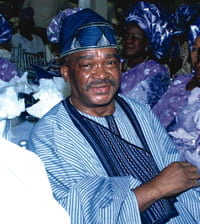 A
former Military Governor of Ogun state, retired Lt. General Oladipo
Diya, on Friday expressed gratitude to President Goodluck Jonathan and
the Council of State for recently granting him state pardon, saying that
he has forgive Abacha.
A
former Military Governor of Ogun state, retired Lt. General Oladipo
Diya, on Friday expressed gratitude to President Goodluck Jonathan and
the Council of State for recently granting him state pardon, saying that
he has forgive Abacha.

 HuffingtonPost