By Theresa Ugwuanyi
Just as the leadership of the Nigerian Navy is making arrangement to partner with security agencies of the United States of American to fight crude oil theft in the Gulf of Guinea, a senior military officer attached to the Joint Task Force (JTF) in Port Harcourt has accused top politicians and some monarchs in the Niger Delta region of supporting oil thieves in the region.
He disclosed this to Daily Independent on Monday.
The officer, who commands one of the units of the JTF, told Daily Independent that he got to know this following his deployment from Delta to Rivers State.
“I have discovered that traditional rulers and top politicians in the region would not want oil theft to end. This is because they make good money from the business. They even finance some of the operations,” he said.
He added: “Apart from financing, one out of five oil thieves arrested by JTF must be a relative or son to one traditional ruler or an influential person of that particular state. This may sound like a typical tale by moonlight stuff, but that is the hard fact.”
He stressed that if the government was serious about curtailing the activities of oil criminals, “Government must first look inward, deal with the root of the problem first before looking at the rest of the body. I can confirm to you that what the Minister of Finance said Nigeria is losing daily is very minute compared to what we (JTF) know.”
He stated that on several occasions when bunkerers were arrested, “people that would be coming to beg for their release are either top politicians, traditional rulers, government functionaries.
“You would be shocked that as they are talking to you, a call is coming to your phone from a top military officer from Abuja ordering you to release the suspects,” he added.
The soldier, who confessed he was fed-up with the insincerity of government in the fight against oil theft, regretted that criminals in the region were stealing the country dry.
“Some of them have no other job, no other means of livelihood, lazy and academically epileptic, so they cannot do any other thing other than stealing oil.”
He said he has spent 13 months with the JTF in Delta and in Rivers and, “I have seen more than enough. I am even gathering data, pictures and facts, one day I hope to write a book on this subject because this is not fair, it is injustice of the highest order.”
The JTF operative added: “ I decided to speak to you because I know you would not sell me out like one other journalist in Port Harcourt that I spoke to and he decided to go behind to the oil barons and finished me there; today he is on their payroll and would not write any negative story again about oil theft in the country.”
via: Innocent Eboigbe Ehiz fb
Tuesday, 23 July 2013

Monday, 22 July 2013
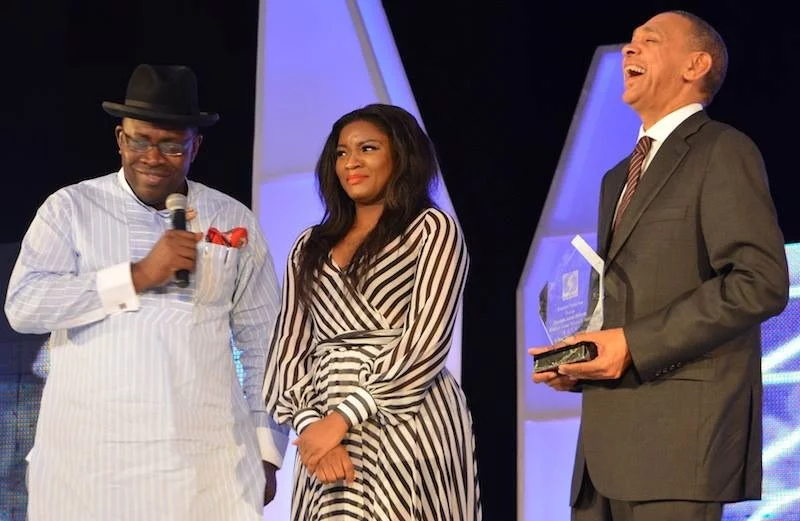
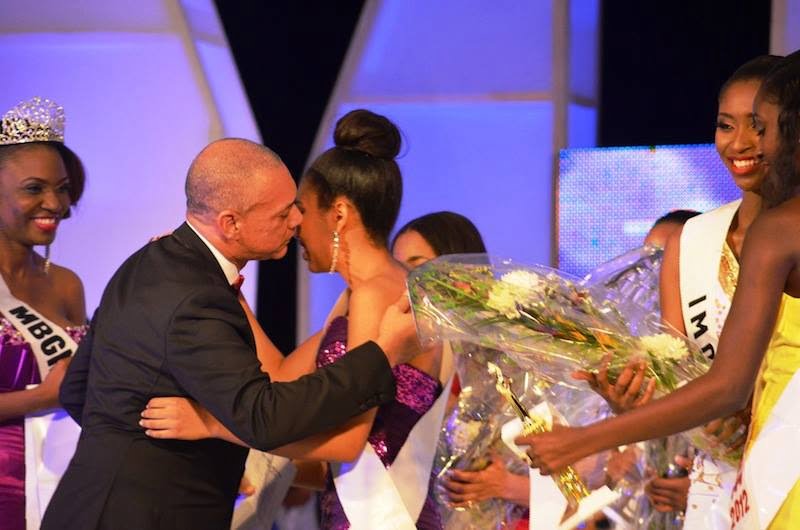
MBGN ends in grand style [PHOTOS]

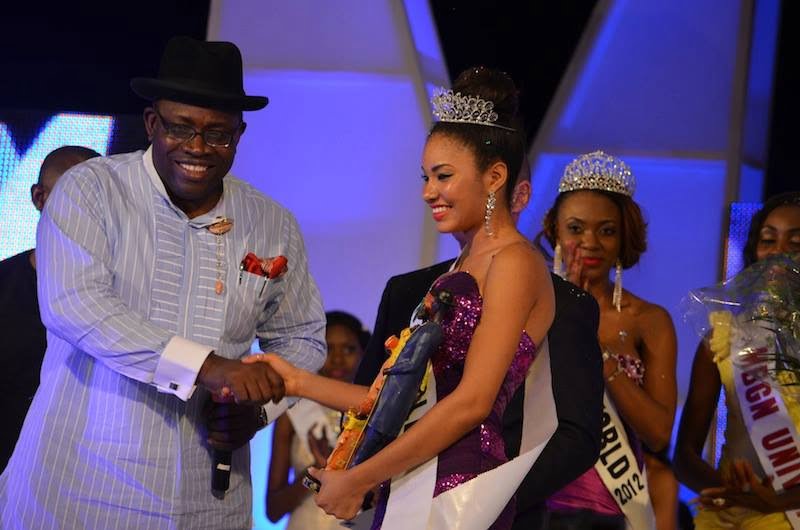
Miss Anna Ebiere Banner has emerged winner of the 26thedition of the Most Beautiful Girl in Nigeria (MBGN) Pageant, which held at the weekend in Yenagoa, the Bayelsa State capital.
By this victory, Ebiere Banner, who represented Bayelsa State at the event, has bagged an appointment as Honorary Special Assistant on Culture and Tourism to Governor Seriake Dickson as well as Cultural Ambassador of Bayelsa.
First runner up went to Miss Imo,Stephanie Okwu, Miss Adamawa, Powede Lawrence clinched the second runner-up position while Miss Kaduna, Enoma Agbonifo emerged third runner-up and Miss Abuja, Melissa Devidal took the fourth runner-up honour.
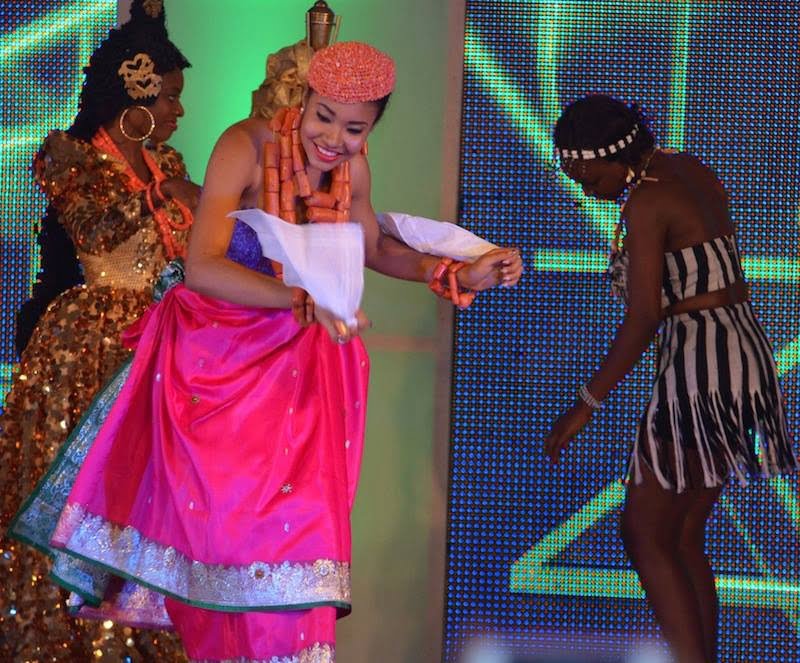
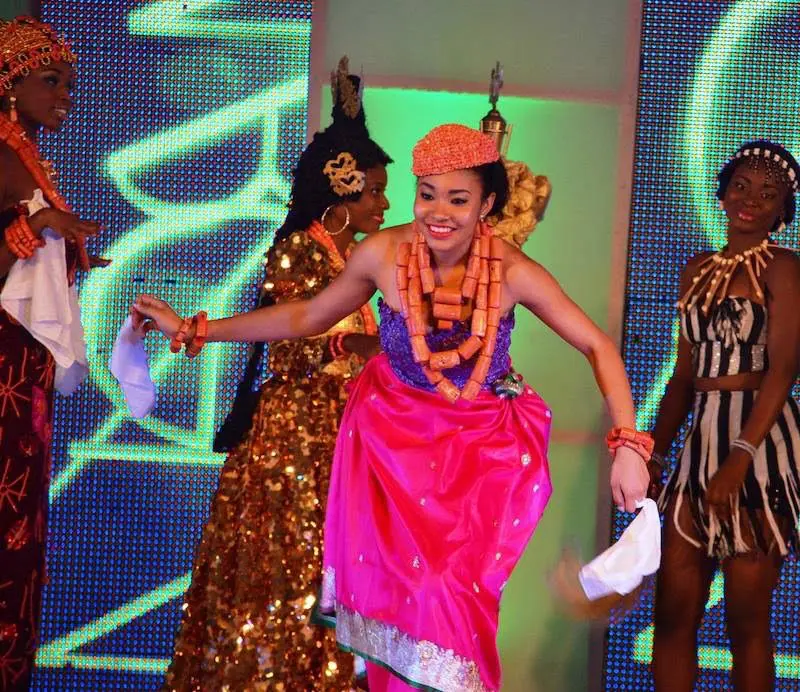
In other categories of the MBGN pageant, Miss Photogenic went to Miss Kano, Blessing Obi, Miss Akwa Ibom,Fontanne Bassey emerged winner of Miss Amity, Miss Bayelsa, Ebiere Banner won Miss Costume and Miss Ogun, Tiamiyu Aderonke got Miss Charismatic.
Speaking at the ceremony, President Goodluck Jonathan said the United Nations Educational, Scientific and Cultural Organisation, UNESCO has approved Bayelsa as host for the maiden edition of the organization’s under water committee conference taking place on the 24th of September 2013.
Represented by the Minister of Culture and Tourism, High Chief Edem Duke, the President also announced that over 7,000 Nigerians would converge in Yenagoa for the Nigeria Festival for Arts and Culture, NIFEST scheduled to hold from the 15th to 25th of September, this year.
He commended Governor Seriake Dickson for his significant contributions towards the development of the tourism sub sector, describing him as a great icon of tourism.
Earlier in his remarks, Governor Dickson, noted that the hosting of beauty pageants in the state would serve as a veritable platform to boost tourism and other socio-economic activities in the state.
According to the Governor, Bayelsa will play host to beauty pageants of international scale quarterly pointing out that the MBGN has helped to espouse the true ideals of the African woman.
He said government would soon unveil the state’s tourism calendar to the public and expressed commitment to hosting the Miss Centenary Beauty Pageant expected to take place in Bayelsa in September this year.
Speaking later at the post pageant dinner, the state Deputy Governor Retired Rear Admiral Gboribigha John Jonah, commended the Chairman of Siverbird Group, Mr. Ben Murray Bruce and members of the organization for making Bayelsa proud at the international level.
Chairman of the Silverbird Group, Mr. Ben Murray Bruce expressed gratitude to the state government for partnering with the organization for showcasing true beauty of young and promising Nigerian women to the outside world as the event was being watched on twitter and other social media across the globe.
Mr. Bruce said over the years the pageant has brought hope and transformed the lives of not only the beauty queens but also that of their families.
He cited Miss Agbani Darego from Rivers State who emerged Miss World and made her family and country proud by her achievement.
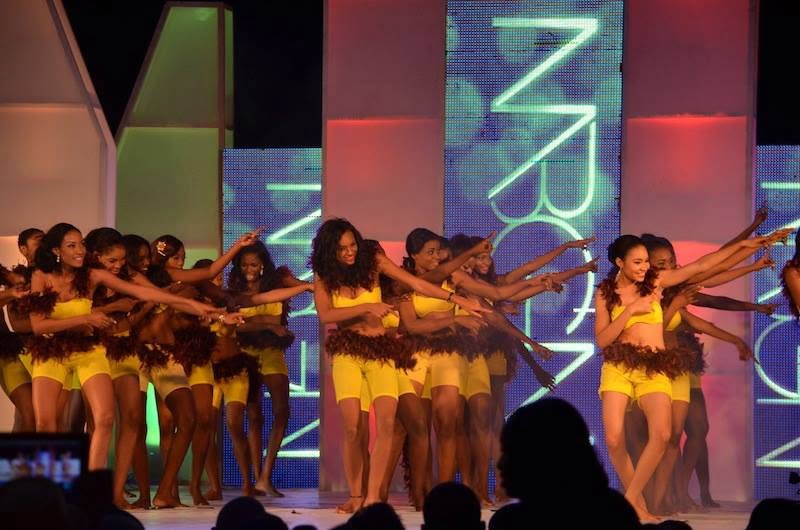
More photos from the event below:


DailyPost
1966 COUP: I WAS IMPRISONED FOR FAILING TO IMPLICATE OBASANJO
by Alex Abutu
When did you join the army?
I joined the Nigerian Army in 1958 and was sent to Abeokuta to train as a driver.After our training and certification, I was posted to Enugu where I served for 2 years before I was then posted to Kaduna state. After about four months in Kaduna we were deployed to the war zone in Congo, with the fifth battalion of the Nigerian Army, and included in this battalion were the likes of former President Olusegun Obasanjo, Major Chukwuma Nzeogwu, and Aguiyi Ironsi. Ironsi was the head of the Nigerian troops in Congo.
I spent 6 months in Congo driving Major Chukwuma and then Captain Obasanjo, before our return to Kanta road in Kaduna.
So what happened on your return to Kaduna?
On return from Congo, we went back to normal army duties and I was assigned to drive Nzeogwu, Obasanjo and other officers’ dropping and picking them from their offices. This is what I was doing till the first coup happened.
What happened during the coup?
I was the one who drove Major Chukwuma all through the night of the coup. Wherever he went I drove him.
What happened that night?
A lot happened that night. But I am not in a position to say anything. As I told you before my duty was to drive my master, Major Chukwuma Nzeogwu, to wherever he asked me to.
Were you aware that anything was wrong that night?
Initially, I had no idea what was happening, but as the day progressed, and given the kind of places and activities taking place at the locations where we went, I knew something was wrong. But specifically what, I didn’t know.
Did Chukwuma tell you what he was doing or what was going on?
No. I was just a pool driver serving him and others. He never discussed his official duties with me, even though I was very close to him, as he has a listening ear and was very supportive. He never told me what was happening.
So why were you sent to prison?
The morning after the coup, Major Chukwuma Nzeogwu had a brief meeting with Obasanjo at a roundabout in Kaduna. I was the one who drove him there, but had no idea what they discussed. But the tribunal that handled the trials after the coup, wanted to know what both officers discussed. From the way I was questioned, their plan from all indications was to rope in Obasanjo as one of the coup plotters. I told them the truth that to the best of my knowledge Obasanjo was not part of the coup, nor do I know any other officers, and that I was not privy to what both officers discussed. After attempts to force me to say things I know nothing about, which were targeted at implicating Obasanjo, I was then sent to jail without a form of sentence.
I joined the Nigerian Army in 1958 and was sent to Abeokuta to train as a driver.After our training and certification, I was posted to Enugu where I served for 2 years before I was then posted to Kaduna state. After about four months in Kaduna we were deployed to the war zone in Congo, with the fifth battalion of the Nigerian Army, and included in this battalion were the likes of former President Olusegun Obasanjo, Major Chukwuma Nzeogwu, and Aguiyi Ironsi. Ironsi was the head of the Nigerian troops in Congo.
I spent 6 months in Congo driving Major Chukwuma and then Captain Obasanjo, before our return to Kanta road in Kaduna.
So what happened on your return to Kaduna?
On return from Congo, we went back to normal army duties and I was assigned to drive Nzeogwu, Obasanjo and other officers’ dropping and picking them from their offices. This is what I was doing till the first coup happened.
What happened during the coup?
I was the one who drove Major Chukwuma all through the night of the coup. Wherever he went I drove him.
What happened that night?
A lot happened that night. But I am not in a position to say anything. As I told you before my duty was to drive my master, Major Chukwuma Nzeogwu, to wherever he asked me to.
Were you aware that anything was wrong that night?
Initially, I had no idea what was happening, but as the day progressed, and given the kind of places and activities taking place at the locations where we went, I knew something was wrong. But specifically what, I didn’t know.
Did Chukwuma tell you what he was doing or what was going on?
No. I was just a pool driver serving him and others. He never discussed his official duties with me, even though I was very close to him, as he has a listening ear and was very supportive. He never told me what was happening.
So why were you sent to prison?
The morning after the coup, Major Chukwuma Nzeogwu had a brief meeting with Obasanjo at a roundabout in Kaduna. I was the one who drove him there, but had no idea what they discussed. But the tribunal that handled the trials after the coup, wanted to know what both officers discussed. From the way I was questioned, their plan from all indications was to rope in Obasanjo as one of the coup plotters. I told them the truth that to the best of my knowledge Obasanjo was not part of the coup, nor do I know any other officers, and that I was not privy to what both officers discussed. After attempts to force me to say things I know nothing about, which were targeted at implicating Obasanjo, I was then sent to jail without a form of sentence.
Where was Obasanjo at this time, and was he aware of what you went through?
I had no idea. I don’t know if he was aware. I only met him after so many years. He came to Owerri in 1979 as the Head of State on a state visit, preparatory to his handing over to the elected civilian administration of Alhaji Shehu Shagari. Then we mounted a guard of honour in his respect. It was there he saw me, and asked me if I was still in the army.
How did you get out of prison?
I was in the prison till the civil war started, and because there were only three of us trained in the use of the 106, a special purpose armoured car, some Generals came to the prison where I was remanded, to find out if I was still there.
The Prison guards told them I was not there. But I overheard the discussion and shouted that I am here and the Generals ordered my release. I was released and given a complete set of uniforms, and moved immediately to Adikpo, to participate in the training for the civil war.
I had no idea. I don’t know if he was aware. I only met him after so many years. He came to Owerri in 1979 as the Head of State on a state visit, preparatory to his handing over to the elected civilian administration of Alhaji Shehu Shagari. Then we mounted a guard of honour in his respect. It was there he saw me, and asked me if I was still in the army.
How did you get out of prison?
I was in the prison till the civil war started, and because there were only three of us trained in the use of the 106, a special purpose armoured car, some Generals came to the prison where I was remanded, to find out if I was still there.
The Prison guards told them I was not there. But I overheard the discussion and shouted that I am here and the Generals ordered my release. I was released and given a complete set of uniforms, and moved immediately to Adikpo, to participate in the training for the civil war.
DailyTrust
Rivers crisis: I’m ashamed because those politicians are Christians – Oritsejafor
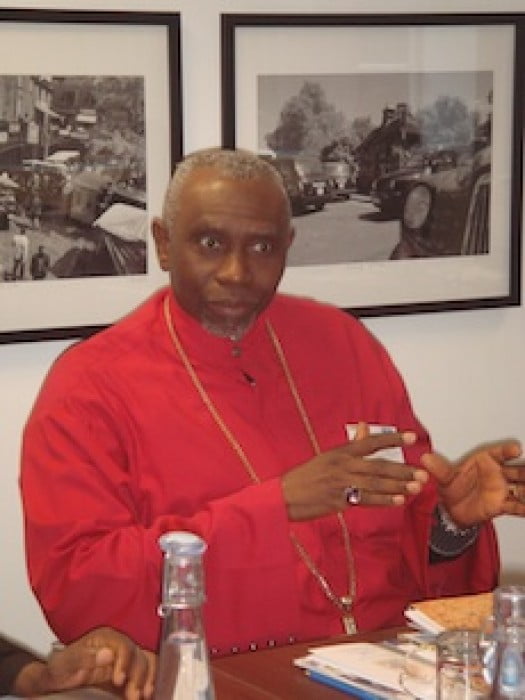
Pastor Ayo Oritsejafor
The fracas, Oritsejafor said was against the principle of democracy, stressing that politicians must play the game to promote democratic values in the country.
The cleric while speaking with newsmen in Kaduna, Sunday, noted that the power tussle in the oil rich city had made the nation a laughing stock in the world, asserting that such attitude amongst Nigerian supposed leaders would kill Nigeria’s democracy.
While appealing to the parties involved in the fracas to sheathe their swords for peace to reign, the preacher said he felt ashamed that those involved in the crisis were Christians.
He added that it was not in the character of a good Christians to behave in the manner that most Nigerian leaders behave
The CAN president said, “I feel terrible about the happenings in Rivers State. I feel terrible for many reasons. I feel terrible because it is making Nigeria a laughing stock to the world.
“I feel terrible because it is happening in the part of the country where I come from. I feel terrible because many of the actors are supposed to be Christians.
“I feel sad because those involved in these things ought not to get themselves involved in such things at all.”
DailyPost

Senator Yerima and Constitutional Review By Maryam Uwais

Maryam Uwais
It should be pointed out, however, that several media reports on the constitutional review debate at the Senate give the impression that underage marriage has been endorsed by the Senate Chambers. Facts are that S.29 of the 1979 Constitution permits a Nigerian citizen of ‘full age’ to renounce his or her citizenship by declaration in a prescribed manner, for which purpose ‘full age’ was stated to be 18 years and above. The subsection also provides that, ‘any woman who is married shall be deemed to be of full age’. In its current efforts to review the Constitution, the Senate Committee had determined that the particular subsection should be deleted, basically because citizenship has no bearing on gender, as for example, voting, the right to drive a car, possess a weapon or such similar social interactions that are evolving or are germane to a democratic Nation. Senator Yerima, however, vehemently argued (and lobbied) against the removal of the clause, on the grounds that deleting that clause was against (his understanding of) Islam. In his understanding, a girl, once married, automatically assumes the full mental capacity and responsibility to consciously make the prescribed declaration of renouncing her citizenship.
This position needs to scrutinized carefully, against the backdrop of similar positions that obtain under the Shari’a and in our context, as a Nation. Does it then follow that the married girl who is below 18, at election time, would be permitted to vote, or is her not being issued a voters card un-Islamic? Is the Senate now going to make an exception to that law, permitting her to vote, or even drive, in accordance with (Senator Yerima’s understanding of) Islam?
Contrary to the position conveyed by the Senator from Zamfara, there is certainly no unanimity of positions on such contemporary matters of social interaction, within Islamic jurists or the various Schools of Thought. Surely where there is ‘silence in thetexts’ (i.e primary sources) or lack of unanimity as regards a particular practice, that opening allows for a society to determine for itself what is in its best interest (maslaha), in its own context. What about married Muslim girls who inherit property? Is it not the position that in some cases, where not considered sufficiently mature (‘sufaha’, based on Qur’an 4:6), such property remains in the custody of her guardian, until she grows to be intellectually mature? This would, of course, depend on her age, mental capacity and the size and nature of the property. Why does such property not devolve upon her automatically upon marriage, to deal with it as she wishes,irrespective of her mental capacity? There definitely appears to be no basis, under the Shari’a, that would compel a girl to deal with matters of such gravity as therenunciation of citizenship, merely because she is married. Islam is certainly not so presumptuous or harsh as to burden her with what she is mentally and physically incapable of bearing. Her guardian is permitted to determine the age or stage at which such a child can be entrusted with such grave responsibilities, the assessment of her mental capacity being the main determinant.
As a Muslim woman (without pretensions of scholarship) forever striving for knowledge, research into these matters has revealed that in matters of social interaction (mu’amalat), there is a lot of latitude in what is permitted, unless it is expressly prohibited by a clear text. The rules are certainly not so definitive. What is also evident is that the ‘best interests of the child’ is a paramount consideration within Islam, along with the principle of public good (maslaha or istislah). The operational rules are not defined (probably deliberately, in my humble view) and the determination of such issues is best left to the experience, custom and context of the particular society. The Qur’an provides that the predominant consideration in matters relating to children would depend on the point at which they can be said to not be ‘sufaha’ (mentally immature) anymore, in the context of that particular community.
It is interesting that Senator Yerima would rather link the weighty and dispassionate subject of citizenship with his understanding of gender vis a vis his perception of the age of marriage, rather than with other matters of social interaction, such as those relating to inheritance rights, driving or even voting. Indeed, citizenship is a contemporary phenomenon within the Sharia, as in the early days the concept of citizenship had not been defined and people traveled across boundaries, without restriction. In a Muslim community, when matters evolve, it is for scholars or experts in Islamic legal philosophy-‘Usul-al-Fiqh’- and juristic reasoning (and not even those solely learned in the Qur’an-‘Mussafirun’, the Fiqh-‘Fuqaha’ or the Hadith-‘Muhaddithun’), to analyze the issues with a view to arriving at an appropriate position for the context of that relevant community. In this particular instance, it is certainly perplexing for the Senator to insist so categorically that even a married ‘intellectually immature’ girl must be permitted to renounce her citizenship, irrespective of her mental capacity. The foundation for such a general and sweeping statement within the Shari’a is difficult to locate.
The public good remains the overriding consideration in the process of analytical reasoning by those qualified for the purpose, so long as the deductions are not in direct conflict with the primary sources of the Shari’a. Therefore, in following arguments repeatedly canvassed by the Senator, it may be necessary to examine the context in which we live, to determine what is good, for the purpose of encouragement and support, and what remains harmful to our society, to be confronted, discouraged or prohibited by Muslim jurists.
Today the North of Nigeria continues to throw up Nigeria’s poorest indices on matters relating to healthcare, nutrition, education, empowerment and productivity. Consequently, unemployment, insecurity, violence and poverty remain rife in that region. Statistics have it that 2/3 of the 102 million poor people in Nigeria live in the North. Extreme poverty in the North translates into extreme vulnerability to the effects of climate change, food security and so much more. Incidentally, over half of the women in the North are married off by the age of 16 and commence childbirth within the first year of marriage. Also, of the 16 million births by girls below the age of 18, 9 out of 10 of them are married.
Facts are that nearly half of all the children under 5 years of age are malnourished in the North East zone, with women and children in the nutrition ‘high-burden’ States of Adamawa, Bauchi, Borno, Gombe, Jigawa, Kano, Katsina, Kebbi, Sokoto, Yobe andZamfara suffering the most from malnutrition, wasting and stunting. This singular factor remains the underlying cause for 53% of under-5 deaths. If the child is stunted in its first 1000 days, that condition is irreversible, so the future of these children, and the larger population, is permanently shortchanged. The health and nutritional needs of mothers, new-borns and children are closely linked, with young mothers accounting for a majority of severely malnourished children.
Multiple health risks arising from child marriage include the sexual exploitation (including forced sexual relations) that she is subjected to, as well as limited access to reproductive health services, despite the real and present danger of contracting diseases such as HIV/AIDS, STIs (sexually transmitted diseases) and the debilitating ailment of VVF/RVF (VVF-a tear in the flesh between the vagina and the urinary passage, usually due to prolonged labour, resulting in uncontrolled urine or feces in the case of recto-vaginal fistulae-RVF), including the abandonment that comes with such ailments. Nigeria, with 2% of the world’s population, has 10% of VVF patients. Three-quarters of those with VVF/RVF are young girls who are not yet physically mature but have suffered trauma in their first pregnancy.
Statistics show that stillbirths and deaths are 50% more likely in babies born to mothers younger than 18, as against babies born to mothers above that age. Each day, 144 women die in childbirth in Nigeria, with the North East alone having 5 times the global rate of maternal mortality. The lack of information and access to support ultimately results in psycho-social and emotional consequences, domestic violence, abandoned (street) children, with the attendant deprivations of their rights and freedoms, whose wellbeing is severely compromised. The prevalence of the abuse of the right to the exercise of divorce by Muslim men has only compounded the situation, leading to so many negative social deviations such as substance abuse (that has become so rampant), commercial sex work and the complete loss of values in the entire family set up.
Many of these adolescents are married off to men much older than they, and because of the associated power differentials, this singular factor impedes communication between them, with the girl having no negotiation skills in crucial decision-making that may affect her life. Having lost out on these critical life opportunities, these married adolescents can never aspire to living as meaningful and productive members of society. Not being able to participate actively in the community translates to their losing out completely on benefitting from economic activity and earning a decentincome. Many of these girls remain excluded from community life, having been separated from peers and family members by marriage. Depression sets in. A life of diminished opportunities. The community loses out completely; the economy cannot improve where half its population is stuck in this rut.
Child marriage, from available statistics, ultimately hampers the efforts of these young adolescents from acquiring an education, as sooner than later, they find it difficult to combine the onerous responsibilities of being a wife and mother, with schooling. They drop out, if they have not been removed for the purpose of marriage, in the first place. Consequently, 70.8% of young women aged 20-29 in the North West zone are unable to read or write. Due to the fact that these girls are deprived so early of an education (including the access to information and knowledge) they remain bereft of the purchasing power necessary for an adequate diet, healthcare,skills, or even recourse to support in emergencies, all of which would enable them rise above the circumstances of abject poverty. It is paradoxical that Muslims like Senator Yerima would rather their wives and daughters be treated by female medical personnel if they fall ill, and yet they are, by continuously advocating for child marriage, deliberately closing the avenues for girls to aspire to such professions.
Deprivations of formal and non-formal education translate, at such an early age, into restrictions on mobility, domestic burdens, the denial of sundry freedoms in respect of survival, development and participation, as well as the loss of adolescent years. Indeed, children of young, uneducated mothers are also less likely to attain high levels of education, perpetuating cycles of low literacy and limited livelihood opportunities. Child marriage, therefore, ultimately deprives societies of the intellectual and financial/livelihood contributions of girls, and of their offspring. It is no wonder then that the North continues to portray such poor ratings in almost all aspects of human endeavour.
As a consequence, MDGs 1 (relating to eradicating extreme poverty and hunger), 2 (on education), 4 (on reducing child mortality), 5 (on maternal health), 6 (on combating diseases) remain unattainable goals (at least in Northern Nigeria), if we cannot confront the consequences and implications of child marriage. Evidently, the geography of poverty requires a coherent and urgent Northern strategy and a solution to the instability that has bedeviled the region in recent years. Against this background of grim data, we can ill afford to play politics with the obvious deficiencies in our human capital. The North, as an intrinsic part of Nigeria needs to improve on all fronts, to impact positively on Nigeria’s progress and support its growth. Since child marriage has all these devastating and diminishing implications, surely checking the increase in the practice can only trigger and catalyze positive growth, in so many dimensions.
It is certainly not mandatory in Islam that girls must be married off as minors, so to keep insisting that this practice must remain sacrosanct, given the background of needs in Northern Nigeria, is incongruous, even under the Shari’a. Where a practice is determined to be merely permissible and not mandatory, it is considered practicable and entirely feasible within Islamic jurisprudence, to discourage or prohibit it, where it is found to be so harmful to individuals and to the community. Countries such as Yemen, Egypt, Morocco, Tunisia, Algeria, Somalia and Bangladesh, with majority or high Muslim populations have set a minimum age for marriage as 18, in the acknowledgment that there are serious social, physical and mental health risks associated with child marriages. This progressive step became necessary, in that these indisputable facts placed a heavy burden on the accountable and God-fearing leadership in majority Muslim countries, to protect the vulnerable in their midst.
It is, therefore, not unreasonable to expect that educated elite and public figures such as Senator Yerima, being conscious of their grave responsibilities to prohibit harm and to enjoin good in our own context, should actually discourage this devaluing and belittling practice of early marriage, in the public good, for the protection of the vulnerable and the realization of social benefits. To enable our girls attain their fullest possible potential is definitely a target that Senator Yerima should also be working passionately towards, along with the rest of Nigerians who yearn for a better future.
Indeed, the overriding objectives of the Sharia include the promotion of human dignity, justice, compassion, the removal of hardship, the prevention of harm, the realization of the lawful benefits of the people, and the education of the individual by inculcating in him a sense of self discipline and restraint, which aims are by no means exclusive. All else may be adapted to achieve these ends, which measures may encompass matters of concern not only to law but also to economic development, administration and politics. For those that reflect, the hardship that these little girls experience, where married off and divorced soon after, so wantonly, is certainly unacceptable within the faith.
Although the fundamentals of faith and the practical pillars on which they stand remain immutable in principle, they may be interpreted and justified at the level of implementation in the exercise of public good. This process must of need be carried out solely by persons learned and eminently qualified to speak on the subject matter in question. We must always bear in mind that the ‘appropriation’ of divine authority in religious interpretation is best left to Scholars learned in Islamic legal philosophy and analytical reasoning. Having acquired the requisite knowledge and expertise (including the capacity to weigh the various views in the particular sphere of learning in the context of our times), these Jurists would also need to have imbibed, at the barest minimum, the attributes of humility, compassion, reflection, wisdom, self-restraint, diligence, objectivity, along with piety. Our learned Scholars must stand up and be heard, rather than remain silent on matters that so adversely affect us as individuals, as a region, a Nation and as members of a global community, which challenges paradoxically controvert the deeper meaning and purpose of the Shari’a.
Back to the issue in contention, it is important to commend the thinking behind the decision to delete the constitutional clause that seeks to lumber even an ‘intellectually immature’ girl, where married, with the grave responsibility of the power to renounce her citizenship, thereby elevating the subject of citizenship to the level whereby both men and women have similar responsibilities, without discrimination. It is hoped that ultimately, members of the Senate would reflect deeply on the implications of their recent action and revisit their decision to retain the contentious clause, if only to ensure that every Nigerian citizen of full age, without distinction, is subjected to similar standards and responsibilities under the provisions of our Constitution.
Maryam Uwais MFR
Chairperson, Isa Wali Empowerment Initiative, Kano
Saharareporters
Subscribe to:
Posts (Atom)