Monday, 5 May 2014
Goodbye to Enemies of Progress
Glory be to God, the cabal that has constituted cancerous tumor in the body of All Progressives Congress (APC) today yielded to our fervent prayers as they melted out of our body, painlessly.
The group which changed its name from Grace Group to Alaghodaro after they rebelled against Chief Anenih Leadership in PDP since 2005 is returning to PDPretrogressively to swallow their vomit because APC could no longer tolerate their desperation.
We wish to assure the good people of Edo State that the exit of the group from APC which is spending state fund to develop the state and defection to PDP where they shared state fund without development from 1999-2008, will enable Comrade Governor Adams Oshiomhole to further develop Edo State.
Whereas it was the Ize-Iyamu group that wanted the Comrade Governor to manipulate APC congresses for him, they now claim that it was the governor that manipulated.
We challenge them to prove their strength by going to a party without structure rather than going to PDP where food is ready.
We salute the courage of Governor Oshiomhole in resisting the desperate attempt by the group to manipulate him.
We sympathize with Chief Tony Omoaghe an established factional leader who condescended so low as to return to his estranged master who harbours unforgivable charges against him. May God rescue him from the lions den into which hunger has chased him.
APC reassures the good people of Edo State that the exit of this retrogressive group is a blessing to the party and the good people of Edo State.
Comrade Godwin Erhahon
State Interim Publicity Secretary

Thursday, 1 May 2014
Nigerians Must Resist Jonathan’s Nascent Dictatorship’

The Education Rights Campaign (ERC) has called on Nigerians to rise against President Jonathan’s nascent dictatorship.
This call was contained by the Publicity Secretary of ERC, Mr. Hassan Soweto in a statement he issued yesterday.
ERC also condemned the attack on members of the Academic Staff Union of Polytechnic (ASUP), Colleges of Education Academic Staff Union (COEASU), ERC as well as students under the aegis of the National Association of Polytechnic Students (NAPS) by members of the Nigeria Police.
He said: “The police descended on the protesters like wild beasts and attacked them with water cannons, baton and teargas, the same police and security forces, who have failed to rein in the dreaded Boko Haram.”
While engaged in this shameless act, the Police were totally unmindful of the age and status of the protesters, who are lecturers of polytechnics and Colleges of Education. Some of the protesters sustained injuries in the process.
“A lecturer was hit in the stomach by a teargas canister shot deliberately into an orderly crowd of the nation’s citizens by policemen obeying the orders of a failed government.
“The same police and security forces, who have failed to rein in the dreaded Boko Haram and under whose nose Nigerians daily lose their lives in regular acts of criminality. The same police and security forces under whose nose over 200 girls disappeared and several weeks after there whereabout is still unknown”.
ERC therefore called on the labour movement, civil society and indeed all Nigerians with a conscience to rise up and vigorously condemn the brutal assault.
“This is crucial because this development, taken together with all the previous undemocratic actions taken by this government, clearly shows that President Jonathan’s anti-poor government is fast turning into a vicious civilian dictatorship.
“We also call on NLC and TUC to withdraw any invitation they might have extended to President Goodluck Jonathan to attend or speak at this year’s May Day ceremony because it will amount to a slap on the face of workers if the President, who ordered such a vicious attacks on ASUP and COEASU members and other protesters is now seated among Nigerian workers on May Day”, it added.
It would be recalled that ASUP has been on strike for 10 months cumulatively, while COEASU has been on strike for 3 months. And the major cause of the strike is gross underfunding of public education and non-implementation of agreements with both unions.
Leadership
This call was contained by the Publicity Secretary of ERC, Mr. Hassan Soweto in a statement he issued yesterday.
ERC also condemned the attack on members of the Academic Staff Union of Polytechnic (ASUP), Colleges of Education Academic Staff Union (COEASU), ERC as well as students under the aegis of the National Association of Polytechnic Students (NAPS) by members of the Nigeria Police.
He said: “The police descended on the protesters like wild beasts and attacked them with water cannons, baton and teargas, the same police and security forces, who have failed to rein in the dreaded Boko Haram.”
While engaged in this shameless act, the Police were totally unmindful of the age and status of the protesters, who are lecturers of polytechnics and Colleges of Education. Some of the protesters sustained injuries in the process.
“A lecturer was hit in the stomach by a teargas canister shot deliberately into an orderly crowd of the nation’s citizens by policemen obeying the orders of a failed government.
“The same police and security forces, who have failed to rein in the dreaded Boko Haram and under whose nose Nigerians daily lose their lives in regular acts of criminality. The same police and security forces under whose nose over 200 girls disappeared and several weeks after there whereabout is still unknown”.
ERC therefore called on the labour movement, civil society and indeed all Nigerians with a conscience to rise up and vigorously condemn the brutal assault.
“This is crucial because this development, taken together with all the previous undemocratic actions taken by this government, clearly shows that President Jonathan’s anti-poor government is fast turning into a vicious civilian dictatorship.
“We also call on NLC and TUC to withdraw any invitation they might have extended to President Goodluck Jonathan to attend or speak at this year’s May Day ceremony because it will amount to a slap on the face of workers if the President, who ordered such a vicious attacks on ASUP and COEASU members and other protesters is now seated among Nigerian workers on May Day”, it added.
It would be recalled that ASUP has been on strike for 10 months cumulatively, while COEASU has been on strike for 3 months. And the major cause of the strike is gross underfunding of public education and non-implementation of agreements with both unions.
Leadership
Nigeria’s economic transition reveals deep structural distortions – By Zainab Usman
 According
to recently reviewed GDP figures, Nigeria is now Africa’s biggest
economy. It was about time a more accurate measure of economic output,
which captures Nigerians’ entrepreneurial zeal, was adopted. The
headline-capturing highlights of the new series reveal the scale of the
economy, and greater economic diversification with the rapid growth of
non-oil sectors. Significantly, the figures indicate how this growth
accounts for the “jobless” economic expansion, the slow pace of
industrial development and the regional dimensions of the economic boom.
According
to recently reviewed GDP figures, Nigeria is now Africa’s biggest
economy. It was about time a more accurate measure of economic output,
which captures Nigerians’ entrepreneurial zeal, was adopted. The
headline-capturing highlights of the new series reveal the scale of the
economy, and greater economic diversification with the rapid growth of
non-oil sectors. Significantly, the figures indicate how this growth
accounts for the “jobless” economic expansion, the slow pace of
industrial development and the regional dimensions of the economic boom.According to the rebased figures, six sectors now account for 70% of nominal GDP rather than three in the old series. The service sector grew fastest, by 240%, and is progressively constituting a larger portion of the GDP. Conversely, the share of the two hitherto giants – agriculture and oil has fallen to 21% and 14.4% respectively. Nigeria is transiting to a services-driven economy due to the rapid growth of information and communications technology (ICT), banking, trade and the informal economy.
Zenith Bank, UBA and Guaranty Trust Bank are Nigerian financial institutions with a huge presence across the continent. Mobile phone subscription has exploded from just 2.2 million lines in 2002 to over 169 million by 2013. Call credit vendors, petty traders and other unofficial activities in the informal economy have also been included in the new series, as a component of the services sector.
On the surface, the emergence of the service sector as a major growth driver indicates a greater diversification of the country’s production structure away from oil (a long sought after goal). The share of the oil and gas sector has fallen from 32.4% of GDP in the old series to just 14.4% in the new series. On one hand this is good news, on the other hand, it reveals deeper structural distortions. Nigeria appears to be leap-frogging from an extractive to a services-oriented economy without commensurate industrial development, and this comes with some baggage. This slow pace of industrialisation accounts for the non-inclusive nature of growth and widening inequality in the country.
The necessity to experience industrialisation as a phase in the economic development process from a poor to a rich society is well documented. The Economist and Foreign Policy magazines both recently hosted debates on the necessity of industrialisation for sub-Saharan African economies. Economist Ha-Joon Chang points out categorically that “…it is a fantasy to think that developing countries can skip industrialisation and build prosperity on the basis of service industries”.
Multilateral organisations such as the United Nations Industrial Development Organisation (UNIDO), the United Nations Economic Commission for Africa (UNECA) and the African Union are advocating for inclusive and sustainable industrial development as the key to structural economic transformation of African economies. This is hinged on the export-oriented-industrialisation (EOI) route taken by South Korea, Singapore and other East Asian Tigers to economic development and prosperity.
Industrialisation is regarded as the surest route to poverty reduction and economic transformation. With the labour intensive nature of manufacturing industry, the share of people engaged in subsistence agriculture falls as those engaged in agro-processing, light and heavy manufacturing and ancillary services rises. Economists argue that industrial development creates employment along a value chain, raises incomes, and improves human development. As Dani Rodrik emphasises, the manufacturing sector is where the world’s middle classes take shape and grow; without a vibrant manufacturing base, societies tend to be more unequal.
In Nigeria, as the new GDP series reveals, this industrialisation process is yet to take root. The manufacturing sector, which was 10% of GDP in 1980, constitutes only 6.9% in the revised figures. By contrast, the over 200-fold growth in ICT, trade and financial services means that the service sector now constitutes 52.3% of economic output. Unlike the manufacturing sector, which employs low-skilled, low-wage labour, these services are highly capital and technology intensive.
Entry-level staff in banks in the country require a minimum of a tertiary qualification. While the mobile tech start-up revolution sweeping across the commercial capital Lagos, is dominated by tech-savvy entrepreneurs with a highly specialised skill set. Therefore, the mobile revolution hasn’t led to an explosion of job opportunities, as youth unemployment persists at 54%. A stark reminder of the unemployment situation is the recent recruitment exercise of the immigration service, in which 6.5 million Nigerians applied for 4,000 jobs and where 19 people were crushed to death at stampedes at the recruitment centres.
At the other end of the scale, the telecoms sector is creating a booming informal economy of call credit vendors, informal call centres and other microenterprises with limited scope for upward mobility.
Though the GDP series involve macro-level aggregate data, some inferences about regional distribution of economic activity can be made. While agricultural output has increased, it has grown much more slowly than the capital, technology and skills intensive services sector. Agriculture’s decline as a share of GDP has more implications in the northern states, where it dominates.
Critically, the diminishing share of agriculture as a percentage of GDP, which should indicate economic development in an industrialising economy, is not the case here. Hundreds of textile, food and beverage and other light manufacturing industries lie moribund in industrial hubs in Kaduna and Kano states. Electricity shortages, infrastructural decay and influx of cheap Chinese imports and smuggled consumer goods are some of the factors attributed to the acceleration of de-industrialisation in the North. Tellingly, farmers are not leaving their farmlands in villages to become factory workers in modern industries, but are urbanising in the fringes and becoming an underclass in the vast unofficial activities in the informal sector.
Although some states like Kano have a vibrant trade-based economy (and the ‘Kannywood’ local entertainment sector is booming), economic output in the northern states is mostly agrarian. On the other hand, the services sector – banks, telecoms, hospitality, trade – are mostly concentrated in the South. Of the 21 commercial banks in the country, only one is owned by and headquartered in the North.
Even in the South, Lagos and to a lesser extent, the four major oil-producing states, account for the bulk of economic output. Lagos, where most banks, financial institutions, telecoms firms, oil companies and other private sector organisations are headquartered could be Africa’s fifth largest economy, if it were a separate country. As an outlier, it is the only self-sufficient state out of 35 others, able to generate over 50% of its revenues from internal sources more than its monthly allocations from the centre.
Conclusions about the regional dimension of economic growth can only be made with certainty when the state-level GDP figures are released by the Nigerian Bureau of Statistics (NBS). Yet we can deduce from the new series as to why Nigeria’s economic boom is not only non-inclusive, but geographically concentrated, in which many northern states lag behind.
As expected, these figures are being politicised by both the government – which has adopted a triumphalist attitude and implicitly claims credit – and sceptical Nigerians, who are worried about the ‘jobless growth’ and poor human development situation. Both sides miss the point about the purpose of the rebasing exercise, which is mainly to provide a more accurate picture of the economy. Thankfully, the NBS has dispassionately emphasised that “the rebasing exercise does not in itself reflect the effectiveness or otherwise of public policy”.
The onus now lies on policy makers to address these structural economic problems head on, not merely to politicise them. The government has recently launched an industrial policy, an Agricultural Transformation Agenda, and has privatised the power sector. With Nigeria’s staggering size, its booming population and its equally staggering problems, there is certainly scope for doing much more.
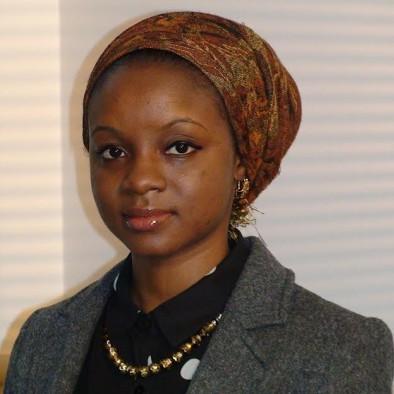
Zainab Usman is a DPhil Candidate at the University of Oxford.
AfricanArguments
Jonathan, Politics, and the War on Terror
 Salisu Suleiman.
When over 200 secondary school girls, whose parents had been assured of their safety, were brazenly abducted from the Government Girls Secondary School, Chibok, Borno state, the federal government was quick to condemn the act. As usual, it promised to defeat Boko Haram and rescue the girls.
A day later, the military declared that it had freed most of the girls, only to retract the claim two days later. Most of the girls remain missing, forcing understandably desperate parents to join the search.
It didn’t take long for a totally different version of the events leading to the large abduction to emerge. According to one report, the Chairman of Chibok local government area received a message two hours earlier, that a convoy of about 20 vehicles driven by suspected Boko Haram members had been sighted heading to the town. Even with limited communications, he managed to reach contact the state police command which mobilized for the challenge.
Unfortunately, faced with well-armed and well-drilled fighters, it didn’t take long for the police to run out of ammunition and withdraw. But that is not the real story. What is instructive is that the military post right opposite the school was reportedly withdrawn just before the attack.
Not a single member of the Nigerian military remained behind to confront the invaders and protect the students, ostensibly on whose behalf the military post had been located in that position.
Similarly, a few weeks earlier when suspected Boko Haram fighters launched a large scale attack on an army barracks near Maiduguri, the initial reports claimed that the attackers had come in under the cover of the night to wreck the large scale havoc they inflicted, in addition to the high number of causalities. But like the Chibok attack to come, it didn’t take long for contrary reports to emerge.
Eye witness accounts insist that the attacks did not take place at night, but that the terrorists came in the middle of the day and were actually observed prior to the attacks. Again, there are claims that many of the military personnel on posting at the barracks had been ordered to evacuate before the attacks occurred, and that only the uninformed were left behind, fatally exposed to be slaughtered by the hordes of invaders.
Not long afterwards, a brave British Broadcasting Corporation (BBC) reporter did one of the most informative pieces on the insurgency to date. He traveled to the scenes of the conflict and was able to conduct first hand interviews with some of the victims. A particularly telling interview was with a lady named Comfort who had managed to escape from the den of the terrorists. Comfort claimed that Boko Haram usually had information about any planned military raid and had time to escape to forests and caves before they occurred.
The claim insinuates that not only are the locations of Boko Haram camps known to the military, but the unspoken implication is that either the terrorists had moles within the military, there was some sort of illegal alliance, or both. These are very matters.
The military should not only speedily repudiate such allegations and provide evidence to back their position, but also take additional steps to build public trust and confidence. That failing, few Nigerians now believe what the military says about the war on terror; the rumor mills are in overdrive.
As if it were not bad enough that most Nigerians do not believe the military, even the civil Department of State Security, (SSS) is losing the credibility campaign, not the least because of the approach of its spokesperson, Marilyn Ogar. Just last week, the SSS was accused by a group of not being fair to Muslims. There is grave danger to the state when a section of the population believes that public institutions are biased against one group.
The DSS only has itself to blame to exposing itself to such ridicule, especially in the aftermath of the recent ‘invasion’ of its headquarters. Anyone who has been to the SSS headquarters before, as I have, cannot but chuckle at the claim. Whatever the truth may be, a number of people were killed and their bodies dumped at various morgues across Abuja.
Not even the usually meaningless government probe of the event has been announced. No one knows the identity of the dead, who killed them, and under what circumstances, and evidently, no one cares.
But then, we should not be surprised. These institutions are only following the trend set by President Goodluck Jonathan. How credible are the words of a president who says he feels the pain of terrors victims one day, but immediately proceeds to a political rally to backslide on the yet to dry blood of the dead, and dance on their yet to be dug graves?
NigeriaIntel
Gov Nyako Was Not Grilled By Police Detectives – Official

Sajoh made the clarification in a statement he signed and made available to LEADERSHIP in Yola.
He said the story was carefully planted in the paper to achieve the twin aim of stoking embers of discord between the governor and the police force and also to embarrass Governor Nyako.
“Our attention has been drawn to a news story in a national daily to the effect that police detectives from Force Headquarters grilled Governor Murtala Nyako for four hours at the Government House, Yola on Tuesday the 29th of April, 2014”.
Sajoh said the story which was not authored by the Adamawa State correspondent of the national daily was planted by some persons in Abuja with a view to embarrass the state governor and create friction between the government of Adamawa State and police authorities both in Yola and Abuja.
“This is rather unfortunate and dangerous. It has become the stock-in-trade of some persons based in Abuja to continuously stoke the embers of hatred and discord between the governor of Adamawa State and federal government agencies for very unwholesome motives.
“As rightly stated by CSP Frank Mba in the same story, His Excellency Governor Murtala Nyako as a major stakeholder in the security set-up of the state received a team from Force Headquarters on a fact finding visit to the state.
“The team was accompanied by the state commissioner of police, Mr A. J. Abakasanga. They had open and frank discussions on all matters related to their visit which had no connection whatsoever with recent events related to the governor’s memo,” Sajoh said.
Sajoh further observed that in recent times several attempts have been made by some elements within the state and Abuja to destroy the cordial relationship between the government of Adamawa State and the police formation in the state.
“This has been done through the release of a fake letter purportedly written by the police commissioner on a request for the release of a venue to the PDP for a rally.
“That letter was roundly denied by the commissioner of police. Again these same elements attempted to read meanings into a routine police activity by creating stories related to the withdrawal of security details covering the governor.
“We wish to state categorically that the relationship between the state governor and the police commissioner is cordial and excellent.”
He further advised those planting the stories to stop in the interest of peace, security and harmonious working relationships in the state.
Leadership
BMW Recalls Model X6 In Which Sambo's Brother Got Into Fatal Accident
Top German automobile producer BMW announced the recalling of 156,000 cars and sports utility vehicles in the United States because of possible engine problems, which comes soon after Nigeria's Vice President's brother died in the accident involving one of such models.
According to the information provided by NY Daily, 128i, 328i, Z4, 135i, 335i, 528i, 535i and 640i cars, so as many X3, X5, and X6 SUVs, will be recalled starting from May.
The company officials explained that bolts that hold a camshaft housing can loosen and break. It may consequently result in the reduced power or stalling thus increasing accident risk.
The National Highway Traffic Safety Administration stated that dealers would replace bolts free of charge.
It would be recalled that the younger brother of Nigeria's Vice President Namadi Sambo, Captain Yusuf Sabo Sambo (Retd), was driving a BMW X6 when he got into a fatal accident.
Naij.com
VP Brother’s Death, Abducted Schoolgirls Expose Govt’s Double Standard’

The Kaduna Salvation Movement (KASMO) has lamented the
hypocrisy and insensitivity of government in Nigeria, accusing the
political class of playing double standard.
The group observed that since Vice President Namadi Sambo brother’s death, most activities at federal and state levels have been paralysed under the guise of paying condolences, while about 230 girls have been abducted for over two weeks now and nothing concrete seems to have been done for their release.
In a press statement issued by the chairman of the group, Mr Mohammed Musa Soba, and made available to newsmen yesterday in Kaduna, it viewed as “disgraceful and despicable the double standard of our political leaders both in the discharge of their constitutional responsibilities and moral obligations placed on us by our different cultures and respected religions.
“It is ironic that while the entire country is being traumatised by the abduction of over 230 innocent school girls and the continuous killing of innocent souls across the country, not even a condolence visit was paid to the families of the bereaved and the distressed. But when the brother of Vice President Namadi Sambo, Captain Sabo Sambo died in a motor accident few days ago, the business of government was abruptly brought to an end with the postponement of even the weekly federal executive council meeting.
“While we sympathise with Vice President Sambo over his brother’s demise, we condemn the attitude of turning personal issues into state matters while the real issues that border on the security of lives and property of ordinary Nigerians are treated with levity and criminal contempt.”
Leadership
The group observed that since Vice President Namadi Sambo brother’s death, most activities at federal and state levels have been paralysed under the guise of paying condolences, while about 230 girls have been abducted for over two weeks now and nothing concrete seems to have been done for their release.
In a press statement issued by the chairman of the group, Mr Mohammed Musa Soba, and made available to newsmen yesterday in Kaduna, it viewed as “disgraceful and despicable the double standard of our political leaders both in the discharge of their constitutional responsibilities and moral obligations placed on us by our different cultures and respected religions.
“It is ironic that while the entire country is being traumatised by the abduction of over 230 innocent school girls and the continuous killing of innocent souls across the country, not even a condolence visit was paid to the families of the bereaved and the distressed. But when the brother of Vice President Namadi Sambo, Captain Sabo Sambo died in a motor accident few days ago, the business of government was abruptly brought to an end with the postponement of even the weekly federal executive council meeting.
“While we sympathise with Vice President Sambo over his brother’s demise, we condemn the attitude of turning personal issues into state matters while the real issues that border on the security of lives and property of ordinary Nigerians are treated with levity and criminal contempt.”
Leadership
Subscribe to:
Posts (Atom)