Monday, 6 July 2015
APC Group Defends Akande, Says He Spoke Like a Sincere Leader
The Action Group of the All Progressives Congress (APC) has risen in stout defence of the former Interim Chairman of the ruling party, Chief Bisi Akande, saying his recent utterances on the crisis bedeviling the party at the National Assembly were those of a sincere leader.
The group, through a statement by its spokesperson, Segun Dipe, said the ramrod qualities of Akande qualify him to see when things are skewed towards failure and was right to have called the people involved to order.
“Here is the man who steered the ship of our party through the turbulent waters from conception to birth. He did so with sincerity of purpose and great sacrifice that even President Muhammadu Buhari, a man of few words, not given to praise-singing, confessed that he respected Akande’s patriotism while acknowledging how he led the interim party ‘with dexterity and integrity.”
The party Chairman, Chief John Odigie-Oyegun, also admitted that he saw in Akande trustworthiness and sincerity. Is it such a person that would now wish the smooth-sailing ship of the party should capsize?”
APC-AG recalled how Akande had journeyed with former governor of Lagos State, Senator Bola Ahmed Tinubu, through thick and thin from the dark and lonely days of the Alliance for Democracy (AD) to the Action Congress (AC) and then Action Congress of Nigeria (ACN) before arriving at the APC, saying such a person knows what true loyalty and discipline are and should be taken serious when preaching them.
Akande had been criticised for his recent utterances with which he cautioned some party members, whom he accused of trading the party’s birthright and dining with the enemy with a bid to get choice positions.
Specifically, he mentioned some northern elites and the PDP members within the APC as those rocking the party boat with indiscipline and disloyalty.
But the APC Action Group said the former interim chairman was on point and had only reiterated what was already in the public domain. Perhaps it is making more meaning to them now that it is coming from a person of Akande’s flawless character.

Women Groups Defend Appointment of Zakari As INEC Boss
Women Groups Defend Appointment
Onyebuchi Ezigbo in Abuja
About ten different women non-governmental organizations have expressed support for the appointment of a woman, Mrs. Amina Bala Zakari, as the acting Chairman of the Independent National Electoral Commission (INEC).
A statement jointly signed by Women in Politics Forum (WIPF), Proactive Gender Initiative (PGI), Women Rights Advancement and Protection Alternative (WRAPA), Federation of International Women Lawyers (FIDA), 100 Women Lobby Group, Equity Advocates, National Association of Women Journalists (NAWOJ), Women Advocate Research and Documentation Centre (WARDC), Women Foundation of Nigeria (WFN)and Nigerian Women Trust Fund (NWTF).
The groups said the appointment was in line with the national gender policy.
"Women in Politics Forum (WIPF) and other appreciate President Muhammadu Buhari for appointing Mrs. Amina Bala Zakari as the acting INEC Chairperson. This has shown that our President is a gender sensitive leader,” they said.
Onyebuchi Ezigbo in Abuja
About ten different women non-governmental organizations have expressed support for the appointment of a woman, Mrs. Amina Bala Zakari, as the acting Chairman of the Independent National Electoral Commission (INEC).
A statement jointly signed by Women in Politics Forum (WIPF), Proactive Gender Initiative (PGI), Women Rights Advancement and Protection Alternative (WRAPA), Federation of International Women Lawyers (FIDA), 100 Women Lobby Group, Equity Advocates, National Association of Women Journalists (NAWOJ), Women Advocate Research and Documentation Centre (WARDC), Women Foundation of Nigeria (WFN)and Nigerian Women Trust Fund (NWTF).
The groups said the appointment was in line with the national gender policy.
"Women in Politics Forum (WIPF) and other appreciate President Muhammadu Buhari for appointing Mrs. Amina Bala Zakari as the acting INEC Chairperson. This has shown that our President is a gender sensitive leader,” they said.
Sani Abacha Didn’t Die Of Apple-Al-Mustapha
By Toyin Akingbade
“When I got to the bedside of the Head of State, he was already gasping. Ordinarily, I could not just touch him. It was not allowed in our job. But under the situation on ground, I knelt close to him and shouted, “General Sani Abacha, Sir, please grant me permission to touch and carry you.” Contrary to insinuations, speculations and sad rumours initiated by some sections of the society, I maintain that the sudden collapse of the health system of the late Head of State started previous day (Sunday, 7th June, 1998) right from the Abuja International Airport immediately after one of the white security operatives or personnel who accompanied President Yasser Arafat of Palestine shook hands with him (General Abacha) I had noticed the change in the countenance of the late Commander-in-Ch
Later in the evening of 8th June, 1998, around 6p.m; his doctor came around, administered an injection to stabilize him. He was advised to have a short rest. Happily, enough, by 9p.m; the Head of State was bouncing and receiving visitors until much later when General Jeremiah Timbut Useni, the then Minister of the Federal Capital Territory, came calling. He was fond of the Head of State. They were very good friends.
They stayed and chatted together till about 3.35a.m. A friend of the house was with me in my office and as he was bidding me farewell, he came back to inform me that the FCT Minister, General Useni was out of the Head of State’s Guest House within the Villa. I then decided to inform the ADC and other security boys that I would be on my way home to prepare for the early morning event at the International Conference Centre.
At about 5a.m; the security guards ran to my quarters to inform me that the Head of State was very unstable. At first, I thought it was a coup attempt. Immediately, I prepared myself fully for any eventuality.
As an intelligence officer and the Chief Security Officer to the Head of State for that matter, I devised a means of diverting the attention of the security boys from my escape route by asking my wife to continue chatting with them at the door – she was in the house while the boys were outside. From there, I got to the Guest House of the Head of State before them.
When I got to the bedside of the Head of State, he was already gasping. Ordinarily, I could not just touch him. It was not allowed in our job. But under the situation on ground, I knelt close to him and shouted, “General Sani Abacha, Sir, please grant me permission to touch and carry you.” I again knocked at the stool beside the bed and shouted in the same manner, yet he did not respond. I then realized there was a serious danger. I immediately called the Head of State’s personal physician, Dr. Wali, who arrived the place under eight minutes from his house.
He immediately gave Oga – General Abacha – two doses of injection, one at the heart and another close to his neck. This did not work apparently as the Head of State had turned very cold. He then told me that the Head of State was dead and nothing could be done after all.
I there and then asked the personal physician to remain with the dead body while I dashed home to be fully prepared for the problems that might arise from the incident. As soon as I informed my wife, she collapsed and burst into tears. I secured my house and then ran back.
At that point, the Aide-de-Camp had been contacted by me and we decided that great caution must be taken in handling the grave situation.
Again, I must reiterate that the issue of my Boss dying on top of women was a great lie just as the insinuation that General Sani Abacha ate and died of poisoned apples was equally a wicked lie. My question is: did Chief M.K.O Abiola die of poisoned apples or did he die on top of women? As I had stated at the Oputa Panel, their deaths were organized. Pure and simple!
It was at this point that I used our special communication gadgets to diplomatically invite the Service Chiefs, Military Governors and some few elements purportedly to a meeting with the Head of State by 9a.m. at the Council Chamber. That completed, I also decided to talk to some former leaders of the nation to inform them that General Sani Abacha would like to meet them by 9a.m.
Situation became charged however, when one of the Service Chiefs, Lieutenant General Ishaya Rizi Bamaiyi, who pretended to be with us, suggested he be made the new Head of State after we had quietly informed him of the death of General Sani Abacha. He even suggested we should allow him access to Chief Abiola. We smelt a rat and other heads of security agencies, on hearing this, advised I move Chief Abiola to a safer destination. I managed to do this in spite of the fact that I had been terribly overwhelmed with the crisis at hand.
But then, when some junior officers over-heard the suggestion of one of the Service Chiefs earlier mentioned, it was suggested to me that we should finish all the members of the Provisional Ruling Council and give the general public an excuse that there was a meeting of the PRC during which a shoot-out occurred between some members of the Provisional Ruling Council and the Body Guards to the Head of State When I sensed that we would be contending with far more delicate issues than the one on ground, I talked to Generals Buba Marwa and Ibrahim Sabo who both promptly advised us – the junior officers – against any bloodshed. They advised we contact General Ibrahim Babangida (former Military President) who equally advised against any bloodshed but that we should support the most senior officer in the Provisional Ruling Council (PRC) to be the new Head of State.
Since the words of our elders are words of wisdom, we agreed to support General Jeremiah Useni. Along the line, General Bamaiyi lampooned me saying, “Can’t you put two and two together to be four? Has it not occurred to you that General Useni who was the last man with the Head of State might have poisoned him, knowing full well that he was the most senior officer in the PRC?”
Naturally, I became furious with General Useni since General Abacha’s family had earlier on complained severally about the closeness of the two Generals; at that, a decision was taken to storm General Useni’s house with almost a battalion of soldiers to effect his arrest. Again, some heads of security units and agencies, including my wife, advised against the move.
The next most senior person and officer in government was General Abdulsalami Abubakar, who was then the Chief of Defence Staff. We rejected the other Service Chief, who, we believed, was too ambitious and destructive. We settled for General Abubakar and about six of us called him inside a room in the Head of State’s residence to break the news of the death of General Abacha to him.
As a General with vast experience, Abdulsalami Abubakar, humbly requested to see and pray for the soul of General Abacha which we allowed. Do we consider this a mistake? Because right there, he – Abubakar – went and sat on the seat of the late Head of State. Again, I was very furious. Like I said at the Oputa Panel, if caution was not applied, I would have gunned him down.
The revolution the boys were yearning for would have started right there. The assumption that we could not have succeeded in the revolution was a blatant lie. We were in full control of the State House and the Brigade of Guards. We had loyal troops in Keffi and in some other areas surrounding the seat of government – Abuja. But I allowed peace to reign because we believed it would create further crises in the country.
We followed the advice of General Ibrahim Badamasi Babangida and the wise counsel of some loyal senior officers and jointly agreed that General Abdulsalami Abubakar be installed Head of State, Commander-in-Ch
By Toyin Akingbade


Sunday, 5 July 2015
APC Crisis: How NEC made Oyegun, Saraki, Dogara winners
…As Tinubu, Akande are curiously absent
•Govs, aggrieved camps’ meeting fail to broker peace
By Levinus Nwabughiogu
Like a prosecution counsel whose absence stalled the hearing of his case in a law court, the failure of the National Leader of the All Progressives Congress, APC, Asiwaju Bola Tinubu, and the former interim National Chairman of the party, Chief Bisi Akande’s, to attend the party’s National Executive Committee, NEC, meeting, on Friday, stopped the hearing of “their case” against the leadership of the party and the National Assembly respectively. This is the inside story of how the APC National Chairman, Chief John Oyegun, was let off the sack hook.
Apart from President Muhammadu Buhari, a retired military general who is obviously not known with generous, frivoulous, broad smiles, every other person wore smiles on their way out of the meeting.
From the ruling party National Chairman, Chief John Oyegun, to the Senate President, Dr. Bukola Saraki, and Speaker Yakubu Dogara, the smiles beamed. The governors were not left out. Trust Governors Adams Oshiomole and Rochas Okorocha who spoke to journalists. Their smiles were expectedly infections. But these were wry, seemingly subdued smiles that flashed just across faces.
Sure, one would think that those smiles were from the heart. But beyond the facade was deep seated pain arising from the stalemate of the core issue that brought them together. In any case, many thought it was a conscious calculation to hoodwink the media and the world knowing what the expectations of the members of the public were of them from the meeting.
Vote of confidence on Oyegun
But Oyegun’s happy mood was real. No doubts. He had hitherto been on tenterhooks. Two reasons were chiefly responsible. One: He was let off the sack hook and unexpectedly given a vote of confidence by the gathering. Two: His perceived critics were not available to frontally press their charges against him.
Indeed, to any keen follower of the ugly developments in the All Progressives Congress, APC, since June 9 when the 8th National Assembly was inaugurated, expectations were high that the National Executive Committee, NEC, meeting of the party, held on Friday at its national secretariat in Abuja, would have resolved the logjam. But that was not to happen.
Speaker of the House of Representatives, Hon. Yakubu Dogara;Senate President, APC Chirman Chief John Odigie-Oyegun Dr. Bukola Saraki and President Muhammadu Buhari at the APC NEC Meeting.
Speaker of the House of Representatives, Hon. Yakubu Dogara;Senate President, APC Chirman Chief John Odigie-Oyegun Dr. Bukola Saraki and President Muhammadu Buhari at the APC NEC Meeting.
What is the logjam? The Senate President, Saraki, and the Speaker, House of Representatives, Dogara, were elected into office in defiance of the directive of the party which had, in a straw poll, on June 6, produced Senate Ahmed Lawan and Rep. Femi Gbajabiamila as official candidates for the portfolios. Since then, all things fell apart for the party. That was round one of the problems.
Round two: While every effort was made to placate the powers-that-be in the APC, who obviously godfathered and even midwived the candidatures of Lawan and Gbajabiamila, another tsunami hit the party. What happened? The party’s hierarchy, in what was believed to be a coerced move, sent in a list of candidates to be made Senate Leader, Deputy Senate Leader, Chief Whip and Deputy Chief Whip, ditto for the House of Representatives. But their list was rejected by the senators who eventually picked their choices for the positions.
Meanwhile, the letter containing the names for the Reps principal offices was not read by the Speaker, a development that culminated in a free- for -all on June 25 on the floor of the House. And then the party boiled further.
The crisis escalated when it sprawled menacingly to the national secretariat of the party, threatening Oyegun as the National Chairman as some quarters accused him of taking gratification.
But the man has since dismissed the allegation saying it is neither here not there.
And determined to broker peace among the APC warring parties, the Chairman summoned a meeting of the NEC for Friday.
Buhari, Saraki, Dogara, senators, Reps, governors elected on the platform of the party and every other person who had the licence to attend graced the event. But the National Leader of the party, Asiwaju Bola Tinubu, and the former interim National Chairman, Chief Bisi Akande, upon whom most things in the party revolved around were conspicuously absent.
Rhetorics
One would have thought that the core issue, being the crisis in the party, would be exhaustively discussed and laid to rest, but you can’t bet it was scarcely mentioned in the course of proceedings. What rather transpired in the meeting were words of admonition, warnings, cautions and, in the end, there was a basket full of resounding rhetorics. Yet the crisis raged on. Otherwise, why would a NEC that had the powers to take decisive and definite decisions pass on the responsibility of brokering peace between the aggrieved parties onto the governors to mediate?
Meanwhile, in the preclude to the closed-door session, the President had asked everyone to pocket his selfish ambition and allow the party and, by extension, his government to work.
‘Winning the battle, losing the war’
He said: “The elections have come and gone. The APC has won the battle, but lost the war. This is the paradox of democracy and we shall see how we can manage it going forward.
“I have already addressed you through the Chairman, through the leadership of the party, through your excellencies, the governors, and through our senators and House of Representatives members.
“The APC must not disappoint its constituency, that is the nation-state. We have to convince our various constituencies that we are individually worthy of the sacrifices that they have made.
“Let us as members of the APC no matter our personal differences get together and use the mandate given to us by this country. This is my personal appeal to you in the name of God. Whatever your personal interest or ambition, please keep it close to your heart and in your pocket. Let APC work.
“Let the system work and let us have a government that will earn the respect of our constituencies. My problem is the constituencies. I thank you very much for listening to me, and I thank the leadership across the board, and I appeal to you to please continue to work together.
“Please accept the superiority of the party. I cannot confine myself to the cage or Sambisa forest and refuse to participate in NEC or BoT. So, I respect, the superiority of the party. But God in his infinite mercy has helped by giving us acceptance. Let us not throw this success to the wind”.
APC will overcome challenges – Oyegun
In his welcome speech at the meeting, the National Chairman expressed the hope that the challenges in the party would be resolved before the resumption of National Assembly on July 21.
“We know the issues the challenges the party is passing through. In the process, we will discuss the challenges. I can assure you that they will be dealt with conclusively before the National Assembly reassembles”, Oyegun said.
APC governors to meet Saraki, Dogara
Briefing journalists after the meeting, the National Publicity Secretary of the party, Alhaji Lai Mohammed, said that NEC resolved that Pregressives Governors Forum, a body of APC governors, would meet with Saraki and Dograra later as part of the moves to settle the conflict.
He stated that both the NEC and the governors unanimously expressed satisfaction with the Oyegun-led party executive by passing a vote of confidence on him.
He said: “The National Legal Adviser came to seek the approval of NEC as to the certain candidates of NEC who should be members of BoT and a motion was moved and carried after which NEC and the governors passed a vote of confidence in the leadership of the party.
“NEC has provided an enabling environment to look into ways of resolving the national assembly lock jams. Later in the day, the governors will be meeting with the Speaker and the Senate President in a further attempt to find a lasting solution to the lingering logjam at the National Assembly.
“Also, it is important to let you know that everybody in the party is united on two issues which are party supremacy and the need to ensure that this government deliver its campaign promises.”
APC will not break up—Okorocha
Also with journalists at the end of the meeting, Okorocha, who is the Chairman of the governors group, stated that the problems in the party would be resolved amicably.
He said: “Many people think that there will be problems between APC members at this meeting. But I am assuring Nigerians that we have met and discussed what affects all of us and we have understood ourselves. We have also reiterated our support and loyalty to our leadership. We are also going to meet on the issue of the National Assembly crisis and it will be resolved amicably. So, I can confidently say that the crisis facing the party is almost over now.”
APC will come out of problem stronger—Oshiomhole
Similarly, the Edo governor, Oshiomhole said that APC would come out of its present challenges stronger and better.
Senate President, Dr. Bukola Saraki and President Muhammadu Buhari at the APC NEC Meeting.
Senate President, Dr. Bukola Saraki and President Muhammadu Buhari at the APC NEC Meeting.
“In human societies, you are bound to get divergent views. We can’t be perfect because we are human. The only thing is to recognize our limit and work together. The fact that the president left his office to attend the NEC meeting shows that he believes in the supremacy of the party because all of us, the president inclusive went for the election on the platform of the party,”he stated.
“I expect that the party will work as unified entity especially as we promised the nation change. We had a very interesting discussion during the meeting and we affirmed the superiority of the party. We also have confidence in the way the president is giving leadership to the country. And so we all pledged to be Layla and dedicated to the party and the administration.
“I think we are leaving this place much, much stronger than we entered. But the good thing about democracy is that it allows even the fool to be foolish and the intelligent also to be intelligent. In the process of discussion, we intended to appeal to people to buy into our beliefs and our actions for us to be strong. And I am happy that those that are expecting chairs will be thrown, people coming out wearing long faces. But the party came out to say after we are APC”.
Tinubu, Akande absent at NEC meeting
Curiously absent at the meeting were Tinubu and Akande. Both had been dissatisfied with the turn of events in the National Assembly and the APC. While Tinubu was said to have been using the party leaders against Saraki and Dagara as National Assembly leaders, Akande exploded in a letter, warning against a North’s conspiracy against the Youraba of the South-West. But at the APC NEC meeting where the issue could have been discussed both men stayed away. Consequently, the NEC decided to step down their case, a development many felt had given Saraki, Dogara and Oyegun an edge in the crisis.
Lai Mohammed defended their absence. “If you look at our Constitution, neither of them is a member of the EXCO of the party. I think it is at the discretion of the NWC or NEC whom to invite or not and I also saw that quota as act of respect for his position. I don’t want to fathom more reasons why they are not here, but like I said neither of them is a member of the EXCO of the party”, he said.
Peace meeting
Having received the blessing of the NEC to mediate between Saraki/ Lawan’s groups and Dogara/Gbajabimaila’s groups, APC governors took the peace meeting to Imo State Governor’s Lodge in Asokoro where they met with the aggrieved groups. But like the NEC meeting, the Asokoro meeting ended in deadlock. Again, beaming with broad smiles, Okorocha and Oshiomhole, who have apparently become the mouthpiece of the Progressives Governors Forum, briefed journalists.
“You will not see any more disagreements as against the past. Peace has come to our party. Both the Senate President and the Speaker; Senator Ahmed Lawan and Honourable Femi Gbajabiamila will work together for the unity and progress of our party. By next week, we will give you people the details of the outcome of this peace meeting, but so far so good all things being equal,”Okorocha said.
Oshiomhole echoed similar sentiment “When you have some little disagreement among friends, the only way to solve them is to talk and we have started the process. The fact that the two sides are present, the foundation for peace is there.
“If people refuse to see eye to eye or refuse to sit together, then you can’t even discuss and the fact that they all turned up and we listened to all the sides and we have a couple of suggestions, we have agreed to continue with the conversation and we are meeting again tomorrow (Saturday) night here again. So, I believe we are making some progress. Not that everything is signed, sealed and delivered that is why Okorocha said we are continuing the process.”
Bottom line
In the reckoning of many ordinary Nigerians, the brouhaha in the APC does not concern them. What they earnestly yearn for is change. Clogging the wheel of developmental progress in the overall good of the country might spell doom for the government of Buhari. Just as Oyegun and the governors have promised, Nigerians expect the crisis in the National Assembly to be resolved before its resumption date of July 21.
Saturday, 4 July 2015
Nigerian-born scientist wins award for his cancer-seeing glasses
Ben Ezeamalu

A Nigerian born scientist, Samuel Achilefu, has won the prestigious
St. Louis Award for 2014 for creating cancer-visualizing glasses.
Dr. Achilefu, a professor of radiology and biomedical engineering, and his team developed the imaging technology in cancer diagnosis into a wearable night vision-like goggles so surgeons could see the cancer cells while operating.
“They basically have to operate in the dark,” Bloomberg Businessweek quoted Dr. Achilefu, 52, as saying.
“I thought, what if we create something that let’s you see things that aren’t available to the ordinary human eye.”
Dr. Achilefu won a scholarship from the French government to study at the University of Nancy, according to St. Louis Post-Dispatch, a regional newspaper in St. Louis, U.S., and is the 87th person to receive the annual award since it was established in 1931.
Married with two young children, Dr. Achilefu moved to St. Louis after he was hired by Mallinckrodt to start a new research department.
“Our efforts start with two words: ‘What if?'” Dr. Achilefu said during his acceptance speech.
“These words may sound simple, but they embody the belief that each person has the potential to make a difference, if only he or she can take the time to understand the problem.”
According to Bloomberg, the researchers’ technology requires two steps: First, surgeons inject a tiny quantity of an infrared fluorescent marker into the patient’s bloodstream. The peptides contained in the marker enables it to locate cancer cells and buries itself inside.
After the tracer flows through a patient’s body and clears from non-cancerous tissue – which lasts about four hours – the operation would begin. Wearing the goggle, the doctor can inspect tumours under an infra red light that reacts with the dye, causing cancer cells to glow from within.
This month, the goggles have been used on humans for the first time by surgeons at the Washington University School of Medicine.
Four patients suffering from breast cancer and over two dozen patients with melanoma or liver cancer have been operated on using the goggles since they were developed.
“The goggles function fantastically,” says Ryan Fields, a surgical oncologist who is collaborating with Dr. Achilefu to improve on the technology.
“They allow us to see the cells in real time, which is critical. Because the marker has not yet been FDA-approved, doctors are currently using a different, somewhat inferior marker that also reacts with infrared light.”
Julie Margenthaler, a breast cancer surgeon, says tens of thousands of women who had had breast cancer lumpectomies go back for second operations every year because of the inability to see the microscopic extent of the tumours.
“Imagine what it would mean if these glasses eliminated the need for follow-up surgery and the associated pain, inconvenience and anxiety.”
Dr. Achilefu and his team began work in 2012 after they received $2.8 million grant from the National Institutes of Health, according to the St. Louis Post-Dispatch.
Before then, they had been working on a lean budget provided by the Department of Defence’s Breast Cancer Research Program.
After it was developed, the team spent years testing the technology on mice, rats, and rabbits to confirm the efficacy of the goggles.
“Nobody would believe us until we showed that the goggles work,” Dr. Achilefu says.
The Food and Drug Administration are still reviewing the goggles and a related dye Dr. Achilefu and his co-researchers developed, according to Washington University in St. Louis, a St. Louis based journal.
Dr. Achilefu says he intends to keep Washington University as the primary centre for clinical trials to evaluate the technology in patients.
“Making a difference in society should be the goal of everybody,” Dr. Achilefu
Dr. Achilefu, a professor of radiology and biomedical engineering, and his team developed the imaging technology in cancer diagnosis into a wearable night vision-like goggles so surgeons could see the cancer cells while operating.
“They basically have to operate in the dark,” Bloomberg Businessweek quoted Dr. Achilefu, 52, as saying.
“I thought, what if we create something that let’s you see things that aren’t available to the ordinary human eye.”
Dr. Achilefu won a scholarship from the French government to study at the University of Nancy, according to St. Louis Post-Dispatch, a regional newspaper in St. Louis, U.S., and is the 87th person to receive the annual award since it was established in 1931.
Married with two young children, Dr. Achilefu moved to St. Louis after he was hired by Mallinckrodt to start a new research department.
“Our efforts start with two words: ‘What if?'” Dr. Achilefu said during his acceptance speech.
“These words may sound simple, but they embody the belief that each person has the potential to make a difference, if only he or she can take the time to understand the problem.”
According to Bloomberg, the researchers’ technology requires two steps: First, surgeons inject a tiny quantity of an infrared fluorescent marker into the patient’s bloodstream. The peptides contained in the marker enables it to locate cancer cells and buries itself inside.
After the tracer flows through a patient’s body and clears from non-cancerous tissue – which lasts about four hours – the operation would begin. Wearing the goggle, the doctor can inspect tumours under an infra red light that reacts with the dye, causing cancer cells to glow from within.
This month, the goggles have been used on humans for the first time by surgeons at the Washington University School of Medicine.
Four patients suffering from breast cancer and over two dozen patients with melanoma or liver cancer have been operated on using the goggles since they were developed.
“The goggles function fantastically,” says Ryan Fields, a surgical oncologist who is collaborating with Dr. Achilefu to improve on the technology.
“They allow us to see the cells in real time, which is critical. Because the marker has not yet been FDA-approved, doctors are currently using a different, somewhat inferior marker that also reacts with infrared light.”
Julie Margenthaler, a breast cancer surgeon, says tens of thousands of women who had had breast cancer lumpectomies go back for second operations every year because of the inability to see the microscopic extent of the tumours.
“Imagine what it would mean if these glasses eliminated the need for follow-up surgery and the associated pain, inconvenience and anxiety.”
Dr. Achilefu and his team began work in 2012 after they received $2.8 million grant from the National Institutes of Health, according to the St. Louis Post-Dispatch.
Before then, they had been working on a lean budget provided by the Department of Defence’s Breast Cancer Research Program.
After it was developed, the team spent years testing the technology on mice, rats, and rabbits to confirm the efficacy of the goggles.
“Nobody would believe us until we showed that the goggles work,” Dr. Achilefu says.
The Food and Drug Administration are still reviewing the goggles and a related dye Dr. Achilefu and his co-researchers developed, according to Washington University in St. Louis, a St. Louis based journal.
Dr. Achilefu says he intends to keep Washington University as the primary centre for clinical trials to evaluate the technology in patients.
“Making a difference in society should be the goal of everybody,” Dr. Achilefu
INVESTIGATION: How children from rich Nigerian families help finance Boko Haram
Premium Times

On Saturday, 4 October, 2013, Bauchi, capital of Bauchi State, was
experiencing an unusually cold weather. At the Old GRA, a suburb of the
city, Ismaila Gambo, a 21-year-old with a neatly trimmed beard got up at
dawn and headed to a nearby mosque for his morning prayers. He wore a
grey sweatshirt atop a pair of jeans and boots.
Ismaila’s dressing suggested that he was off to some high-energy work. But he was actually headed for Maiduguri, capital of Borno State where he believed he was to carry out a self-appointed divine assignment.
Upstairs, in a bedroom in the Gambos’ home, a duplex, his 17–year-old sister, Khadija, said her own prayers. She was dressed in a long gown and wore a headscarf as she waited for her brother to return.
Khadija wore a niqabi, a veil worn by a Muslim woman so that only the eyes are visible. Soon, if all went according to plan, Khadija would be married to a jihadi, a fighter for the cause of Islam. What would her husband be like? She hoped he would be handsome and bearded like Ismaila, her brother.
When the men returned from the mosque just before 6 a.m., Khadija waited until she heard her father go back to bed. Then, before her parents woke up, she stuffed some pillows under the covers to make it seem like she was the one in bed and mentally reviewed her checklist: – clothes for five days, boots, warm socks, a toothbrush, a hairbrush, her niqabi, hijab, and Qur’an.
She grabbed her suitcase, walked downstairs, slipped through the door with her brother and they sped off in one of their father’s many cars.
For the Gambo children, they were embarking on a journey to fulfill destiny. Both had been radicalised by the extremist ideology of Boko Haram and were making a trip to be part of the movement they believed in. But fate had other plans for them.
The two Gambo siblings – this website agreed to change their names for security reasons – had been plotting their journey for over a year. They had been in touch via the telephone and internet with others who had become convinced that the Boko Haram ideology represents the way to salvation.
Ismaila is an Engineering graduate of the Abubakar Tafawa Belewa University, Bauchi. His sister, was a second year French undergraduate of the University of Jos, before they embarked on their journey.
But Ismaila and his sister did not fulfill the mission to join the insurgents. They were caught because he mixed up the phone number of his contact — a lecturer at the University of Maiduguri– which was given to him by a Boko Haram member. The contact was to have provided them with accommodation in GRA, Maiduguri.
“I made a mistake with the numbers they (Boko Haram) had given me in Bauchi, and by twist of fate it was another University of Maiduguri lecturer’s number.”
“The lecturer played along, and while we were waiting, the house was raided,” Ismaila recalled, without regret.
He and his sister are among many that wanted to join Boko Haram or successfully joined, but were caught and are now cooling their heels at a detention camp in Maiduguri, capital of Borno State and the heart of the insurgency.
The icirnigeria.org was given a brief, exclusive access to the detention facility in Maiduguri, one of the many such places where the children of mostly rich and powerful people who have supported, sponsored or were working for Boko Haram are being kept.
The story of these “rich kids” provides a glimpse into how some of the terrorist activities of the Boko Haram group have been financed. Apparently, part of the insurgency group’s past success can be attributed to the contributions these children made to their “cause”.
Ismaila told the icirnigeria.org that there were many of them who were successfully recruited from very influential homes to work for Boko Haram. Many of them consider claims that the insurgency was poverty-driven laughable.
Adegboyega Sam, an army major and one of the officers at the camp, said when Ismaila and his sister were arrested, they had almost an equivalent of N3 million in various currencies, several banks’ ATM cards, four smartphones and three laptops.
“There are many of them here, children of influential Nigerians, some we have been keeping for more than three to four years. We only await instructions from above; ours is to follow orders,” he said.
Confusion
In spite of several hours of interrogation, investigators who have handled the case of these young Nigerians are still a bit confused about how they got conscripted to work for Boko Haram. There are still too many questions unanswered. Why did they leave everything dear to them – family, privileged upbringing and life – without looking back to become terrorists?
The services that Ismaila intended to offer Boko Haram are unclear, even to him. According to a rough transcript of his confessional statement, he told security operatives that he wanted to play a “public-service role” — delivering food, or, perhaps, providing intelligence for the sect; maybe “a combat role”, he said.
Ismaila said he had never held a gun, let alone fire one. As he claimed, his desire was to help Muslims. He wanted to die fighting a holy war.
When asked if he was willing to be used on a suicide mission, Ismaila said: “Yes, if it pleases the Almighty Allah.”
“I did not just run with my sister. An Islamic State had been established, and it is thus obligatory for every able-bodied male and female to fight to keep it. I wanted the comfort of a new khalifah (caliphate),” he said.
Investigations show that there are many like Ismaila who have come to believe in the Boko Haram ideology and have provided support in terms of intelligence, logistic support, food, transportation and so on. Others have directly provided funds to oil the wheel of the deadly insurgency campaign waged by Boko Haram against the Nigerian state and its people.
Musa Awal
Another inmate of the detention facility, Musa Awal, 18, was restless as he spoke to our reporter.
“This nation is openly against Islam and Muslims, especially since Jonathan became President and the evil of this country makes me sick,” he said angrily.
Musa is the third son of a wealthy family from Borno State. His family came into wealth during the regime of the late General Sani Abacha. He told our reporter boldly that not only is education harmful, but “living in this land is haram [sinful]”.
But when reminded that he had attended some of the best schools in Nigeria, he kept mute, looking bemused.
When Musa was caught, he begged that his parents should not be called. He told interrogators that if he confessed, his parents would be killed.
According to a security source, this suggests that he must have worked with a group of people – the possibility of a cell could not be overruled.
Another source at the Directorate of Behavioural Analysis which is part of the office of the National Security Office, NSA, revealed that they had been tracking finance and supplies to Boko Haram for long and it was no surprise that many influential families had set up some sort of fund which they released in the shape of “protection monies” to Boko Haram.
“Some of them watch helplessly as their kids become radicalized and when we nab them, some even prefer that their wards are left in detention out of fear,” said the source.
The source disclosed that one way that Boko Haram finances its operations is through collection of protection money which it obtains from willing sources or through blackmail and coercion of residents of territories it controls.
For example, rich people like Ismaila and Musa, who sympathise with Boko Haram fighters, funnel monies to the insurgents ostensibly for protection but in reality as financial support to prosecute their activities.
The source said that is why, curiously, in spite of the numerous attacks on Maiduguri, places like the old and new GRA where wealthy and influential people stay, have never been targeted.
“Go to both the new GRA and the old one, none of them has been attacked all these years that the insurgency has lasted,” he stated.
The Parents
When our reporter visited Musa’s parents, it was obvious that they were regular people, although wealthy.
His mom expressed shock that he had become radicalised and joined a terrorist group. She said that the only time her son was violent was when he was aged about eight. That was when he got angry and broke the television. She also said they ensured that their kids never had unsupervised internet access and encouraged them to watch cartoons.
“We wanted to preserve their innocence, but maybe with all the affluence we failed,” she said with a sigh.
The story is no different from the Gambos whose children first attended religious schools before heading to the upscale Hillcrest School in Jos, Plateau State, after which they spent a year in a preparatory college in the United Kingdom. After that, back home in Bauchi, a private Islamic teacher came home to give them Islamic knowledge in what they considered a conducive environment.
But the story of radicalised rich kids like Ismaila and Musa cannot be strange or new to those who know about Farouk Abdulmutallab, who at 23, attempted to bomb a US-bound plane on a Christmas Day in 2009.
The youngest of the 16 children of Umaru Mutallab, a wealthy businessman and banker from Kastsina State, Farouk, now popularly known as the “underwear bomber”, hid explosives in his underwear which failed to detonate on a flight from Amsterdam to Detroit, Michigan.
Among other charges, he was arraigned for the attempted murder of 289 people and was in February 2012, sentenced to four life terms and a 50 year jail term.
There is also the story of Ibrahim Uwais, the son of a former Chief Justice of Nigeria, who allegedly left with his two wives and children to join the ISIS.
The 41-year-old devout Muslim, who was perceived to have hated Boko Haram, its ideology and killing of innocent people, left his father, Muhammed Uwais, and other family members shocked.
Kunle Nwosu, a psychologist with the NSA office’s Counter-Terrorism Department, works on a de-radicalization programme started recently for “rich misdirected boys”, as he called them.
He said in many cases, most of their parents are nice, regular people and the kids seem well adjusted. They are obedient, well-mannered, got good grades in school and are volunteers in mosques. Religion plays a central role in their lives and they make efforts to pray five times daily.
“To be honest with you, you can’t imagine their kids being Boko Haram,” Nwosu stated.
Aliyu Ibrahim, an Islamic scholar in one of Maiduguri’s many Islamiyya (Islamic schools), explained why many kids from wealthy homes are Boko Haram supporters. “We have a lot of experience with these influential children. Many of these kids are Boko Haram fans. Something just goes wrong. It probably begins from drugs, stealing, waywardness and then sympathy for Boko Haram,” he said.
Big Problem
“If you read many of their statements, there is a similarity to them as if they’d been copied from a script. For example you keep seeing the phrase “I simply cannot sit here and let my brothers and sisters get killed by infidels; I am ready to die and so forth,” noted Mr. Nwosu.
Mr. Nwosu observed that most of the boys and girls in the facility were arrested before the coming of the Islamic State, IS, which has launched a terrorist campaign in the Arab world. He believes that many such youths who are open to extremist indoctrination might have since joined ISIS and that Nigeria may already have a large army of radicalized youths that could make the country a huge tinderbox.
But if nothing can be immediately done about Nigerian youths that might be flocking to join ISIS, certainly, back home, the state can take action against those who have been detained for links to Boko Haram. Or so it seems.
Some wondered why such potentially dangerous youths would be kept in detention for years, some as many as four years, without being brought to trial. But it is not as cut and dry as it appears, it seems. Even our security source at the camp balked when asked why the detainees had not been charged. He did not provide an answer.
However, another security source, who is also a lawyer, who does not want to be named, said there is no legal obstacle preventing the military or security agencies from charging them to court, reasoning that there are a plethora of charges that can be brought against them.
“Basically you have something like knowingly attempting to provide material support and resources to a terrorist organization in the form of personnel — namely, himself, monies and so on,” he observed.
Even then, he added that ”a wide range of activities is criminalized under the Terror Act, including supplying weapons, money, personnel or training to providing things like humanitarian relief, conflict-resolution training and other expert advice or assistance”.
It is not known precisely how federal authorities arrived at its targets and under what laws some of these semi-juvenile detention facilities are run. In all, it was discovered that there are four facilities – one in Borno and Plateau states and two in Abuja – all catering to some 1,000 individuals aged between 15 and 30.
The National Security Adviser’s Office would not speak officially. The Department for State Security too said it was not aware of the existence of these facilities.
Similarly, the military appeared unwilling or unable to offer any information. The publication of this report was held up for several weeks in order to get the defence spokesman, Chris Olukolade, a Major General, to speak on the detention camps but it was difficult getting him until last week.
When confronted with our findings last week, Mr. Olukolade stated that he was not aware of any detention camp where young Boko Haram financiers or supporters were being held,
He however, promised to find out and react appropriately later. Until the time of going to press, Mr. Olukolade did not provide any information on the matter.
The icirnigeria.org, however, learnt that investigation of many young people at various stages of radicalization was ongoing. Also, agents were gathering intelligence and setting traps for unsuspecting targets like Ismaila.
This report was first published by the International Centre for Investigative Reporting. We have their permission to republish.
Ismaila’s dressing suggested that he was off to some high-energy work. But he was actually headed for Maiduguri, capital of Borno State where he believed he was to carry out a self-appointed divine assignment.
Upstairs, in a bedroom in the Gambos’ home, a duplex, his 17–year-old sister, Khadija, said her own prayers. She was dressed in a long gown and wore a headscarf as she waited for her brother to return.
Khadija wore a niqabi, a veil worn by a Muslim woman so that only the eyes are visible. Soon, if all went according to plan, Khadija would be married to a jihadi, a fighter for the cause of Islam. What would her husband be like? She hoped he would be handsome and bearded like Ismaila, her brother.
When the men returned from the mosque just before 6 a.m., Khadija waited until she heard her father go back to bed. Then, before her parents woke up, she stuffed some pillows under the covers to make it seem like she was the one in bed and mentally reviewed her checklist: – clothes for five days, boots, warm socks, a toothbrush, a hairbrush, her niqabi, hijab, and Qur’an.
She grabbed her suitcase, walked downstairs, slipped through the door with her brother and they sped off in one of their father’s many cars.
For the Gambo children, they were embarking on a journey to fulfill destiny. Both had been radicalised by the extremist ideology of Boko Haram and were making a trip to be part of the movement they believed in. But fate had other plans for them.
The two Gambo siblings – this website agreed to change their names for security reasons – had been plotting their journey for over a year. They had been in touch via the telephone and internet with others who had become convinced that the Boko Haram ideology represents the way to salvation.
Ismaila is an Engineering graduate of the Abubakar Tafawa Belewa University, Bauchi. His sister, was a second year French undergraduate of the University of Jos, before they embarked on their journey.
But Ismaila and his sister did not fulfill the mission to join the insurgents. They were caught because he mixed up the phone number of his contact — a lecturer at the University of Maiduguri– which was given to him by a Boko Haram member. The contact was to have provided them with accommodation in GRA, Maiduguri.
“I made a mistake with the numbers they (Boko Haram) had given me in Bauchi, and by twist of fate it was another University of Maiduguri lecturer’s number.”
“The lecturer played along, and while we were waiting, the house was raided,” Ismaila recalled, without regret.
He and his sister are among many that wanted to join Boko Haram or successfully joined, but were caught and are now cooling their heels at a detention camp in Maiduguri, capital of Borno State and the heart of the insurgency.
The icirnigeria.org was given a brief, exclusive access to the detention facility in Maiduguri, one of the many such places where the children of mostly rich and powerful people who have supported, sponsored or were working for Boko Haram are being kept.
The story of these “rich kids” provides a glimpse into how some of the terrorist activities of the Boko Haram group have been financed. Apparently, part of the insurgency group’s past success can be attributed to the contributions these children made to their “cause”.
Ismaila told the icirnigeria.org that there were many of them who were successfully recruited from very influential homes to work for Boko Haram. Many of them consider claims that the insurgency was poverty-driven laughable.
Adegboyega Sam, an army major and one of the officers at the camp, said when Ismaila and his sister were arrested, they had almost an equivalent of N3 million in various currencies, several banks’ ATM cards, four smartphones and three laptops.
“There are many of them here, children of influential Nigerians, some we have been keeping for more than three to four years. We only await instructions from above; ours is to follow orders,” he said.
Confusion
In spite of several hours of interrogation, investigators who have handled the case of these young Nigerians are still a bit confused about how they got conscripted to work for Boko Haram. There are still too many questions unanswered. Why did they leave everything dear to them – family, privileged upbringing and life – without looking back to become terrorists?
The services that Ismaila intended to offer Boko Haram are unclear, even to him. According to a rough transcript of his confessional statement, he told security operatives that he wanted to play a “public-service role” — delivering food, or, perhaps, providing intelligence for the sect; maybe “a combat role”, he said.
Ismaila said he had never held a gun, let alone fire one. As he claimed, his desire was to help Muslims. He wanted to die fighting a holy war.
When asked if he was willing to be used on a suicide mission, Ismaila said: “Yes, if it pleases the Almighty Allah.”
“I did not just run with my sister. An Islamic State had been established, and it is thus obligatory for every able-bodied male and female to fight to keep it. I wanted the comfort of a new khalifah (caliphate),” he said.
Investigations show that there are many like Ismaila who have come to believe in the Boko Haram ideology and have provided support in terms of intelligence, logistic support, food, transportation and so on. Others have directly provided funds to oil the wheel of the deadly insurgency campaign waged by Boko Haram against the Nigerian state and its people.
Musa Awal
Another inmate of the detention facility, Musa Awal, 18, was restless as he spoke to our reporter.
“This nation is openly against Islam and Muslims, especially since Jonathan became President and the evil of this country makes me sick,” he said angrily.
Musa is the third son of a wealthy family from Borno State. His family came into wealth during the regime of the late General Sani Abacha. He told our reporter boldly that not only is education harmful, but “living in this land is haram [sinful]”.
But when reminded that he had attended some of the best schools in Nigeria, he kept mute, looking bemused.
When Musa was caught, he begged that his parents should not be called. He told interrogators that if he confessed, his parents would be killed.
According to a security source, this suggests that he must have worked with a group of people – the possibility of a cell could not be overruled.
Another source at the Directorate of Behavioural Analysis which is part of the office of the National Security Office, NSA, revealed that they had been tracking finance and supplies to Boko Haram for long and it was no surprise that many influential families had set up some sort of fund which they released in the shape of “protection monies” to Boko Haram.
“Some of them watch helplessly as their kids become radicalized and when we nab them, some even prefer that their wards are left in detention out of fear,” said the source.
The source disclosed that one way that Boko Haram finances its operations is through collection of protection money which it obtains from willing sources or through blackmail and coercion of residents of territories it controls.
For example, rich people like Ismaila and Musa, who sympathise with Boko Haram fighters, funnel monies to the insurgents ostensibly for protection but in reality as financial support to prosecute their activities.
The source said that is why, curiously, in spite of the numerous attacks on Maiduguri, places like the old and new GRA where wealthy and influential people stay, have never been targeted.
“Go to both the new GRA and the old one, none of them has been attacked all these years that the insurgency has lasted,” he stated.
The Parents
When our reporter visited Musa’s parents, it was obvious that they were regular people, although wealthy.
His mom expressed shock that he had become radicalised and joined a terrorist group. She said that the only time her son was violent was when he was aged about eight. That was when he got angry and broke the television. She also said they ensured that their kids never had unsupervised internet access and encouraged them to watch cartoons.
“We wanted to preserve their innocence, but maybe with all the affluence we failed,” she said with a sigh.
The story is no different from the Gambos whose children first attended religious schools before heading to the upscale Hillcrest School in Jos, Plateau State, after which they spent a year in a preparatory college in the United Kingdom. After that, back home in Bauchi, a private Islamic teacher came home to give them Islamic knowledge in what they considered a conducive environment.
But the story of radicalised rich kids like Ismaila and Musa cannot be strange or new to those who know about Farouk Abdulmutallab, who at 23, attempted to bomb a US-bound plane on a Christmas Day in 2009.
The youngest of the 16 children of Umaru Mutallab, a wealthy businessman and banker from Kastsina State, Farouk, now popularly known as the “underwear bomber”, hid explosives in his underwear which failed to detonate on a flight from Amsterdam to Detroit, Michigan.
Among other charges, he was arraigned for the attempted murder of 289 people and was in February 2012, sentenced to four life terms and a 50 year jail term.
There is also the story of Ibrahim Uwais, the son of a former Chief Justice of Nigeria, who allegedly left with his two wives and children to join the ISIS.
The 41-year-old devout Muslim, who was perceived to have hated Boko Haram, its ideology and killing of innocent people, left his father, Muhammed Uwais, and other family members shocked.
Kunle Nwosu, a psychologist with the NSA office’s Counter-Terrorism Department, works on a de-radicalization programme started recently for “rich misdirected boys”, as he called them.
He said in many cases, most of their parents are nice, regular people and the kids seem well adjusted. They are obedient, well-mannered, got good grades in school and are volunteers in mosques. Religion plays a central role in their lives and they make efforts to pray five times daily.
“To be honest with you, you can’t imagine their kids being Boko Haram,” Nwosu stated.
Aliyu Ibrahim, an Islamic scholar in one of Maiduguri’s many Islamiyya (Islamic schools), explained why many kids from wealthy homes are Boko Haram supporters. “We have a lot of experience with these influential children. Many of these kids are Boko Haram fans. Something just goes wrong. It probably begins from drugs, stealing, waywardness and then sympathy for Boko Haram,” he said.
Big Problem
“If you read many of their statements, there is a similarity to them as if they’d been copied from a script. For example you keep seeing the phrase “I simply cannot sit here and let my brothers and sisters get killed by infidels; I am ready to die and so forth,” noted Mr. Nwosu.
Mr. Nwosu observed that most of the boys and girls in the facility were arrested before the coming of the Islamic State, IS, which has launched a terrorist campaign in the Arab world. He believes that many such youths who are open to extremist indoctrination might have since joined ISIS and that Nigeria may already have a large army of radicalized youths that could make the country a huge tinderbox.
But if nothing can be immediately done about Nigerian youths that might be flocking to join ISIS, certainly, back home, the state can take action against those who have been detained for links to Boko Haram. Or so it seems.
Some wondered why such potentially dangerous youths would be kept in detention for years, some as many as four years, without being brought to trial. But it is not as cut and dry as it appears, it seems. Even our security source at the camp balked when asked why the detainees had not been charged. He did not provide an answer.
However, another security source, who is also a lawyer, who does not want to be named, said there is no legal obstacle preventing the military or security agencies from charging them to court, reasoning that there are a plethora of charges that can be brought against them.
“Basically you have something like knowingly attempting to provide material support and resources to a terrorist organization in the form of personnel — namely, himself, monies and so on,” he observed.
Even then, he added that ”a wide range of activities is criminalized under the Terror Act, including supplying weapons, money, personnel or training to providing things like humanitarian relief, conflict-resolution training and other expert advice or assistance”.
It is not known precisely how federal authorities arrived at its targets and under what laws some of these semi-juvenile detention facilities are run. In all, it was discovered that there are four facilities – one in Borno and Plateau states and two in Abuja – all catering to some 1,000 individuals aged between 15 and 30.
The National Security Adviser’s Office would not speak officially. The Department for State Security too said it was not aware of the existence of these facilities.
Similarly, the military appeared unwilling or unable to offer any information. The publication of this report was held up for several weeks in order to get the defence spokesman, Chris Olukolade, a Major General, to speak on the detention camps but it was difficult getting him until last week.
When confronted with our findings last week, Mr. Olukolade stated that he was not aware of any detention camp where young Boko Haram financiers or supporters were being held,
He however, promised to find out and react appropriately later. Until the time of going to press, Mr. Olukolade did not provide any information on the matter.
The icirnigeria.org, however, learnt that investigation of many young people at various stages of radicalization was ongoing. Also, agents were gathering intelligence and setting traps for unsuspecting targets like Ismaila.
This report was first published by the International Centre for Investigative Reporting. We have their permission to republish.
Thursday, 2 July 2015
Allison Madueke establishes The Union Newspaper; to pay reporters N250,000 monthly
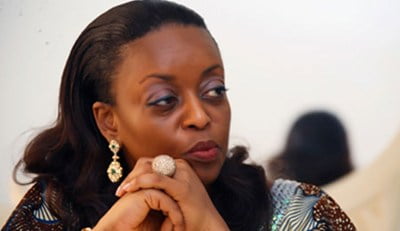 Minister of Petroleum, Diezani Allison Madueke, has joined the league of newspaper publishers in the country, with the introduction of a weekly title, ‘The Union’, DailyPost has learnt.
It was gathered that the paper has an all-gloss pullouts for its Entertainment, Sports, Fashion and Style sections.
Sources said reporters would be paid N250,000 monthly, while Editors will get about N500,000 per month.
Subscribe to:
Posts (Atom)