Wednesday, 12 August 2015

As Nigeria's Peace Committee Resurrects.

By Hamisu Salihu

The 2015 general elections Peace committee headed by former president Abdulsalami Abubakar must be commended for the roles they played towards the successful or peaceful conduct of the hotly contested 2015 presidential elections. They worked both on and behind the scenes to trigger and influence events that later culminated in the historic handing over from the ruling PDP to the opposition APC. We give kudos to them for that!
With the achievement of their primary objective therefore, one had thought the Peace committee would naturally disband and give the newly elected government space to do for Nigerians what it has promised them at the campaign trail. Alas, that appeared not be the case; as the Peace committee on Tuesday 11/08/2015 suddenly resurrected and abruptly paid President Muhammadu Buhari a visit many Nigerians found unusual and unexpected.
Speaking after ‘the closed door’ meeting, Mr Mathew Hassan Kukah while responding to a question about their mission which appeared to be on Buhari’s anti-corruption crusade, said: ‘I think what we are concerned about is process. It is no longer a military regime, and under our existing laws, everybody is innocent until proven guilty.’ Connecting the dots of events occurring prior to the peace committee’s meeting with Baba Mai Gaskiya such as the visit to Villa by two former heads of state, it won’t require any political expert to decipher the code and conclude that the Peace committee met with PMB purposely to intercede on behalf of certain interests or individuals likely to come under the loop of President Buhari’s anti-corruption or loot recovery crusade.
Unless we, ordinary Nigerians, were kept in the dark about the entire terms of what was called Abuja Accord signed on January 14, 2015, which the Peace committee mid-wifed, I do not think that allowing officials who stole from public treasury to escape justice was part of the agreement signed in the event of Buhari defeating the then incumbent Goodluck. But I stand to be corrected though! Thus, for the peace committee’s spokesperson to make the scathing innuendo and remark that Nigeria was ‘no longer a military regime’ is uncalled for as it all sounded like someone was wailing on behalf of the bereaved. For goodness’ sake, since when has it become the peace committee’s responsibility to hold forte for those suspected of looting our commonwealth in billions? Which is the import of the entire message of Mr Kukah and his committee!
The last time I checked Nigeria was not operating a caste system; we are all said to be equal before the law irrespective of class and status. And, as an enthusiastic follower of events and happenings in Nigeria, I have heard and read of how some ordinary folks involved in or suspected of theft of items not worth a million Naira were set on fire by angry mobs. And that is still the unofficial penalty for theft in many places in Nigeria! While I am not a subscriber to or a believer in jungle justice, the import of this is that majority of Nigerians are seriously averse to anything to do with theft or corruption. And, so far, I have never heard of a committee set up either by Mr Kukah or any of his Peace committee members purposely to fight such jungle justice meted out on ordinary oles or barawos! So what PMB’s anti-corruption fight style or ‘process’ typical of ‘military regime’ is Mr Kukah and his committee ‘concerned about’ that is worse than setting suspects ablaze?!
For avoidance of doubt, President Muhammadu Buhari was voted into power by Nigerians to specifically fight the cancer of corruption. In fact it has been said by someone that should Buhari fail in all areas but succeed in killing official corruption, Nigerians will ultimately be happy for it and with him. And I agree with this. In essence, the whole pedestal upon which the charismatic statute of PMB rests is his anti-corruption credential; hence any individual or group who arm-twists, cajoles, intimidates or blackmails PMB into soft-pedalling or jettisoning entirely his anti-corruption campaign does PMB and Nigerians a great disservice and disfavour. And, history and posterity will not forgive that individual or group for setting corruption free from the hands of Nigerians after it was chased, caught, wrestled to the ground, tamed and handed over to the only alpha/Mallam Nigerians believe knows best how to slaughter the monster–That is President Muhammadu Buhari!
Salihu is of the department of economics, University of Surrey, UK

Tuesday, 11 August 2015

Buhari sacks heads of NNPC subsidiaries, appoints 4 new Group Executive Directors


Photo credit: Bloomberg
 
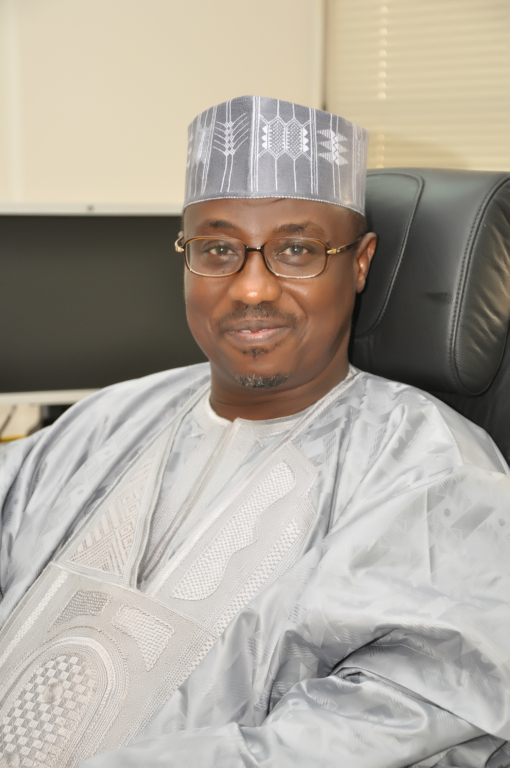
Maikanti Baru, GED Exploration & Production
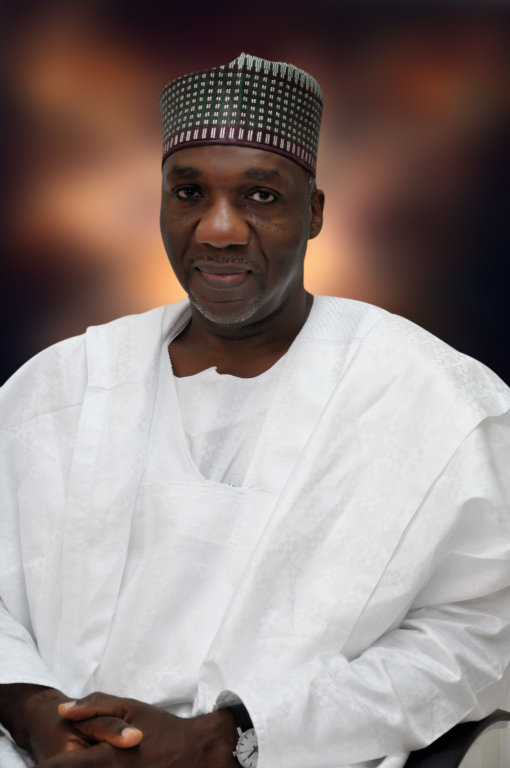
The Management of the Nigerian National Petroleum Corporation (NNPC) has appointed four new Group Executive Directors to man the four new Directorates that have been approved by the Presidency.
The new Group Managing Director, Emmanuel Ibe Kachikwu, disclosed that the new appointments are in line with the Federal Government’s aspiration to transform the Corporation into a lean, efficient, business-focused, transparent and accountable national oil company in keeping with international best practices.
The appointments, which were approved by President Muhammadu Buhari, include Dr. Maikanti Baru, Group Executive Director, Exploration & Production; Mr. Isiaka Abdulrazaq, Group Executive Director, Finance & Services; Engr. Dennis Nnamdi Ajulu, Group Executive Director, Refining & Technology; and Dr. Babatunde Victor Adeniran, Group Executive Director, Commercial & Investment.
Engr. Dennis Ajulu, GED Refining & Engineering
A new Company Secretary/Legal Adviser and Managing Directors have also been appointed for the Strategic Business Units. They are: Chidi Momah, Group General Manager, Company Secratarty & Legal Adviser; Mrs. Esther Nnamdi Ogbue, Managing Director, Pipelines and Products Marketing Company (PPMC); Engr. Chinedu Ezeribe, Managing Director, Warri Refinning & Petrochemicals Company (WRPC); Mr. Babatunde Bakare, Managing Director, Nigerian Gas Company (NGC); Mr. Inuwa Ibrahim Waya, Managing Director, Hyson; Mr. Abubakar Mai-Bornu, Managing Director, Nigerian Petroleum Development Company (NPDC); and Mr. Ladipo Fagbola, Managing Director, NNPC Retail.
Others are: Mr. Rowland Ewubare, Managing Director, Integrated Data Services Ltd (IDSL); Mr. Modupe Bammeke, Managing Director, NNPC Prpoerties; Mr. Abdulkadir Saidu, Managing Director, Duke Oil; and Mr. Dafe Sejebor, Group General Manager, Nigerian Petroleum Investment Management Services (NAPIMS).
Isiaka Abdulrazak, GED Finance & Services
The Corporation also retired 38 top management staff, reducing the number from 122 to 83.
Also in line with the aspiration to reposition the Corporation, 12 personnel have been recruited from the private sector into the top management cadre to jump-start a new business outlook to enhance the operational environment as a profit-driven business as against the current civil service orientation.

National Peace Committee: Jonathan Did Not Seek Our Intervention


*Says fight against corruption must follow rule of law
 By Tobi Soniyi in abuja
National Peace Committee, headed by Abdulsalam Abubakar ‎on Tuesday in Abuja said that former president, Dr Goodluck Jonathan, did not call the committee to intervene on his behalf to placate President Buhari in his anti-corruption crusade.
 Fielding questions from journalists after the committee met with President Muhammadu Buhari at the State House in Abuja, the Coordinator of the committee, Bishop Mathew Kukah, said:‎ "Anybody is free to come to our committee but President Jonathan never by telephone or another means talked to the committee. We went to see him, but that is after we had already seen members of the political party, members of the civil society. We planned to see the speaker because we couldn't see him yesterday.
 "This is a very planned series of intervention essentially just to hear out everybody and I think the good news is that Nigerians are committed to a new nation; they are committed to ensuring that the gains and blessings God has given us come to fruition."
 Asked why it has become necessary for the committee to intervene, he said‎, "This is not an intervention, it is a hearing out process. When we had election it was like a wedding; now the reality of government is now the marriage and people need to be encouraged.
 "We need to reaffirm that this is our country and the only thing we can collectively be opposed to is injustice, iniquity, corruption and in that regard we all had one single conversation."
 He said Buhari had also reaffirmed the need for the committee to continue and that the international community also welcomed the contributions of the committee.

Buhari to Abdulsalami committee: No mercy for looters


By Isiaka Wakili |


President Muhammadu Buhari has said that the prosecution of those who have stolen national resources will begin in a matter of weeks.

Presidential spokesman Femi Adesina quoted Buhari as saying this yesterday during a meeting with members of the National Peace Committee headed by former Head of State General Abdulsalami Abubakar (rtd).

Buhari told the committee that his government was "irrevocably" committed to doing all within its powers to break the vicious cycle of corruption, unemployment and insecurity in Nigeria.

"Nigeria has to break this vicious cycle before we can make progress", President Buhari told Abdulsalami's committee.

The president also disclosed that his government was diligently getting facts and figures pertaining to the nation's stolen funds, before proceeding to the prosecution of identified culprits.

Buhari also told the committee that under his leadership, the Federal Government would ask for the return of stolen funds stashed in foreign banks and ensure that those who stole the funds are put on trial in Nigeria.

He also disclosed that his administration was reorganising the country's revenue generating institutions as part of its actions to address the national problems it inherited.

He that a single treasury account had been established for all Federal revenue to ensure greater probity, transparency and accountability in the collection, disbursement and utilisation of national funds. 

"We have really degenerated as a country. Our national institutions, including the military, which did wonderfully on foreign missions in the past, have been compromised. But we are doing something about it. The military is now retraining and morale has been resuscitated.

"As Petroleum Minister under Gen. Olusegun Obasanjo  in the 1970s, I could not travel abroad until I had taken a memo to the Federal Executive Council asking for estacode. Now, everybody does what he wants.

"That is why security-wise and economically, we're in trouble," President Buhari told his guests, adding that those who have stolen the national wealth "will be in court in a matter of weeks and Nigerians will know those who have short-changed them", Buhari said.

The presidential spokesman said Buhari granted the National Peace Committee, formed before the 2015 general elections, the permission to transform to National Peace Council.

He also quoted Abdulsalami and members of his committee as urging the Federal Government to be guided by the rule of law in its fight against corruption.

Members of the National Peace Committee who accompanied Gen Abubakar on the visit were Bishop Matthew Hassan Kukah, His Eminence, Alhaji Sa'ad Abubakar, the Sultan of Sokoto, Cardinal John Onaiyekan, Pastor Ayo Oritsejafor, President of the Christian Association of  Nigeria (CAN) and  Archbishop Nicholas Okoh, Primate of the Anglican Church of Nigeria.

Others were Justice Rose Ukeje (rtd), Prof Ameze Guobadia, Vanguard Newspaper Publisher, Sam Amuka, Dame Priscilla Kuye, Senator Ben Obi, Dr. Yunusa Tanko, and Dr Arthur-Martin Aginam.

Monday, 10 August 2015

Buhari’s Shuttle Diplomacy: Legal Implications for Nigeria


110815F-Law-Cov-3.jpg - 110815F-Law-Cov-3.jpg


Norrison Quakers
The primary purpose of government as required by the constitution is to inter alia ensure the security and welfare of the Nigerian people.
This constitutional imposition, I believe is the basis of President Muhammadu Buhari’s shuttle diplomacy, the background of which is the request for military assistance in terms of hardware, training and financial support to quell insurgency in the North eastern part of Nigeria and rebuilding it including educating the people.
The other reason is to repatriate moneys illegally siphoned and deposited in foreign banks by politically exposed office holders or their fronts, allies or cronies.
I would prefer to consider the economic, political and social impact or benefits of the President’s Shuttle diplomacy for Nigeria and Nigerians rather than its legal implications.
Nigeria as a country operates as it were a constitutional democracy, the implication of which is that the constitution is supreme having a binding force over all authorities and persons. The shuttle diplomacy in my view is within the ambit of existing laws, legal aid/assistance and mutual treaties between Nigeria and some of the countries visited by the President either at regional, sub-regional, continental and global levels. The persons allegedly involved in the loot are presumed constitutionally to be innocent until otherwise established. It will therefore be out of place to express concerns or fears of possible human rights violations or breach of existing legislations knowing that the diplomatic shuttle is within legal, statutory and constitutional cover.
It is indeed worrisome that our common inheritance or wealth has been siphoned and/or stolen by persons supposedly having the mandate of the people to oversee, manage and control the resources. A cursory look of the provisions of the Constitution reveals that there are checks and balances particularly as regards financial matters e.g. all political office holders are to be paid allowances and salaries from the consolidated revenue fund, the quantum which is also determined by the Revenue Mobilisation Allocation and Fiscal Commission, with corresponding provisions as regards State apparatus or institutions.
The general acceptance or good will of the current administration of President Buhari is a pointer to the fact that the world as a whole is nauseated by the financial recklessness of our leaders, which is essentially the reason; why they have decided to assist the country to recover the loot stashed away in foreign banks by our leaders. Until the emergence of this current administration, we did not know that military aids were stopped, suspended or seized by the US to Nigeria because military equipment were (somewhat in circumstances that appear questionable) found with and deployed by the insurgents in their attack on Nigeria.
I believe that, President Buhari has the discipline and character to rebrand and develop the nation and since democracy is an all-inclusive and participatory system of government, we must all support the government and do the right things, so as to enjoy global respect and recognition and create an enabling environment for investment.

Quakers SAN practices in Lagos

President Buhari's Shuttle Diplomacy, Strengthening the Fight Against Corruption and Insurgency


110815F-Law-Cov-2.jpg - 110815F-Law-Cov-2.jpg


Francis Moneke
President Muhammadu Buhari recently returned from the United States of America where he engaged with President Barack Obama and other top functionaries of the United States government on issues of mutual cooperation and assistance. President Buhari seized the opportunity to solicit the assistance and support of the US government in two critical areas, to wit, the fight against insurgency and corruption. During his election campaign, President Buhari pledged to Nigerians that he would address the twin problems of Boko Haram inspired terrorism and the nagging problem of corruption, both of which assumed alarming proportions during the regime of former President Goodluck Jonathan, bringing the security and economy of the country to a very low ebb, as it were. Buhari’s election was largely predicated on the perception by a majority of Nigerians that he has what it takes, given his antecedents, to effectively tackle the intractable monsters of Boko Haram and corruption.

Two months after President Buhari’s inauguration, the Boko Haram insurgents are far from relenting on their macabre agenda of bloodletting, and the Buhari administration seems already at its wits’ end on how to contain their fiendish escapades. Hence, the visit to the United States offered President Buhari an opportunity to renew the plea for assistance from the global ‘chief policeman’. In the past few years, however, the United States government has failed or refrained from rendering any tangible assistance to Nigeria in the struggle to overcome Boko Haram. Some attributed this non assistance or non-committal attitude to a sour relationship between the White House and former President Goodluck Jonathan. The pertinent question is whether the United States would now harken to President Buhari’s request and run to the aid of Nigeria to defeat or at least subdue this menacing sect that has defied the combined forces of the military regiment and police troops that had hitherto been unleashed against it.

The prospect of the United States changing its mind to assist Nigeria in combating terrorism is very bleak to say the least. The decision by the US government to render any form of military assistance to a foreign nation is always weighed against the strict criterion set down by the LEAHY AMENDMENT.
The Leahy Amendment is a US Human Rights Law that prohibits the US Department of State and Department of Defense from providing military assistance to foreign military units that violate human rights with impunity. Pursuant to this law the US government would normally vet potential recipients of security assistance, and if such a recipient is found to have been credibly implicated in or indicted for gross violations of human rights, assistance is denied and such a country is labeled untrainable forever, unless and until the government of that country takes effective steps to bring those responsible for such violations to justice.

The US State Department has interpreted ‘gross human rights violations’ to mean a small number of the most heinous acts such as murder of non-combatants, torture, enforced disappearance, and rape as a tactic. On what is considered ‘credible evidence’ the standard of the State Department is that evidence of the alleged gross human rights violations need not attain the same standard as would be required to admit evidence in a US court of law. Therefore, to blacklist a country as a violator, as it were, reliance is placed on a wide array of sources including the Annual Department of State Country Report on Human Rights, records of US Government Agencies, human rights reports by NGOs, and information garnered from the press.

There is no gain-saying the fact that the Nigerian military and Police have been consistently indicted for human rights violations by Nigerian and international NGOs, local and international media, lawyers and US State Department Annual Reports on Nigeria. Indeed, the Nigerian media is constantly inundated with a plethora of allegations of human rights abuses by the military and police. Recently, Amnesty International made an allegation of gross human rights violations against the Nigerian military forces engaged in the war against Boko Haram. As dire as the situation foisted on the country by Boko Haram might be, and as difficult as the job of the military and police in trying to combat terrorists might be, under no circumstance is gross and wanton violation of human rights justifiable or acceptable. The military cannot hide under the umbrella of fighting terror to unleash untold human rights abuses on innocent citizens, even the terrorists themselves must not be treated without any regard to human rights, because the State is the custodian of the law and must not condescend to the same level of impunity and lawlessness that characterise the activities of the terrorists. The Nigerian Police is even worse, with an unenviable record of extrajudicial killings, torture and enforced disappearances.

The evidence of gross violations of human rights against the Nigerian Military and Police is therefore overwhelming, and the United States government had no difficulty in applying the Leahy Amendment to refuse repeated appeals for military assistance from Nigeria – be it training of military personnel, provision of necessary intelligence and most importantly, supply of weapons and other military hardware. The argument is that such equipment if provided for such an indicted country would ultimately be used by it in furthering its agenda or practice of human rights violations.

Therefore, given the status quo, rather than hope on the US government for military assistance, the Buhari administration should look inwards or to other climes for such assistance. Better still, it should embark on a total overhaul of the Nigerian Military and Police by taking steps to uproot the many bad eggs in the forces, investigate all reported cases of gross human rights violations by them, and ensure that all those indicted sequel to such investigation are brought to justice. If the Nigerian Military and Police are properly sanitised, we do not really need the assistance of the United States government to win the war against a small and faceless sect such as Boko Haram.

On the issue of corruption, President Buhari during his visit to the White House requested the assistance of the US government to recover over $150 billion stashed away in different US banks or otherwise invested in the United States by corrupt Nigerian government officials.

This is a legitimate request, and the US government has no reason not to assist Nigeria in recovering this humongous loot of public funds domiciled within its jurisdiction. Nigeria and the United States are signatories to the United Nations Convention against Corruption (General Assembly Resolution 58/4), and both countries have ratified that Convention.

Article 31 (1) (a) of the aforesaid Convention provides that “each State Party shall take, to the greatest extent possible within its domestic legal system such measures as may be necessary to enable confiscation of proceeds of crime derived from offences established in accordance with this Convention or property the value of which corresponds to that of such proceeds.” One of the offences created by the Convention under Article 17 is “embezzlement, misappropriation or other diversion of property by a public official.” Article 51 of the Convention emphasises that the return of confiscated assets is one of its fundamental principles, and State Parties must therefore afford one another the widest measure of cooperation and assistance in that regard. It goes on to provide under Article 57 that assets or property confiscated by State Party shall be returned to the legitimate owners thereof.

By virtue of the foregoing provisions of the UN Convention against Corruption, the United States Government is bound, in the spirit of international cooperation which underscores the Convention, to take all necessary and reasonable steps to discover, confiscate and return to Nigerian government all funds, assets and/or property illegitimately imported into its jurisdiction by Nigerian government officials. President Buhari may consider presenting before the Conference of the State Parties created under Article 63 of the Convention an official report to the effect that there is about $150 billion of Nigeria’s assets sitting in US banks or otherwise invested in that country. This may serve as a stronger persuasion on the US government to investigate, discover, confiscate and return such funds or assets.

Article 66 (1) & (2) of the Convention stipulates that disputes between State parties as to interpretation or application of the Convention should be settled by negotiation, failing which the parties may resort to Arbitration. If after six months and there is no agreement as to the organisation of Arbitration, either or both State parties may refer the matter to the International Court of Justice.

It must however be recognised that the main fight against corruption in Nigeria does not rest with recovering looted funds by past government officials nor with probing previous administrations; the crux of an effective war against corruption lies in putting in place measures to restore discipline, probity, transparency and sanity in public service and thereby forestall and prevent future acts of corruption. While corruption has many causes, it is strongly inter-related to poor governance failure in economic policy limits opportunities, weaknesses in public administration result in a decline in the probity of public servants and inadequate legislative oversight of government.

All of these factors contribute to an environment favourable to the growth of corruption. In turn, corruption erodes the authority and effectiveness of public institutions. Indeed, the Preamble to the UN Convention against Corruption recognises that corruption poses a grave threat to the stability and security of societies, undermining the institutions and values of democracy, ethical values and justice and jeopardising sustainable development and the rule of law. There is therefore no gainsaying the fact that the institutionalised culture of corruption is to blame for relentless insecurity and perennial underdevelopment in Nigeria. The correlation between corruption in Nigeria and the menace of Boko Haram is therefore not far-fetched.

During his tete-a-tete with President Obama, President Buhari was eulogised by the American president as a man of proven integrity with zero tolerance to corruption. It is indeed mainly for this reputation of integrity that President Buhari finally got the mandate of the Nigerian people in the last presidential election. The ball is therefore in the court of the President to live up to the great expectations of the Nigerian people that he would wield the magic wand that would put paid to the monster of corruption and its sibling that is insecurity.

Francis Chigozie Moneke is the Executive Director of Human Rights & Empowerment Project Ltd/Gte.

Buhari’s Shuttle Diplomacy: Strengthening the Anti-Corruption Crusade


 Femi Falana
 The right to development is a fundamental right by virtue of which every person is entitled to participate in, contribute to and enjoy economic, social and cultural development. It is a right which includes the exercise of full sovereignty over national resources, self determination, popular participation in development and equality of opportunity. By virtue of section 16(2)(c) of the Constitution, the Nigerian State shall direct its policy towards ensuring the promotion of a planned and balanced economic development and ensure that the economic system is not operated in such a manner as to permit the concentration of wealth or the means of production and exchange in the hands of a few individuals or of a group.
The demand for the control of the country's natural resources was a component element in the struggle for independence from the British colonial regime. But upon the attainment of self-rule the status quo was allowed to remain in the economic front. Realising that the socio-economic rights of the people could not be meaningfully guaranteed without the control of the natural resources a duty has been imposed on the member states of the African Union to freely dispose of the commonwealth in the exclusive interest of the people.
 In order to establish a welfare system in the country, the Constitution has imposed a duty on the State to direct its policy towards ensuring that the material resources of the nation are harnessed and distributed as best as possible to serve the common good and that the economic system is not operated in such a manner as to permit the concentration of wealth or the means of production and exchange, in the hands of few individuals or of a group. But with the hijack and control of the economy by imperialism and its local lackeys the commonwealth has been completely concentrated in the hands of a few people.
No doubt, the domination of the Nigerian economy by market forces has stultified the development and growth of an efficient, dynamic and self-reliant economy in Nigeria. The adoption of neo-liberal economic policies by the Federal Government has continued to promote poverty among the generality of Nigerians. Despite the abundant resources of the nation, the Vice President, Professor Yemi Osinbajo has disclosed that "over 100 million Nigerians live below the poverty line." I am not unmindful of the commitment of the Buhari Administration to fight corruption. It ought to be pointed out that corruption is not the root cause of our poverty but a manifestation of the peripheral capitalist economy which is anchored on ruthless exploitation.
With the implementation of the Structural Adjustment Programme the State has stopped the planning of the economy, refused to harness the resources of the country and failed to address grand corruption and abuse of office.  But in view of the debilitating effects of corruption on the society, the State has adopted some measures to promote transparency and accountability in governance. In addition to the penal and criminal codes which have provided for stringent penalties for fraud, embezzlement, stealing, conversion etc other laws which are designed to promote good governance are the Independent Corrupt Practices and Other Related Offences Commission (ICPC) Act, Economic and Financial Crimes Commission (EFCC) Act, Code of Conduct Bureau Act, Public Procurement Act, and Fiscal Responsibility Act. In demonstration of its resolve to combat corruption, the Government has ratified the United Nations Convention on Corruption and the African Union Convention on Corruption.
Aside from, the collaboration with some countries to tackle corruption through Mutual Legal Assistance, the Federal Government has enacted a number of laws for encouraging ethical standards and promoting good governance. Notwithstanding the corpus of anti-graft laws and the establishment of anti-corruption agencies, official corruption has stultified growth and development and exposed the country to ridicule before the comity of nations. This is not unexpected given the nature of the country's neo-colonial capitalist economy compounded by impunity on the part of the ruling class.
Duty of Nigerian citizens to fight corruption
 The duty imposed on citizens "to render assistance to appropriate and lawful agencies in the maintenance of law and order” includes the duty to expose corruption by reporting allegations of corrupt practices to the anti-graft agencies. In Fawehinmi v Inspector-General of Police   (2002) 1 NWLR (PT 767) 606  the Supreme Court held that notwithstanding the immunity conferred on heads of government by section 308 of the Constitution, criminal allegations against them may be investigated by the police during their term of office. The view of the apex court was captured by Justice Uwaifo when he said that “the evidence or some aspect of it may be the type which might be lost forever if not preserved while it is available, and in the particular instances given it can be seen that the offences are very serious ones which the society would be unlikely to overlook if it had its way. It may no doubt be used for prosecution of the said incumbent Governor after he has left office. But to do nothing under the pretext that a Governor cannot be investigated is a disservice to the society.”
The Court however turned round to hold that the police could not be compelled to investigate or prosecute any criminal complaint on grounds of public policy. With respect, the Supreme Court missed the point as it failed to take cognisance of the relevant provisions of the Constitution. In other words, the discretion of the anti graft agencies to decide whether or not to investigate or prosecute allegations of corruption cannot override the fundamental right of citizens to freedom of information coupled with the duty placed on them to render lawful assistance to law enforcement agencies in the discharge of their duties.
Convinced that they have discretion to investigate or prosecute allegations of corruption the anti graft agencies have often picked and chosen which cases to investigate or prosecute. The latitude given to the police and other agencies clothed with prosecutorial powers was challenged in Alhaji Sani Dododo v Economic & Financial Crimes Commission and Ors. (2013) 1 NWLR (PT 1336) 468. Having submitted petitions to the anti graft agencies alleging corruption against a former governor of Sokoto State, Senator Muhammed Adamu Aliero which were not investigated by the respondents the Appellant approached the Federal High Court for judicial review by filing a writ of mandamus. In striking out the case for want of locus standi on the part of the Appellant the federal high court held that the Respondents could not be compelled to investigate or prosecute the suspect.
The appeal against the verdict was also dismissed by the Court of Appeal. But the locus standi of the Appellant to institute the case was recognised when the Court (per Nwodo JCA) held that "the traditional and narrow view set out in Adesanya’s case will not attain justice in the realm of public right in the light of the Nigerian cases earlier set out on issue of locus... the African Charter provision encompassing public rights should be so construed broadly to vest locus on a tax payer who is interested in good governance and shows such interest by writing a statutory body to complain on misappropriation of public funds. Such an act is disclosure of sufficient interest.”
In recognising the constitutional duty imposed on citizens to report allegations of corrupt practices by public officers to the anti graft agencies the Court of appeal further stated that the appellant “also has a duty, by dint of section 24(e) of the same Constitution ‘to render assistance to appropriate and lawful agencies in the maintenance of law and order’. It is in the spirit of section 24 of the Constitution, read together with section 15(5) of the same Constitution that enjoins the state agencies to ‘abolish all corrupt practices and abuse of power’ that the appellant made his complaint of corrupt practices against the 4th respondent to the 1st and 2nd Respondents, who are no doubt lawful agencies of the Federal Government charged with police powers to investigate allegations of corrupt practices and financial crimes and prosecute the offenders.”
In the fight against corruption, the Court rightly held that aggrieved citizens who submit petitions alleging corrupt practices against public officers are entitled to the report of the investigation carried out by the police and anti graft agencies. It was the solid view of the Court that "the appellant is entitled to the investigation report on his right as the complainant. See Article 9 of the African Charter. The generality of the public are not entitled to that information until the person suspected is arraigned before a competent court for trial."
In view of the categorical pronouncements of the appellate courts in the cases of Fawehinmi v the President (2008) CHR 1 and Alhaji Dododo v. Economic and Financial Crimes Commission (supra) it can no longer be said that a tax payer has no locus standi in demanding for the investigation or prosecution of a public officer suspected to have engaged in corrupt practices. To that extent, the Federal High Court (per Kolawole J.) fell into error when it struck the case of Socio-Economic Rights Accountability Project & Ors. v Attorney-General of the Federation & Anor.  Unreported Suit No: FHC/ABJ/CS/ 640/ 2010 on the ground that the Plaintiffs, a group of human rights bodies, lacked the locus standi to demand for an account of the $12.4 billion which was allegedly mismanaged by the Ibrahim Babangida junta. Since the members of the Plaintiffs have a duty to render assistance to law enforcement agencies the doctrine of locus standi was improperly invoked and wrongly applied by the trial court.
Indeed, the trial court ran into contradictions when it turned down the request of the Defendants for the award of costs. Even though the court had struck out the case for want of locus standi it proceeded to say the Plaintiffs could not be said to be "busybodies" when it held that "It will be uncharitable for anybody to describe or christen them as ‘busy-bodies’. They are not, rather, I see them as patriotic ‘corporate citizens’ of Nigeria who in my view, are driven purely by a desire to use the judicial instruments to effectuate in practical terms, the ‘fundamental objectives’ expressed in section 14(1) of the CFRN, 1999 as amended that ‘the Federal Republic of Nigeria shall be based on the principles of democracy and social justice’.... These Applicants are not busy-bodies but patriotic corporate citizens (regardless of the status of the 2nd and 3rd Applicants who did not sue through their registered trustees) whose courage to bring this action against all odds, must be commended."
In Bamidele Aturu V Honourable Minister of Petroleum & Ors. (unreported) Suit No: FHC/ABJ/CS/591/2009 the locus standi of the plaintiff to challenge the decision of the defendants to deregulate the downstream sector of the petroleum sector was upheld by the Federal High Court. The trial judge, Adamu J. (as he then was) held that "...it is my considered view therefore that any decision by the government of Nigeria to deregulate the downstream sector of the petroleum industry in the face of the extant laws copiously referred to, will not only be unlawful, illegal but unconstitutional as well and therefore, null and void.”
Recovery of looted wealth
No doubt, the avowed commitment of President Buhari to fight corruption and end impunity in the country has attracted the goodwill of the international community. Apart from his invitation to attend and address the last meeting of the G7, President Buhari is currently on tour of the United States on the invitation of President Obama. Before then, Nigeria had hosted the meeting of her neighbours in the renewed fight against terrorism. To a large extent, the pariah status of the country may be said to have ended.
At the meeting of the G7, President Buhari pleaded with the leaders of global capitalism to collaborate with Nigeria in fighting terrorism and in fixing her comatose economy. Convinced that the destiny of the nation lies in the hands of Nigerians I pleaded with President Buhari to look inwards. In particular, I suggested that Nigeria should reject any bailout and make a strong case “for the repatriation of our looted wealth in the vaults of western banks”. Happily, President Buhari has requested the Obama Administration to assist in the repatriation of about $150 billion looted from the public treasury in the last decade.
Since the war against official corruption commenced under the Buhari Administration corruption has decided to fight back in a vicious way. Apart from attacking the leadership of the anti graft agencies the regime has been accused of engaging in dictatorial and authoritarian tactics by the few unpatriotic elements who have stolen the country dry. While the decision of the Federal Government not to interfere in the work of the anti-graft agencies is a welcome development, the National Assembly should forward to President Buhari for his assent the Witness Protection Bill and the Whistle Blowers’ Bill. The National Assembly deserves commendation for enacting both laws together with the Administration of Justice, 2015.
Under the new Act the granting of stay of proceedings and other delay tactics have been banned in the trial of criminal cases. Accordingly, a criminal trial shall be concluded within months unless there are exceptional circumstances which may prolong any trial. Indeed, the elevation of trial judges to the Court of Appeal will no longer lead to a fresh trial before other judges as newly appointed judges will be given the fiat to conclude part heard matters. Plea bargain has been given statutory recognition by the Act.
Those who are opposed to the renewed fight against corruption have begun to accuse President Buhari of waging a persecution agenda. While urging the anti graft agencies to ignore such campaigns of calumny it is germane to remind Nigerians that since 1994 all successive regimes in Nigeria have waged a war against corruption. It was the Sani Abacha junta that enacted the Failed Bank Decree and the Advance Fee Fraud Decree to deal ruthlessly with bank fraud and the offence of obtaining money by false pretences. The Pius Okigbo-led probe of the mismanagement of the Central Bank instituted by the junta revealed that $12.2 billion in the Dedicated Accounts was misappropriated by his predecessor and comrade-in-arms, General Ibrahim Babangida.
Following the death of the maximum dictator, General Abacha on June 8, 1998, his successor, General Abdulsalami Abubakar  ordered investigation into the grand looting of the Central Bank of Nigeria from 1993-1998. At the end of the probe it was established that the late military ruler stole about $5 billion from the vaults of the CBN through his National Security Adviser, Mr. Mohammed Gwazo. The said stolen fund has since been traced to over 140 bank accounts in western countries and some remote islands in the world. Based on report of the investigation the Federal Government recovered funds and properties worth over $1 billion from the family and associates of General Abacha. The forfeited assets were promulgated into law by General Abubakar on 26th May, 1999. Upon our request under the Freedom of Information Act, the immediate past Secretary to the Federal Government, Senator Anyim Pius Anyim confirmed that the said funds and assets had been forfeited to the Federal Government.
Upon the restoration of civil rule in May 1999 the Olusegun Obasanjo Administration embarked on the recovery of the remaining Abacha loot. Contrary to the misleading information of the then Minister of Finance, Dr. Ngozi Okonjo-Iweala, that only $500 million was recovered under her watch we have established that the Government of Switzerland assisted Nigeria to recover $700 million which was handed over to the Federal Government while another sum of $350 million was recovered from family members and business associates of General Abacha in respect of the Ajaokuta contract scam. It has also been revealed that the proceeds from the sale of shares of the late dictator in a refinery located in Sierra Leone worth $450,000 were forfeited to the Federal Government at the material time.
It is on record that the recovery efforts of the Federal Government continued under the Goodluck Jonathan Administration. In justifying the withdrawal of the criminal charges filed against Mr. Mohammed Abacha over his role in the diversion of the stolen fund, the Federal Ministry of Justice disclosed, sometime last year, that another sum of $970 million had been recovered from the Abacha loot.  Shortly thereafter, the United States' Government announced that it had recovered the sum of $458 million from the Abacha loot. The said sum of $458 has not been repatriated to Nigeria for obvious reasons.
During the recent electioneering campaign, President Jonathan boasted that his administration had fought corruption more than previous regimes. He therefore warned Nigerians not to vote for General Buhari as he was likely to jail corrupt people. As Nigerians actually wanted corrupt people jailed they decided to vote for the retired General. In fairness to President Jonathan, the fight against corruption under his regime recorded some success. Apart from an ex-governor who escaped the arrest of the EFCC only to be arrested, tried and jailed abroad the era witnessed the conviction of a few influential people who were convicted for stealing billions of Naira but asked to pay ridiculously low fines. Indeed, the regime charged Mr. Dick Cheney, a former Vice President of the United States and the Nigerians who were indicted in the Halliburton scandal even though the cases were struck out for want of diligent prosecution.
 Based on the concern expressed by President Jonathan over the inordinate delay in the prosecution of corruption and terrorism cases the heads of the Supreme Court, Court of Appeal and Federal High Court issued practice directions to accelerate the hearing and determination of such cases. Under the practice directions the hearing of cases of corruption and terrorism shall be heard day by day while appeals arising there from shall take precedence over other matters. But for reasons best known to our judges the practice directions have been ignored.
Campaign against Anti Graft Agencies by the Ruling Class
 Based on the avowed commitment of President Muhammadu Buhari to fight the menace of corruption the members of the ruling class have begun to wage a campaign of calumny against the EFCC and other anti graft agencies.  An influential newspaper has, without any shred of evidence, accused the EFCC leadership of wallowing in corruption while a rented crowd has "stormed" Abuja to demand for the removal of the EFCC chairman. Even some members of the ruling party have not spared the EFCC for daring to ask certain people to account for public funds the EFCC has been accused of allowing itself to be used to settle political scores. On its own part, the Peoples Democratic Party has alleged that the anti corruption agenda of the Buhari Administration is deliberately designed to humiliate the party and embarrass the Goodluck Jonathan Administration.
The other day, the immediate past National Security Adviser, Col Sambo Dasuki (rtd) had his residence searched by officials of the State Security Service (SSS)based on a search warrant issued by a Magistrate. Without considering the fact that the search was carried out in line with the rule of law the SSS was accused by a section of the media of embarrassing Col. Dasuki for leading the soldiers who arrested General Buhari during the palace coup of 1985. In the same vein, police investigation into the alleged forgery of the Standing Rules of the Senate by a top national assembly staff is being politicised. Even a mere invitation extended to some persons to react to allegations linking them with multi billion naira fraud is now said to be a political vendetta.
Since the allegations of bias or persecution being leveled against the EFCC are deliberately designed to discredit the renewed fight against corruption and shield looters from prosecution it is high time that the attention of Nigerians was drawn to the fact that corruption is fighting back. It is indeed embarrassing that some members of a regime that promised to fight corruption are involved in the dubious campaign to sustain impunity in the country. Having closely monitored the recent activities of the EFCC since it was established over 10 years ago, I can say, without any fear of contradiction, that the Buhari Administration has not gone beyond granting autonomy to the commission to discharge its statutory duties.  It may interest Nigerians to know that majority of the petitions which formed the basis of the ongoing investigation by the EFCC were submitted before the emergence of the Buhari Administration.
I have confirmed that the petition against the cabal of fuel importers was submitted to the EFCC sometime in January 2012 by the immediate past Minister of Petroleum Resources, Mrs. Deziani Alison-Madueke on the directive of President Jonathan. Even the petition against those who duped the nation of hundreds of millions of dollars through the oil swap scam was also submitted to the EFCC by her after the 2015 presidential election. With respect to the ex-governors of the APC and PDP who are currently standing trial, the petitions which triggered the investigations were written and submitted to the anti graft agency by concerned citizens and anti-corruption bodies.
It should be pointed out that the EFCC and other anti graft agencies are being inundated with petitions by Nigerians and foreigners alike who believe that the Buhari Administration will not shield corrupt people from investigation and prosecution. To that extent, the decision of the Federal Government to limit the investigation of corruption cases to the Jonathan Administration cannot be justified in law. As there is no statute of limitation with respect to corruption cases aggrieved Nigerian citizens cannot be restrained from exposing corrupt practices of successive regimes. More so, that President Buhari has requested the Obama Administration to assist in the recovery and repatriation of $150 billion stolen from Nigerian in the past decade.
Conclusion
 There is no doubt that official corruption has continued to arrest the development of the country. This is not unexpected given the nature of the country's neo-colonial capitalist economy compounded by impunity on the part of the ruling class. If the Buhari Administration is going to confront the menace of corruption it has to ensure that the stolen wealth of the nation is recovered and invested in promoting the welfare of the Nigerian people. To that extent, all the welfare laws enacted pursuant to chapter II of the Constitution should be implemented in order to promote the welfare and security of the people.
The EFCC and ICPC should leave no stone unturned in the recovery of the nation's looted wealth. Henceforth, state and local governments should cooperate with the EFCC in the investigation and prosecution of those who have diverted public funds belonging to them. To guarantee the maximum cooperation and participation of the citizenry in the fight against corruption the Federal Government should direct all public officers to comply with the provisions of the Freedom of Information Act. In addition, President Buhari should sign the Whistle Blowers Bill and the Witness Protection Bill into law. In granting autonomy to the anti graft agencies the regime should ensure that there is no selectivity in the investigation and prosecution of corruption cases while the rights of all criminal suspects are respected.
Mr. Falana SAN is a human rights lawyer and recipient of the Bernard Simmons Award of the International Bar Association.