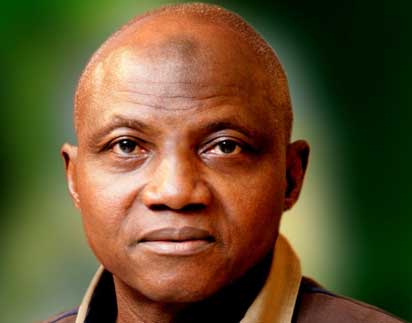
Tatalo Alamu
It is said that thunder hardly strikes twice at the same spot. If the now civilianized former military ruler from Daura is remembered for little else, he will be memorialized as the man under whose watch thunder struck the Nigerian political firmament twice. It is no mean achievement. Let us now elaborate on this political conceit.
In March 1984 and after the first hundred days of his first coming, it was clear that the lean ramrod straight infantry general meant exacting business. Now thirty one years apart, and after another hundred days of the new civilian regime headed by the selfsame but now retired general, Buhari has again shaken Nigeria to its political foundation. A brief historical detour is in order.
At the close of the month of December 1983, a group of senior military officers led by Major General Mohamadu Buhari , as at then the General Officer commanding the Third Division of the Nigerian Army based in Jos, overthrew the civilian regime headed by Alhaji Shehu Aliyu Shagari. There was widespread jubilation and applause across the length and breadth of the nation. The joyous mood of the nation was captured in the enraptured refrain: “Happy new year, and happy new regime!!”
It is interesting to note that when Buhari was toppled twenty months later in a palace coup spearheaded by the then Chief of Army Staff, Major General Ibrahim Babangida, the applause, if any at all, was muted. There was no general jubilation except among disaffected factions of the political class. As far as the general populace was concerned, it was a play of giants among military juggernauts in which Nigerians were nothing but spectral spectators.
But as fate and divine destiny would have it, thirty years after his ouster by his colleagues, Buhari has been returned to power as a civilian after another major ruling class implosion and this time on the cusp of a pan-Nigerian revolt against corrupt and inept civilian rule. This was after three storied attempts in 2003, 2007 and 2011 which ended in tears and much gnashing of teeth.
This time around, nothing could have stopped the Buhari momentum as it swept the cobwebs of elite mischief and ancient feuds before it. Never in Nigeria’s history has the national multitude rooted and rallied valiantly for one individual. Since no one can argue with a political volcano, the utterly remiss and renegade Nigerian ruling class quietly slunk away after one last ditch attempt to torpedo the entire process.
It should be noted that the old military coalition which swept Buhari to power was an inchoate, contrary and contradictory amalgam comprising of careerists, rightwing power venders, professional coupists and a sprinkling of genuine nationalists officers. Very soon, the stress and strains began to manifest and it was clear to the discerning that a military showdown was all but inevitable.
It was said that Alhaji Shehu Shagari, the ousted and absconding former civilian president, aborted his precipitate flight around Lafia upon learning of the headship and composition of the new military junta. It was not a revolution, so to say. It was an orderly revolt among military orderlies of the oligarchy.
Demonstrating astonishing political virginity, General Buhari himself did not help matters. A devout traditionalist obviously insulated from the then prevalent national mood and temperament, he addressed a press conference denouncing those who were insinuating that Alhaji Shagari was brought down to Lagos in chains. This was at a time when Shagari’s deputy, Alex Ekwueme, had been hauled into detention where he developed a beard that would make Nebuchadinazeer wince in fearful admiration.
By the time Buhari was ousted, what was perceived as the less than evenhanded handling of the cases of corrupt self-enrichment and other sensitive national matters had cost the administration considerable elite sympathy particularly among the Southern factions. The powerful ASUU gave up after dismissing the junta as the military wing of the NPN.
Wole Soyinka, soon to be ennobled—or ennobeled—was on fearsome rampage tearing the administration to pieces at every available forum. Two respected civil war stalwarts from the west tore into the administration. In a coup de grace, the inevitable General Obasanjo gave a lecture at UI in which he warned that Nigeria was not the exclusive property of a section and must not be so ruled. It was the beginning of the end.
In retrospect, it can now be seen that just as the military amalgam that originally brought Buhari to power was inchoate and irredeemably conflictual, the civilian coalition that has brought him to power almost thirty two years after is even more inchoate, contradictory and roiling with mutually exclusive political tendencies. It has already occasioned much stress and tension in the polity. The senate is lost to a desperate counter-revolutionary group who do not care a hoot about Buhari’s messianic mission.
It is only a mere hundred days into Buhari’s civilian administration and writs are already flying all over the place. Investigative organs are being legally defanged or disabled on a daily basis. The masses who are still solidly behind Buhari do not own either newspapers or electronic organs of counter-revolutionary dissemination of virulent nation-tearing propaganda and they can only watch in fearful dismay. It is obvious that if thunder can strike twice, so can retrogressive reaction.
What remains is at this point is to take a prospective analysis of the balance of forces, the problems that may fatally entrap Buhari this time around as a result of certain persistent political peccadilloes and the political formations that will shape up in opposition to the retired general in all their structural, systemic, ideological and institutional dimensions. This should serve as a political primer and mnemonic device for the retired general as well as a handy manual for a chronically conflicted nation.
In a brilliant, profoundly ironic comparison of the two Bonapartes, Karl Marx once observed that history often repeats itself, the first time as a tragedy and the second time as a farce. In an interesting gloss on this passage, Terry Eagleton, the notable Anglo-Irish Marxist literary theorist, has noted that it was not just that Louis Bonaparte was a pathetic parody of his more illustrious uncle but that that was the way Napoleon Bonaparte himself would have appeared had he shown up around that time: A regressive caricature of his former self. In other words, time changes everything and change also must time itself.
It is important to save General Buhari from becoming a self-parodying caricature of his former self. The first time he ruled Nigeria, it was as an absolute military autocrat with all the power, the symbolic aura and paraphernalia of military despotism. This time around as a civilian ruler, he can no longer tap into or avail himself of such wide, untrammeled powers. Military rule is passé and the international community abjures autocratic civilian rule.
But besides all this, and much more importantly, the National Question, in the intervening decades, has been critically exacerbated and Nigeria has become a roiling cage of contrary nationalities clawing at each other to death. The Nigerian post-colonial state is completely demystified and desacralized. Nothing is sacred or sacrosanct anymore.
President Buhari should therefore not be surprised or miffed if every step he takes to bring succour and solace to Nigerians irrespective of tribe, creed or region is subject to stringent scrutiny and every appointment is viewed from ethnic, religious and regional prism. Many will cock a snook at him just for the fun of it. Others will try to derail him out of bitter primordial malice, and he cannot resort to extra-constitutional measures in a just bid to sanitize the nation without calling into question the fragile national fabric. The Nigeria political elites have never been this bitterly polarized.
Yet it is a scary and precarious situation when a seeming revolution cannot employ revolutionary methods to deal with a historic mess. The former general just has to get on with the job within the circumscribed and constricting ambit of law and order. Unlike the first time around when he was able to slam a tense somnolence on the nation by sheer military muscle, many more writs will erupt this time around as his sense of justice, evenhandedness and fair play is called into question by ethnic barons and ideological charlatans who have suddenly found their voice after keeping quiet when Jonathan’s misrule appeared to favour their section.
However, one thing Buhari has going for him which his military regime did not enjoy is massive international support and global approval. Having helped to bleed Nigeria senseless through its tacit support for executive pickpockets, the west is now showing some remorse about the fate and tragedy of the greatest conglomeration of Black souls in the world. Buhari should be able to leverage this global opprobrium for looters of our national patrimony irrespective of their status as the internal battle against corrupt enrichment gets underway.
But character is fate as the ancient Greek sages noted. What may eventually derail President Buhari are certain character traits which may be admirable when viewed in isolation but which when viewed holistically may represent a classic instance of how personal virtues may become political handicaps in the ethnic hotbed and political bedlam of fractious nations.
For example, Buhari’s contempt for the Nigerian political class is legendary .This contempt is well-deserved and shared by many patriotic Nigerians. But such was this contempt that the first time around, it didn’t allow him to even contemplate a Transition Programme for a return of the country to civil rule. The enemies who would eventually oust him pounced on this.
This time around, the same contempt is driving Buhari to throw the baby away with the birth water by stiffly ignoring the call for another look at the structural misalignment that has hobbled the nation’s march to authentic nationhood. The president sees it as mere political irritation but it may eventually be discovered that without this drastic structural surgery, good governance and probity may simply not be enough. An opportunistic but expired faction of the political elite has already latched on to this as causus belli, knowing how it resonates with wide sections of the nation.
The other problem is Buhari’s seeming inability to transcend a confining cultural and religious milieu. Nobody can grudge a man for his fidelity to the spiritual and cultural conditioning of his political habitus. This is in the nature of human acculturation. But to rule a fractious multi-national nation like Nigeria requires far more cosmopolitan gamesmanship and metropolitan expansiveness than the president has shown. No one is asking him to admit contrary elements into his inner spiritual chambers, but he needs to widen and broaden his political associations in order to avail himself of the political, economic and spiritual intelligence that he will need in the struggle to redeem Nigeria.
If he has not been told, then he must be told that he could not have come to power without this .That critical political intelligence, economic surveillance, cultural patrolling and intellectual trouble shooting will be quite decisive as the battle to redeem Nigeria shapes up in the months ahead. The first time around, General Buhari did most things right, but left his military flanks exposed which proved fatal.
This time around, President Buhari has been doing most things right while leaving his political flanks exposed which may prove equally lethal. The senate fiasco ought to have taught him a lesson. Even as the benefits of his nationalist reforms are beginning to kick in, he will still need a countervailing patriotic political cadre to shield him from political hyenas and to serve as the conduit pipe and transmission belt of a new national consciousness. It is morning yet after a mere hundred days and whatever the elite carping about posts and postings, Mohamadu Buhari is doing very well.



When President Muhammadu Buhari, after his swearing-in, on May 29, allowed himself up to September to name his ministerial cabinet, he couldn’t have reckoned that the seeming adequate time would pass so swiftly to open him to very critical scrutiny by both supporters and political opponents on how far he had gone in meeting their expectations. Supporters, in opting for Buhari in the presidential elections, believed he would provide a fresh political/administrative atmosphere, in contrast to the record of the previous 16 years while critics contemptuously dismissed all such optimism. To worsen matters for Buhari, the public expectations/pessimism (of supporters and critics respectively) within the conventional first 100 days (ending tomorrow), coincided with the September undertaking within which to name his ministers, Unless those ministers have been named by now, Buhari has up till the last day of the month to keep his undertaking, as he did not specify a particular date. But such an excuse or even undue delay henceforth, will subject the Buhari administration to further ridicule, both in Nigeria and abroad. Meanwhile, pro and anti-Buhari groups are, as expected, engaged in polemical fisticuffs on his performance so far
Either way, the better objective verdict must be related to what President Buhari inherited and promised the nation as a newly elected head of government on May 29, 2015. 1. Widespread goodwill at home and abroad. 2.Perception of Nigerians and the entire international community that the scale of corruption in Nigeria is one of the highest in the world. 3. A feeling of omnibus marginalisation of northerners and indifference by south westerners even if such existed. The only point of note was the opportunistic exploitation of that dissatisfaction by discredited and politically irrelevant elements parading as representatives of Yoruba under the banner of a remnant Afenifere. 4. Free looting of national treasury by financial criminals purportedly claiming subsidy for fuel not supplied at all in many cases. 5. A rampaging Boko Haram insurgency, which forced the closure of Maiduguri International Airport for over a year. 6.Virtual collapse of nationwide power supply throughout the previous five years. 7. A poorly equipped Nigerian army facing and deserting a better-equipped insurgents. 8. Unpaid arrears of monthly salaries of federal and state civil servants. 9. Promise of battling corruption among public office holders and civil servants. 10. Routing of the Boko Haram assault on the nation. 11. National debt of trillions of naira owed to contractors.
Largely, international goodwill brought President Buhari to office last May and it is to his credit that he still retains that distinction for Nigeria. Substantially, the country is no longer viewed by foreign governments and businessmen as swimming in corruption. That is a feat attained within three months. Rather than a professional gimmick of foreign public relations consultants, that image change for Nigeria is due to Buhari’s firm leadership in containing the vermins in the public and private sectors as well as their foreign collaborators. Even on the highly debated issue of human rights, given his military background, Muhammadu Buhari is emerging unduly liberal. A good example was his weak submission that he would abide by any leadership(s) produced by the national leadership. Confronted with fallout of his liberal disposition, the same Buhari had to tactfully clip the wings of his National Assembly dissidents, who, after tasting the first blood, became insatiable. The prospects at that stage were that the National Assembly APC rebels, would eventually commence ruling the man at Aso Rock.
Rather sadly, President Buhari’s almost unlimited goodwill on the local scene, which followed him to office three months ago, has diminished. It should be a matter for concern that a man like former Kaduna State Governor Balarabe Musa now reminds us that we have a President of Nigeria who must ensure he does not deteriorate to president of northern Nigeria. There is an irony in this development. The controversy should not be sourced to only the appointments made, as the timing and manner. For example, for all the criticisms made, it is remarkable that, traditional critics have not described the appointees by President Buhari as “mediocrities.” The only reason for that is the sound education background of these fellows.
Mr. Babachir Lawal, the new Secretary to the Government of the Federation is a law post-graduate of Oxbridge (Oxford/Cambridge) as well as Warwick Universities. Such distinctions do not come better even though the easiest counter-submission is that any other part of the country (specifically South) could also produce men of distinction. Still, the criticism should be at a different aspect of the appointments. What was so important or more compelling for these latest appointments than the release of the list of the ministerial nominees? What is holding up ordinary release of list of ministers? If such a list had been simultaneously released with the recent appointment of virtually personal staff of President Buhari, there, definitely, would not have been any uproar or such might make much impact since ministers, statutorily, must comprise appointees from all parts of the country.
What is more, whenever the list of ministers is released for screening by National Assembly, the time may be only for the members to proceed on sallah holidays. For at least a fortnight if not longer? That will stretch to October before the commencement of the screening proper. To last how long? Conservatively, we may run into the first six months of the administration with another possible six months for the new ministers to effectively grasp their new job. In that situation, the longest serving minister may be for barely three years. If President Buhari strictly adheres to the public impression that he would serve for only one term, it must still be his interest that his party (would) win the 2019 race. Unfortunately, the anti-PDP coalition, which won APC the presidency only six months, no longer exists. South South and south East are now reflecting that, perhaps, they were correct in their voting preferences at the last presidential elections. After the elections, widespread reports indicated that South East thereby lost the Senate presidency. Hence the general speculation that South East would be compensated with the post of Secretary to the Government of the Federation. Nothing was done to dispel that speculation, only to be shattered all round,
On its part, South West is back to its old survival tactics of “siddon look” to nurse its wound. However, must South East, South South and South West (entire South) not retire into sober reflection on their political pattern of self-destruction? Each of the three was, along with the three northern zones, in contention for the post recently filled. But the three states, which lost were victims of regicide. In Rivers State, ex-Governor Rotimi Amaechi was subjected to judicial probe of his tenure by his political enemy, Nyesom Wike. In Lagos, new helmsman, Akinwunmi Ambode, for yet-to-be-stated reasons, intermittently released costs of some projects while his predecessor, Babatunde Fasola, was in office. In Imo, the battle for the South East zonal leadership of APC was the deciding factor. Hence, whatever the feelings of the people, Governor Rochas Okorocha openly supported President Buhari on the new appointments.
Still on the credit side, theft of public fund through legalised fraud called fuel subsidy has been substantially reduced. Indeed, there is no more display of loose money. Federal and state civil servants now collect monthly salaries as and when due after collecting their accumulated arrears hitherto owed them. The magic was sequel to instant and firm streamlining of financial regulation, affirming only a single Federation Account for any revenue accruable to Federal Government. Not left out are unpaid poor Nigerian soldiers at the war front, who have had that situation reversed. The army is now well equipped and has contained the Boko Haram insurgents. Maiduguri International Airport, forced to be closed almost two years ago by the superior firepower of Boko Haram, has been re-opened.
Most significantly, within the last 100 days, President Buhari gave order to the entire armed forces leadership to rout out the Boko Haram within a stipulated time of three months. The import of that directive was recently affirmed by one service chief, who said: “It is an order from the Commander-in-Chief and we must carry it out.” Days or at most weeks more for Boko Haram?
Either way, the better objective verdict must be related to what President Buhari inherited and promised the nation as a newly elected head of government on May 29, 2015. 1. Widespread goodwill at home and abroad. 2.Perception of Nigerians and the entire international community that the scale of corruption in Nigeria is one of the highest in the world. 3. A feeling of omnibus marginalisation of northerners and indifference by south westerners even if such existed. The only point of note was the opportunistic exploitation of that dissatisfaction by discredited and politically irrelevant elements parading as representatives of Yoruba under the banner of a remnant Afenifere. 4. Free looting of national treasury by financial criminals purportedly claiming subsidy for fuel not supplied at all in many cases. 5. A rampaging Boko Haram insurgency, which forced the closure of Maiduguri International Airport for over a year. 6.Virtual collapse of nationwide power supply throughout the previous five years. 7. A poorly equipped Nigerian army facing and deserting a better-equipped insurgents. 8. Unpaid arrears of monthly salaries of federal and state civil servants. 9. Promise of battling corruption among public office holders and civil servants. 10. Routing of the Boko Haram assault on the nation. 11. National debt of trillions of naira owed to contractors.
Largely, international goodwill brought President Buhari to office last May and it is to his credit that he still retains that distinction for Nigeria. Substantially, the country is no longer viewed by foreign governments and businessmen as swimming in corruption. That is a feat attained within three months. Rather than a professional gimmick of foreign public relations consultants, that image change for Nigeria is due to Buhari’s firm leadership in containing the vermins in the public and private sectors as well as their foreign collaborators. Even on the highly debated issue of human rights, given his military background, Muhammadu Buhari is emerging unduly liberal. A good example was his weak submission that he would abide by any leadership(s) produced by the national leadership. Confronted with fallout of his liberal disposition, the same Buhari had to tactfully clip the wings of his National Assembly dissidents, who, after tasting the first blood, became insatiable. The prospects at that stage were that the National Assembly APC rebels, would eventually commence ruling the man at Aso Rock.
Rather sadly, President Buhari’s almost unlimited goodwill on the local scene, which followed him to office three months ago, has diminished. It should be a matter for concern that a man like former Kaduna State Governor Balarabe Musa now reminds us that we have a President of Nigeria who must ensure he does not deteriorate to president of northern Nigeria. There is an irony in this development. The controversy should not be sourced to only the appointments made, as the timing and manner. For example, for all the criticisms made, it is remarkable that, traditional critics have not described the appointees by President Buhari as “mediocrities.” The only reason for that is the sound education background of these fellows.
Mr. Babachir Lawal, the new Secretary to the Government of the Federation is a law post-graduate of Oxbridge (Oxford/Cambridge) as well as Warwick Universities. Such distinctions do not come better even though the easiest counter-submission is that any other part of the country (specifically South) could also produce men of distinction. Still, the criticism should be at a different aspect of the appointments. What was so important or more compelling for these latest appointments than the release of the list of the ministerial nominees? What is holding up ordinary release of list of ministers? If such a list had been simultaneously released with the recent appointment of virtually personal staff of President Buhari, there, definitely, would not have been any uproar or such might make much impact since ministers, statutorily, must comprise appointees from all parts of the country.
What is more, whenever the list of ministers is released for screening by National Assembly, the time may be only for the members to proceed on sallah holidays. For at least a fortnight if not longer? That will stretch to October before the commencement of the screening proper. To last how long? Conservatively, we may run into the first six months of the administration with another possible six months for the new ministers to effectively grasp their new job. In that situation, the longest serving minister may be for barely three years. If President Buhari strictly adheres to the public impression that he would serve for only one term, it must still be his interest that his party (would) win the 2019 race. Unfortunately, the anti-PDP coalition, which won APC the presidency only six months, no longer exists. South South and south East are now reflecting that, perhaps, they were correct in their voting preferences at the last presidential elections. After the elections, widespread reports indicated that South East thereby lost the Senate presidency. Hence the general speculation that South East would be compensated with the post of Secretary to the Government of the Federation. Nothing was done to dispel that speculation, only to be shattered all round,
On its part, South West is back to its old survival tactics of “siddon look” to nurse its wound. However, must South East, South South and South West (entire South) not retire into sober reflection on their political pattern of self-destruction? Each of the three was, along with the three northern zones, in contention for the post recently filled. But the three states, which lost were victims of regicide. In Rivers State, ex-Governor Rotimi Amaechi was subjected to judicial probe of his tenure by his political enemy, Nyesom Wike. In Lagos, new helmsman, Akinwunmi Ambode, for yet-to-be-stated reasons, intermittently released costs of some projects while his predecessor, Babatunde Fasola, was in office. In Imo, the battle for the South East zonal leadership of APC was the deciding factor. Hence, whatever the feelings of the people, Governor Rochas Okorocha openly supported President Buhari on the new appointments.
Still on the credit side, theft of public fund through legalised fraud called fuel subsidy has been substantially reduced. Indeed, there is no more display of loose money. Federal and state civil servants now collect monthly salaries as and when due after collecting their accumulated arrears hitherto owed them. The magic was sequel to instant and firm streamlining of financial regulation, affirming only a single Federation Account for any revenue accruable to Federal Government. Not left out are unpaid poor Nigerian soldiers at the war front, who have had that situation reversed. The army is now well equipped and has contained the Boko Haram insurgents. Maiduguri International Airport, forced to be closed almost two years ago by the superior firepower of Boko Haram, has been re-opened.
Most significantly, within the last 100 days, President Buhari gave order to the entire armed forces leadership to rout out the Boko Haram within a stipulated time of three months. The import of that directive was recently affirmed by one service chief, who said: “It is an order from the Commander-in-Chief and we must carry it out.” Days or at most weeks more for Boko Haram?