Monday, 7 July 2014
Omisore’s Assasin Squadron: Omisore lied about using masked armed men
The All Progressives Congress in Osun State has raised the alarm over the alleged use of masked armed men as security guards by the governorship candidate of the Peoples Democratic Party, Senator Iyiola Omisore.
The APC, in a statement issued on Saturday by its Director of Research, Publicity and Strategy, Mr. Kunle Oyatomi, said that while security agencies were battling to free Nigeria from the grip of terrorists, the governorship candidate of the PDP in the state was encouraging terrorism by using masked ‘terrorists’ as his security guards in his campaign in Osun State.
A photograph sent to our correspondent by the APC showed a masked man with a gun behind Omisore.
The ruling party asked security agencies in the state to investigate the use of masked armed men by Omisore.
The statement read in part, “The PDP governorship candidate, Iyiola Omisore, has introduced the terrorist culture of armed masked men in his campaign in a flagrant public gesture intended to intimidate the electorate.
“Omisore was spotted during his campaign closely guarded by a masked, suspected armed terrorist, the first of its kind to be seen anywhere in the political history of electioneering in Yorubaland.
“The APC observes that while President Jonathan fights armed and masked terrorists in the North with Nigerian soldiers, the reverse is being done in Osun, by Jonathan’s man, hiding behind security cover to intimidate the electorate with masked and armed suspected terrorist guards.
“Political terrorism has arrived in Nigeria’s democratic space by the evil construct of the PDP.”
The spokesperson of the APC in the state alleged that the PDP’s “desperation to win by force of arms” rather than the votes of the people had begun to manifest clearly.
The APC stated that the PDP’s resort to terrorism and electronic manipulation of the voting process would fail because it was not the wish of the citizens of Osun State to replace Aregbesola’s excellence in governance with a clueless character.
The APC also said it heard through the grapevine that the PDP had brought bales of fake police uniforms with substantial arms into the state with the intention to attack party leaders.
But Omisore, in his response to SUNDAY PUNCH enquiry denied the allegation of using terrorists as security guards.
The media aide to the PDP candidate, Mr. Diran Odeyemi, said his principal’s security guards were policemen, operatives of State Security Service and Nigeria Security and Civil Defence Corps and not terrorists as being claimed by the APC.
He said, “We all know the style of APC is to accuse others whatever is their plan or intention. If they are really concerned about the security men in Omisore’s campaign, they should contact security agencies to find out and stop playing to the gallery.
“In the campaign train are men from the SSS, the Police, Civil Defence. PDP will never preach violence neither do we rely on thugs to win election.”
culled from Punch
By Femi Makinde
Friday, 27 June 2014
"High-level corruption rocks $470million CCTV project that could secure Abuja"
Ibanga Isine
Since the installation of the CCTV cameras, criminals have launched violent attacks on Abuja without being detected.
The failure of the National Public Security Communication System, NPSCS; otherwise known as the CCTV project, has heightened the level of insecurity in the Nigerian capital, Abuja, PREMIUM TIMES checks have revealed.
The project which was initiated by late President Umaru Yar’Adua, was conceived to help security agencies in the Federal Capital Territory check the growing insecurity in the federal capital.
But since the installation of the CCTV cameras and allied equipment, criminals and insurgents have over and over again launched violent attacks on the city without being detected.
Between 2010 when the project was initiated and now, Abuja has come under seven deadly attacks, leaving scores of people dead and properties worth billions of naira destroyed.
The first bomb explosion in the city occurred on 1st October, 2010, a few meters from the Three Arms Zone, during the country’s 50th Independence Day Anniversary celebrations.
Three Arms Zone is home to the Presidential Villa, the National Assembly Complex and the Supreme Court of Nigeria.
The Movement for the Emancipation of the Niger Delta, MEND claimed responsibility for the twin car bombs which killed 10 and injured many more.
On June 16, 2011, a suicide bomber drove a bomb-laden car and rammed into the parking lot of the Police headquarters, shortly after the convoy of the then Inspector-General of Police, Hafiz Ringim, entered the complex.
Two persons died, including the traffic warden who prevented the bomber from ramming the bomb-laden vehicle into the main building, while several cars at the parking were burnt.
On August 26, 2011, another suicide bomber rammed a bomb-laden car into the United Nations building along the Diplomatic Drive in Abuja, killing about 20 persons.
Another suicide bomber, on April 26, 2012, attacked the Abuja office of the Thisday Newspaper, ripping off the roof of the building and killing innocent staff.
However, on April 14, twin blasts rocked the Nyanya Motor Park killing 71, while 124 persons suffered life-threatening injuries.
Barely two weeks after the April 14 attack, another one occurred opposite the same Nyanya Motor Park on May 1, killing nine and injuring scores of persons.
On Wednesday, June 24, another bomb went off at Emab Plaza, a busy shopping plaza in the heart of the capital, killing 21 persons.
In all the attacks, the CCTV cameras installed across the city could not pick up images of the perpetrators of the dastardly acts.
PREMIUM TIMES has learnt that some of the CCTV cameras installed around the capital city are mere toys, ostensibly fixed to deceive the public.
Top officers at the Force Headquarters, who pleaded not to be quoted because they were not authorized to speak on the matter, said while some of the cameras were functional, several others, were dormant, making the task of policing the city a difficult and sometimes impossible one.
It was also found that most of the crimes in the city are committed outside the CCTV coverage area as most of the functional cameras are concentrated within the Three Arms Zone and some parts of the Business District.
One of our sources said, “The truth is that the CCTV cameras in Abuja are not helping us much in tackling insecurity in the city. It is like taking an inadequate dosage of a drug when you have a major health challenge.
“The drug will not work because it does not meet the required dosage. But when you take the required dosage, the drug will be able to deal with the ailment.
“That is the same situation we have with the CCTV cameras installed here in Abuja. Some of the cameras are working but a lot more are not working thereby creating many dark spots in the city.
“The camera is not helping much because most of the crimes occur in some of the dark spots. If a crime is committed in some of the coverage areas, it will be possible to detect them with the cameras.”
Another official revealed that the NPSCS project has been a subject of hire-wired intrigue and corruption by top officials of the Police Affairs Ministry and the Presidency.
“The contract was awarded and paid for, long before the present IGP came on board but a lot of people are trying to rope him into the problem when they know those who were responsible for the failed project,” he said.
PREMIUM TIMES learnt that the NPSCS project was initiated to help Nigeria tackle the increasing level of insecurity in the country as far back as 2010.
Investigation showed that late President Umaru Yar’Adua was persuaded by some of his powerful aides to award the $470 million project to the Chinese firm, ZTE Corporation, in August 2010 without carrying out due diligence on the company.
The project, which was funded through a $600 million credit facility obtained from the Chinese EXIMBANK, was slated for completion in May, 2011.
Part of the project consisted of the installation of Close Circuit Television Cameras, CCTV, in many parts of the Federal Capital Territory, FCT.
The NPSCS project is based on the Global Open Trunking Architecture (GoTa), a new technology that provides strategic telecommunications solutions to targeted clientele.
Olusegun Aganga, the then Minister of Finance, led the Federal Government’s delegation to Beijing where the loan agreement for the project was signed with the Chinese EXIMBANK in June 2010.
Former Minister of Police Affairs, Adamu Waziri and the then Inspector-General of Police, Halfiz Ringim, were also part of the delegation.
The $600 million financing portfolio for the project was secured as a soft credit loan with three percent interest repayable in 10 years after an initial 10 years of grace.
The project was expected to create a dedicated trunk system for inter-agency communications and linkages as well as remove critical national security agencies from private network operators and service providers.
Late Mr. Yar’Adua had during a visit to China on March 1, 2008, made a brief stop at Shanghai where he held talks with top executives of ZTE Researching and Development Centre.
The outcome of the discussion culminated in the signing of a Memorandum of Understanding (MoU) between the Federal Government of Nigeria and ZTE Corporation.
The government, PREMIUM TIMES learnt, made a down payment of $70, 500,000 which is 15 percent of the total contract sum and signed a Sovereign Guarantee to the tune of $399, 500, 000 to enable ZTE source the loan from the Chinese Government.
However, the project was piloted with the installation of solar-powered security cameras and allied security infrastructure in many parts of Abuja.
But PREMIUM TIMES has learnt that some of the materials deployed for the critical national security infrastructure are of low quality compared to what those used in China. Yet Nigerian authorities are not known to have lifted a finger in protest.
This newspaper also learnt that the contract was signed and executed in secrecy based on the Memorandum of Understanding, MoU, signed between the Nigerian government and the Chinese firm.
Article 4 of MoU specifically indicated that the terms agreed upon by the parties be kept secret.
“The terms of this MoU are agreed by both parties to be confidential. All confidential information shall not be disclosed to third parties or used for any other purpose or the possibility of a business relationship between the parties unless agreed by both parties,” the document read.
The secrecy clause in the MoU, PREMIUM TIMES gathered, was created to allow top officials of the Police Affairs Ministry and the presidency to negotiate away some of the critical elements of the project.
The source at the Presidency further confided in PREMIUM TIMES that the secrecy clause violated every rule of transparency and accountability and should not have been allowed in the MoU.
When contacted, the Force Public Relations Officer, Frank Mba, told PREMIUM TIMES he was not competent to speak on the NPSCS contract.
The Chief Press Secretary at the Police Affairs Ministry, James Odaudu, told PREMIUM TIMES the CCTV project is a sensitive national security operation that should not be discussed publicly.
When further pressed for comments, he said, “It is not possible that the whole of Abuja can be covered in one phase of the project. It is an ongoing project with a lot of rooms for expansion.
“If there are challenges, we will sort them out with time. There are no projects without challenges.”
Mr. Aganga, the then Finance Minister, now Minter of Trade and Investment would not speak to PREMIUM TIMES or reply to an email sent to him on the matter.
When PREMIUM TIMES visited ZTE Corporation Nigeria at No. 5 Dep Street, Maitama, Abuja to speak with its officials on the matter, a security man at the gates said visitors are not allowed into the premises unless on invitation.
Attempts to convince the private security staff on the need to alert top officials of the company on the presence of our staff, also failed.
An email to the corporate headquarters of the company in China was not also replied, weeks after it was sent.
Since the installation of the CCTV cameras, criminals have launched violent attacks on Abuja without being detected.
The failure of the National Public Security Communication System, NPSCS; otherwise known as the CCTV project, has heightened the level of insecurity in the Nigerian capital, Abuja, PREMIUM TIMES checks have revealed.
The project which was initiated by late President Umaru Yar’Adua, was conceived to help security agencies in the Federal Capital Territory check the growing insecurity in the federal capital.
But since the installation of the CCTV cameras and allied equipment, criminals and insurgents have over and over again launched violent attacks on the city without being detected.
Between 2010 when the project was initiated and now, Abuja has come under seven deadly attacks, leaving scores of people dead and properties worth billions of naira destroyed.
The first bomb explosion in the city occurred on 1st October, 2010, a few meters from the Three Arms Zone, during the country’s 50th Independence Day Anniversary celebrations.
Three Arms Zone is home to the Presidential Villa, the National Assembly Complex and the Supreme Court of Nigeria.
The Movement for the Emancipation of the Niger Delta, MEND claimed responsibility for the twin car bombs which killed 10 and injured many more.
On June 16, 2011, a suicide bomber drove a bomb-laden car and rammed into the parking lot of the Police headquarters, shortly after the convoy of the then Inspector-General of Police, Hafiz Ringim, entered the complex.
Two persons died, including the traffic warden who prevented the bomber from ramming the bomb-laden vehicle into the main building, while several cars at the parking were burnt.
On August 26, 2011, another suicide bomber rammed a bomb-laden car into the United Nations building along the Diplomatic Drive in Abuja, killing about 20 persons.
Another suicide bomber, on April 26, 2012, attacked the Abuja office of the Thisday Newspaper, ripping off the roof of the building and killing innocent staff.
However, on April 14, twin blasts rocked the Nyanya Motor Park killing 71, while 124 persons suffered life-threatening injuries.
Barely two weeks after the April 14 attack, another one occurred opposite the same Nyanya Motor Park on May 1, killing nine and injuring scores of persons.
On Wednesday, June 24, another bomb went off at Emab Plaza, a busy shopping plaza in the heart of the capital, killing 21 persons.
In all the attacks, the CCTV cameras installed across the city could not pick up images of the perpetrators of the dastardly acts.
PREMIUM TIMES has learnt that some of the CCTV cameras installed around the capital city are mere toys, ostensibly fixed to deceive the public.
Top officers at the Force Headquarters, who pleaded not to be quoted because they were not authorized to speak on the matter, said while some of the cameras were functional, several others, were dormant, making the task of policing the city a difficult and sometimes impossible one.
It was also found that most of the crimes in the city are committed outside the CCTV coverage area as most of the functional cameras are concentrated within the Three Arms Zone and some parts of the Business District.
One of our sources said, “The truth is that the CCTV cameras in Abuja are not helping us much in tackling insecurity in the city. It is like taking an inadequate dosage of a drug when you have a major health challenge.
“The drug will not work because it does not meet the required dosage. But when you take the required dosage, the drug will be able to deal with the ailment.
“That is the same situation we have with the CCTV cameras installed here in Abuja. Some of the cameras are working but a lot more are not working thereby creating many dark spots in the city.
“The camera is not helping much because most of the crimes occur in some of the dark spots. If a crime is committed in some of the coverage areas, it will be possible to detect them with the cameras.”
Another official revealed that the NPSCS project has been a subject of hire-wired intrigue and corruption by top officials of the Police Affairs Ministry and the Presidency.
“The contract was awarded and paid for, long before the present IGP came on board but a lot of people are trying to rope him into the problem when they know those who were responsible for the failed project,” he said.
PREMIUM TIMES learnt that the NPSCS project was initiated to help Nigeria tackle the increasing level of insecurity in the country as far back as 2010.
Investigation showed that late President Umaru Yar’Adua was persuaded by some of his powerful aides to award the $470 million project to the Chinese firm, ZTE Corporation, in August 2010 without carrying out due diligence on the company.
The project, which was funded through a $600 million credit facility obtained from the Chinese EXIMBANK, was slated for completion in May, 2011.
Part of the project consisted of the installation of Close Circuit Television Cameras, CCTV, in many parts of the Federal Capital Territory, FCT.
The NPSCS project is based on the Global Open Trunking Architecture (GoTa), a new technology that provides strategic telecommunications solutions to targeted clientele.
Olusegun Aganga, the then Minister of Finance, led the Federal Government’s delegation to Beijing where the loan agreement for the project was signed with the Chinese EXIMBANK in June 2010.
Former Minister of Police Affairs, Adamu Waziri and the then Inspector-General of Police, Halfiz Ringim, were also part of the delegation.
The $600 million financing portfolio for the project was secured as a soft credit loan with three percent interest repayable in 10 years after an initial 10 years of grace.
The project was expected to create a dedicated trunk system for inter-agency communications and linkages as well as remove critical national security agencies from private network operators and service providers.
Late Mr. Yar’Adua had during a visit to China on March 1, 2008, made a brief stop at Shanghai where he held talks with top executives of ZTE Researching and Development Centre.
The outcome of the discussion culminated in the signing of a Memorandum of Understanding (MoU) between the Federal Government of Nigeria and ZTE Corporation.
The government, PREMIUM TIMES learnt, made a down payment of $70, 500,000 which is 15 percent of the total contract sum and signed a Sovereign Guarantee to the tune of $399, 500, 000 to enable ZTE source the loan from the Chinese Government.
However, the project was piloted with the installation of solar-powered security cameras and allied security infrastructure in many parts of Abuja.
But PREMIUM TIMES has learnt that some of the materials deployed for the critical national security infrastructure are of low quality compared to what those used in China. Yet Nigerian authorities are not known to have lifted a finger in protest.
This newspaper also learnt that the contract was signed and executed in secrecy based on the Memorandum of Understanding, MoU, signed between the Nigerian government and the Chinese firm.
Article 4 of MoU specifically indicated that the terms agreed upon by the parties be kept secret.
“The terms of this MoU are agreed by both parties to be confidential. All confidential information shall not be disclosed to third parties or used for any other purpose or the possibility of a business relationship between the parties unless agreed by both parties,” the document read.
The secrecy clause in the MoU, PREMIUM TIMES gathered, was created to allow top officials of the Police Affairs Ministry and the presidency to negotiate away some of the critical elements of the project.
The source at the Presidency further confided in PREMIUM TIMES that the secrecy clause violated every rule of transparency and accountability and should not have been allowed in the MoU.
When contacted, the Force Public Relations Officer, Frank Mba, told PREMIUM TIMES he was not competent to speak on the NPSCS contract.
The Chief Press Secretary at the Police Affairs Ministry, James Odaudu, told PREMIUM TIMES the CCTV project is a sensitive national security operation that should not be discussed publicly.
When further pressed for comments, he said, “It is not possible that the whole of Abuja can be covered in one phase of the project. It is an ongoing project with a lot of rooms for expansion.
“If there are challenges, we will sort them out with time. There are no projects without challenges.”
Mr. Aganga, the then Finance Minister, now Minter of Trade and Investment would not speak to PREMIUM TIMES or reply to an email sent to him on the matter.
When PREMIUM TIMES visited ZTE Corporation Nigeria at No. 5 Dep Street, Maitama, Abuja to speak with its officials on the matter, a security man at the gates said visitors are not allowed into the premises unless on invitation.
Attempts to convince the private security staff on the need to alert top officials of the company on the presence of our staff, also failed.
An email to the corporate headquarters of the company in China was not also replied, weeks after it was sent.
National Conference okays State Police
The National Conference sitting in
Abuja on Thursday broke a generational jinx with a resolution that
henceforth, any state of the federation desirous of having a State
Police Force can establish, fund and control it.
This resolution, when enacted into law
would put to rest the long debate and controversies over the
establishment of state police. The state police when established by
states that desired them are to compliment the efforts of the Nigeria
Police Force.
The areas of jurisdiction of the Federal
police will cover the entire country and on clearly spelt out matters
and offences while the jurisdiction of the State Police will cover the
state and operate within the laws enacted by the State Assembly.
The conference also resolved that in
addition to establishing state police, states laws should also provide
for community policing. The decisions were made while considering the
report of the Committee on National security.
The Conference agreed with the report of
the Committee that state governors should be involved in the running of
the Federal Police in their respective states. It was also agreed that
officers of the rank of Deputy Superintendent of Police in the Federal
Police should be deployed to their states of origin.
It was reasoned that this will address
the concern of language and culture, as this group of officers actually
constitute the operational component of the force.
To make the police more people friendly,
the conference called for the amendment of section 214 of the 1999
constitution so that The Nigeria Police Force will be called The Nigeria
Police.
A proposal for the establishment of a
National Border Patrol Force to secure and protect the nation`s border
was also approved by the conference. The Border Patrol Force is to be
domiciled in the Ministry of Defence.
In mapping out security architecture for
the country, the conference accepted the proposal for the creation of a
Security and Intelligence Services Oversight Committee (SISOC).
The committee is to be composed of a
retired Chief Justice of Nigeria as chairman, a former head of the Civil
Service, and a former Director General of the State Security Service or
National Intelligence, as members.
Similarly, the conference also accepted
the proposal for the establishment of Water Way Safety Corps to man the
waterways and riverine areas. The corps is expected to perform similar
functions as that of the Federal Roads Safety Corps (FRSC)
The proposals mandating government to
enact a law that would impose speed limit on convoys of government
officials and limit to the number of vehicle to be in such convoys were
also accepted by the conference.
The number of vehicles in the convoys is
to be determined by Federal Road Safety Corps in consultation with the
Police and the Department of States Security Service.
Such a law is expected to reduce the
recklessness of convoys of government officials which had in the past
led to loss of lives; it would also reduce wastage of government funds.
The conference also agreed that retired military personnel should be mobilized and trained to fight terrorism.
In addition, government was also
mandated to set up Counter Terrorism Architecture to among others:
harmonize national counter terrorism efforts; and provide the platform
for foreign assistance.
It would equally interface between
Nigeria and Africa Union (AU) countries especially contiguous states
such as Niger, Chad, Cameroun and African Center for the Study and
Research on Terrorism and engage the services of well trained counter
terrorism operatives to work within the established in-country
infrastructure.
The proposal that the federal character
outlook of the military be reflected at the entry point into the Nigeria
Defense Academy in cases of officers and at the recruitment stages and
training depots, in case of soldiers, airmen, and sailors was also
accepted by the conference.
Conference also agreed that table of
equipment including clothing should be updated regularly instead of
waiting for the declaration of a state of emergency.
The conference at its plenary also
approved the proposal for the establishment of a Military Industrial
Zone which will include but not limited to collaboration with the
industrial and manufacturing sector in the area of research and
development, production, use and support for military, training weaponry
and equipment.
A proposal for a compulsory life insurance for all armed security personnel by government was approved by the government.
The conference also accepted the
proposal that the Federal Government should set aside a special fund to
rehabilitate and reconstruct the North East, which has suffered
devastating attacks from Boko Haram.
Similarly the conference also agreed
that all the communities such as Odi in Bayelsa State, Zaki Biam in
Benue state and others that were destroyed in the process on restoring
internal peace be compensated.
On gender issue, the conference agreed
to the proposal that government should ensure gender mainstreaming with
respect to recruitment into the Armed Forces and the various security
agencies.
The Conference also agreed that there
should be a compulsory life insurance for all armed security personnel
by government as well as imploring the Federal Government to look into
all pending Police Reform Committees/Panel Reports and implement their
recommendations.
It was agreed also that the Inspector
general of Police should be the accounting officer of the Nigeria Police
and be answerable to the Nigeria Police Council on financial matters.
Delegates agreed that the government
should review the procedure of using the military in the aid of civil
authority in matters of internal security because the existing procedure
referred to as the “blue and brown cards” which was signed by the Prime
Minister in 1960 is obsolete.
The Nigeria Air Force, the delegates
indicated, should be more involved in the management of Total Radar
Coverage of Nigeria (TRACON) in partnership with the Civil Aviation
Authority in securing the country’s airspace.
SIGNED
AKPANDEM JAMES
ASSISTANT SECRETARY, MEDIA AND COMMUNICATION
Abacha loot: Transparency International blasts Jonathan for encouraging corruption
Transparency International has berated the federal government of Nigeria of its decision to drop charges of theft against Mohammed Abacha, the son of deceased military dictator, General Sani Abacha.
Mohammed Abacha had
been charged with helping his father steal and launder about N446.3bn
through various shady foreign accounts between 1995 and 1998.
The government in a shocking move last week withdrew the charges over moves that political analysts say is to clear the path for Mohammed to run for the governorship of Kano State under the platform of the ruling PDP.
But Transparency International in a statement by Chantal Uwimana, Regional Director for Sub-Saharan Africa said: ‘Allowing the theft of public funds to go unpunished sends the wrong message that those with powerful connections can act with impunity. The case should have been fully prosecuted and the government has not given adequate reasons for dropping the charges.’
‘The global anti-corruption movement, deplores the action taken by the government of Nigeria to drop corruption charges against Mohammed Abacha, son of the late president of Nigeria, General Sani Abacha and calls for their immediate reinstatement.
‘The government had accused Mohammed Abacha of receiving stolen property worth millions of dollars. The money is believed to have been stolen by his father when he was President.
‘In his lifetime Gen. Abacha was investigated for corruption and human rights violations. Recently the United States government froze US$458 million in assets it claims he and co-conspirators stole from Nigeria. In separate legal proceedings, Liechtenstein agreed on June 18 to return US$224 million held by companies linked to Gen. Abacha.
‘Corruption is widespread in Nigeria and despite claims by the government to make tackling corruption a priority too few people have been held to account for a series of high profile scandals. At the same time about live in poverty.’
Nigeria, one of the world’s largest oil producers, is believed to have lost over $500 billion dollars to corruption.
The government in a shocking move last week withdrew the charges over moves that political analysts say is to clear the path for Mohammed to run for the governorship of Kano State under the platform of the ruling PDP.
But Transparency International in a statement by Chantal Uwimana, Regional Director for Sub-Saharan Africa said: ‘Allowing the theft of public funds to go unpunished sends the wrong message that those with powerful connections can act with impunity. The case should have been fully prosecuted and the government has not given adequate reasons for dropping the charges.’
‘The global anti-corruption movement, deplores the action taken by the government of Nigeria to drop corruption charges against Mohammed Abacha, son of the late president of Nigeria, General Sani Abacha and calls for their immediate reinstatement.
‘The government had accused Mohammed Abacha of receiving stolen property worth millions of dollars. The money is believed to have been stolen by his father when he was President.
‘In his lifetime Gen. Abacha was investigated for corruption and human rights violations. Recently the United States government froze US$458 million in assets it claims he and co-conspirators stole from Nigeria. In separate legal proceedings, Liechtenstein agreed on June 18 to return US$224 million held by companies linked to Gen. Abacha.
‘Corruption is widespread in Nigeria and despite claims by the government to make tackling corruption a priority too few people have been held to account for a series of high profile scandals. At the same time about live in poverty.’
Nigeria, one of the world’s largest oil producers, is believed to have lost over $500 billion dollars to corruption.
Ekiti Election process skewed in favour of PDP – APC
The All Progressives Congress, APC, said on Thursday that the governorship election in Ekiti State was manipulated to favour the Peoples Democratic Party, PDP, candidate, Ayo Fayose.
The APC stated this at the end of the inaugural meeting of the National Working Committee, who were sworn into office last week.
Mr. Fayose of the PDP defeated his closest challenger, APC’s Kayode Fayemi, by about 100,000 votes to emerge winner of the election held on Saturday.
The APC, in the communiqué, released after the meeting said the process leading up to the election was tainted, thus affecting the whole election.
“If an integral part of the process was badly tainted as we have clearly and fully demonstrated above, then the entire process cannot but be tainted,” it said in the communiqué signed by its spokesperson, Lai Mohammed.
Read the full communiqué below.
It is no longer news that the governorship election in Ekiti State has been won and lost, and that our candidate, Gov. Kayode Fayemi, has shown rare sportsmanship by conceding defeat and congratulating the winner, Mr. Ayodele Fayose.
We are very proud of Gov. Fayemi for his conduct and comportment before, during and after the election, and we hail him as a true democrat in the true spirit of the APC’s belief that election is never a do or die affair, and that Nigerians must always be free to elect those to govern them. After all, it is said that the just powers of governments are derived from the consent of the governed.
Gentlemen, election is a process, and whatever happens on the voting day is only an integral part of that process. What happens before, during and after the voting day complete the process.
If, therefore, we view the just-concluded election in Ekiti as a process, then we can confidently say that while the events of the voting day itself may have led many to believe that the election was free and fair, the same cannot be said of the events before, during and after the election.
We therefore believe that we owe it a duty to the continuous improvement of our electoral system and indeed the sustainability of our democracy to X-ray this election within the context that we have outlined above and draw the necessary lessons
Incidents before election day
We believe that the events leading to the D-Day in Ekiti negate the principles of a free, fair and credible election. From the militarization of the election to the police attack on our supporters, arrest and detention of our leaders across the state and the use of huge funds to induce voters, the federal authorities skewed everything in favour of the PDP.
Militarization of the process:
With thousands of armed troops, police, state security and civil defence personnel deployed to Ekiti, the state was simply under a total lock down. While we believe that the police and the civil defence indeed have a role to play in providing the necessary security for the election, we do not see why soldiers who were armed to the teeth need to be deployed to a non-belligerent situation like an election, especially at a time that their services are more needed elsewhere to turn around a slow motion war that is daily claiming the lives of our compatriots. The questions to ask are: who ordered the deployments of the troops and for what purpose. Who gave the orders to stop Gov. Rotimi Amaechi from reaching Ado-Ekiti, as the Army captain who stopped and threatened to shoot him said he was acting under ”orders from above”.
It is worth mentioning that the physical prevention of Gov. Amaechi from joining his colleagues at the final campaign rally of Gov. Fayemi in Ekiti is a direct function of the unnecessary deployment of troops to Ekiti for the election. This event will go down as the biggest affront to democracy in our country in recent times.
Also worth mentioning is the flagrant abuse of national institutions that led to the country’s aviation authorities shutting down airports in Akure and elsewhere on the same day that our party had its last campaign rally in Ado-Ekiti. This act of impunity was targeted solely at the opposition, and it runs against global standards. Let’s we forget on the same day the helicopter ferrying Governor Adams Oshiomhole fro Benin Airport to Akure en route Ekiti for that finally rally was prevented from taking off. Airports are never shut without the issuance of a NOTAM - Notice to Airmen. Again, who gave the orders for the closure of the airports?
While still on this, it was widely reported that two aircraft made a total of three flights to Akure Airport ferrying what is suspected to be raw cash for use in the Ekiti election. This was neither denied nor investigated, just like no one investigated the police attack on our peaceful supporters during a peaceful procession in Ado-Ekiti on June 8th that led to the death of one person; the teargassing of Gov. Fayemi when he intervened to save the situation; the interception of over 200 boxes of electoral materials by security agents in Ekiti and the busting, three days to the election, of a pro-Fayose and PDP gang in a resort owned by Fayose’s Campaign Manager while they were thumb printing ballot papers ahead of Saturday’s election. The 22 young men, who were arrested, were also caught preparing INEC form EC8.
Incidents during Election Day
On the eve of the election and on election day, without any reason, security personnel arrested APC leaders and supporters across Ekiti, ferrying them far away from where they could vote or monitor the conduct of the election. This is an attestation to the fact that the security operatives were in the state more for a sinister motive than just to provide security for the election.
In fact, the compromise by the security operatives became more obvious when a so-called Special Task Force comprising of Military, Police, SSS and NDLEA officers were summoned to a meeting Friday afternoon – a day before the election, near the Tantaliser fast food eatery at Ado-Ekiti.
In the presence of AIG Baka Nasarawa, Mrs Florence Ikhanone (National Director of SSS) and Brig.-Gen. Momoh, who was the head of the military to the election, Mr. Ayo Fayose’s Chief Security Officer, Kayode Adeoye, and Chris Uba addressed the curiously-named Special Task Force which included 67 SSS operatives, 30 soldiers, 30 NDLEA operatives and 70 mobile policemen.
(Messrs.) Adeoye and Uba reminded the officers of the Special Task Force of their duty to President Goodluck Jonathan, who was identified as their benefactor, and how the officers must ensure that their benefactor wins the election.
This was the same team that went round the state from Friday evening and throughout the duration of the election picking leaders of the APC from across the state in specially-designated black buses with Presidency plate numbers.
The case of the Campaign Manager of Gov. Fayemi, Mr. Bimbo Daramola, was particularly traumatic and saddening. His fiancee and aged father were harassed by armed soldiers who invaded his country home in the middle of the night, with guns being pointed at them as if they were common criminals. The Campaign Manager himself, an honourable member of the House of Representatives, was hounded into an unknown place by soldiers….all this because of an election!
Also on the receiving end of the brutality by security agents were accredited journalists, some of whom were ”deported”, so to say, to neighbouring Kwara State by paid agents of state who turned themselves to enforcers for the ruling Peoples Democratic Party (PDP).
The Mopol Commander who led the operation to ”deport” journalists from Ekiti is the same fellow who led policemen to attack harmless APC supporters who were holding a peaceful procession in Ado-Ekiti. This obviously poorly trained and unprofessional police officer, who was on a mission in Ekiti, acted with such impunity because he once served as the ADC to Goodluck Jonathan when he was a deputy governor in Bayelsa State, and felt he was not accountable to anyone.
Incidents during and after Election Day
While our leaders and supporters were being hounded and arrested across Ekiti during and after the voting, some PDP ministers and PDP stalwarts were moving around freely, with armed escort, even with a restriction on movement in place. What business did these Ministers and their cohorts have in Ekiti during the election? What was their role in the election?
These are questions begging for answers.
Conclusion
At a press conference addressed by our Chairman on June 20th, we warned that our democracy was in clear and present danger from anti-democratic forces who are bent on winning elections, especially in the South-west, at all cost. Today, we restate that warning and call for a reversal of the incidents that made sure a level playing ground was not provided for all the candidates at the just concluded election in Ekiti.
While voting on Election Day may not have been characterized by the usual brigandage and violence, we submit that the entire process was everything but free and fair. If an integral part of the process was badly tainted as we have clearly and fully demonstrated above, then the entire process cannot but be tainted. Voting in Ekiti may have been free of the usual violence or manipulation at the collation centres, but the entire electoral process in the state was neither free, fair nor credible.
Therefore, in order to prevent a recurrence of what happened in Ekiti, especially the militarization of the process, the harassment and intimidation of citizens, especially those in opposition, my party has decided to challenge in court the role of the military in policing elections. We will also encourage our leaders and supporters, who were arrested, harassed and intimidated to seek the enforcement of their constitutionally-guaranteed fundamental rights that were recklessly abridged by the security agencies, especially soldiers.
In this regard, we commend the good people of Nigeria who have spoken out openly against these bare-faced acts of hooliganism by the very agents of state paid by taxpayers to prevent such acts.
Our decision to act is not only to ensure that these irresponsible and unconstitutional acts are not repeated in subsequent elections, especially that in Osun in August and next year’s general elections, but also because we have always said that evil thrives when good men do nothing!
Alhaji Lai Mohammed
National Publicity Secretary
(The Communiqué was issued at the end of the inaugural meeting of the National Working Committee (NWC) of the All Progressives Congress (APC) in Abuja onThursday, June 26th 2014).
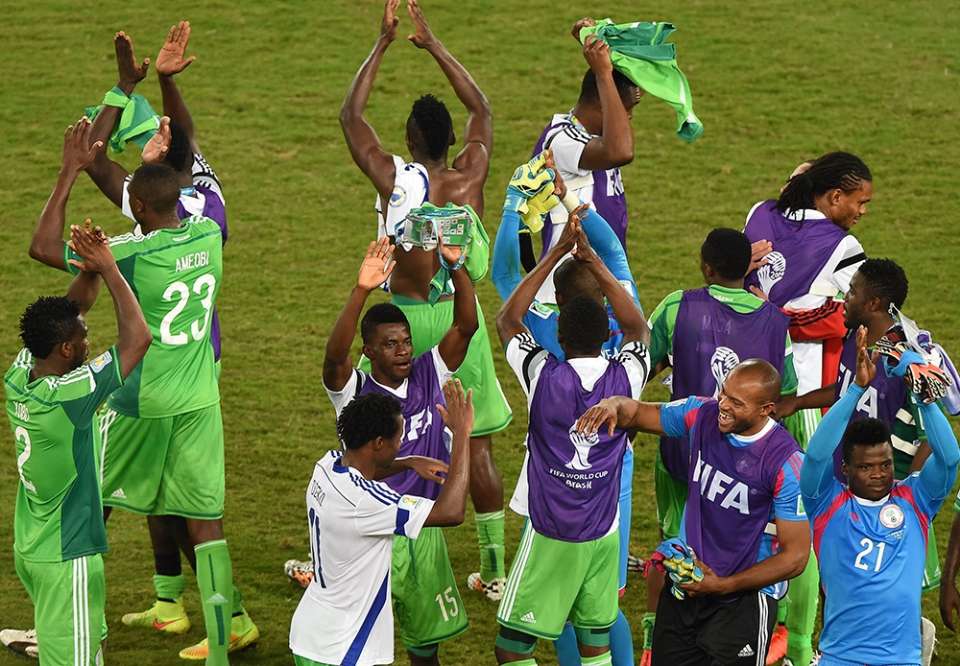
Super Eagles boycott training over unpaid appearance allowance
The Super Eagles cancelled a schedule training session on Thursday after a meeting where the players demanded the immediate payment of their appearance fee.
The Super Eagles may be heading the way of the Black Stars of Ghana if nothing is promptly done to settle the bad blood already brewing in camp over unpaid allowances.
Football news website, Kickoff.com is reporting that the Super Eagles cancelled a schedule training session on Thursday after a meeting where the players demanded the immediate payment of their appearance fee.
The Black Stars, who were embroiled in a similar disagreement with their country’s officials, were eliminated from the completion after an uninspiring performance against the Portuguese national team in their last group match. The Ghanaians lost the match by two goals to one.
The Black Stars players had threatened to boycott the match with Portugal if their appearance fees were not paid. It took the intervention of the Ghanaian President, John Mahama and the $3 million cash that was flown to the team in Brazil before they withdrew their threat.
The Super Eagles media officer, Ben Alaiya, told Kickoff.com that the team was in a meeting and would come out for training afterwards. But an hour later, a bus, which was ready to take the team to training, re-parked, with officials saying the training had been cancelled.
Kickoff.com says during the meeting, the players asked to be paid the appearance fee agreed with the Nigerian Football Federation (NFF) for making it past the group stage of the competition.
Kickoff.com says the Secretary- General of the football federation, Musa Adamu, left Brazil for Nigeria for more cash prior to the meeting. An official of the Federation, who was not named, told kickoff.com that Mr. Musa left to get money to prosecute the other rounds of the competition.
It is hard to imagine that the team is having problem with finances after, President Goodluck Jonathan approved the NFF’s budget of N2 billion, one of the biggest budget by teams in the competition, to execute the World Cup.
Mr. Amadu is expected to return to Brazil before the team’s round of 16 match with former world champion, France in Brasilia
Why I can’t celebrate Fayose’s victory - Femi Falana
A legal practitioner, Mr. Femi Falana (SAN), has called on the people of Ekiti State to be moderate in celebrating the victory of a former Governor of the state, Mr. Ayo Fayose, in the last governorship election. He said the governor-elect “cannot change.”
He however said since Ekiti people had made their choice, “I can only wish them well.” Falana, in an interview with The PUNCH in Abuja, on Wednesday, said the credibility of the election being used as a defence point in political circles depended on certain factors.
He said, “Ekiti people have voted and made their choice; I can only
wish them well. We know what happened before, I am a student of history.
I know that Fayose cannot change and so why do you think I should be
celebrating? I can only wish Ekiti people well for their choice. Fayose
regretted it the last time. So what has changed?. Fayose said he had
changed, which is a reflection of the fact that what happened the last
time cannot be tolerated in a civilised society; let’s wait and see. He
didn’t come with any programme and no manifesto in this election. If
people opted for him, you can only wish them well.”
When asked whether the election was free and fair, Falana said, “It depends on what you mean by a free and fair election.” He added, “In terms of the accreditation, in terms of the actual voting and the collation of results, the Independent National Electoral Commission did very well this time and there was a noticeable improvement.“
"But when you look at the totality of the election, militarisation of Ekiti State, harassment by security forces, disenfranchisement of some people by the military forces, and the fact that the place was invaded with 30,790 policemen, soldiers and members of the Nigerian Security and Civil Defence Corps, you can’t say that was a free and fair election. You must have an election in a free and fair atmosphere.”
Falana applauded the incumbent Governor of Ekiti State, Kayode Fayemi, for accepting defeat and congratulating Fayose.The human rights lawyer said, “Fayemi’s action is very commendable. The governor acted as a patriot and he hasn’t disappointed me. When you are defeated in an election, you must learn to congratulate the winner and he had said it earlier that ‘if the election was credible and I lose, I will congratulate the winner’ and that is what he has done. I think other Nigerian politicians should emulate that. But the duty is on INEC; if INEC conducts a good election, nobody will go to court. That is what Fayemi has shown. He is an enlightened guy and a patriot.”
When asked whether the election was free and fair, Falana said, “It depends on what you mean by a free and fair election.” He added, “In terms of the accreditation, in terms of the actual voting and the collation of results, the Independent National Electoral Commission did very well this time and there was a noticeable improvement.“
"But when you look at the totality of the election, militarisation of Ekiti State, harassment by security forces, disenfranchisement of some people by the military forces, and the fact that the place was invaded with 30,790 policemen, soldiers and members of the Nigerian Security and Civil Defence Corps, you can’t say that was a free and fair election. You must have an election in a free and fair atmosphere.”
Falana applauded the incumbent Governor of Ekiti State, Kayode Fayemi, for accepting defeat and congratulating Fayose.The human rights lawyer said, “Fayemi’s action is very commendable. The governor acted as a patriot and he hasn’t disappointed me. When you are defeated in an election, you must learn to congratulate the winner and he had said it earlier that ‘if the election was credible and I lose, I will congratulate the winner’ and that is what he has done. I think other Nigerian politicians should emulate that. But the duty is on INEC; if INEC conducts a good election, nobody will go to court. That is what Fayemi has shown. He is an enlightened guy and a patriot.”
Subscribe to:
Posts (Atom)